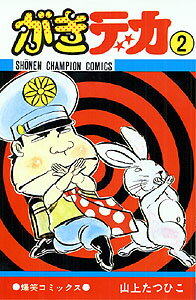
Gaki Deka Review: The Boy Cop Who Yells 'Death Sentence!' and Pulls a Radish From His Pants
by Tatsuhiko Yamagami
Read the first volume. If it doesn't hook you, put it down. It'll hook you.
Buy Gaki Deka on Amazon →*Affiliate link — I earn a small commission at no extra cost to you.
The first time I read Gaki Deka I was an adult, sitting in a used bookstore in Tokyo with a stack of yellowed Champion Comics volumes I had pulled off the 100-yen shelf. I did not grow up with it — it finished before I was born. But my father used to say "Shikei!" — "Death sentence!" — as a joke whenever someone did something stupid, and he would put his hand up in a strange salute, and I never knew where it came from until I opened volume one. It came from a fat little boy in a police hat who decided, with zero authority and full confidence, that he was a cop.
Quick Take
- Tatsuhiko Yamagami's 1974-1980 Weekly Shonen Champion hit — a child who declares himself "Japan's first boy police officer" and runs his neighborhood through pure crude nonsense
- Famous for catchphrase-poses like "Shikei!" (Death sentence!), "Hachijojima no kyon!", and "I love African elephants" — gags Japanese people still quote 50 years later
- T (Teen). The humor is deliberately vulgar and sexual by 1970s standards — radishes from pants, testicle jokes — so go in knowing that
Who Is This Manga For?
- Readers curious about 1970s shonen comedy and how a children's magazine got away with this
- Weekly Shonen Champion history readers — Gaki Deka ran alongside Dokaben during Champion's golden era and helped push the magazine past a million copies
- Comedy manga fans who want to see the ancestor of the absurd, no-consequences gag protagonist
- People who heard a Japanese person yell "Shikei!" and wondered where it came from
Content Warnings & Age Rating
Age Rating: T (Teen) Content Warnings: Crude humor and sexual jokes built around a child protagonist — including the recurring gag of objects (a tsuchinoko snake, a pumpkin, a radish) appearing from Komawari's crotch, plus testicle gags. 1970s sensibility throughout.
Nothing graphic by modern standards, but the comedy is vulgar on purpose. Read it knowing the era it came from.
Yu's Rating
| Category | Score |
|---|---|
| Story Depth | ★★☆☆☆ |
| Art Style | ★★★★☆ |
| Character Development | ★★☆☆☆ |
| Accessibility for Non-Japanese Readers | ★★★☆☆ |
| Reread Value | ★★★☆☆ |
Story Overview
There is no overarching plot, and pretending otherwise would be lying to you. Gaki Deka is pure episodic gag manga.
The setup: Komawari-kun (full name Yamada Komawari) is an ordinary elementary school student in Nerima Ward, Tokyo, who has appointed himself "Japan's first boy police officer." He wears the hat. He carries himself like authority. He is, in fact, a problem child who writes dirty jokes into his school compositions. Each chapter drops him into a normal situation — school, the neighborhood, his classmates — and lets him detonate it through sheer crude confidence.
What carries the series instead of plot is Yamagami's technique. He drew it in a serious gekiga style — heavy, realistic linework borrowed from dramatic manga — and then used that serious art to deliver completely surreal gags. The contrast is the engine. And structurally he built the jokes like manzai, the Kansai two-person comedy form: a clear boke (the one who says the absurd thing) and tsukkomi (the one who snaps back), often with the rhythm of a stage routine. Komawari is the boke who will not stop. Over six years and 26 volumes, the formula never really evolves — it just keeps escalating.
Characters
Komawari-kun (Yamada Komawari): The self-declared boy cop. His whole character is unearned authority that never collapses. He sentences people to death for minor offenses, transforms or produces strange objects when excited, and — this is the key — never faces lasting consequences. He ends every chapter exactly as confident as he started.
Saijo Yoshio: Komawari's classmate, drawn as the handsome, cool one. The running joke is that Saijo looks like the straight man but is secretly even more of a pervert than Komawari — the manga keeps undercutting his good looks with worse behavior than the gremlin protagonist's.
Kinouchi Momoko and Jun: The classmate "heroines" of the cast — the girls Komawari and Saijo orbit, and the closest the series has to romantic-comedy anchors. They function mostly as the normal world that the boys' nonsense crashes into.
What I Love About It
I love that the joke is the pose, not just the words.
"Shikei!" — Death sentence! — is funny as a line, sure. A child sentencing adults to death for jaywalking is a good gag on paper. But Yamagami made it physical. There is a specific arm gesture, a specific face, a specific way Komawari's whole body commits to the verdict, and that drawing is what burned the phrase into Japanese culture. Fifty years later people still do the gesture. My own father did it at the dinner table without knowing the manga's volume count or the author's name. That is the rare thing — a gag that escaped the page and became a piece of body language an entire country shares.
What I came to appreciate, reading it as an adult who knows what came after, is how much of modern gag manga is downstream of this. The absurd-object gag, the protagonist who is a tiny tyrant immune to consequences, the serious-art-plus-stupid-content contrast — Komawari is yelling "Hachijojima no kyon!" and "I love African elephants!" with total conviction, and the comedy lives entirely in his refusal to acknowledge that any of it makes sense. He is the ancestor of a whole lineage. Sitting on that bookstore floor, I could feel the line running from this fat little boy cop straight to half the gag manga I grew up reading.
Memorable Scene ⚠️ Spoiler Warning
The gag I cannot shake is the crotch gag, and I am almost embarrassed to write it, but it is genuinely the series' signature. When Komawari gets excited or worked up, strange things emerge from inside his pants — a tsuchinoko (the mythical fat snake), a pepo pumpkin, a daikon radish. There is no logic. A boy gets agitated and produces a radish. The reader is supposed to be appalled and laughing at the same time, and the gekiga-realistic art makes it worse — it is drawn with the same heavy seriousness as a dramatic fight scene.
It stays with me because it is the purest version of what this manga is. It refuses to make sense, it refuses to apologize, and it refuses to let the realistic art rescue you into thinking it will be normal. A 1970s children's magazine printed a radish coming out of a kid's pants and a million people bought it. That is either the death of good taste or the birth of something — and the fact that I still remember the panel is its own answer.
Pros & Cons
Pros
- A genuine landmark — helped push Weekly Shonen Champion past a million copies in its golden era
- Catchphrase-gags ("Shikei!") that escaped the manga and became national body language
- The gekiga-art-plus-absurd-gag contrast is craft, not accident
- A primary source for anyone tracing where the modern crude-gag protagonist came from
Cons
- No English translation — Japanese only
- Pure episodic gags, no story or character growth to hold onto
- The sexual and crude humor is 1970s vintage and reads dated
- The crude register genuinely won't work for everyone — that's not a diplomatic warning, that's the truth
Is Gaki Deka Worth Reading?
For readers of classic shonen and manga history, yes — this is a foundational gag manga, and Komawari's catchphrase-poses are still alive in Japanese culture today. For readers who want plot, warmth, or anything resembling restraint, the crude episodic comedy will test your patience. It won't work for everyone, and that's not a failure on your part.
Similar Manga
| Title | Its Approach | How Gaki Deka Differs |
|---|---|---|
| Tensai Bakabon | Akatsuka's surreal family gag comedy | Gaki Deka is cruder and built on one tyrant-child rather than an ensemble |
| Makoto-chan | Kazuo Umezu's grotesque crude-kid gag manga | Similar shock-comedy spirit; Gaki Deka frames it through the "boy cop" authority gag |
| Cromartie High School | Deadpan absurdist delinquent comedy | Cromartie is cool and dry; Gaki Deka is loud, physical, and intentionally vulgar |
Official English Translation Status
Gaki Deka has no official English translation. It remains available only in Japanese.
Where to Buy
No English release yet. That just means you find it before everyone else does.
If you read Japanese, the Champion Comics volumes are still in print and easy to find used.
This post contains affiliate links. If you purchase through these links, I may earn a small commission at no extra cost to you. As an Amazon Associate, I earn from qualifying purchases.
*Affiliate link — I earn a small commission at no extra cost to you.
More Manga You Might Like
Slice of Life / Comedy
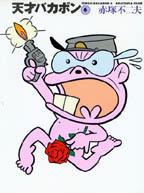
Tensai Bakabon
Tensai Bakabon is Fujio Akatsuka's landmark gag manga about the Bakabon family — a household where the father's complete detachment from logic is presented as wisdom, and the world's attempts to impose reason are the actual problem.
Slice of Life / Comedy
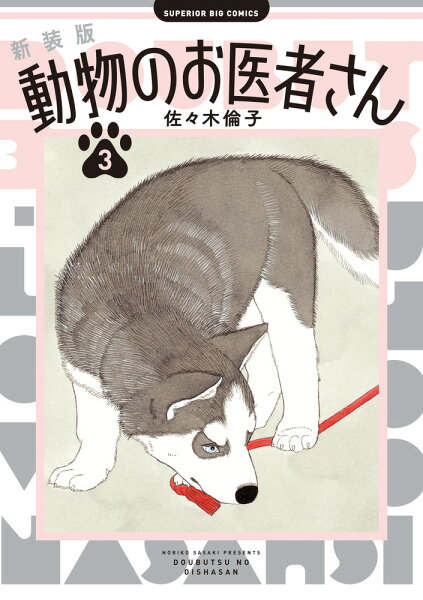
Doubutsu no Oisha-san
Doubutsu no Oisha-san follows Hamutaro, a quiet veterinary student in Hokkaido, his deadpan husky Chobi, and the warm chaos of vet-school life — a 12-volume Hana to Yume comedy so popular it set off a real Siberian Husky boom across Japan.
Slice of Life / Comedy
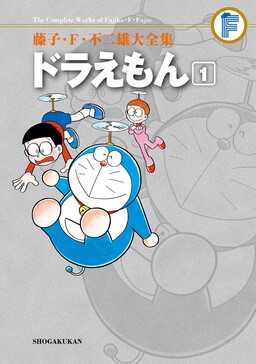
Doraemon
Yu's review of Doraemon — a robot cat from the 22nd century, sent back to help a hopeless boy named Nobita with gadgets from his four-dimensional pocket. Fujiko F. Fujio's most beloved work, and the manga every Japanese kid grows up inside.
Slice of Life / Comedy
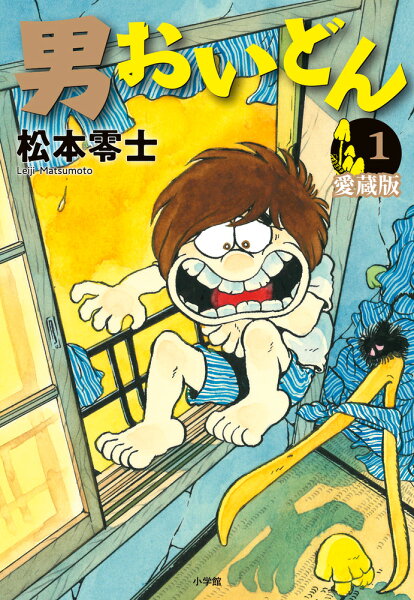
Otoko Oidon
Otoko Oidon follows Saburo Oyama, a young man from Kyushu trying to make it in Tokyo — living in a tiny boarding house, perpetually broke, hopelessly unlucky in love, and stubbornly determined to become someone despite all evidence suggesting otherwise.
Slice of Life / Comedy
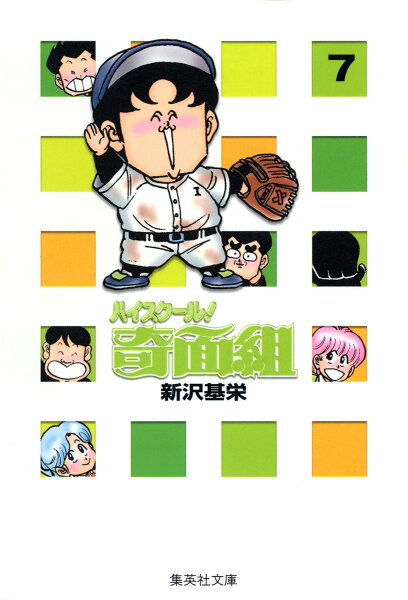
High School! Kimengumi
High School! Kimengumi follows five boys who turn their strange faces into a way of life, building one of the loudest, weirdest gag manga of 1980s Shonen Jump.
Slice of Life / Comedy
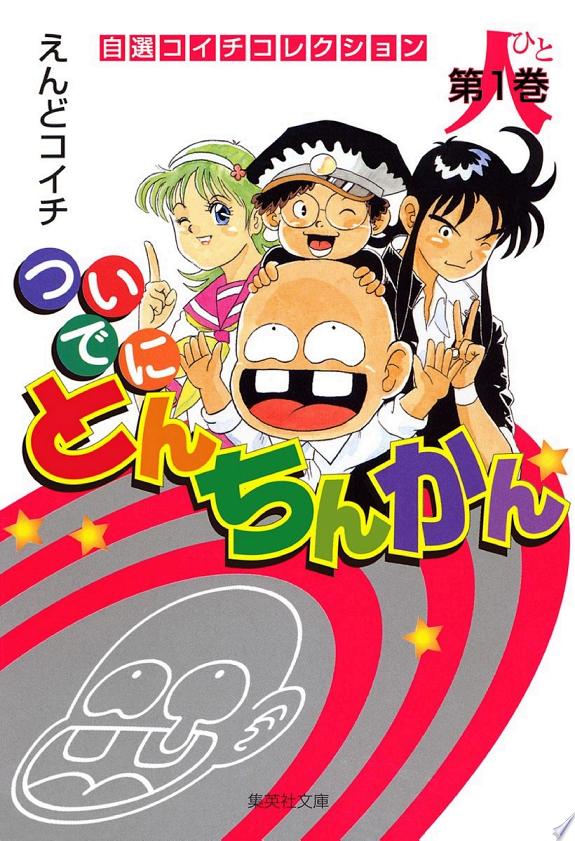
Tondemo-kun
Tondemo-kun follows a trio of delinquent students whose plans to cause trouble consistently backfire in ways that are so spectacularly wrong they accidentally create good outcomes — a comedy built entirely on the gap between intention and result.
Written by
Yu
Manga Enthusiast from Japan
I grew up in Japan and manga literally saved me during a tough time in elementary school. My English isn't perfect, but my love for manga is real — and I want to share it with you.