
Gabriel DropOut Review: Heaven's Best Student Comes to Earth and Becomes a Gaming Shut-In
by Ukami
Read the first volume. If it doesn't hook you, put it down. It'll hook you.
Buy Gabriel DropOut on Amazon →*Affiliate link — I earn a small commission at no extra cost to you.
When I was a kid hiding from the world, I told myself the same lie a lot of lonely kids tell themselves: if I just tried hard, I could be great at something. Gabriel DropOut is a comedy about an angel who actually was great at something — the best student Heaven ever produced — and then threw it all away the second she found an MMORPG. I laughed the first time I read it, and then I felt a little seen, which is not what I expected from a four-panel gag manga.
I want to be honest up front, because the old version of this review on my site got some facts wrong. Gabriel DropOut is by Ukami, it runs in Dengeki Daioh G (ASCII Media Works / KADOKAWA), and it is still ongoing — 16 volumes in Japan, with Yen Press up to volume 15 in English. It is not finished, and the older write-up that said "9 volumes complete" was simply incorrect. Let me give you the real thing.
Quick Take
- The premise inversion — the angel is a gaming shut-in, the demons are the responsible ones — never stops being funny, and Ukami keeps finding new corners of it across sixteen volumes
- It started as a strict four-panel (4-koma) comedy and grew into longer chapters over time, so the rhythm gets richer as the series goes on
- Age rating: T (Teen) — fantasy violence is purely comedic and there is nothing graphic here
Story Overview
Graduating angels are sent down to Earth to live among humans and learn to guide them toward happiness, eventually earning their place as full angels. Gabriel White Tenma graduates at the very top of her class — Heaven's most promising student — and arrives on Earth glowing with potential.
Then she discovers online games. Within the first volume she has degenerated into a textbook Japanese shut-in: greasy hair, dead eyes, skipping school, living for her save file. The running engine of the series is that nobody can drag her back out. Her best friend Vignette tries; her teachers try; her own family eventually intervenes. There is no overarching plot to "fix" Gabriel — the comedy is watching everyone fail to.
Because it's episodic by design, I'll be honest about what to expect: this is not a story that builds to a climax. It's a cast of four supernatural high-schoolers bouncing off each other, gag after gag, with the long-game pleasure coming from how well you get to know them. By the later volumes Yen Press's vol. 15 even notes the characters down to their final half-year of high school, so there is a slow forward drift of time — just no grand arc.
Characters
Gabriel White Tenma — The fallen overachiever. Her decline is the whole joke, and Ukami commits to it completely: she works a café job so badly that she convinces her own boss she's a foreigner who barely speaks Japanese, just to lower his expectations. The gap between "best angel in Heaven" and "person who would rather send her underwear to school than attend in person" (yes, that gag happens) is the series' beating heart.
Vignette April Tsukinose — A demon, and the most responsible person in the entire cast. She's Gabriel's first friend on Earth and functions as the long-suffering straight-woman, the one who actually cooks, cleans, and shows up. The irony — the demon behaves like an angel, the angel behaves like a demon — is stated plainly and never gets old.
Satanichia McDowell Kurumizawa (Satania) — A demon obsessed with being evil, whose evil is pathetically small (failing to recycle, petty pranks) and almost always backfires. Her defining curse is a white stray dog that keeps stealing her beloved melon bread. She eventually adopts the dog anyway.
Raphiel Ainsworth Shiraha — The second-ranked angel, and a quiet sadist. She presents as serene and polite while openly enjoying the suffering of Gabriel and Satania. When Satania is this close to a small victory, Raphiel is the one delighting as the dog snatches the bread again.
What I Love About It
What makes Gabriel DropOut land for me isn't the angel-and-demon gimmick — it's how precisely it nails the texture of giving up. Gabriel isn't evil and she isn't sad; she's just comfortable. She found the one thing that asks nothing of her and demands everything of her at the same time, and she sank into it. The teleport gag is the perfect distillation: she's so far gone, so unwilling to physically exist at school, that when she tries to warp herself there she accidentally teleports only her underwear instead. It's a stupid, brilliant joke, and underneath it is a real observation about how a person can be present in body and completely checked out in spirit.
The café arc is the other one I keep coming back to. Gabriel, the supposed paragon of Heaven, decides the smartest survival strategy at her part-time job is to pretend she's a foreigner who can't understand instructions — actively making her boss think less of her so he'll expect less work. I have known that exact instinct. I have been that instinct. Ukami draws it for laughs, but it's the most honest thing in the book: sometimes the lazy person isn't lazy out of weakness, they're lazy with a strategy. That's the kind of specific, human comedy that keeps me rereading a gag manga I theoretically already "get."
Memorable Scene ⚠️ Spoiler Warning
The arc I think about most is the one where Gabriel's family finally has enough and punishes her, and she comes back to school as the old Gabriel — the radiant, diligent, model angel she was supposed to be from the start. And here's the twist: her friends hate it. Vignette, Satania, and Raphiel have grown so attached to the rotten, lazy, useless Gabriel that this perfect version unsettles them, and they actually conspire to drag her back down and reconvert her into a slob.
The punchline is that it's all a front — the reformed "perfect angel" is just Gabriel performing, faking virtue while staying exactly as lazy as ever underneath. It's the whole series in one chapter: the people around her don't love her despite her flaws, they love her because of them, and Gabriel's true talent isn't gaming or angel-work — it's effortlessly defeating every attempt to make her better. I laughed, and then I sat with how weirdly tender it is that her friends prefer the broken version of her.
Pros & Cons
Pros
- The angel/demon role-reversal premise stays funny across sixteen volumes without leaning on escalation
- Four distinct, well-balanced comic voices — straight-woman, idiot, sadist, and the gloriously hopeless lead
- The shift from strict 4-koma to longer chapters lets the jokes breathe more as the series matures
- Gaming and shut-in humor that lands even if you've never touched an MMO
Cons
- Episodic by design — there's no real plot, just situations
- Character "growth" is minimal; people are who they are, forever
- If you want a story with stakes and an arc instead of comfort-food comedy, this won't work for you
Is Gabriel DropOut Worth Reading?
Yes — if you want a reliable, low-stakes comedy you can open anywhere and laugh at. It's a character-driven gag manga, not a story with a destination, so go in for the cast and the rhythm rather than a plot. For me it's the kind of book I reach for when I want to feel better, not when I want to be moved.
Similar Manga
| Title | Its Approach | How Gabriel DropOut Differs |
|---|---|---|
| Miss Kobayashi's Dragon Maid | Supernatural beings doing domestic slice-of-life | Gabriel DropOut keeps it to school comedy and never goes soft for long |
| The Devil Is a Part-Timer! | A demon humbled by the mundane modern world | Here it's an angel who falls, and the demons are the responsible ones |
| Nichijou | Absurdist, escalating gag comedy | Gabriel DropOut's humor stays grounded in its four characters and their fixed dynamics |
Where to Buy
Read the first volume. If it doesn't hook you, put it down. It'll hook you.
This post contains affiliate links. If you purchase through these links, I may earn a small commission at no extra cost to you. As an Amazon Associate, I earn from qualifying purchases.
*Affiliate link — I earn a small commission at no extra cost to you.
More Manga You Might Like

Slice of Life / Comedy
Slow Start
Yu's review of Slow Start — Hana Ichinose started high school a year late due to illness, making her a year older than her classmates; the series follows her trying to fit in with her new friends while carrying the secret that she is different, in Tokumi Yuiko's characteristic warm and gentle 4-koma style.

Slice of Life
Kill Me Baby
A review of Kaduho's Kill Me Baby — ongoing in Manga Time Kirara Carat since July 2008, 16+ volumes in Japan. Sonya is a trained assassin; Yasuna is her completely unfazed school friend. Yen Press publishes the English edition.

Slice of Life / Comedy
Monthly Girls' Nozaki-kun
Yu's review of Monthly Girls' Nozaki-kun — Chiyo Sakura confesses to her crush Umetaro Nozaki and he hands her his autograph; she discovers he is the author of a popular shojo manga and accidentally becomes his assistant; the series is a comedy about manga creation that uses the genre conventions of shojo manga as its comedic material.

Slice of Life
Blend S
Yu's review of Blend S — Maika Sakuranomiya's smile looks terrifying even when she's being kind, so a café manager hires her to play the 'sadistic' waitress. The gap between her gentle heart and her scary face is the whole joke, and it never gets old.
Slice of Life / Fantasy
A Witch's Printing Office
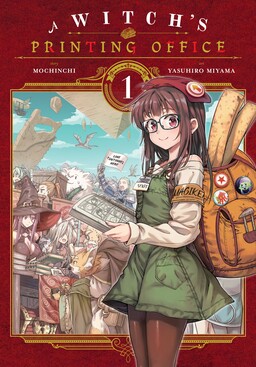
Yu's review of A Witch's Printing Office — Mika is a modern Japanese woman who worked at Comiket (the giant doujinshi convention) and wakes up in a fantasy world where magical festivals share printed pamphlets; using her knowledge of convention organization and printing logistics, she builds a business that transforms how the fantasy world shares information.

Slice of Life
My New Boss Is Goofy
Yu's review of My New Boss Is Goofy — Momose Shinya carries severe anxiety from years under a genuinely terrible boss; at his new job he is placed under Aoyama Keita, a boss whose enthusiasm, sincerity, and accidental wholesomeness begin to undo years of workplace damage.
Written by
Yu
Manga Enthusiast from Japan
I grew up in Japan and manga literally saved me during a tough time in elementary school. My English isn't perfect, but my love for manga is real — and I want to share it with you.
Disclosure: This post contains affiliate links. As an Amazon Associate, I earn from qualifying purchases at no extra cost to you.