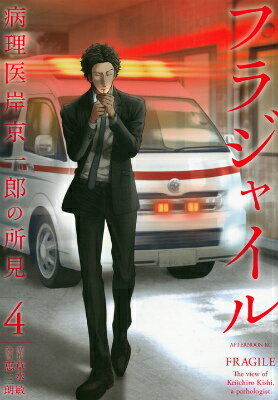
Fragile Review: The Manga That Made Me Respect the Doctor Who Never Meets the Patient
by Bin Kusamizu (story) / Saburo Megumi (art)
Read the first volume. If it doesn't hook you, put it down. It'll hook you.
Buy Fragile on Amazon →*Affiliate link — I earn a small commission at no extra cost to you.
I grew up thinking I understood what a doctor was. The doctor was the person standing over you, the surgeon, the hero with the scalpel. Then I read Fragile, and I learned about the kind of doctor I had never once pictured: the one who never meets the patient at all. The one in a quiet room, looking at a slice of your body under a microscope, deciding what is true. I didn't know that person existed until this manga showed me. And now I can't stop thinking about how much of medicine happens far away from the bed.
I'm Yu, and I read a lot of medical manga. Most of it is about the surgery, the emergency, the dramatic save. Fragile is about the quiet step before all of that — and it might be the one that taught me the most.
Quick Take
- A medical manga where the hero is a pathologist, not a surgeon — the doctor who decides the truth of a diagnosis from tissue, not from the bedside
- Each case is a mystery the body holds onto until someone reads it correctly, and getting it wrong means treating the wrong disease
- Age rating: T (Teen) — clinical depictions of illness and death, but nothing gratuitous
Story Overview
Keiichiro Kishi is the head of pathology at a large general hospital. He never treats living patients directly. The other departments send him samples — biopsies, autopsy tissue, anything that needs a name — and he tells them what the cells actually say. Surgeons, internists, and oncologists then build their treatment on his reading. He is brilliant, and he is famous around the hospital for being an arrogant, blunt troublemaker who blows up case conferences. Most of his colleagues can't stand him. They also can't argue with him.
The series opens through the eyes of Chihiro Miyazaki, a young second-year neurology resident. She has a patient whose treatment plan doesn't sit right with her, and she can't say why. Through Kishi, she ends up confronting the gap between what her supervising doctor assumes and what the tissue actually shows. The diagnosis she's been told is wrong. The correct one saves the patient's life. That single case changes the entire direction of her career — she transfers out of neurology and into pathology, to learn how to see the way Kishi sees.
From there the manga runs as a case-by-case medical drama. Tumors that need identifying before a surgeon cuts. Infections that mimic something else. Deaths that need explaining. Each arc is anchored in a real diagnostic problem, and each one circles the same idea: the person who decides what disease you have is often not the person you ever shake hands with.
Characters
Keiichiro Kishi is the kind of protagonist medical manga almost never builds a series around. He is not a surgeon racing the clock. His weapon is the microscope, and his interventions are diagnostic — the right name at the right moment so the wrong treatment never starts. His abrasiveness isn't a flaw he's meant to grow out of. It's the cost of caring only about being correct. He'll humiliate a senior doctor in front of a room if it means the patient doesn't get treated for the wrong disease.
Chihiro Miyazaki is the reader's way in. She starts as an earnest neurology resident who follows her gut into a fight she doesn't fully understand, and she comes out of it changed. Her arc is the slow, honest work of learning to read tissue — moving from a clinician who meets patients to a pathologist who meets their cells, and learning why that quieter role matters just as much.
Hisashi Morii is the clinical laboratory technician in Kishi's department. He's sharp-tongued and indispensable, with medical knowledge well beyond his title — he was a medical student himself before financial hardship forced him to quit. He's the steady ground under Kishi's chaos.
Madoka Hosoki is a surgeon and, as far as anyone can tell, Kishi's only real friend, going back to their university days. She's composed and distant where he's combative, and she places total trust in his readings — when Kishi says the diagnosis is X, she operates on X.
What I Love About It
What hooked me is the inversion at the center of the whole series. We're trained by every other medical story to watch the surgeon, the one with their hands inside the patient. Fragile quietly points at the step before that and says: none of the heroics work if this part is wrong. The surgeon can only cut out the right thing if the pathologist named the right thing. The whole dramatic save is built on a quiet person in a lab being correct first. I had genuinely never thought about medicine that way, and the manga made me feel a little ashamed of how little I'd noticed about who actually decides what's wrong with you.
And then there's Kishi himself, who I came to love precisely because he refuses to be lovable. He doesn't perform warmth. He doesn't soften bad news into a comforting shape. He delivers the accurate answer with no ceremony and moves on. At first I read that as coldness. By the end I read it as a different kind of respect — he trusts that the truest thing he can give you is the truth, even when it's unwelcome, even when the room hates him for it. In a genre full of doctors who make speeches, a doctor who just refuses to lie about the cells felt almost radical to me. I kept turning pages not to see who he'd save, but to see what he'd see.
Memorable Scene ⚠️ Spoiler Warning
The case that opens the series stayed with me the longest, because it's where Miyazaki's whole life pivots. She's a neurology resident, uneasy about a patient's treatment plan but unable to prove her instinct. With Kishi pushing her, she ends up going far past the rules — at his prompting she gets into her supervising doctor's computer to chase the data she needs, an act that could have ended her career. But the pathology tells a different story than the one her department had settled on. The original diagnosis was wrong. The corrected one saves the patient.
What makes it land isn't triumph. It's the quiet weight of it: a young doctor realizing that being polite and obedient could have let a patient be treated for the wrong disease, and that the unpleasant man in the lab was the only one looking at the truth. That's the moment she decides to leave the bedside and learn to read tissue herself. It reframes the entire series — the dramatic save here isn't a surgery, it's a correct reading. I closed the volume understanding why someone would give up meeting patients to do this work, and that surprised me.
Pros & Cons
Pros
- A genuinely fresh protagonist and premise — the pathologist as hero is rare and it works
- Each case stands as its own satisfying diagnostic mystery
- Kishi's bluntness is consistent and meaningful, never softened for comfort
- It quietly teaches you something real about how diagnosis actually works
Cons
- It's long and ongoing — a real commitment to start
- The medical detail can get dense, even when the manga explains it
- The protagonist is deliberately abrasive — if you need a warm lead, this won't work for everyone
Is Fragile Worth Reading?
Yes — especially if you want a medical manga that respects your intelligence and shows you a side of medicine the dramatic stories skip. It asks for patience with both its length and its prickly hero, but in return it gives you something I rarely get from this genre: the feeling that I actually learned how a piece of the real world works. A blunt protagonist and dense detail are the price of admission, and to me it was worth paying.
Who Is This Manga For?
- Readers who love procedural drama with real depth
- Anyone curious about the parts of medicine that happen away from the patient
- People who prefer quiet, exacting protagonists over loud heroes
- Fans of grounded seinen medical manga in the lineage of Say Hello to Black Jack
Similar Manga
| Title | Its Approach | How Fragile Differs |
|---|---|---|
| Say Hello to Black Jack | Follows a young doctor confronting the ethics and politics of Japanese hospitals | Fragile centers the pathologist behind the diagnosis, not the bedside clinician |
| Black Jack | Episodic, semi-fantastical tales of a genius unlicensed surgeon | Fragile is grounded and procedural, with realistic diagnostic cases |
| Team Medical Dragon | High-stakes surgical drama with a conventional hero structure | Fragile's "save" is a correct reading of tissue, not an operation |
Where to Buy
No English release yet. That just means you find it before everyone else does.
The Japanese edition is the only legitimate way to read it for now — Fragile is serialized in Kodansha's Monthly Afternoon and collected under the Afternoon KC label.
Find the Japanese edition on Amazon.co.jp →
This post contains affiliate links. If you purchase through these links, I may earn a small commission at no extra cost to you. As an Amazon Associate, I earn from qualifying purchases.
*Affiliate link — I earn a small commission at no extra cost to you.
More Manga You Might Like
Slice of Life / Drama
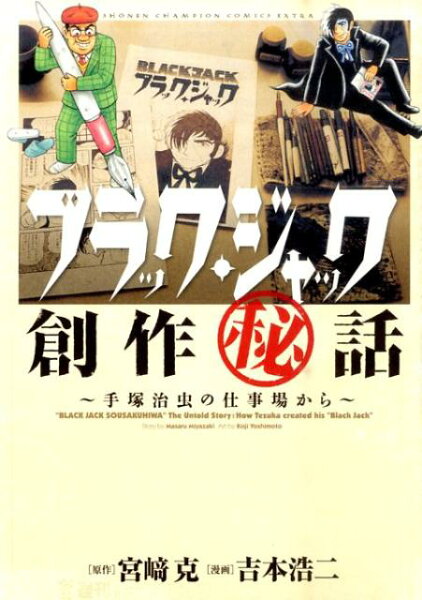
Black Jack Sousaku Hiwa
Black Jack Sousaku Hiwa is a documentary manga about how Osamu Tezuka created Black Jack — told through the editors and assistants who worked beside him, capturing both the genius and the human cost of his impossible work ethic.

Slice of Life / Drama
Bartender
Bartender follows Ryu Sasakura, a young genius bartender who serves the 'Glass of the Gods' at a hidden Ginza bar — the one drink each troubled customer needs at that exact moment in their life.

Slice of Life / Drama
Tokujou Kabachi!!
Tokujou Kabachi!! follows Daisuke Kanie, a paralegal at an administrative scrivener's office, as he takes on bureaucratic injustice and legal gray areas armed only with his knowledge of Japanese administrative law — and a willingness to argue until someone listens.
Slice of Life / Drama
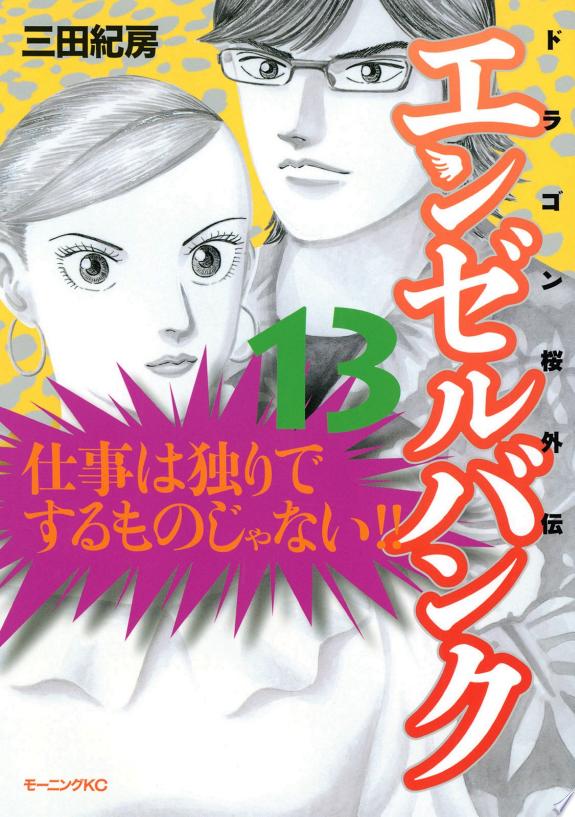
Angel Bank: Dragon Zakura Gaiden
Yu's review of Angel Bank — the Dragon Zakura spin-off in which a disillusioned teacher becomes a job-placement agent under a charismatic career consultant, and learns that most people don't change jobs, they just change companies.
Slice of Life / Drama
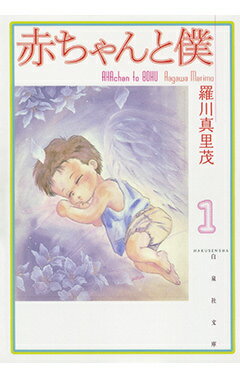
Baby and Me
Baby and Me follows Takuya Enoki, a grade-schooler who becomes a mother and a brother at the same time, raising his toddler brother Minoru after their mother dies and their father works to keep the family going.
Medical / Drama
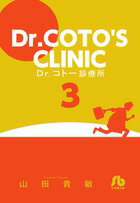
Dr. Koto Clinic
Kensuke Gotoh is a brilliant surgeon from a prestigious Tokyo hospital. He arrives on Koshiki Island — a remote Japanese island with no hospital, no specialists, and a population that has stopped expecting medical care — and becomes its only doctor. Takatoshi Yamada's medical manga has won the Shogakukan Manga Award, sold 12 million copies, and been adapted into multiple dramas and a 2022 film. The manga has been on author-illness-related hiatus since 2010 at 25 volumes.
Written by
Yu
Manga Enthusiast from Japan
I grew up in Japan and manga literally saved me during a tough time in elementary school. My English isn't perfect, but my love for manga is real — and I want to share it with you.
Disclosure: This post contains affiliate links. As an Amazon Associate, I earn from qualifying purchases at no extra cost to you.