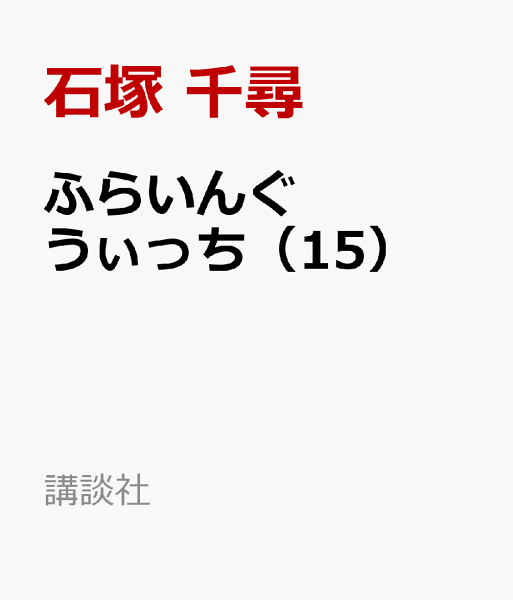
Flying Witch Review: A Trainee Witch Whose Greatest Spell Is Slowing You Down
by Chihiro Ishizuka
Read the first volume. If it doesn't hook you, put it down. It'll hook you.
Buy Flying Witch on Amazon →*Affiliate link — I earn a small commission at no extra cost to you.
When I was a kid with no friends, the quiet hours were the worst. After school, before my parents came home, the apartment was so silent that I could hear the clock. I used to fill that silence with manga, and the ones I loved most were never the loud ones. They were the ones where nothing happened, where a character just made tea and looked out a window, because that made the silence feel like company instead of loneliness.
Flying Witch is that kind of manga. Makoto Kowata is fifteen, she is a witch, and her biggest talent is making a day go slowly. I came to it expecting magic. What I got was the feeling of a long afternoon in the countryside with someone who is in no hurry at all. I did not know I needed that until I had it.
Quick Take
- A fifteen-year-old trainee witch moves from Yokohama to rural Aomori with her black cat Chito, lives with her cousins, and learns to be a witch the way you learn to cook — slowly, by doing
- The magic is real but small and domestic: pulling mandrakes from the garden, flying a broom, brewing things from what grows nearby, all folded into ordinary rural life
- Age rating: All Ages — one of the gentlest, most calming manga you will ever read, with nothing graphic anywhere in it
Story Overview
Makoto Kowata is a fifteen-year-old witch from Yokohama. In the witch tradition of her family, a young witch leaves home around this age to live independently and complete her training, so Makoto moves out to Hirosaki in Aomori — deep, green northern Japan — to stay with her relatives, the Kuramoto family. She brings her familiar, a black cat named Chito.
There is no plot, and that is the point. Each chapter is a small episode in Makoto's new life: she goes shopping with her cousin and absent-mindedly rides her broom home in broad daylight where anyone could see her, she botches a summoning spell that turns the house into something out of a Hitchcock film, she tries to harvest a mandrake from the garden. Slowly the world widens. She meets other magical people in the area, the seasons turn, and the line between the magical and the ordinary stays comfortably blurred. Nobody is saving the world. Makoto is just becoming a slightly better witch, and a slightly more settled person, one quiet day at a time.
Characters
Makoto Kowata — Polite, warm, and gently scatterbrained. She is a capable witch in the practical sense — more interested in preparing potions and tending plants than casting dramatic spells — but she is also a teenager who forgets that ordinary people are not supposed to see a girl on a broom. Her charm is that she treats magic as completely normal, which makes the people around her, and the reader, do a double take.
Chinatsu Kuramoto — Makoto's young cousin. She starts out a little nervous and suspicious of this strange older relative, but after Makoto flies her home on the broom, she is hooked, and she becomes the one character who reacts to magic with real wide-eyed wonder. That wonder is the reader's way in.
Kei Kuramoto — Chinatsu's older brother and Makoto's cousin. He takes the existence of a witch in the house almost completely in stride, which makes him the calm anchor of the household.
Akane Kowata — Makoto's older sister and a far more accomplished, free-spirited witch. She drops in occasionally, and her casual mastery is a quiet contrast to Makoto's earnest, still-learning effort.
Nao Ishiwatari — Makoto's new friend and soon-to-be classmate, whose family runs a liquor store. She is the everyday-person foil who gets pulled into Makoto's magical world, sometimes against her will.
What I Love About It
The thing I love most is how Flying Witch refuses to separate the magical from the domestic. In most fantasy, magic is the special thing — it gets its own rules, its own danger, its own music. Here, magic is just another chore. Makoto harvests a mandrake the way you would dig potatoes. She knows it is a powerful, even dangerous plant, but she handles it with the matter-of-fact patience of someone who has done this before. The wonder is not in the magic being loud. It is in the magic being treated as ordinary, which somehow makes the ordinary feel like magic instead.
And then there is the pace. I keep coming back to that. This manga is built to be slow, and it taught me something about why I love this whole genre. When Makoto and Chinatsu wander through the Aomori countryside, the book is not waiting to get somewhere. The walk is the somewhere. Reading it, I felt the same thing I felt as a lonely kid filling the silence after school — that quiet, when you stop fighting it, is not empty. It is full of small things you only notice when nothing is rushing you. Flying Witch made me sit still long enough to notice them, and that is a rare gift from a book.
Memorable Scene ⚠️ Spoiler Warning
The mandrake scene from the first volume is the one that stuck in my head, because it captures the whole personality of the manga in a single sequence.
Makoto decides to give her new friend Nao a gift to mark their friendship — and the gift she picks is a mandrake she pulls straight out of the garden. She calmly warns Nao to cover her ears, because mandrakes scream when uprooted. Sure enough, the moment it comes free of the soil, the ugly little root starts shrieking, then groans and writhes in Makoto's hands like a cranky old man. Makoto, completely unbothered, explains how lethal it can be and how useful it is for healing after a good detox, as if she is reading a recipe. Nao is horrified and absolutely does not want this screaming root as a token of friendship.
What I love is that the joke is entirely in the contrast. Makoto's total calm against Nao's panic, the genuinely creepy plant against the warmth of "I made you a gift." It is funny, it is a little eerie, and it is sweet all at once, and it tells you exactly what kind of book you are holding.
Pros & Cons
Pros
- Magic folded into everyday rural life in a genuinely original, grounded way
- The Aomori countryside is rendered with real affection and detail
- Makoto and Chinatsu's relationship grows naturally and warmly
- Calming to the point of being actively restful to read
Cons
- No plot, no stakes, no dramatic momentum
- Ongoing with a slow release schedule, so there are long waits between volumes
- That gentle, unhurried pace is either the whole appeal or a dealbreaker — this one genuinely won't work for everyone
Is Flying Witch Worth Reading?
If you want plot, tension, or a destination, no — this manga is allergic to all three. But if you want a book that lets you breathe, where a teenage witch pulling a screaming root out of the dirt is about as dramatic as it gets, then yes, absolutely. It is one of the most quietly restorative manga I have read, and it rewards slowing down.
Who Is This Manga For?
- Readers who want slice-of-life with gentle fantasy that never disrupts the calm
- Anyone who loves rural Japan drawn with care and specificity
- Fans of Mushishi or Yotsuba&! who want that same sense of wonder in ordinary things
- Readers who want magic treated as part of everyday domestic life
Similar Manga
| Title | Its Approach | How Flying Witch Differs |
|---|---|---|
| Mushishi | Atmospheric rural fantasy with a wandering, melancholy, sometimes dark tone | Flying Witch keeps the rural atmosphere but trades the melancholy for warmth and comedy |
| Yotsuba&! | Finds wonder in ordinary daily life through a child's eyes, no fantasy at all | Flying Witch adds a layer of literal, low-key magic on top of that everyday wonder |
| Laid-Back Camp | Slow, comforting slice-of-life built around an outdoor hobby and nature | Flying Witch swaps the hobby framework for witch training and the magical world |
Where to Buy
Read the first volume. If it doesn't hook you, put it down. It'll hook you.
This post contains affiliate links. If you purchase through these links, I may earn a small commission at no extra cost to you. As an Amazon Associate, I earn from qualifying purchases.
*Affiliate link — I earn a small commission at no extra cost to you.
More Manga You Might Like

Slice of Life / Fantasy
Konohana Kitan
Yu's review of Konohana Kitan — Yuzu is a young fox girl who begins working at Konohanatei, a hot spring inn that welcomes both humans and gods. Staffed entirely by fox-girl attendants, the inn becomes the setting for gentle, self-contained stories about hospitality, connection, and letting go.
Slice of Life
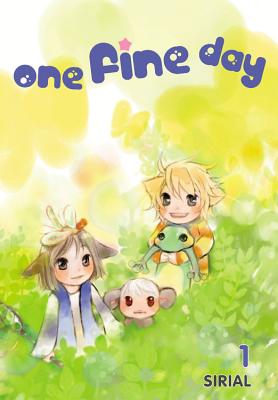
One Fine Day
A review of One Fine Day — the Korean manhwa iyashikei about a young wizard and his animal companions living peacefully in the countryside, with no particular goal beyond the specific pleasures of daily life.
Slice of Life / Fantasy
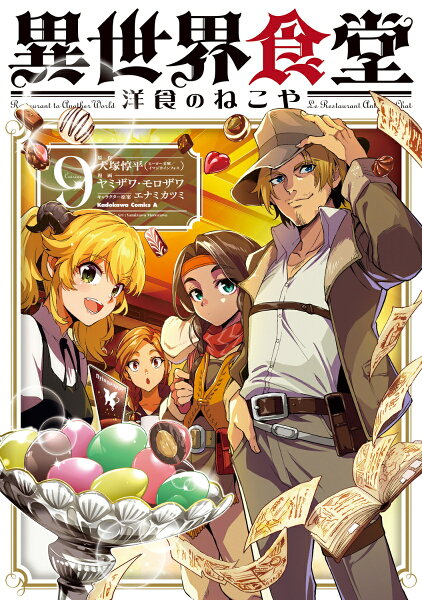
Restaurant to Another World
Yu's review of Restaurant to Another World — Western Restaurant Nekoya is a small Tokyo restaurant that, every Saturday, has a door that opens from various locations in a fantasy world; fantasy world inhabitants enter and encounter Japanese Western food for the first time; each chapter follows a different customer and the dish that changes them.
Slice of Life
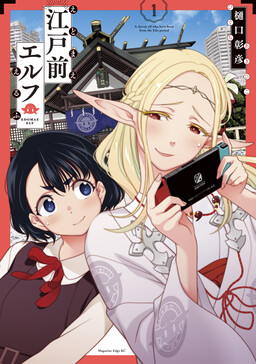
Otaku Elf (Edomae Elf)
Yu's review of Otaku Elf — Elda is a 600-year-old elf summoned to Japan by Tokugawa Ieyasu and enshrined as a goddess at Tokyo's Takamimi Shrine, but she's become a video-game-loving shut-in. Sixteen-year-old miko Koito Koganei tries to coax her out of her shell. Akihiko Higuchi's cozy comedy from Kodansha, in English from Seven Seas.
Slice of Life
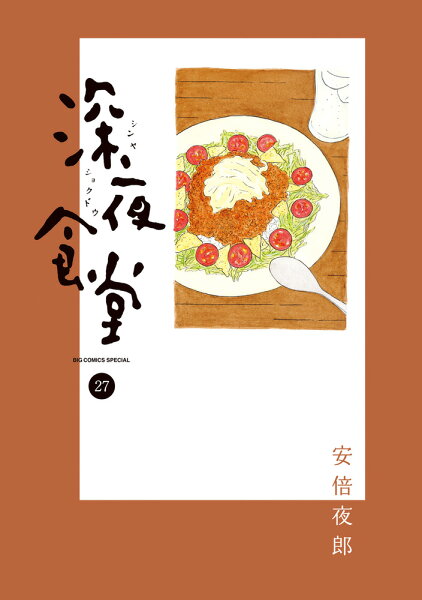
Midnight Diner
Midnight Diner follows the nameless master of a small late-night diner in Tokyo's Shinjuku district — open from midnight to seven in the morning, one set menu, anything you want if he has the ingredients. Each chapter tells the story of a customer and the dish that connects them to something they've lost or found.
Slice of Life
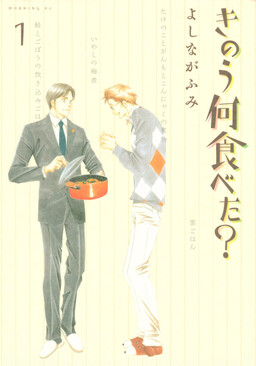
What Did You Eat Yesterday?
Yu's review of What Did You Eat Yesterday? — Shiro and Kenji are a gay couple in Tokyo; Shiro is a lawyer who cooks dinner every night; the manga follows their domestic life through the meals Shiro prepares, with complete recipes; a quiet, adult slice of life about partnership and food.
Written by
Yu
Manga Enthusiast from Japan
I grew up in Japan and manga literally saved me during a tough time in elementary school. My English isn't perfect, but my love for manga is real — and I want to share it with you.
Disclosure: This post contains affiliate links. As an Amazon Associate, I earn from qualifying purchases at no extra cost to you.