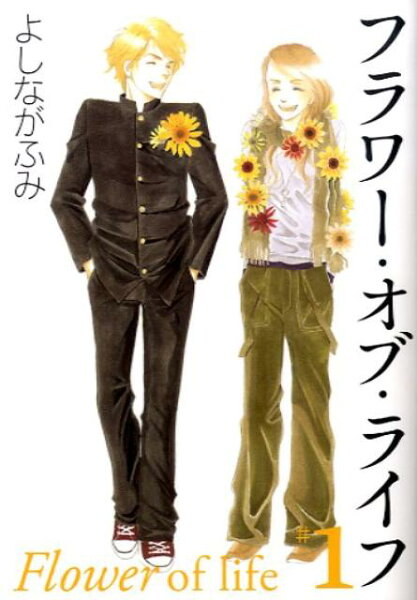
Flower of Life Review: A High School Comedy That Knows Ordinary Days Are the Whole Point
by Fumi Yoshinaga
Read the first volume. If it doesn't hook you, put it down. It'll hook you.
Buy Flower of Life on Amazon →*Affiliate link — I earn a small commission at no extra cost to you.
When I was a kid with no friends, the worst part of school was not the loneliness during class. It was lunch. The thirty minutes where everyone naturally clustered into groups and I had nowhere to put myself. I used to read manga under my desk just so my hands had something to do. So when I picked up Flower of Life and met Harutaro Hanazono — a boy walking into a brand new classroom a month late, knowing nobody — my chest tightened before he even said a word. I knew that walk. I knew that doorway.
And then Harutaro did the thing I never could. He just talked to people. Loudly. Honestly. He made friends in the first five pages, and I sat there a little jealous and a lot delighted. This is a Fumi Yoshinaga manga, so I expected sharp character writing. I did not expect it to be this funny, or this kind.
Quick Take
- Harutaro returns to school after surviving leukemia and lands in the most manga-obsessed, gossip-loving class imaginable
- Fumi Yoshinaga in pure comedy mode — every classmate and teacher is specific, ridiculous, and weirdly real
- Short (4 volumes), complete, rated T (Teen) — illness is the backdrop, not the focus
Story Overview
Harutaro Hanazono enrolls in high school a month into the school year, having recovered from leukemia after a bone marrow transplant. He is cheerful, blunt, and determined to live like a normal student — which mostly means he wants to draw manga and make friends, in roughly that order.
He immediately befriends Shota Mikuni, a quiet, chubby boy who loves manga as much as he does. The two of them start making their own doujinshi (amateur comics) together. They fall in with a small manga club: Kai Majima, a sullen, self-important otaku who can lecture for hours about his favorite series, and Takeda, a pretty girl who reads shojo manga. Hovering over the class is Shigeru Saito, a female teacher who looks and acts like a gay man — and who is quietly tangled in an affair with Koyanagi, a married teacher who was once her own teacher ten years earlier.
The series has almost no "plot" in the dramatic sense. It is a school year of conversations, crushes, embarrassments, and a manga contest. The arc that carries it is Harutaro and Shota's push to make something good enough to submit — culminating in volume four, when a gruff editor takes an interest in their work and the question becomes whether two teenagers can draw a contest-quality manga and pass their final exams at the same time.
Characters
Harutaro Hanazono is an unusual lead for a school comedy. Because he nearly died, he treats ordinary daily life as a gift — but Yoshinaga never lets this curdle into a "wise sick kid" cliché. His gratitude shows up as energy and bluntness. He says exactly what he thinks, befriends everyone, and throws himself into making manga with Shota.
Shota Mikuni is the quiet heart of the series. He's chubby, welcoming, and just as manga-mad as Harutaro, and the two click instantly over their shared dream of drawing comics. He's easy to underestimate, which makes his moments of quiet resolve land harder — he turns out to want a professional manga career, not just a hobby.
Kai Majima is the comedy engine: a full-of-himself otaku and athlete who runs on endlessly about whatever he loves and is convinced he knows best. He has real manga knowledge but a difficult, lecturing personality, and the friction between his ego and the group is where a lot of the humor lives.
Shigeru Saito, the homeroom teacher, gives the series its adult counterweight. A woman who presents and behaves like a gay man, she is carrying on an affair with Koyanagi, a married former teacher of hers. Across the series she finally ends it — telling herself she loved him because he was such a good father. Yoshinaga writes her with the same specificity she gives the teenagers.
What I Love About It
Yoshinaga is, for my money, one of the best character writers in manga, and Flower of Life shows a side of her that her dramatic work doesn't: she is genuinely, deliberately hilarious when she wants to be. The comedy doesn't come from giant sweat drops or chibi faces. It comes from people talking — overconfident, self-deceiving, lovable people who don't quite understand themselves.
The single moment that made me put the book down and just sit with it is the manga contest. Harutaro and Shota submit a doujinshi together and lose — beaten cleanly by better work. Harutaro, deflated, quietly assumes that's the end, that the two of them won't make something together again. And then Shota, the quiet one, simply starts talking about their next project. No speech, no dramatic music. He just refuses to treat one loss as the end, because in his head he's already going to be a professional.
I love this because it's the opposite of how shonen handles failure. There's no training montage, no roaring comeback. There's just a chubby, soft-spoken kid who has decided what he is, and a friend learning that the person beside him is more stubborn than he looks. As someone who spent years assuming every "no" was final, watching Shota shrug off rejection like that genuinely rearranged something in me.
Memorable Scene ⚠️ Spoiler Warning
The image that stays with me isn't a big plot beat — it's a small domestic one. Harutaro at home with his older sister Sakura, a shut-in. There's barely any dialogue. Yoshinaga draws her feet resting on his back, his soft laugh, her fond smile, and the whole relationship between a survivor and the sister who watched him almost die is communicated in a few quiet panels.
After spending the day with Harutaro being the loud, unkillable optimist of his class, this scene shows the cost underneath. He's not just a cheerful kid; he's someone whose family already lived through the worst version of his story. The page doesn't explain any of that. It just lets you feel it through body language. It's the kind of restraint that tells you Yoshinaga trusts her readers completely.
Pros & Cons
Pros
- Yoshinaga's character writing at its most playful and warm
- Harutaro's survivor's-eye view gives the comedy real emotional weight
- Complete in 4 volumes — no bloat, no dragging
- Every classmate and teacher is specific and memorable
Cons
- Physical English copies (DMP) can be hard to find new and may need the secondary market
- It's comedy-first; readers chasing the drama of Ōoku or Antique Bakery may want to recalibrate
- It assumes some familiarity with manga and otaku culture — and it's a slow, talky, plotless series, which is either the whole appeal or a dealbreaker. This one won't work for everyone.
Is Flower of Life Worth Reading?
Yes — especially if you like character-driven slice-of-life where the "story" is just people growing up around each other. It's short, complete, very funny, and quietly moving, with one of Yoshinaga's most likable leads. Go in for the comedy, stay for the warmth underneath. If you need a strong plot engine, look elsewhere in her catalog.
Similar Manga
| Title | Its Approach | How Flower of Life Differs |
|---|---|---|
| Antique Bakery | Yoshinaga's ensemble drama with heavier emotional stakes | Flower of Life is lighter and comedy-first, set in a school |
| What Did You Eat Yesterday? | Quiet adult Yoshinaga built around food and routine | Flower of Life trades food for teenage manga obsession and classroom chaos |
| Yotsuba&! | Finds wonder in ordinary days via a small child | Flower of Life finds it via teens who already know life is fragile |
Where to Buy
Read the first volume. If it doesn't hook you, put it down. It'll hook you.
This post contains affiliate links. If you purchase through these links, I may earn a small commission at no extra cost to you. As an Amazon Associate, I earn from qualifying purchases.
*Affiliate link — I earn a small commission at no extra cost to you.
More Manga You Might Like

Slice of Life / Comedy
Hitoribocchi no Marumaru Seikatsu
A review of Katsuwo's Hitoribocchi no Marumaru Seikatsu — 9 volumes in Monthly Comic Alive. Bocchi Hitori starts middle school with a mission to make friends with everyone in her class; she is so socially anxious that she faints, vomits, and freezes up at the slightest interpersonal challenge. Yen Press's English edition is complete.

Slice of Life
Sansha Sanyou
Yu's review of Sansha Sanyou — Youko Nishikawa (formerly wealthy), Futaba Odagiri (enthusiastic eater), and Teru Hayama (smiling sadist) are three incompatible high school girls who end up eating lunch together and become friends; Cherry Arai's gentle comedy about the friendships that form despite personality differences.

Slice of Life / Comedy
Keep Your Hands Off Eizouken!
A review of Keep Your Hands Off Eizouken! by Sumito Oowara — three high school girls form an anime-making club, and the manga keeps stepping inside their imaginations to show you what making something actually feels like.

Slice of Life / Comedy
Princess Jellyfish
Yu's review of Princess Jellyfish — Tsukimi Kurashita is a jellyfish-obsessed otaku girl living in an all-female apartment building full of passionate nerds; when she meets Kuranosuke, a cross-dressing son of a politician who barges into her world, her quiet otaku life starts to change.

Slice of Life / Comedy
Nichijou: My Ordinary Life
Yu's review of Nichijou — a high school slice-of-life where ordinary situations escalate to catastrophic absurdity, a robot girl tries to hide what she is, and the Professor is an eight-year-old genius who made her.
Slice of Life
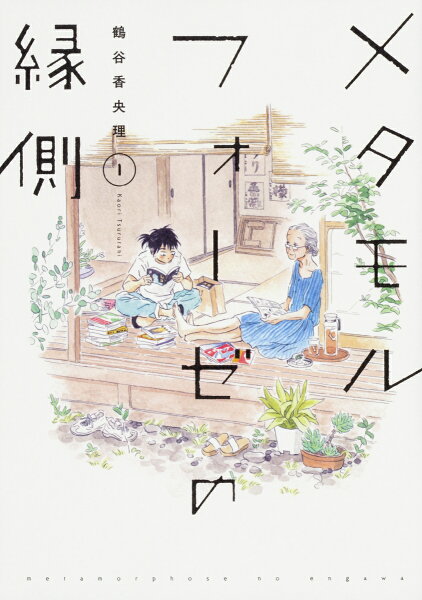
Metamorphose no Engawa
A 75-year-old widow discovers Boys' Love manga for the first time. A 17-year-old bookstore clerk who loves BL has never had a friend who shares her passion. This is the story of their friendship.
Written by
Yu
Manga Enthusiast from Japan
I grew up in Japan and manga literally saved me during a tough time in elementary school. My English isn't perfect, but my love for manga is real — and I want to share it with you.
Disclosure: This post contains affiliate links. As an Amazon Associate, I earn from qualifying purchases at no extra cost to you.