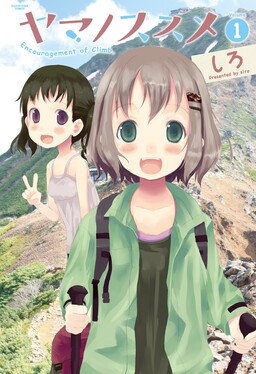
Encouragement of Climb Review: The Mountain Manga Where the Hero Doesn't Reach the Summit
by Shiro
Read the first volume. If it doesn't hook you, put it down. It'll hook you.
Buy Encouragement of Climb on Amazon →*Affiliate link — I earn a small commission at no extra cost to you.
When I was a kid I was the opposite of an outdoor person. Recess, field trips, sports day — those were the days I dreaded most, because they were the days nobody could pretend not to see that I had no one to stand next to. So I stayed inside. I read manga inside. Going outside, for me, was never about a mountain. It was about being seen having no friends.
That is exactly why Aoi Yukimura got under my skin so fast. Her fear of heights goes back to a fall from playground equipment when she was small — she broke her leg, and the open, look-down feeling of high places stayed scary ever after. But the manga never milks that for tears; mostly she's just an indoor girl who would rather stay in her room. And then a loud, sunny childhood friend shows up and refuses to let her hide. I have wanted that friend my whole life. Encouragement of Climb is the gentlest manga I know about being dragged, kindly, back into the world.
Quick Take
- A four-panel ("yonkoma") slice-of-life about real hiking — the mountains are real Japanese peaks, the gear is drawn accurately, and the trails are routes you could actually walk.
- Its quiet genius is that the main character regularly does not succeed; the most important climb in the early story is one she has to give up on partway.
- Age rating: All Ages. There is no objectionable content — just thin mountain air and tired legs.
Story Overview
Aoi Yukimura is a quiet girl in Hannō who prefers staying indoors and is afraid of heights. Her childhood friend Hinata Kuraue — outgoing, athletic, and absolutely relentless — reappears in her life and reminds her of something they once shared: a sunrise they watched together when they were small. Hinata wants to climb a mountain so the two of them can see a sunrise like that again, and she will not take "I'd rather stay home" for an answer.
So Aoi starts small. Their first real climb is the modest Mount Tenran near Hannō — barely a mountain by mountaineering standards, but a genuine wall for a girl who panics at heights. From there the story widens outward: they meet Kaede Saitō, an experienced older climber who quietly teaches them how to do this properly, and Kokona Aoba, a cheerful younger girl they keep running into on the trails. The group's ambitions grow with their skill, building toward the climb that anchors the early arcs — an attempt to scale Mount Fuji and watch the sunrise from its summit.
That Fuji climb is the pivot of the whole series, and Shiro does something brave with it. The series is ongoing in Japan, currently past two dozen volumes, and it keeps expanding to new peaks across Japan — but everything in the early story is measured against what happens on Fuji.
Characters
Aoi Yukimura — The indoor girl. Her arc is not "scared kid becomes fearless." It is slower and more honest than that: she keeps choosing to go outside even when going outside is hard, and she keeps running into the limits of her own body and nerve. She is allowed to fail, to sulk about failing, and to come back anyway. That is the most realistic confidence-growth I have read in a slice-of-life manga.
Hinata Kuraue — Aoi's childhood friend and the engine of the plot. She is the one who remembers the old sunrise and decides it is worth chasing. What I love is that she is enthusiastic without being a bully about it — she pushes Aoi, but the friendship is the point, not the summit.
Kaede Saitō — The senior climber who befriends them. She is the adult-in-the-room (only a little older, but vastly more experienced) who actually knows how mountains kill people, and her care for the younger girls is the quiet moral center of the cast.
Kokona Aoba — A younger girl they meet on the trails, small and bright, who folds into the group. She rounds out the circle and gives Aoi someone she can mentor in turn rather than always being the one needing help.
What I Love About It
Most stories about overcoming fear are built like a slingshot: tension, struggle, and then the triumphant release at the top of the mountain. Encouragement of Climb knows that real mountains do not work that way, and it refuses to lie about it. The thing I love most is that the story's biggest early climb — Mount Fuji — is one Aoi does not finish.
She prepares for it. She trains, she travels, she starts up Japan's most famous peak with her friends and the sunrise as the goal. And somewhere before the Eighth Station, pushing herself harder than she should, she develops a headache and altitude sickness, and her body simply stops. She cannot go on. Personal effort and pure willpower do not carry her over the top, because that is not how thin air works, and the manga is too honest to pretend otherwise.
What makes this great rather than just sad is the texture of the failure. Kaede stays behind with Aoi at the Eighth Station to look after her, while Hinata and Kokona continue up to watch the sunrise from the summit. And Aoi's worst feeling afterward is not even her own disappointment — it is the guilt that she kept Kaede from reaching the top, that her friend gave up the summit to sit with her in the cold. That is such a specific, recognizable kind of shame. I have felt exactly that: the certainty that I am the reason a good thing did not happen for someone kind enough to stay near me. The manga sits in that feeling instead of rushing past it, and it is the whole reason I trust this gentle little book.
Memorable Scene ⚠️ Spoiler Warning
The Mount Fuji climb is the scene I cannot shake. The build-up is all optimism — friends, gear, a famous mountain, a sunrise to chase. Then the air thins, Aoi's head starts pounding, and the cheerful momentum of the climb just curdles into nausea and exhaustion before she even reaches the Eighth Station. She has come so far as a climber, and it is still not enough, and the manga lets that land without softening it.
The image that stays with me is the split: Kaede choosing to stay back in the cold with a sick, defeated Aoi while Hinata and Kokona's silhouettes keep climbing toward the sunrise that was supposed to be Aoi's whole reason for coming. Aoi gets neither the summit nor the sunrise — she gets a friend who decided she mattered more than the view. The rest of that arc is Aoi quietly carrying the dejection of failing Fuji and slowly, stubbornly, rediscovering why she loved the mountains in the first place. No montage, no instant redemption climb. Just a girl picking herself back up at her own pace. It is the most grown-up thing a cute four-panel manga has ever done to me.
Pros & Cons
Pros
- The hiking content is genuinely accurate — real peaks, real gear, real routes.
- Aoi is allowed to fail, which makes her growth feel earned instead of scripted.
- The friendship between Aoi, Hinata, Kaede, and Kokona is warm without being saccharine.
- It works as a soft introduction to Japanese mountain culture, Mount Fuji included.
Cons
- The four-panel format and gentle pace mean the plot drifts; do not come for tension.
- The stakes are almost entirely internal — there is no villain, no race, just Aoi versus her own nerves.
- A quiet hiking manga where the heroine sometimes turns back won't work for everyone — if you need momentum and victory, this slow, kind story will feel like it is going nowhere.
Is Encouragement of Climb Worth Reading?
Yes, if you want a slice-of-life that is honest about effort. It is accurate about real mountains, generous about friendship, and brave enough to let its heroine fail on Fuji instead of handing her an easy summit. If you need plot momentum and clear victories, its gentle four-panel drift will frustrate you — but if you have ever needed a friend to drag you outside, this is one of the kindest manga I can point you to.
Where to Buy
No English release yet. That just means you find it before everyone else does.
There's no licensed English edition of the Yama no Susume manga — the Japanese print and digital release from Earth Star Entertainment is the only legitimate way to read it right now.
Find the Japanese edition on Amazon.co.jp →
This post contains affiliate links. If you purchase through these links, I may earn a small commission at no extra cost to you. As an Amazon Associate, I earn from qualifying purchases.
*Affiliate link — I earn a small commission at no extra cost to you.
More Manga You Might Like

Slice of Life
An Old Man and His Cat
Yu's review of An Old Man and His Cat — a widower named Fuku-san adopts Mofu-chan, a large flat-faced cat that nobody wanted; the series follows their daily life together; Nekomaki's manga about loneliness, companionship, and what a cat can give to someone who needs them.
Slice of Life / Comedy
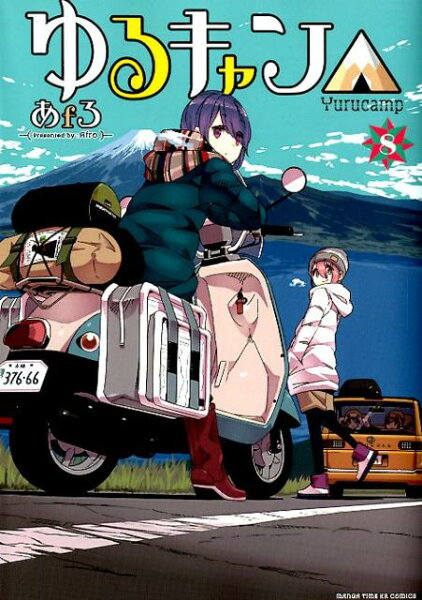
Laid-Back Camp
Yu's review of Laid-Back Camp — a quiet girl who camps alone near Mount Fuji meets a sleepy newcomer over a cup of curry noodles, and somehow that becomes the warmest manga about cold weather I have ever read.

Slice of Life / Comedy
Penguin & House
Yu's review of Penguin & House — Pen-chan is a penguin who arrives at a young salaryman's apartment and decides to stay; the series follows their daily cohabitation, the small adjustments both make, and the warmth that accumulates in an otherwise solitary life.

Slice of Life / Comedy
Is the Order a Rabbit?
Yu's review of Is the Order a Rabbit? (Gochuumon wa Usagi Desu Ka?) by Koi — Cocoa Hoto moves to a European-styled town and ends up boarding at the Rabbit House café, where she meets quiet barista-in-training Chino and a small circle of friends who slowly become family. A CGDCT comfort manga where the house Angora rabbit, Tippy, carries the spirit of Chino's grandfather.
Slice of Life / Comedy
Comic Girls
Yu's review of Comic Girls (こみっくがーるず) by Kaori Hanzawa — Kaoruko 'Kaos' Moeta is a shy four-panel manga artist who ranks dead last in a reader survey and gets sent to a dormitory full of other young female manga creators. A gentle Manga Time Kirara comedy about making things while terrified you aren't good enough.

Slice of Life
Asteroid in Love
Yu's review of Asteroid in Love (Koisuru Asteroid) by Quro — Mira promised to find an asteroid and name it after her friend Ao, because there's already a star called Mira but nothing in the sky carries Ao's name. A Manga Time Kirara Carat earth-sciences-club story about astronomy, geology, and a childhood promise that grows up with the girls keeping it.
Written by
Yu
Manga Enthusiast from Japan
I grew up in Japan and manga literally saved me during a tough time in elementary school. My English isn't perfect, but my love for manga is real — and I want to share it with you.
Disclosure: This post contains affiliate links. As an Amazon Associate, I earn from qualifying purchases at no extra cost to you.