
Keep Your Hands Off Eizouken! Review: The Manga That Draws You Inside a Head Mid-Daydream
by Sumito Oowara
Read the first volume. If it doesn't hook you, put it down. It'll hook you.
Buy Keep Your Hands Off Eizouken! on Amazon →*Affiliate link — I earn a small commission at no extra cost to you.
When I was a kid with no friends, I used to build whole worlds in my head on the walk home — what the buildings were made of, how the machines worked, where the wind came from. I never showed anyone. I didn't think anyone wanted to see. The first time I read Keep Your Hands Off Eizouken!, I got to the part where Asakusa looks up at a water tower and the page just opens up into the world she's imagining, and I had to put the book down for a second. Somebody had finally drawn the thing I did alone in my head, except these girls actually make it.
Quick Take
- One of the rare manga where the form does the talking — the imagination sequences look completely different from the "real" world, and that gap is the whole point
- Three girls with three jobs (dreamer, animator, money) who genuinely need each other; none of them could make anything alone
- Age rating: T (Teen) — extremely safe, the most dangerous thing here is a budget meeting
Story Overview
Midori Asakusa is a first-year at Shibahama High who fills notebooks with worlds — settings, machines, the logic of how imaginary places hold together — but she's too anxious to ever finish anything or show it to anyone. Her friend Sayaka Kanamori couldn't care less about art; she cares about money and sees an opportunity. The third piece arrives when they cross paths with Tsubame Mizusaki, a famous teen model whose actor parents have forbidden her from pursuing what she actually loves: character animation, figures in motion.
The three of them form the Eizouken — on paper a humble "film research club," in practice an anime production unit. From there the series runs on a loop that never gets old: the club picks something impossibly ambitious to make, Asakusa designs the world, Mizusaki animates the movement, Kanamori scrounges the budget and beats back the student council, and they fight to finish before a deadline at a school event or a screening.
It isn't really a story about whether they'll succeed — they usually do, more or less. It's about what the work looks like from the inside: the cut corners, the things that had to be simplified, the distance between the thing you saw in your head and the thing you could actually produce with the time and money you had. The Japanese run is ongoing (ten volumes as of early 2026); Dark Horse has put out eight in English so far.
Characters
Midori Asakusa — The world-builder. She is the engine of every project's imagination but is almost paralyzed when it comes to producing or presenting. Her arc is learning to let the work leave her head and survive contact with other people, deadlines, and compromise. The manga literally drops you inside her daydreams, so you understand her not by description but by living in her mind for a few pages.
Tsubame Mizusaki — The animator. A successful model who's quietly desperate to draw movement instead of pose for it. Her parents forbade animation, so her thread is about doing the forbidden thing anyway — sneaking the work, defending it, and pouring everything into the motion of a single character. She's the one who can actually execute what Asakusa imagines.
Sayaka Kanamori — The producer. She openly does not care about art; she cares about profit and viability. But she's not a villain or a cynic — she's the reason anything ships. She negotiates, schedules, fights bureaucracy, and protects the other two so they can make things. She's one of the best "I'm only in it for the money" characters precisely because the manga shows her enabling the art she claims not to value.
What I Love About It
The imagination sequences. Every single time. When Asakusa starts building a world in her head, Oowara doesn't describe it — he switches visual registers entirely. The clean school-manga linework gives way to something rougher, denser, kinetic, full of cross-sections and machines and the kind of half-finished detail that exists when you're constructing a place in your mind and haven't decided yet what's load-bearing. The manga uses its own visual language to portray the act of inventing visual language. You're not told Asakusa has a vivid imagination. You're put inside it.
What makes this more than a clever trick is the gap it sets up. The worlds in her head are vast and weird and alive — and then the club has to actually produce something with one camera, no money, and a deadline. The manga never pretends that compression is painless. It shows what gets cut, what gets simplified, what has to be faked, and then it shows the girls deciding it's worth shipping anyway. That honest distance between the daydream and the deliverable is the truest thing I've read about making anything, and it's why I keep coming back to a manga where, on paper, almost nothing dramatic happens.
Memorable Scene ⚠️ Spoiler Warning
Volume 1, the day the three of them really click. After Asakusa and Kanamori help Mizusaki slip away from the people minding her, the conversation about making anime tips over into actually doing it — and the page falls away into a shared daydream. The three of them go tearing through the sky on a flying machine, Asakusa's world swallowing them whole, until they pile the thing into a building, scramble out, and run like hell as it goes up behind them.
It's played for joy, not stakes, and that's exactly why it lands. This is the moment their three separate talents fuse for the first time — the dreamer's world, the animator's motion, the producer dragged along for the ride — and the manga shows it by literally letting them live inside the thing they're going to spend the whole series trying to build for real. Early as it is, I still think it's the best sequence in the book.
Pros & Cons
Pros
- The imagination sequences are a genuine formal achievement — manga doing something only manga can do
- One of the most honest portrayals of the creative process in any medium, compromises included
- Kanamori is a rare, fully-realized "money person" who enables art instead of opposing it
- Warm, funny, and accessible — no prior anime-industry knowledge required
Cons
- The episodic, project-by-project structure means the long-term stakes stay low
- Some readers find the dense imagination pages genuinely hard to parse panel-to-panel
- It's a manga about motion told in still images — that built-in tension won't work for everyone, and a few readers prefer the anime for exactly that reason
Is Keep Your Hands Off Eizouken! Worth Reading?
Yes. If you've ever built something in your head and felt the ache of trying to make it real, this manga is for you — it captures both the daydream and the grind of shipping it more honestly than almost anything I've read. If you only want fast plot and high stakes, the low-key episodic rhythm may not grab you. For everyone else, the imagination sequences alone are worth the price of Volume 1.
Similar Manga
| Title | Its Approach | How Eizouken Differs |
|---|---|---|
| Bakuman | Two boys grinding to become professional manga creators | Bakuman is conventional industry drama; Eizouken is formally inventive, putting you inside the imagination itself |
| Blue Period | The psychology of discovering art and the gap between vision and execution | Blue Period is intense and introspective; Eizouken is episodic, comedic, and collaborative |
| Yotsuba&! | Slice-of-life wonder at the ordinary world | Yotsuba finds magic in reality; Eizouken builds whole invented worlds on the page |
Where to Buy
Read the first volume. If it doesn't hook you, put it down. It'll hook you.
This post contains affiliate links. If you purchase through these links, I may earn a small commission at no extra cost to you. As an Amazon Associate, I earn from qualifying purchases.
*Affiliate link — I earn a small commission at no extra cost to you.
More Manga You Might Like

Slice of Life / Comedy
Heaven's Design Team
Heaven's Design Team imagines that God outsourced the creation of Earth's animals to a design firm of demigods. Each chapter is a new brief — 'I want a creature that does X' — and the team argues, prototypes, and engineers its way to an animal that actually exists, with real biology notes at the end.

Slice of Life / Comedy
Nichijou: My Ordinary Life
Yu's review of Nichijou — a high school slice-of-life where ordinary situations escalate to catastrophic absurdity, a robot girl tries to hide what she is, and the Professor is an eight-year-old genius who made her.

Slice of Life
The Ryuo's Work Is Never Done!
A review of The Ryuo's Work Is Never Done! — the manga about a teenage shogi champion who ends up coaching a precocious elementary school girl, becoming entangled with a cast of passionate junior players.
Slice of Life / Comedy
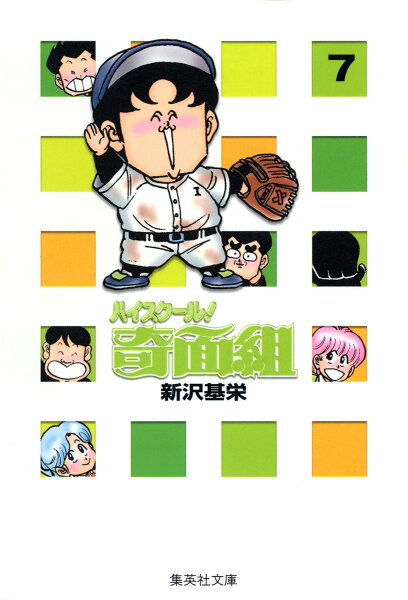
High School! Kimengumi
High School! Kimengumi follows five boys who turn their strange faces into a way of life, building one of the loudest, weirdest gag manga of 1980s Shonen Jump.
Slice of Life / Comedy
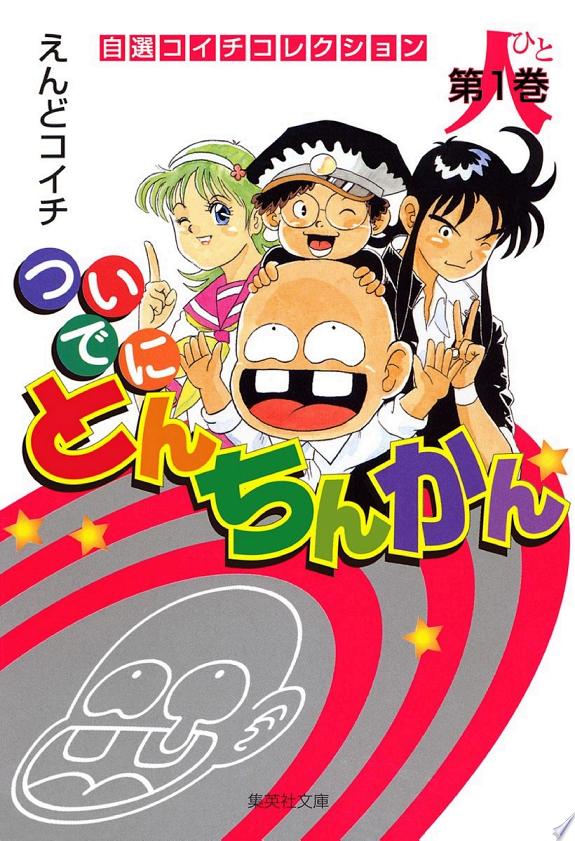
Tondemo-kun
Tondemo-kun follows a trio of delinquent students whose plans to cause trouble consistently backfire in ways that are so spectacularly wrong they accidentally create good outcomes — a comedy built entirely on the gap between intention and result.
Comedy / Slice of Life
Macaroni Houren-sou
Macaroni Houren-sou follows three high school students living together in a boarding house — Toshio Shingami, the energetic straight man; Kinoshita, the eccentric wildcard; and Trapp, the cool foreigner — in a surreal comedy that uses the school-life setting as a launching pad for increasingly unhinged humor.
Written by
Yu
Manga Enthusiast from Japan
I grew up in Japan and manga literally saved me during a tough time in elementary school. My English isn't perfect, but my love for manga is real — and I want to share it with you.
Disclosure: This post contains affiliate links. As an Amazon Associate, I earn from qualifying purchases at no extra cost to you.