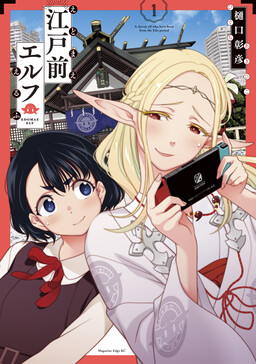
Otaku Elf Review: A 600-Year-Old Goddess Who Won't Leave Her Shrine Because a Kid Made Fun of Her Ears
by Akihiko Higuchi
Read the first volume. If it doesn't hook you, put it down. It'll hook you.
Buy Otaku Elf (Edomae Elf) on Amazon →*Affiliate link — I earn a small commission at no extra cost to you.
I have spent a lot of my life not wanting to go outside. When I was a bullied kid, my room was the only place I felt safe, and manga was the only window I let stay open. So when I first read about Elda — a goddess who has been worshipped for centuries and still refuses to step past her own front gate — I did not laugh at her. I understood her completely. That is the strange magic of this series. It looks like a silly comedy about an elf who plays too many video games. But under the jokes it is about being afraid of the world for a reason you can barely explain to anyone.
That is why Otaku Elf (江戸前エルフ, Edomae Elf) stuck with me far more than I expected.
Quick Take
- A 600-year-old enshrined elf goddess is, in practice, a hopeless gaming shut-in — and the gap between her divine status and her actual life is the whole joke
- The cozy Tokyo-shrine setting and the warm dynamic between Elda and her teenage caretaker Koito carry it; this is comfort reading, not plot
- Rated T (Teen) — clean, gentle comedy with some drinking gags, fine for most readers
Who Is This Manga For?
- Readers who love supernatural-being-meets-modern-Japan comedies
- Anyone who enjoys shrine and miko settings handled with affection
- People who want low-stakes, episodic comfort manga
- Fans who like a sad, quiet idea sitting underneath the laughs
Story Overview
Roughly 400 years ago, during the early Edo period, the warlord Tokugawa Ieyasu summoned an elf named Elda from another world. She was enshrined at the Takamimi Shrine in Tokyo's old downtown — the "Edomae" of the title points to that classic, traditional Tokyo flavor — and worshipped as the deity Takamimi Hime no Mikoto. So far, so grand.
The joke is that the present-day Elda is a complete shut-in. She passes her endless days playing video games, reading manga, eating snacks, and draining energy drinks, using the shrine's spirits to make her miko run errands and buy her figures online. She is a goddess in name and an otaku in fact.
Into this comes sixteen-year-old Koito Koganei, who has recently inherited her family's duty as the shrine's miko and Elda's caretaker. Most of the series is Koito gently — and not always successfully — trying to coax Elda out of her self-built shell and into the wider world. There is no grand narrative arc. It is an episodic, "pleasant, meandering" collection of short stories rooted in the rhythm of the neighborhood and the seasons, with light historical flavor about Edo-era Tokyo woven through.
Characters
Elda — The 600-plus-year-old elf at the heart of it. Summoned by Ieyasu, enshrined as a deity, and now a hardline shut-in who would rather game than do anything resembling divine duty. Her comedy comes from the gap between her power and her helplessness at ordinary life; her sadness comes from her immortality, which is gradually revealed as the real reason she withdrew from people.
Koito Koganei — The sixteen-year-old miko who has just taken on the family role of tending Elda. She is the patient, exasperated straight man, genuinely fond of Elda and quietly determined to pull her back toward the world, with mixed results.
Koyuzu Koganei — Koito's younger sister, a well-rounded and notably talented cook who rounds out the household side of the cast.
Yord and Haira — Other long-lived elves who appear in Elda's world. Yord (Yolde) is an energetic, childlike dark elf summoned around the same time as Elda by a different lord; Haira is the oldest of them, well past 700, and saddled with a gambling habit. They are some of the only beings Elda will not outlive, which matters more than the comedy first lets on.
What I Love About It
The thing I love is the reason Elda became a shut-in, because it is told twice and the second version broke my heart. On the surface, the series tells you she withdrew about 60 years ago after a local troublemaker — a boy named Kisaburo — teased her about her long elf ears. It is played as a comic origin: the proud goddess, so embarrassed by one kid's joke that she never left the shrine again. As someone who was once made small by other kids' words, I laughed and winced at the same time. A throwaway cruelty becoming a 60-year cage is funny only because it is also true to how shame works.
But the manga is smarter than that surface. The deeper reason is her immortality. Everyone Elda meets eventually dies — everyone except a handful of fellow elves like Yord and Haira. The ear joke is almost a cover story she tells, a small graspable excuse for a grief too big to name. What I find quietly devastating is the flip side the series offers: people take comfort in the fact that Elda will remember them, that long after they are gone she will still be there carrying them forward across generations. A comedy about a lazy gamer goddess turning, for a page, into a meditation on being the one who is left behind — and the one who gets to remember — is exactly the kind of thing I started this site to share.
Memorable Scene ⚠️ Spoiler Warning
The moment that stays with me is when the shut-in backstory gets reframed from "embarrassed by a kid" to the truth of her immortality. For most of the early chapters you accept the Kisaburo ear-teasing as the cause, and it is genuinely funny — centuries of dignity undone by one rude child. Then the series quietly lets you understand that Elda has watched every human she ever cared about grow old and die, again and again, for hundreds of years, and that the shrine is less a sulking spot than a shelter from that endless loss. The reveal does not arrive as melodrama. It just shifts the light, and suddenly the gamer goddess slumped over her controller looks like someone hiding from something enormous. After that, every cozy daily scene reads a little differently to me.
Pros & Cons
Pros
- The divine-goddess-versus-actual-shut-in premise is immediately funny and original
- The cozy Tokyo-shrine atmosphere and Edo-period flavor are genuinely charming
- The Koito–Elda relationship is warm without being syrupy
- A real, quietly sad idea about immortality sits under the jokes
Cons
- It is episodic with no major plot — momentum is not the point
- The comedy can feel repetitive over long reading sessions
- The deeper themes are touched lightly, not deeply explored
- Pure cozy slice-of-life comedy won't work for everyone — if you need a driving story, this is not it
Is Otaku Elf Worth Reading?
Yes, if you want gentle, funny comfort reading with a surprisingly tender idea underneath. Otaku Elf is an episodic, low-stakes comedy that uses a goddess-shut-in gag to sneak in something quietly moving about loneliness and immortality. If you need a strong central plot, skip it; if you want a warm world to sink into a few volumes at a time, it is a lovely one.
Similar Manga
| Title | Its Approach | How Otaku Elf Differs |
|---|---|---|
| Miss Kobayashi's Dragon Maid | A supernatural being adjusting to modern domestic Japan with warmth and comedy | Otaku Elf swaps the household for a shrine and leans into otaku shut-in culture |
| The Demon Girl Next Door | A would-be fearsome being who is actually harmless and broke, played for gentle laughs | Otaku Elf centers a centuries-old immortal, so its sadness runs deeper |
| Gabriel Dropout | A divine being who behaves like a lazy gamer instead of fulfilling her holy role | Otaku Elf keeps the same gap but ties it to real grief and an Edo-era backstory |
Official English Translation Status
Seven Seas Entertainment publishes Otaku Elf in English in print and digital. In Japan the series ran in Kodansha's Shōnen Magazine Edge before moving to the Comic Days website, and it is ongoing, with twelve volumes out in Japan as of late 2025.
Where to Buy
Read the first volume. If it doesn't hook you, put it down. It'll hook you.
This post contains affiliate links. If you purchase through these links, I may earn a small commission at no extra cost to you. As an Amazon Associate, I earn from qualifying purchases.
*Affiliate link — I earn a small commission at no extra cost to you.
More Manga You Might Like
Slice of Life
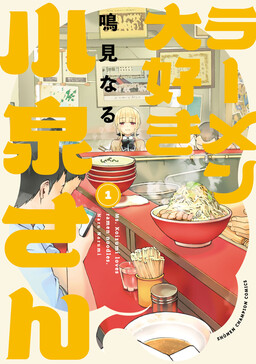
Ms. Koizumi Loves Ramen Noodles
Yu's review of Ms. Koizumi Loves Ramen Noodles — Koizumi is beautiful, cold, and unapproachable; she also has a complete and total dedication to ramen; she knows every shop, every regional style, every topping combination; Naru Narumi's food manga about a woman whose single passion is executed with absolute seriousness.
Slice of Life
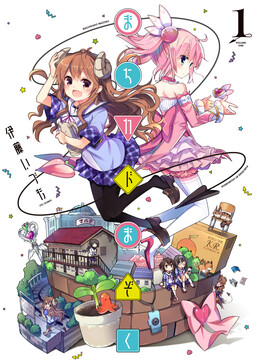
The Demon Girl Next Door (Machikado Mazoku)
Yu's review of The Demon Girl Next Door — Yuko Yoshida wakes up one day with horns and a tail, awakened as a descendant of a demon clan; her clan's curse can only be lifted by defeating a magical girl; she confronts her school's magical girl, Momo Chiyoda; the magical girl turns out to be friendly, competent, and far stronger; Izumo Ito's comedy manga about the most gentle rivalry.
Comedy / Slice of Life
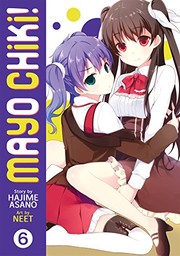
D-Frag!
Yu's review of D-Frag! — Kenji Kazama is a delinquent who wants to be feared, and instead gets dragged into the Game Creation Club (provisional) by four girls who are not afraid of him at all. A loud, fast school comedy where the joke is a tough guy who can't scare anyone.
Slice of Life / Fantasy
Konohana Kitan
Yu's review of Konohana Kitan — Yuzu is a young fox girl who begins working at Konohanatei, a hot spring inn that welcomes both humans and gods. Staffed entirely by fox-girl attendants, the inn becomes the setting for gentle, self-contained stories about hospitality, connection, and letting go.
Slice of Life / Fantasy
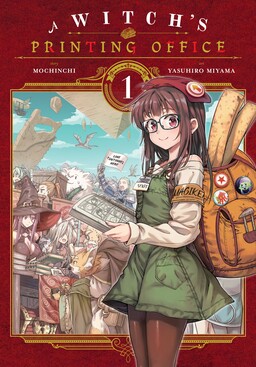
A Witch's Printing Office
Yu's review of A Witch's Printing Office — Mika is a modern Japanese woman who worked at Comiket (the giant doujinshi convention) and wakes up in a fantasy world where magical festivals share printed pamphlets; using her knowledge of convention organization and printing logistics, she builds a business that transforms how the fantasy world shares information.
Slice of Life / Comedy
Slow Start
Yu's review of Slow Start — Hana Ichinose started high school a year late due to illness, making her a year older than her classmates; the series follows her trying to fit in with her new friends while carrying the secret that she is different, in Tokumi Yuiko's characteristic warm and gentle 4-koma style.
Written by
Yu
Manga Enthusiast from Japan
I grew up in Japan and manga literally saved me during a tough time in elementary school. My English isn't perfect, but my love for manga is real — and I want to share it with you.
Disclosure: This post contains affiliate links. As an Amazon Associate, I earn from qualifying purchases at no extra cost to you.