
Dragon Zakura Review — A Former Biker Lawyer Tells Five Delinquents They Can Pass Tokyo University's Entrance Exam
by Norifusa Mita
Read the first volume. If it doesn't hook you, put it down. It'll hook you.
Buy Dragon Zakura on Amazon →*Affiliate link — I earn a small commission at no extra cost to you.
I took Japan's university entrance exam in my final year of high school. Specifically the Center Test, then the secondary exam for the second-tier private university I eventually attended. I am not, by Japanese standards, the kind of student Dragon Zakura was written about. I was, however, the kind of student Dragon Zakura was written for — someone who looked at the entrance exam system and could not figure out what it was actually measuring.
The manga answered that question for me. The answer was harder than I expected.
Quick Take
- Norifusa Mita's 21-volume manga (2003–2007) about students preparing for Tokyo University's entrance exam under the guidance of an unconventional teacher
- One of the most consequential education-related manga in modern Japanese publishing
- Age rating: T (Teen) — academic pressure and social commentary; no graphic content
What Is Dragon Zakura About? (Plot Summary)
Kenji Sakuragi (桜木 建二) is a Tokyo lawyer. He has a colorful past as a former biker-gang member. He has been brought in as a bankruptcy trustee at Ryuzan High School — a struggling private high school in Tokyo whose academic results have collapsed and whose enrollment is dropping.
Sakuragi's proposal: rather than dissolve the school, brand it around an audacious goal. He will personally select students from Ryuzan's worst performers and prepare them to pass the entrance exam for Tokyo University (Todai, 東京大学) — the most prestigious university in Japan, traditionally accessible mainly to elite prep school graduates.
If even one Ryuzan student passes Todai, the school's reputation transforms overnight. If five pass, Ryuzan becomes legitimate. If none pass, the project fails and the school closes.
Five students volunteer. The series follows them through approximately two years of preparation, structured around Sakuragi's specific teaching philosophy:
Sakuragi's thesis — The Todai entrance exam is not a test of intelligence. It is a test of preparation under specific rules that can be learned. Anyone who learns the rules well enough can win the game. This is presented as both inspiring (anyone can play) and indicting (then what the system is actually sorting for is access, not ability).
The series provides real study advice — Mita consulted with education specialists, and the techniques the manga teaches (time management, memorization strategies, exam-taking psychology) were widely adopted by actual Japanese students during the manga's run.
The manga is divided structurally:
Volumes 1–8: Establishing the five students, their backgrounds, and Sakuragi's methods. Specific subjects (math, English, Japanese, science, social studies) get dedicated arcs explaining the exam's structure.
Volumes 9–18: The deepening preparation. Mock exams, the students' personal lives, the relationships among the five, the pressure increasing as the exam approaches.
Volumes 19–21: The exam itself and the results. The series ends with a clear conclusion about which students passed and what each student's outcome meant.
The Sequel: Dragon Zakura 2
Dragon Zakura 2 ran 2018–2021 in Weekly Morning — 17 volumes, 139 chapters. The sequel is set ten years after the original. Ryuzan's Todai pass rate has dropped to zero again. Naomi Mizuno (one of the original five, who passed Todai's Faculty of Science I) returns as a teacher to lead a new "Todai Specialist Course."
The sequel teaches new students. It also engages with how Japanese education has shifted in the ten years between manga runs — the rise of digital learning tools, the changing demographic of who attempts Todai, the evolution of the exam itself.
The Drama Adaptations (2005 and 2021)
The manga has been adapted twice into TV dramas, both major commercial hits.
Dragon Zakura (2005) — TBS, 11 episodes. Hiroshi Abe as Sakuragi. Masami Nagasawa as Mizuno. Average viewership 16.4%; the highest-rated episode peaked at 19.7%. The drama is widely considered one of Abe's defining roles.
Dragon Zakura (2021) — TBS, 10 episodes. Hiroshi Abe returns as Sakuragi (now 16 years older, fitting the sequel's timeline). Masami Nagasawa returns as Mizuno. Average viewership 16.1% in a much more fragmented TV market — considered a remarkable success.
Both dramas are available with English subtitles via streaming services in various regions.
Who Is This Manga For?
- Readers interested in Japanese education and class mobility discourse
- Underdog story fans willing to accept that the system the underdogs are entering is itself problematic
- Anyone preparing for major standardized tests — the study methods are genuinely useful
- Seinen readers who like long-form drama with social-critique substance
- Hiroshi Abe drama fans who want the source material
Characters
Kenji Sakuragi — The protagonist. Aggressive, sometimes harsh, always honest. His teaching philosophy treats students as intelligent adults who can handle the truth about the system. He does not tell students that hard work guarantees success; he tells them that hard work plus the right methods plus realistic expectations gives them a fighting chance. Hiroshi Abe's drama performance has shaped how many readers visualize the character.
Naomi Mizuno — Female student. Probably the most extensively developed of the original five. Quiet, observant, becomes increasingly committed across the volumes. Eventually passes Todai's Faculty of Science I (理科I類, the most competitive faculty). Returns in the sequel as a teacher.
Yusuke Yajima — Male student. The "delinquent who could have been smart" archetype. Has to overcome both academic gaps and his own family situation. Becomes a ronin (a student who fails and re-attempts the next year) but eventually passes Todai.
The other students — Three additional members of the original five, each with their own arcs and outcomes. The series treats each as an individual rather than as a type.
Cultural Context
Tokyo University (Todai) is Japan's top national university. Entrance is determined by a multi-stage examination: the Common Test (formerly the Center Test) followed by Todai's own second-stage exam. The acceptance rate varies by faculty but is roughly 20–30% for those who reach the second stage; far fewer students reach the second stage at all. Todai graduates dominate Japanese government, academia, and major corporations — the social value of a Todai degree is enormous.
Dragon Zakura engages with Todai's social function explicitly. The manga is not pro-Todai or anti-Todai; it is honest about Todai. Sakuragi teaches students to pass the exam while making them clear-eyed about what the system the exam gatekeeps is actually doing.
The manga had measurable real-world influence. Japanese cram schools incorporated Sakuragi-style methodologies. Education policy discussions referenced specific manga arcs. The "Mita-style study method" became a recognized term in Japanese exam-prep culture.
What I Love About It
Sakuragi's first lecture.
Volume 1, somewhere in the first 20 pages. Sakuragi stands in front of the assembled students of Ryuzan High School. He has just been introduced as the bankruptcy trustee. He has just announced that five students will pass Todai.
He then gives a speech that is the manga's whole thesis. It goes roughly: The world is run by people who studied. They studied not because they were smart but because they were prepared. The rules of the world favor people who know the rules. If you do not study, you will be deceived for the rest of your life by people who did. Your only options are: become someone who knows the rules, or accept being someone the rules are used against.
The speech is harder than the inspirational version of the same message. It is harder because Sakuragi is not promising the students that hard work will produce justice. He is promising them that hard work will give them a fighting chance at being on the right side of an unjust system. The students hear this. Some of them get angry. Some of them get quiet. Mita writes the silence after Sakuragi's speech with care; the silence is where the manga's serious project starts.
What I love is what the speech does not pretend. Sakuragi does not say the system is fair. He says the system is what it is and offers tools for surviving inside it. That honesty — combined with the practical study methods that follow across 21 volumes — is the manga's actual contribution. It is one of the rare Japanese works that talks honestly about class mobility, about the rules of the entrance-exam game, and about what students owe themselves when they look at the world clearly.
I was angry for weeks after I first read this speech. I am still angry. But I am angry in a useful way now, because Mita gave me a way to think about it.
Memorable Scene ⚠️ Light Spoiler
The exam-day sequence in the final volumes.
Sakuragi has prepared the students for two years. The students have studied harder than any of them imagined they could. The exam arrives. Mita spends multiple chapters on the day itself: the students arriving at the testing site, the specific exams, the time pressure, the small mistakes that matter, the small triumphs that matter more.
What makes the sequence work is its restraint. Mita does not turn the exam into a sports-manga finale. There is no inspirational music cue equivalent. There are just five students taking a difficult test under pressure, doing what they can with what they have learned. Some struggle. Some focus. Some get distracted by something they cannot control.
The results, when they arrive, are not unanimous. Mita refuses the cheap satisfaction of every student passing. The actual outcome of the project — who passes, who fails, who becomes a ronin and tries again — is the manga's emotional reality. The system is a sorting mechanism. Even the students who prepared well face uncertainty. Some win. Some lose. All of them are changed by the attempt.
That ending is why Dragon Zakura is great. It refuses the inspirational frame while honoring the inspiration. The students who fail are not failures. The system that sorted them is not justified by the students who passed. Both things are true.
Similar Manga
| Title | Its Approach | How Dragon Zakura Differs |
|---|---|---|
| Assassination Classroom | Education drama with absurd premise | AssClass is action-comedy; Dragon Zakura is social-realism |
| March Comes In Like a Lion | Skill development with serious thematic weight | March is shogi-focused; Dragon Zakura is exam-focused |
| Boy from the Country (田舎から来ました) | Class mobility through education | Less famous; same thematic territory |
| Yowamushi Pedal | Underdog teen overcoming obstacles | YowaPeda is sports; Dragon Zakura is academic |
Reading Order / Where to Start
Volume 1. Read straight through. The sequel (Dragon Zakura 2) is best after completing the original.
For English readers without Japanese: watch the 2005 TBS drama with subtitles. It covers approximately the first 11 volumes of the original manga.
Official English Translation Status
Dragon Zakura has no official English manga release. Kodansha has not licensed the manga to any English publisher. The Japanese editions are widely available (21 volumes of the original + 17 volumes of Dragon Zakura 2).
The 2005 and 2021 TBS drama adaptations starring Hiroshi Abe are available with English subtitles in various regions.
Pros & Cons
Pros
- One of the most consequential education manga in Japan
- Sakuragi is an unusually intelligent and morally complex protagonist
- Real study advice that has been validated by Japanese exam-prep professionals
- Social critique with real teeth
- 21 volumes complete, plus 17-volume sequel for continuation
Cons
- No English manga license
- Very specific to Japanese exam-prep culture
- Art style is functional rather than visually striking
- The institutional-critique tone is an acquired taste. It won't land for everyone, especially readers wanting purely inspirational underdog narratives.
Is Dragon Zakura Worth Reading?
If you can access it (Japanese ability, fan translation, or drama as substitute): yes — particularly if you have any interest in Japanese education, class mobility, or social-critique fiction.
For English-only readers: the 2005 drama is the most accessible alternative.
Format Comparison
| Format | Notes |
|---|---|
| Physical (Japanese) | All 21 volumes + 17 sequel volumes available in Japan |
| Digital (Japanese) | Available via Japanese ebook services |
| English Manga | None — unlicensed |
| Drama (TBS 2005 + 2021) | Both seasons available with English subtitles in various regions |
Where to Buy
No English release yet. That just means you find it before everyone else does.
*Affiliate link — I earn a small commission at no extra cost to you.
More Manga You Might Like
Slice of Life / Drama
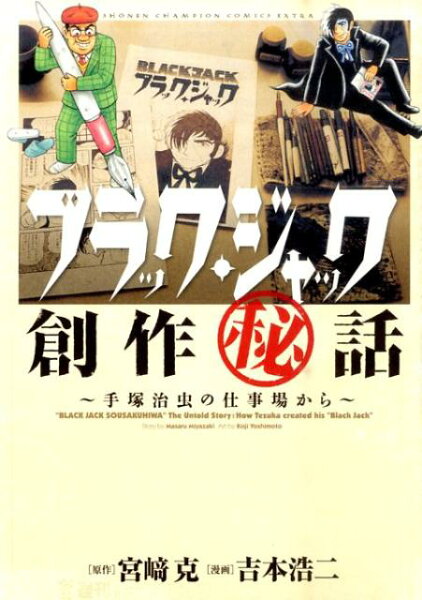
Black Jack Sousaku Hiwa
Black Jack Sousaku Hiwa is a documentary manga about how Osamu Tezuka created Black Jack — told through the editors and assistants who worked beside him, capturing both the genius and the human cost of his impossible work ethic.
Cooking / Drama
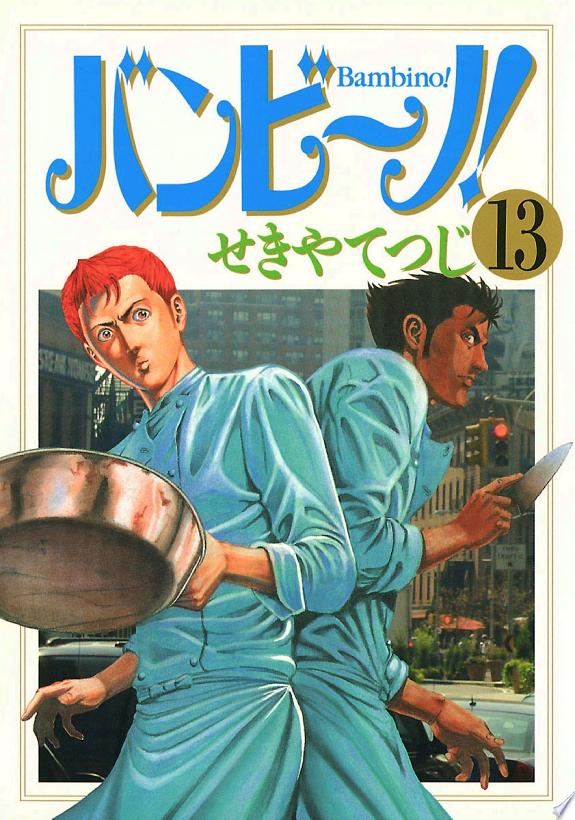
Bambino!
A Fukuoka college student walks into a top Tokyo Italian kitchen sure he can cook — and gets sent to the dish sink. Bambino! is the most honest kitchen manga I have read.

Slice of Life / Drama
Bartender
Bartender follows Ryu Sasakura, a young genius bartender who serves the 'Glass of the Gods' at a hidden Ginza bar — the one drink each troubled customer needs at that exact moment in their life.

Slice of Life / Drama
Tokujou Kabachi!!
Tokujou Kabachi!! follows Daisuke Kanie, a paralegal at an administrative scrivener's office, as he takes on bureaucratic injustice and legal gray areas armed only with his knowledge of Japanese administrative law — and a willingness to argue until someone listens.
Slice of Life / Drama
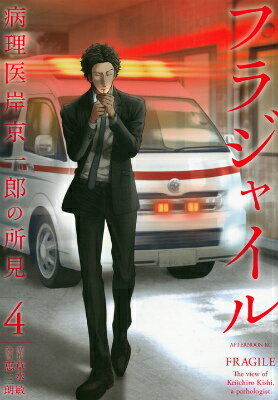
Fragile
A review of Fragile, the medical manga about Keiichiro Kishi, a blunt, brilliant pathologist who reads the truth in tissue samples and changes the diagnoses other doctors get wrong.
Slice of Life / Drama
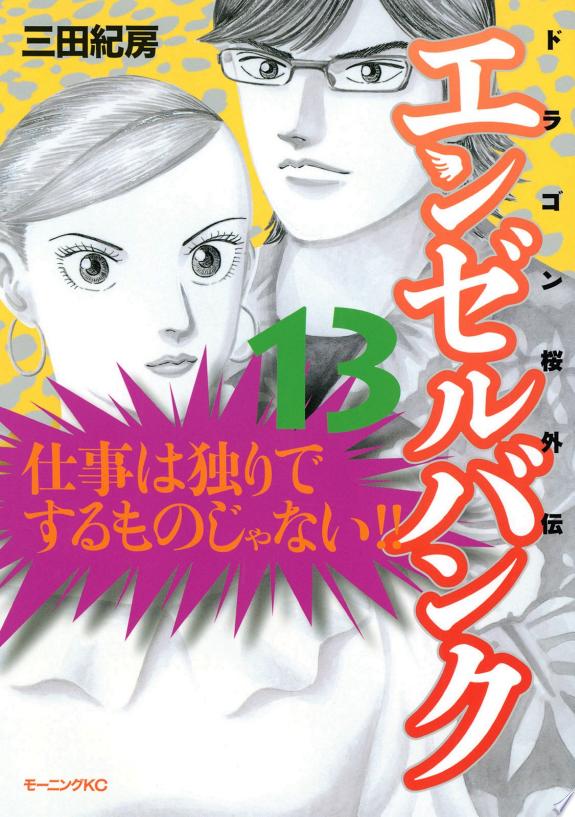
Angel Bank: Dragon Zakura Gaiden
Yu's review of Angel Bank — the Dragon Zakura spin-off in which a disillusioned teacher becomes a job-placement agent under a charismatic career consultant, and learns that most people don't change jobs, they just change companies.
Written by
Yu
Manga Enthusiast from Japan
I grew up in Japan and manga literally saved me during a tough time in elementary school. My English isn't perfect, but my love for manga is real — and I want to share it with you.