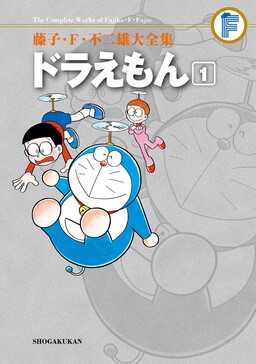
Doraemon Review: The Gentlest Manga About a Boy Who Has to Learn to Stand Without His Best Friend
by Fujiko F. Fujio
Read the first volume. If it doesn't hook you, put it down. It'll hook you.
Buy Doraemon on Amazon →*Affiliate link — I earn a small commission at no extra cost to you.
I want to be honest with you before anything else: I cannot remember a time before Doraemon. He was just always there, the way the ceiling is there, the way your own name is there. A blue robot cat with no ears and a pocket on his belly. When I was small and the house was quiet and I had no one to call, Doraemon was on the television and in the cheap comics at the convenience store, and somehow that was enough.
I came back to the manga as an adult, expecting it to feel small. It did not. It felt like someone had been holding a door open for me the entire time.
Quick Take
- A robot cat from the future and a boy who fails at everything — the simplest premise in manga, and one that never once runs out of warmth or comedy
- Built by Fujiko F. Fujio out of single, self-contained chapters, but the rare emotional ones (the goodbyes, the glimpse of Nobita's future) hit harder than most "serious" manga ever manage
- Age rating: All Ages — genuinely one of the only manga I'd hand to a six-year-old and a sixty-year-old with the same confidence
Story Overview
Nobita Nobi is a fifth-grade boy who is bad at school, bad at sports, bad at standing up for himself, and prone to crying. His descendants in the 22nd century are so tired of the debt and failure his line has inherited that they send a household robot back in time to fix him at the source. That robot is Doraemon — a cat-shaped helper from the future with a four-dimensional pocket on his stomach that holds an endless supply of gadgets.
The series ran in CoroCoro Comic and a spread of Shogakukan children's magazines from 1969, and Fujiko F. Fujio kept it going until his death in 1996. It collects into 45 tankōbon volumes. Most chapters follow one shape: Nobita has a problem, Doraemon pulls out a gadget, Nobita pushes it too far out of laziness or greed or wounded pride, and the gadget turns on him. It sounds like it would get old. It does not. The pocket is bottomless and so, it turns out, is the comedy.
But Fujiko hid a second thing inside the formula, and used it sparingly. Because Doraemon is supposed to leave when his job is done, the manga keeps circling the idea of separation — chapters where Doraemon has to go back to the future, chapters that jump forward to show Nobita grown up, married to Shizuka, finally okay. The most famous of these, "Goodbye, Doraemon," was written as an ending. It is the chapter every Japanese adult remembers.
Characters
Nobita Nobi — He is genuinely a failure, and the manga refuses to secretly make him gifted. That is the whole point. He is lazy, he takes shortcuts, he leans on Doraemon constantly. But pushed to the wall, with no gadget left, he has a stubbornness that looks a lot like courage. His arc isn't "becomes great." It's "becomes someone who can survive on his own."
Doraemon — The robot cat who knows, every single time, that Nobita will misuse the gadget he hands over. He hands it over anyway. He's vain, he panics, he is terrified of mice, he loves dorayaki to the point of weakness — and underneath all of it he loves Nobita like family. His patience is the emotional engine of the entire series.
Shizuka Minamoto — The kind, level-headed girl Nobita adores, and the person the future-chapters reveal he eventually marries. She's written as the one classmate who is actually decent to him.
Gian (Takeshi Goda) and Suneo Honekawa — Gian is the loud neighborhood bully with a fearsome singing voice; Suneo is the rich, sly kid who flatters Gian and looks down on Nobita. They torment him constantly — and yet the manga lets them be friends too, which is truer to childhood than a clean hero-villain split would be.
What I Love About It
What I love is that Fujiko F. Fujio understood something most children's stories miss: that the most loving thing you can do for someone is make yourself unnecessary to them. Doraemon was sent to fix Nobita's life, but the real project of the whole manga is to get Nobita to the point where he doesn't need Doraemon at all. That is a strange, almost sad mission to give your title character, and the series carries it quietly under all the gadget chaos.
You feel it most in the chapters about leaving. Doraemon is from the future. He was always going to have to go back. And every time the manga raises that possibility, it stops being a comedy about a magic cat and becomes a story about a kid who has built his entire sense of safety around one friend, and now has to imagine losing him. As someone who spent his childhood with exactly one reliable source of comfort, those chapters did not feel like fiction to me. They felt like a warning I needed and a kindness at the same time. Doraemon isn't trying to stay forever. He's trying to make sure Nobita will be all right when he can't.
Memorable Scene ⚠️ Spoiler Warning
"Goodbye, Doraemon."
Doraemon tells Nobita he has to return to the future. He won't fully explain why — only that he has to go. They decide to spend their last night together. But on a walk, Nobita runs into Gian, and for once he refuses to back down. He picks a fight with the bully who has beaten him a hundred times — alone, with no gadget, with nothing in his pocket.
And he loses. Badly. He gets knocked down again and again. But he keeps getting up, refusing to stay down, until Gian, worn out and unsettled by this boy who simply will not quit, finally gives up and walks away. Nobita drags himself back, bruised, to tell Doraemon he won. Doraemon leaves the next morning — able to go, finally, because he has seen with his own eyes that Nobita can look out for himself now.
That's the whole thing. A small kid choosing to take a beating, not to win, but to prove to his friend that the friend is allowed to leave. I have never gotten the image of Nobita standing back up out of my head.
Pros & Cons
Pros
- The warmest, most genuinely all-ages manga I know — no asterisks, no "for kids but actually dark"
- The episodic gadget format never runs dry; you can open any volume anywhere
- The rare emotional chapters land harder than most serious drama because the series earns them so quietly
- Doraemon himself is one of the most lovable characters ever drawn
Cons
- It is episodic to the core; if you need a long continuous plot, you won't find one here
- Some humor and references are rooted in 1970s–80s Japanese childhood and need a little context
- The simplicity that makes it perfect for me will read as "slight" to readers who only want complexity — that's either a flaw or the entire appeal depending on who you are.
Is Doraemon Worth Reading?
Yes — but adjust your expectations. This isn't a plotted epic; it's a bottomless well of short, funny, kind chapters with a quiet ache running underneath about friendship and letting go. If that sounds like too little, it isn't for you. If it sounds like exactly what you forgot you wanted, start reading and don't stop.
Similar Manga
| Title | Its Approach | How Doraemon Differs |
|---|---|---|
| Yotsuba&! | Episodic everyday wonder seen through a child's eyes | Doraemon adds future gadgets and a real undercurrent about loss |
| Chi's Sweet Home | Gentle, all-ages comedy with an animal at its center | Doraemon's cat is a character with an arc, not a pet |
| Astro Boy | Same foundational era; a kind-hearted robot among humans | Doraemon trades sci-fi tragedy for warm domestic comedy |
Who Is This For?
- Anyone who wants the single most beloved children's manga in Japan, in its real form
- Parents looking for manga that is genuinely safe and genuinely good
- Readers curious about the foundation of postwar Japanese pop culture
- Anyone who has ever leaned too hard on one friend and had to learn to stand without them
Where to Buy
Read the first volume. If it doesn't hook you, put it down. It'll hook you.
The official English edition is the full-color digital release on Amazon Kindle, produced by Fujiko-Pro and Shogakukan (with Voyager Japan and AltJapan) — 200 short volumes carry the series fully into English.
This post contains affiliate links. If you purchase through these links, I may earn a small commission at no extra cost to you. As an Amazon Associate, I earn from qualifying purchases.
*Affiliate link — I earn a small commission at no extra cost to you.
More Manga You Might Like
Slice of Life / Comedy
Yo-kai Watch
Yu's review of the Yo-kai Watch manga — elementary schooler Nate Adams finds a capsule machine containing Whisper, a ghost butler who gives him the Yo-kai Watch; the device lets him see Yo-kai, Japanese spirits who cause everyday human problems; a comedy series for younger readers that draws on Japanese folklore while being consistently funny for adults too.
Slice of Life / Comedy
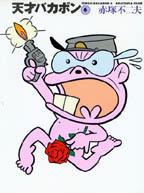
Tensai Bakabon
Tensai Bakabon is Fujio Akatsuka's landmark gag manga about the Bakabon family — a household where the father's complete detachment from logic is presented as wisdom, and the world's attempts to impose reason are the actual problem.
Slice of Life / Comedy
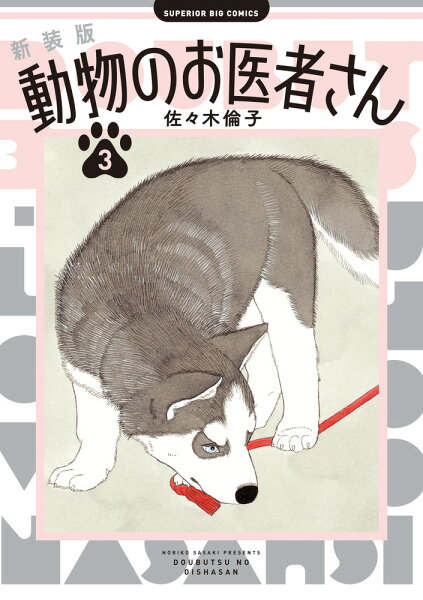
Doubutsu no Oisha-san
Doubutsu no Oisha-san follows Hamutaro, a quiet veterinary student in Hokkaido, his deadpan husky Chobi, and the warm chaos of vet-school life — a 12-volume Hana to Yume comedy so popular it set off a real Siberian Husky boom across Japan.
Slice of Life / Comedy
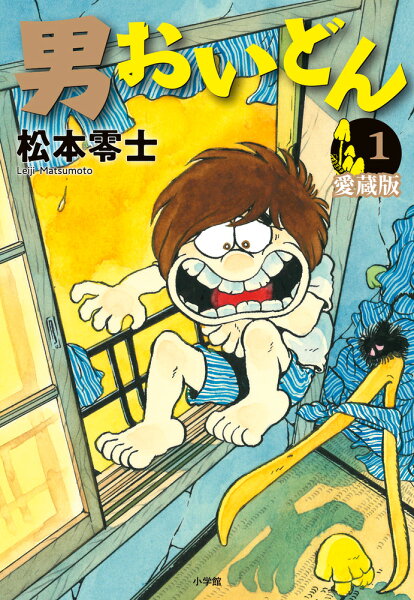
Otoko Oidon
Otoko Oidon follows Saburo Oyama, a young man from Kyushu trying to make it in Tokyo — living in a tiny boarding house, perpetually broke, hopelessly unlucky in love, and stubbornly determined to become someone despite all evidence suggesting otherwise.
Slice of Life / Comedy
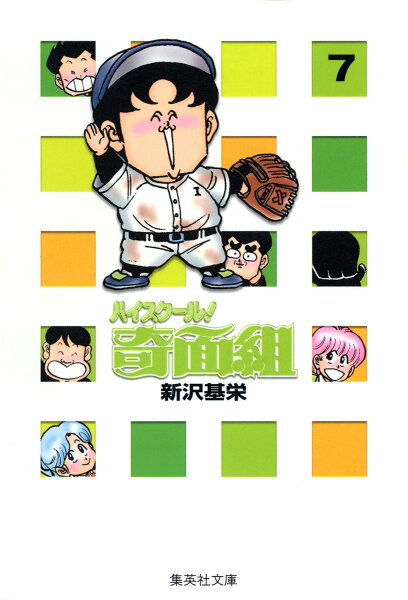
High School! Kimengumi
High School! Kimengumi follows five boys who turn their strange faces into a way of life, building one of the loudest, weirdest gag manga of 1980s Shonen Jump.
Slice of Life / Comedy
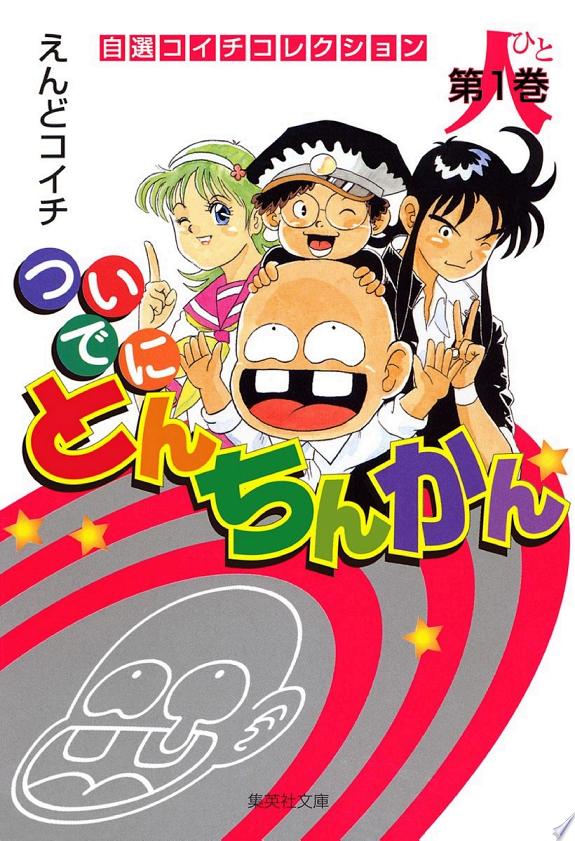
Tondemo-kun
Tondemo-kun follows a trio of delinquent students whose plans to cause trouble consistently backfire in ways that are so spectacularly wrong they accidentally create good outcomes — a comedy built entirely on the gap between intention and result.
Written by
Yu
Manga Enthusiast from Japan
I grew up in Japan and manga literally saved me during a tough time in elementary school. My English isn't perfect, but my love for manga is real — and I want to share it with you.
Disclosure: This post contains affiliate links. As an Amazon Associate, I earn from qualifying purchases at no extra cost to you.