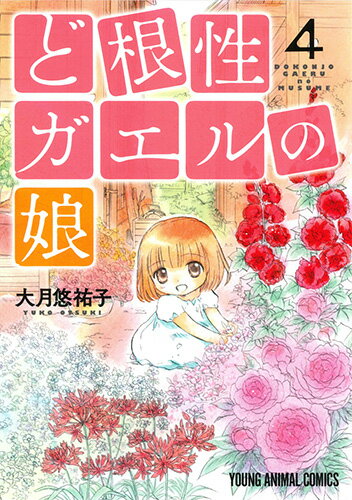
Dokonjo Gaeru Review: The Comedy About a Boy and a Frog Stuck on His Shirt
by Yasumi Yoshizawa
Read the first volume. If it doesn't hook you, put it down. It'll hook you.
Buy Dokonjo Gaeru on Amazon →*Affiliate link — I earn a small commission at no extra cost to you.
I have a soft spot for jokes that are almost too dumb to exist. A boy trips over a rock, lands on a frog, and the frog gets squashed flat — except it doesn't die. It ends up printed onto the front of his shirt, still alive, still talking, with opinions about everything. That's the entire premise of Dokonjo Gaeru, and Yasumi Yoshizawa somehow ran it for six years and 27 volumes in Weekly Shonen Jump without it ever feeling like a one-note gag. My English isn't perfect, so let me just say it plainly: this is one of those manga where the stupidest possible idea turns out to have a real heart underneath it.
Quick Take
- Yasumi Yoshizawa's 1970–1976 Weekly Shonen Jump gag comedy — middle-schooler Hiroshi Kaizuka and Pyonkichi, the flat frog living on his shirt
- 27 volumes; episodic, set in a working-class corner of Nerima, Tokyo (modeled on Shakujii Park)
- Age rating: All Ages — innocent slapstick throughout, nothing graphic
Story Overview
The whole thing kicks off in the chapter "Pyonkichi's Birth." Hiroshi Kaizuka, a second-year middle schooler, is in the middle of a scuffle with the local tough kid Goriiraimo, trips over a small stone, and dives face-first into the dirt — right onto a frog. He thinks he's killed it. Then he looks down at his chest and the frog is flattened onto the front of his shirt, alive, two-dimensional, and able to talk. The frog names himself Pyonkichi, and from that day on Hiroshi is stuck wearing a living, opinionated amphibian wherever he goes.
That's the engine. Dokonjo Gaeru is episodic — there's no long plot, just Hiroshi's everyday life with this impossible problem stitched onto his shirt. School, fights, crushes, money-making schemes, food. Pyonkichi flattens and stretches with the fabric, can't be taken off without ending him, and refuses to behave like a flat frog should. The comedy comes from that constant friction: a normal Showa-era kid trying to live a normal life with a loud frog on his chest who has his own appetites and grudges.
The original manga actually has an ending, which surprised me for a gag series. The final chapter, "From Hawaii With Love" (Vol. 27), is told from the point of view of Ume-san, the sushi chef, who has gone to Hawaii to train and receives a letter from Hiroshi. I'll save the contents for the spoiler section.
Characters
Hiroshi Kaizuka — The hero. A loud, lazy, good-hearted middle schooler who's bad at school and sports (the running gag is that bowling is the one thing he's good at). He wears his sunglasses pushed up on his head and gets into trouble constantly, but he's genuinely kind when it counts. The whole series is his daily life.
Pyonkichi — The flat frog on the shirt. Stubborn, gluttonous, weirdly strong despite being two-dimensional, and shameless about chasing after females of pretty much any species. He bickers with Hiroshi like a sibling and won't accept any limitation that comes with being a frog printed on cotton.
Kyoko Yoshizawa — The heroine. Hiroshi's girlfriend, from a wealthy family, bright and active and kind — but with a temper, fully willing to get into serious shouting matches with Hiroshi. She first assumes Pyonkichi is just a cute design on the shirt before she learns the truth.
Goriiraimo — The neighborhood tough kid / banchō type whose fight with Hiroshi literally starts the whole series. Intimidating up front, but he develops real depth over time and ends up more of a friend than an enemy. Gorou is the loyal first-year who looks up to Hiroshi and calls him "senpai," and Ume-san is the devoted sushi chef who, fittingly, gets the last word in the whole series.
What I Love About It
I love that the absurd part is contained, and everything around it is real. A lazier writer would have made Hiroshi's entire world cartoonishly insane to match the talking flat frog. Yoshizawa does the opposite. The setting is a recognizable, working-class slice of 1970s Nerima — the lot, the school, the sushi shop, the broke teenage money schemes. The relationships behave like real relationships: Hiroshi and Kyoko fight like an actual couple, Goriiraimo is a real rival who slowly becomes a real friend. The only impossible thing in the entire manga is the frog.
That contrast is what makes it last 27 volumes instead of fizzling out after the premise wears off. Because the world is grounded, Pyonkichi never stops being funny — he's the one wrong note in an otherwise ordinary neighborhood, and the joke keeps generating new situations. My favorite running idea is how the flatness itself becomes a tool rather than just a punchline. Pyonkichi can flatten, slip, jump, and squeeze in ways no normal friend could, and Yoshizawa keeps finding new ways for "being a frog stuck on a shirt" to be exactly the right thing to be. It's a dumb premise treated with real craft, and that's a combination I'll always respect.
Memorable Scene ⚠️ Spoiler Warning
The one that stuck with me is the original manga's ending, "From Hawaii With Love" (Vol. 27). The final chapter doesn't even center on Hiroshi — it's told through Ume-san, the sushi chef, who has gone off to Hawaii. He gets a letter, and the news inside it is that Pyonkichi has had eighteen children with another flat frog named Bikki (Vicky). The kids are, of course, also flat — Yoshizawa draws a page of eighteen separate shirts, each with a little tadpole printed on it. The chapter closes on Ume-san shouting his feelings out at the Hawaiian sea.
I find that ending genuinely lovely in how it refuses to get sentimental in any normal way. A six-year gag series about a frog on a shirt ends with that frog becoming a father of eighteen flat babies, delivered secondhand in a letter, to a side character, on a beach. It's silly and warm at the same time, and it lets the absurd premise have the last laugh on its own terms.
Pros & Cons
Pros
- One of Weekly Shonen Jump's defining early-1970s comedies
- Pyonkichi is one of the most iconic characters in the magazine's gag history
- The grounded Nerima setting keeps the absurd premise from burning out
- It actually has an ending, and a memorable one
Cons
- No official English translation exists
- The 1970s comedic register and period attitudes feel dated to modern readers
- The episodic structure means there's no big ongoing plot to pull you forward
- It's old-fashioned, gentle Showa gag comedy — that's either the appeal or a dealbreaker depending on you.
Is Dokonjo Gaeru Worth Reading?
If you care about the history of Shonen Jump or about Showa-era gag manga, yes — this is one of the works that helped define the magazine's comedy tradition, and the craft underneath the dumb premise holds up. If you want a tight ongoing plot or a contemporary setting, the episodic 1970s format will feel its age. As a piece of classic Jump comedy, it's essential; as a casual modern read, it asks some patience.
Similar Manga
| Title | Its Approach | How Dokonjo Gaeru Differs |
|---|---|---|
| Tensai Bakabon | Akatsuka's absurd-father gag comedy where the whole world is unhinged | Dokonjo Gaeru keeps the absurdity to one element — only the frog is impossible |
| Kochikame | Long-running episodic Jump comedy about everyday Tokyo life | Dokonjo Gaeru predates it and shares the grounded-neighborhood register |
| Doraemon | A non-human companion who reshapes a boy's daily life | Pyonkichi solves nothing with gadgets — he's a problem and a partner at once |
Where to Buy
No English release yet. That just means you find it before everyone else does.
Find the Japanese edition on Amazon.co.jp →
This post contains affiliate links. If you purchase through these links, I may earn a small commission at no extra cost to you. As an Amazon Associate, I earn from qualifying purchases.
*Affiliate link — I earn a small commission at no extra cost to you.
More Manga You Might Like
Slice of Life / Comedy
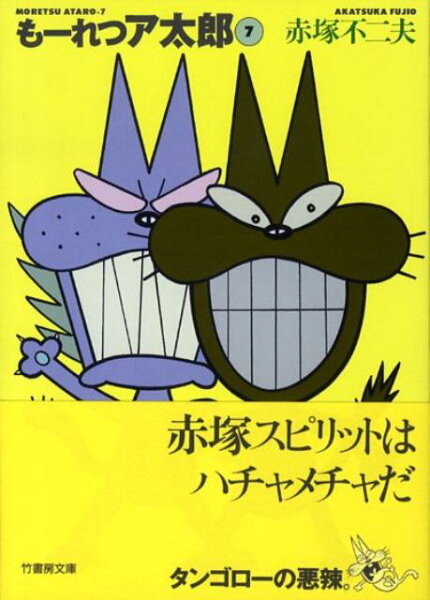
Moretsu Ataro
Moretsu Ataro is Fujio Akatsuka's late-1960s gag manga following Ataro, a young boy who runs his late father's vegetable shop while surrounded by an outlandish cast of friends and neighbors — a foundational work of Japanese gag comedy from one of its greatest masters.
Slice of Life / Comedy
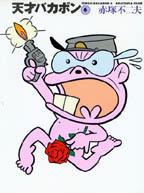
Tensai Bakabon
Tensai Bakabon is Fujio Akatsuka's landmark gag manga about the Bakabon family — a household where the father's complete detachment from logic is presented as wisdom, and the world's attempts to impose reason are the actual problem.
Slice of Life / Comedy
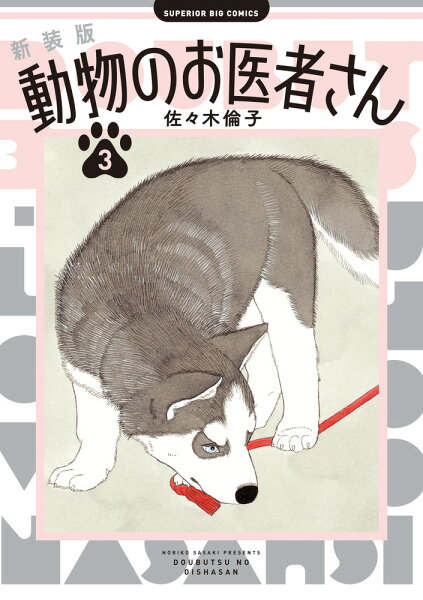
Doubutsu no Oisha-san
Doubutsu no Oisha-san follows Hamutaro, a quiet veterinary student in Hokkaido, his deadpan husky Chobi, and the warm chaos of vet-school life — a 12-volume Hana to Yume comedy so popular it set off a real Siberian Husky boom across Japan.
Slice of Life / Comedy
Doraemon
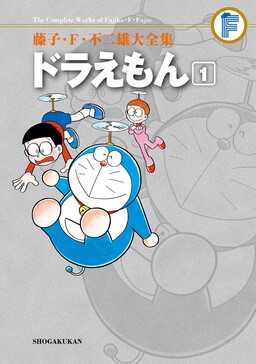
Yu's review of Doraemon — a robot cat from the 22nd century, sent back to help a hopeless boy named Nobita with gadgets from his four-dimensional pocket. Fujiko F. Fujio's most beloved work, and the manga every Japanese kid grows up inside.
Slice of Life / Comedy
Sazae-san
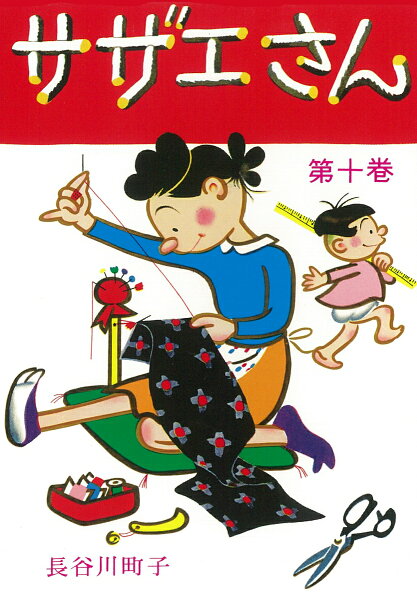
Sazae-san is Japan's most enduring manga — a newspaper 4-koma that began in 1946 and ran for 28 years, following a cheerful, impulsive young woman named Sazae and her extended family through postwar Japan's transformation from devastation to prosperity.
Slice of Life / Comedy
Otoko Oidon
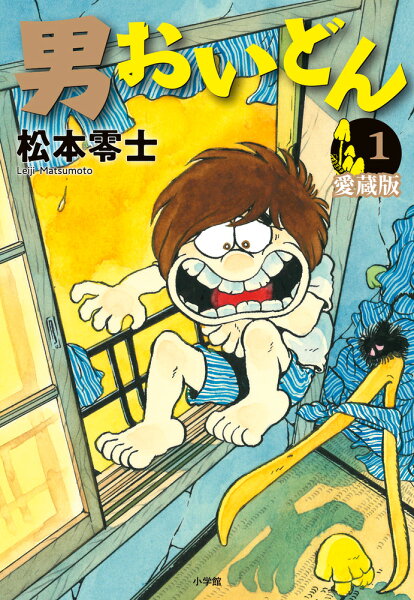
Otoko Oidon follows Saburo Oyama, a young man from Kyushu trying to make it in Tokyo — living in a tiny boarding house, perpetually broke, hopelessly unlucky in love, and stubbornly determined to become someone despite all evidence suggesting otherwise.
Written by
Yu
Manga Enthusiast from Japan
I grew up in Japan and manga literally saved me during a tough time in elementary school. My English isn't perfect, but my love for manga is real — and I want to share it with you.