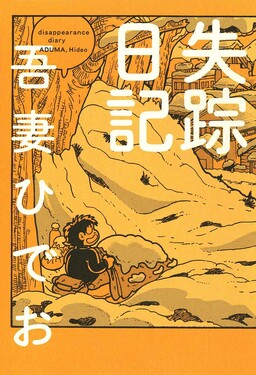
Disappearance Diary Review — A Working Manga Artist Drew His Two Homelessness Episodes and His Alcoholism as a Comedy
by Hideo Azuma
Read the first volume. If it doesn't hook you, put it down. It'll hook you.
Buy Disappearance Diary on Amazon →*Affiliate link — I earn a small commission at no extra cost to you.
My grandfather drank. Not the social way most Japanese men of his generation drank. The other way. He worked as a small-business owner in Osaka, came home, drank, and worked the next day. He died when I was eight. We didn't talk about the drinking in my family, and we still mostly don't.
I read Disappearance Diary in my twenties. It was the first thing I had ever read that talked about alcoholism the way it actually existed in my family — without drama, without redemption, with the specific dark cheerful tone of a person who survived something and refuses to make it a Big Speech.
Hideo Azuma died in 2019. He was the rare manga artist whose actual life I think about when I think about him.
Quick Take
- One of the great manga memoirs. Hideo Azuma — a working manga artist — depicts his two voluntary homelessness episodes and his alcoholism in his own gentle cartoon style
- The tonal gap between "what is being drawn" and "how it is being drawn" is the entire work
- Age rating: T+ (Older Teen) — 16+ — heavy subject matter; no graphic visuals
What Is Disappearance Diary About?
Hideo Azuma was a well-known manga artist in Japan from the early 1970s. He was famous for adult-oriented comedy and ero-manga — work that was commercially successful, professionally respected within its corner of the industry, and creatively distinctive. He was a working artist with deadlines, an editor, a family, a public reputation.
Twice in his career, he disappeared.
First disappearance (1989): Azuma left Tokyo without telling anyone — his family, his editors, his colleagues. He took a train to Hokkaido, then walked into the mountains, then began living as a furousha (homeless person) in winter forests outside the city of Otaru. He survived for months by foraging, scavenging discarded food, and occasionally sleeping in abandoned structures. The temperatures were sub-zero. He had no specific plan to return. He drew a manga during this time using whatever paper he could find.
Second disappearance (1992): Three years later, Azuma did it again. This time he camped under a bridge outside Tokyo and survived through scavenging at a local park. He had a routine — wake, walk, find food, drink, sleep — that he describes in the manga with the same care he would describe his ordinary professional life.
Alcoholism (mid-1990s onward): Between and after the disappearances, Azuma was drinking heavily — eventually requiring hospitalization for detoxification. He spent extended time in a specialized addiction treatment hospital. He drew this period in the manga as well.
Disappearance Diary (失踪日記, Shissou Nikki) was published in 2005 as the collected manga record of these three experiences. The book is a single volume, divided into three sections:
- The first homelessness (Hokkaido forests, 1989)
- The second homelessness (Tokyo bridge, 1992)
- The alcoholism / hospitalization (1990s onward)
Each section is drawn in Azuma's signature gentle, rounded, comedic art style. The same style he used for the adult comedy manga that made his career. Each section is funny. Each section is also describing something that, in a different artist's hands, would be unbearable.
The dissonance between what is being depicted and how it is being drawn is the entire work. Azuma does not explain himself. He does not psychoanalyze his own breakdowns. He does not provide a redemption narrative. He shows you what happened, in the format he draws in, and the reader is left to do all of the emotional and moral work.
The manga won the Osamu Tezuka Cultural Prize (2005) — Japan's most prestigious manga award — and the Bungeishunjū Manga Prize (also 2005). It is one of the most decorated single-volume manga in modern Japanese publishing.
Who Is This Manga For?
- Readers of literary memoir — Disappearance Diary is comparable to Mary Karr or David Sedaris in tone, with the manga format as the additional layer
- Manga history enthusiasts — Azuma's career and his place in the industry are part of the work's subject
- Readers interested in addiction memoirs — the alcoholism section is one of the most honest depictions in any medium
- Anyone interested in tonal-mismatch art — work that depicts heavy subjects in inappropriate-seeming registers
- Not for: readers who need explicit psychological explanation; readers triggered by alcoholism or homelessness content
Content Warnings & Age Rating
Age Rating: T+ (Older Teen) — 16+ Content Warnings: Voluntary homelessness depicted in detail (sleeping rough, scavenging, weather exposure); alcoholism and the physical reality of detox / withdrawal; mention of suicidal ideation (briefly, without dramatization); some references to sexual content in Azuma's professional work; the dark-comedic tone may be misleading for readers expecting a heavier register
The "comedy" framing does not soften the content. If anything, it makes the content more upsetting because the manga refuses to dramatize it.
Story Overview
Part 1: The First Disappearance (Hokkaido, 1989) — Azuma leaves Tokyo. He arrives in Hokkaido in winter. He walks into the forests outside Otaru. The chapters depict his daily survival: building shelters from discarded materials, scavenging through trash bins behind grocery stores, dealing with the cold, hallucinating mildly when food is scarce, encountering local wildlife. He is alone for months. He does not talk to people. He draws himself as a small rounded figure walking through pine trees in deep snow. The art is cute. The content is harrowing. Azuma narrates it in his ordinary professional tone, as if describing a normal job.
Part 2: The Second Disappearance (Tokyo bridge, 1992) — Three years later. Azuma is back in the manga industry briefly. Then he leaves again — this time more locally, more rationally in some ways, more troublingly in others. He camps under a Tokyo bridge. He develops a routine. He meets other homeless people, who are depicted with respect (their nicknames, their habits, their small daily kindnesses). The second disappearance reads as more deliberate than the first. Azuma seems to have decided this was a place he wanted to be.
Part 3: The Alcoholism / Hospitalization — The hardest section. Azuma describes his drinking, the medical consequences, the extended hospital stay for detox. The hospital scenes are some of the most distinctive in the manga: Azuma draws fellow patients, doctors, the ordinary rhythm of an addiction treatment ward. He shows withdrawal in plain matter-of-fact terms. He shows the small kindnesses of other patients. He shows the institutional structure of a Japanese addiction treatment facility without judgment.
The volume ends with Azuma returning to manga work. He does not promise sobriety. He does not promise stability. He just continues. That is the closing emotional note: continuing.
Hideo Azuma: The Author
Azuma Hideo (1950–2019) was a major figure in Japanese underground and adult-oriented manga from the 1970s onward. His early work was in bishojo (cute girl) manga and ero-manga; he is credited as one of the artists who helped shape the lolicon genre in late-1970s manga, though his own engagement with the genre was complicated and he later expressed mixed feelings about that period of his career.
Outside Japan, Azuma is best known for Disappearance Diary. Inside Japan, he is also known for his earlier comedy and adult manga (which has had limited English release).
Azuma published a sequel, Alcoholism Hospital (アル中病棟, Aru-chuu Byoutou, 2013), expanding the alcoholism section of Disappearance Diary into its own full volume. The sequel is not yet licensed in English but is available in Japanese.
Azuma died in 2019 at age 69. The cause of death was esophageal cancer; his decades of alcoholism contributed to the illness. He continued to work as a manga artist until shortly before his death.
Art Style
Azuma's art in Disappearance Diary is deliberate regression. He uses the same simple, rounded, cartoon style that he used for his comedy manga of the 1970s and 80s. Character faces are simplified almost to symbols — round head, small features, expressive but minimal. Backgrounds are detailed enough to ground the setting but not realistic.
This is the choice that makes the manga work. If Azuma had drawn his homelessness realistically — sharp linework, detailed faces, naturalistic shading — the manga would be a different work. It would be either tragedy or social commentary. Drawn in cartoon comedy style, it becomes something stranger: a man describing his breakdowns in the visual language he uses for his ordinary professional life, as if these were ordinary professional experiences.
The reader cannot escape the cartoon. The cartoon is doing the witnessing.
Cultural Context
The Japanese manga industry's labor conditions are part of the manga's subject. Azuma was a working professional in an industry famous for unrelenting deadlines, long hours, and chronic burnout. His disappearances are, in part, what happens when an artist whose job is to be reliable decides to stop being reliable. The manga is not explicit about this connection but the connection is present.
Japanese homelessness has specific cultural texture. The Japanese homeless population is historically smaller than in many Western countries but follows specific patterns — many homeless people in Japan are former workers who have fallen through specific cracks (debt, job loss, family separation). Azuma's depiction of his fellow homeless people is respectful and observational rather than romanticizing or condemning.
Japanese alcoholism treatment has its own institutional structure — the alchu byoutou (alcoholism ward) is a recognized category of hospital ward. Azuma's depictions of his hospital stay accurately reflect the Japanese addiction medicine of the 1990s–2000s.
The Osamu Tezuka Cultural Prize is one of the highest honors in Japanese manga. Disappearance Diary's win in 2005 was widely covered in Japanese media and brought Azuma significant late-career visibility.
What I Love About It
The scene where Azuma encounters another homeless man in the Hokkaido forest.
I won't say which page. Somewhere in the first section, Azuma — who has been alone in the woods for weeks — meets another homeless person. The encounter is brief. They speak only briefly. They share a piece of food. They go their separate ways.
What I love is the quality of the conversation. Azuma does not turn this man into a Wise Homeless Person who delivers Life Lessons. He doesn't dramatize the meeting. He draws the man with the same care he draws himself — small, rounded, cheerful in posture — and lets the conversation be ordinary. They talk about food. They talk about where the wind comes from at night. They wish each other well. The encounter takes maybe two pages.
The respect Azuma shows to the man is the manga's quiet ethical center. Azuma is documenting his own breakdown, his own choice to leave his life, his own descent. He could easily have made the homeless people around him symbols, examples, lessons. He doesn't. They are people. He met them. He drew them. That's it.
I think about this when I think about how to write about other people's hardships. The lesson Azuma teaches is to keep them as people. Not as case studies. Not as symbols of social failure. People. With nicknames. With food preferences. With small kindnesses.
The manga's whole ethic is in that two-page encounter. He extends to others the same dignity he extends to his own breakdown — neither exaggerated nor minimized, just witnessed.
That is the thing I admire about Azuma. He went through things most artists could not write about even if they survived them. He survived. He drew it. He did not center himself. He treated his own pain with the same matter-of-fact tone he treated everyone else's. That is, in the end, the gift of the manga.
What English-Speaking Fans Say
Disappearance Diary has a small but devoted English-language readership, largely among literary manga fans, alternative comics readers, and academics. Reviews in publications like The Comics Journal and various literary publications have praised the manga as one of the finest works of contemporary autobiographical comics in any language.
The most common observation: the manga is unlike anything else. The tonal choice — comedy art applied to homelessness and addiction — is the work's signature and the source of most discussion. Some readers find the tonal mismatch alienating; most find it the manga's essential strength.
The Fanfare-Ponent Mon English edition is well-regarded. The publisher is a small independent press that specializes in literary and alternative manga.
Memorable Scene ⚠️ Spoiler Warning
The end of the alcoholism section.
I won't describe specifics. Toward the end of the third part of the manga, Azuma's hospitalization is winding down. He is being released. The doctor gives him instructions. He goes home. He picks up his work.
The final pages of the manga are Azuma — drawn in his usual small rounded style — at his work desk, drawing. He is not described as cured. He is not described as having achieved insight. He is described as drawing. The next deadline is the next deadline. The next page is the next page.
What makes the ending work is what Azuma refuses to do. He does not say "and from that day, I never drank again." He does not say "I have learned an important lesson." He does not say anything about what comes next. He just shows himself drawing, and the manga ends.
That ending is the manga's whole ethic in a panel. Hideo Azuma was an alcoholic before he wrote Disappearance Diary. He continued to drink, with intermittent attempts at sobriety, after writing it. He died of cancer that his alcoholism likely contributed to. The book did not save him. He did not pretend it would.
What he gave us instead is the document. He drew what happened. He drew it honestly. He drew it well. He left us a record of a particular life lived in a particular way, and refused to assemble that record into a redemptive shape.
That is, in the end, the most honest thing he could have done. The manga is great because it is honest. The honesty is the gift.
Similar Manga
| Title | Its Approach | How Disappearance Diary Differs |
|---|---|---|
| A Drifting Life (Tatsumi Yoshihiro) | Long-form manga industry memoir | Tatsumi is more conventional; Azuma is more experimental in tone |
| My Brother's Husband (Tagame) | Autobiographical-adjacent slice of life | Tagame is fictional but personal; Azuma is direct memoir |
| Alcoholism Hospital (Azuma's sequel) | Direct continuation, alcoholism focus | More focused; same author and style |
| Heartstopper (Alice Oseman) | Cartoony style for serious content | Different content; same tonal-mismatch craft principle |
| Persepolis (Marjane Satrapi) | Cartoony style for autobiography | Satrapi is more political; Azuma is more individual |
Reading Order / Where to Start
Single volume — start at the beginning, read straight through.
The sequel Alcoholism Hospital (アル中病棟) is currently Japanese-only. English readers wanting more Azuma have to start there.
Official English Translation Status
Fanfare-Ponent Mon published the single-volume English edition. It is in print but only through specialized distributors and direct from the publisher; major retailers stock it irregularly. eBook availability is limited.
The sequel Alcoholism Hospital is not licensed in English as of 2026.
Pros & Cons
Pros
- One of the great manga memoirs
- Tonal choice is radical and successful
- Tezuka Prize recognition indicates literary quality
- Single volume — easy commitment
- Honest about a subject most works dramatize
Cons
- Heavy subject matter
- Small publisher — physical copies can be harder to source
- No explicit psychological explanation (some readers want one)
- The "comedy art for heavy subject" style is an acquired taste. It won't land for everyone, especially readers who want clearer emotional cues.
Is Disappearance Diary Worth Reading?
Yes — unconditionally. One of the most important manga memoirs of the 21st century. The single-volume format makes the commitment minimal. The experience is one most readers cannot get elsewhere.
Format Comparison
| Format | Notes |
|---|---|
| Physical (Fanfare-Ponent Mon) | Single volume in English; in print through specialized distributors |
| Digital | Limited availability |
| Japanese | Available in Japan in print and digital; sequel "Alcoholism Hospital" Japanese-only |
Where to Buy
Read the first volume. If it doesn't hook you, put it down. It'll hook you.
This post contains affiliate links. If you purchase through these links, I may earn a small commission at no extra cost to you. As an Amazon Associate, I earn from qualifying purchases.
*Affiliate link — I earn a small commission at no extra cost to you.
More Manga You Might Like
Slice of Life / Memoir
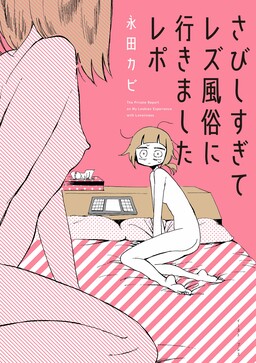
My Lesbian Experience with Loneliness
Yu's review of My Lesbian Experience with Loneliness — Nagata Kabi's autobiographical manga about her experiences with depression, an eating disorder, her difficult relationship with her parents, and her gradual understanding of her own sexuality and loneliness; one of the most honest mental health memoirs in manga form.
Mystery / Drama
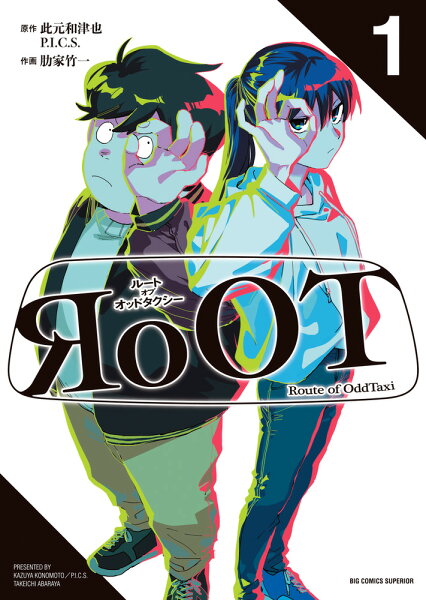
Odd Taxi
Hiroshi Odokawa drives a taxi in Tokyo. He looks like a walrus. He has no friends, no romantic interests, and a memory good enough to recall every conversation in every fare he's driven. A teenage girl is missing. Every passenger Odokawa picks up turns out to be connected to her disappearance — and to each other. Kazuya Konomoto's mystery thriller was an anime first; the 5-volume manga adaptation by Takeichi Abaraya is being released in English by Denpa starting in 2026.

Slice of Life / Biographical
The Road to Manga
The Road to Manga is the autobiographical manga by Fujiko Fujio — the duo who created Doraemon — documenting their childhood friendship, their manga obsession, and their determined journey from provincial Toyama to becoming professional manga artists in postwar Tokyo.
Slice of Life
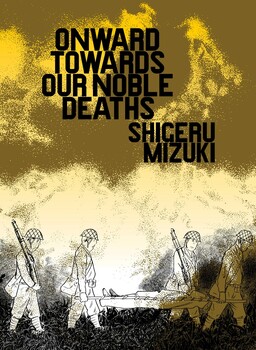
Onward Towards Our Noble Deaths
Yu's review of Onward Towards Our Noble Deaths — Shigeru Mizuki's autobiographical war manga, depicting the Japanese Imperial Army unit that survived a suicidal charge order through the Pacific Theater; the survivors were punished for failing to die; Mizuki survived; most of his unit did not.
Historical / Slice-of-Life
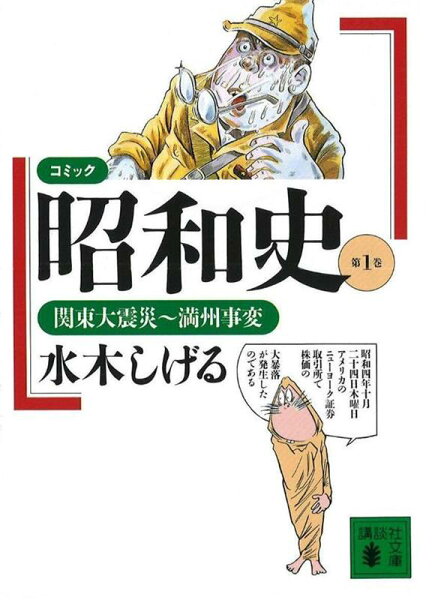
Showa: A History of Japan
Mizuki tells the story of 20th century Japan — and of his own life, including his time as a soldier — across four English volumes.
Drama / Medical
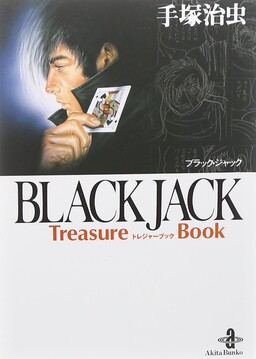
Black Jack
Black Jack is an unlicensed surgeon of impossible skill who lives on a cliff, charges fees that would bankrupt corporations, and decides which patients are worth saving. Osamu Tezuka — the God of Manga, who was himself a trained doctor — spent ten years and 242 standalone chapters on him. Vertical Inc.'s 17-volume English edition is complete.
Written by
Yu
Manga Enthusiast from Japan
I grew up in Japan and manga literally saved me during a tough time in elementary school. My English isn't perfect, but my love for manga is real — and I want to share it with you.
Disclosure: This post contains affiliate links. As an Amazon Associate, I earn from qualifying purchases at no extra cost to you.