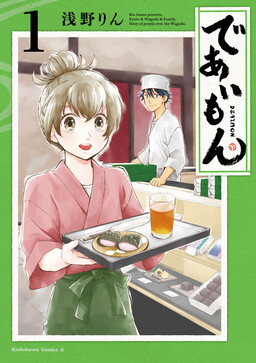
Deaimon Review: A Failed Musician Comes Home to Find a Kid Already Living in His Place
by Rin Asano
Read the first volume. If it doesn't hook you, put it down. It'll hook you.
Buy Deaimon on Amazon →*Affiliate link — I earn a small commission at no extra cost to you.
I left places too. Not a wagashi shop in Kyoto — I never had anything that beautiful to leave. But I know the specific shame of coming back to a place you walked out of, and finding that it kept going fine without you. That the world you thought was waiting for you just closed up the gap where you used to stand. That is the exact feeling Deaimon opens on, and it grabbed me by the collar in the first chapter and did not let go.
Nagomu Irino spent ten years in Tokyo trying to be a musician. He was not a musician. He comes home because his father is in the hospital and someone has to mind the family shop. And waiting for him there is a ten-year-old girl he has never met, who has been living in his house, learning his family's craft, while he was away failing. I want to tell you why this quiet manga wrecked me.
Quick Take
- A man who failed at his dream comes home to a Kyoto wagashi shop and finds a child has quietly taken the place he abandoned — it is about home, inheritance, and the families we don't choose
- The traditional Japanese sweets aren't decoration; the seasonal wagashi are how the series talks about time passing, memory, and people who don't say what they feel out loud
- Age rating: T (Teen) — gentle and warm, but the emotional weight (Itsuka's abandonment by her father) is real
Story Overview
Nagomu Irino is thirty. Ten years ago he walked out of Ryokushō, his family's traditional wagashi shop in Kyoto, to chase a music career in Tokyo. It did not happen. When his father Heigo lands in the hospital, Nagomu finally comes home to help — expecting, I think, to slot back into the life he left.
That life is not there anymore. In the time he was gone, his mother Fuki took in a ten-year-old girl named Itsuka Yukihira, who was abandoned at the shop by her own father — Tomoe, a guitarist who never came back. Itsuka has spent the past year earning her keep, helping in the shop, becoming part of the family. The turning point lands fast and hard: Nagomu's father has decided his son is an unworthy successor who never bothered to learn the craft, and announces that Itsuka will inherit Ryokushō. Father and child, both wanting the same shop, both having lost the same man's approval.
From there the series isn't racing toward an ending — it's an ongoing slice-of-life that moves through the seasons of the wagashi calendar. The slow build is Nagomu earning his way back: learning the confectionery he was too proud to learn as a kid, becoming the steady adult presence Itsuka's actual father never was, and reckoning with the music he gave up. Threads run through it — his ex-girlfriend Kanoko resurfacing in Kyoto, his mother's quiet management of everyone's wounds, Itsuka slowly deciding to hope again.
Characters
Nagomu Irino — The thing Deaimon does so well with Nagomu is refuse to make his failure dramatic. He didn't crash and burn; he just quietly didn't make it, and came home to a family that already wrote him off. His arc is not redemption-by-triumph. It's smaller and harder: learning to make a single sweet correctly, showing up every day, becoming a father to a kid before he's earned the right to call himself one.
Itsuka Yukihira — Ten years old, abandoned by her guitarist father Tomoe, taken in by Fuki. What makes Itsuka unforgettable is that her waiting is active — she's careful about what she lets herself expect, generous to people anyway, and quietly more competent at the family craft than the family's actual son. She is named heir to the shop. She mistook Nagomu for her missing father in the very first scene, and the whole series lives in the gap between the dad who left and the man who stayed.
Mitsuru Horikawa — A high schooler who works at Ryokushō to help support her big family, and who secretly makes music as an amateur musician called "Neon." She's a bridge between Nagomu's abandoned dream and the shop's daily life.
Kanoko Matsukaze — Nagomu's ex-girlfriend, who turns up in Kyoto and takes work at a nearby tea shop. She's not there to be a simple romance — she's part of the past Nagomu has to face instead of run from.
What I Love About It
The seasonal sweets. I went in expecting the wagashi to be pretty background, and instead they turned out to be the whole emotional language of the series. Each time the shop makes a seasonal confection, Deaimon stops and tells you what it is — its name, the season it belongs to, the bit of history or poetry folded into its shape. And because Nagomu is learning all of this for the first time too, late and humbled, you discover it right alongside him. The teaching never feels like a lecture. It feels like watching a grown man finally pay attention to something his family treasured while he was busy ignoring it.
What got me is how the manga uses those sweets to say the things the characters can't. This is a story full of people who don't talk about their feelings — a father who shows love by judging, a kid who shows hope by working hard, a man who shows regret by getting up early to knead bean paste. The wagashi become the speech they can't manage out loud. A sweet made for a specific person, in a specific shape, for a specific season, says I thought about you louder than any of them would ever say it to your face. By the time I understood that, every confection in the shop window had become a tiny letter someone was too shy to send. That is a beautiful trick, and Deaimon does it gently enough that it never feels like a trick at all.
Memorable Scene ⚠️ Spoiler Warning
Itsuka's birthday. She's out in the city with Nagomu, and being out reminds her of an old memory — going to the park with her real father, back before he disappeared. You feel the whole quiet ache of a kid who's never sure if she's allowed to want a family. Then they come back to Ryokushō, and the shop has made her a wagashi birthday cake. A party. Waiting for her.
It floored me because of everything the scene refuses to spell out. Nobody gives a speech. Nobody says "we're your family now." They just made her a sweet — the one thing this family knows how to make — in the shape of for you. The girl who was left behind by the man whose face she keeps seeing in Nagomu's gets handed proof, in bean paste and sugar, that a different set of people chose her. I had to put the volume down for a minute. That's the whole series in one moment: love that doesn't announce itself, delivered through the craft.
Pros & Cons
Pros
- Itsuka is one of the most specifically written child characters in manga — never cute-for-cuteness, always a real kid
- The wagashi aren't food porn; they're the emotional grammar of the whole series, and you'll learn real Japanese sweets culture along the way
- Nagomu's failure-and-return is drawn without a drop of self-pity or cheap redemption
- The Kyoto setting and seasonal rhythm give it a calm that's genuinely hard to find
Cons
- It's ongoing, and it's slow by design — threads stay open, and it accumulates rather than resolves
- Some readers will find the wagashi explanations more detail than they wanted between the drama beats
- If you need plot momentum and big stakes, the deliberately gentle pace won't work for everyone — that's either the point or the dealbreaker, depending on you
Is Deaimon Worth Reading?
Yes — if you want a slice-of-life manga that earns its quiet. Deaimon is about coming home to a place that moved on without you, and discovering a family you didn't plan for, told through the language of traditional Kyoto sweets. The pace is unhurried and the stakes are human-sized, but the characters — especially Itsuka — land with real weight. If "warm, slow, and quietly devastating" sounds good to you, this one's a keeper.
Who Is This For?
- Readers who love slice-of-life about home, regret, and chosen family
- Anyone drawn to a manga built around a specific craft (here, traditional wagashi)
- Fans of grounded family drama with a genuinely written child character, not a mascot
- People who want a calm, seasonal, ongoing series to live in
Similar Manga
| Title | Its Approach | How Deaimon Differs |
|---|---|---|
| Sweetness & Lightning | A widowed dad and his daughter bond over cooking together | Deaimon is about a man becoming a father figure to a child who isn't his, through a craft he resented |
| Barakamon | A burnt-out artist retreats to a rural island and is healed by a local kid | Deaimon keeps its man in his own family's shop, facing the people he disappointed instead of strangers |
| Silver Spoon | A craft (farming) carries the story's meaning and teaches the reader | Deaimon trades the school setting for an adult coming home to inherit-or-not a family business |
Where to Buy
No English release yet. That just means you find it before everyone else does.
Deaimon (であいもん) is not officially licensed in English. The Japanese print and digital volumes from Kadokawa are the only legitimate way to read it — and if you have any Japanese, the seasonal wagashi pages are worth it for the art alone.
Find Deaimon (であいもん) on Amazon.co.jp →
This post contains affiliate links. If you purchase through these links, I may earn a small commission at no extra cost to you. As an Amazon Associate, I earn from qualifying purchases.
*Affiliate link — I earn a small commission at no extra cost to you.
More Manga You Might Like
Slice of Life / Drama
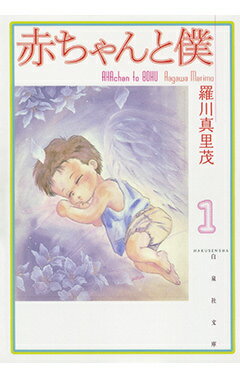
Baby and Me
Baby and Me follows Takuya Enoki, a grade-schooler who becomes a mother and a brother at the same time, raising his toddler brother Minoru after their mother dies and their father works to keep the family going.
Slice of Life / Drama
Umimachi Diary
Umimachi Diary follows three adult sisters in Kamakura who invite their half-sister — whom they barely know — to live with them after their estranged father's death, and the slow process of becoming a family.
Slice of Life
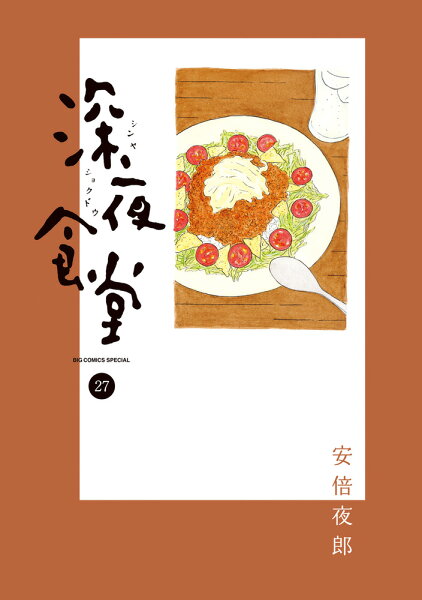
Midnight Diner
Midnight Diner follows the nameless master of a small late-night diner in Tokyo's Shinjuku district — open from midnight to seven in the morning, one set menu, anything you want if he has the ingredients. Each chapter tells the story of a customer and the dish that connects them to something they've lost or found.

Action / Comedy / Slice of Life
Spy x Family
Yu's review of Spy x Family — a manga about a spy, an assassin, and a telepath pretending to be a family, who accidentally become one. Genuinely funny, genuinely warm, and one of the most joyful ongoing series in manga right now.

Slice of Life / Drama
Silver Spoon
Yu's review of Silver Spoon — a city kid escapes to an agricultural high school to avoid his family, and discovers that farming, animal husbandry, and the people who feed the country have lessons no classroom ever taught him.
Slice of Life
The Makanai: Cooking for the Maiko House
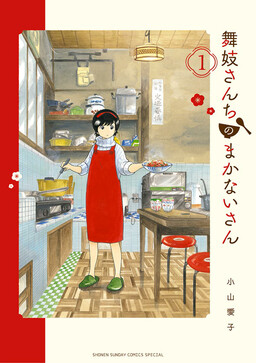
Yu's review of The Makanai: Cooking for the Maiko House — Kiyo comes to Kyoto with her best friend Sumire to train as maiko, but lacks the aptitude; instead of giving up, she becomes the house's makanai — the cook who feeds the maiko — and finds that her real gift was always in the kitchen.
Written by
Yu
Manga Enthusiast from Japan
I grew up in Japan and manga literally saved me during a tough time in elementary school. My English isn't perfect, but my love for manga is real — and I want to share it with you.
Disclosure: This post contains affiliate links. As an Amazon Associate, I earn from qualifying purchases at no extra cost to you.