Daily Lives of High School Boys Review: An Ode to Doing Absolutely Nothing
by Yasunobu Yamauchi
Read the first volume. If it doesn't hook you, put it down. It'll hook you.
Buy Daily Lives of High School Boys on Amazon →*Affiliate link — I earn a small commission at no extra cost to you.
When I was a kid with no friends, the thing I missed most wasn't some big adventure. It was the stupid stuff. The walking-home-from-school stuff. The standing-around-saying-nothing stuff that I watched other boys do and could not figure out how to join. So when I finally read Daily Lives of High School Boys, it hit a strange nerve in me. This is a manga about exactly that. Three boys. No plot. No goals. Just two hundred pages of the most idiotic, beautiful nothing — the friendship I wanted, drawn out as comedy. I laughed, and a little part of me also ached.
Quick Take
- Pure gag comedy about ordinary boys — the joke is always how seriously they take things that do not matter at all.
- Short, sharp chapters with setup-and-payoff timing so clean it feels almost surgical. Complete at 7 volumes.
- Age rating: T (Teen) — crude jokes and mild language, but nothing graphic. Safe for most readers.
Story Overview
There is no story. I mean that as a compliment.
Daily Lives of High School Boys follows three friends at an all-boys high school: Tadakuni, Hidenori, and Yoshitake. It is episodic to its core — each chapter is a self-contained bit. The boys try to act out cool RPG fantasies with sticks for swords. They get bored on a quiet afternoon and decide to try on a girl's clothes "to understand the female psyche." Hidenori keeps running into a strange girl at the riverbank who insists on speaking in dramatic literary lines. There is no overarching plot, no character growth toward a destination — and there does not need to be.
The series ran in Gangan Online from 2009 to 2012 and wrapped at seven volumes, so it ends on its own terms rather than getting stretched thin. One of my favorite running jokes is the meta one: the manga openly admits that Tadakuni stops appearing as much in later chapters because the "editors" only want to show the interesting parts of student life — and apparently Tadakuni isn't interesting enough. The manga laughing at its own format is the most this-manga thing it does.
Characters
Tadakuni is the closest thing to a straight man — the rational one who disapproves of his friends' schemes and gets dragged in anyway. He is also the cosmic punching bag of the series; the universe seems designed to humiliate him specifically.
Hidenori Tabata is the glasses-wearing instigator, the one with the most active imagination and the one who narrates his own life like it's a grand drama. He is the boy who keeps meeting the Literature Girl at the river, and the contrast between his cool-sounding spoken lines and his panicking inner monologue is one of the manga's best engines.
Yoshitake Tanaka has the dyed hair and the least hesitation. Whatever dumb idea is on the table, Yoshitake is already doing it. He throws himself into bits with a commitment the others lack.
The Literature Girl (Bungaku Shoujo) is a recurring side character who only knows how to interact through melodramatic, novelistic dialogue, and she fixates on Hidenori as the leading man of her private romance fantasy. She is unforgettable.
What I Love About It
What I love is how seriously these boys treat the things that do not matter, and how the manga lets that earnestness be the joke instead of mocking it. The riverbank scenes between Hidenori and the Literature Girl are the purest example. She stands in the wind and delivers a line like "The wind… is troubled today," dead serious, and Hidenori — not wanting to lose — answers in the same overblown register while his actual thoughts are screaming. The art keeps both their faces perfectly composed. The comedy lives entirely in the gap between the cool exterior and the internal chaos.
That gap is the whole heart of this manga, and it's why it works on me so personally. Teenage boys do this. They perform confidence they don't have, narrate their lives like they're protagonists, and build elaborate rituals out of total boredom. Yamauchi draws all of it without ever sneering at it. The boys are absurd, but they are never the butt of a cruel joke — they're just kids taking nonsense seriously, the way kids do. There is a running counter-segment called "High School Girls are Funky" that flips the camera to a group of girls, and the punchline is that their lives are every bit as chaotic and irrational. Nobody is spared, and nobody is humiliated for being who they are. It's warm comedy that never goes soft.
Memorable Scene ⚠️ Spoiler Warning
The one that stuck with me is the summer arc with Emi. Visiting his grandparents out in the countryside, Hidenori spends time with a local girl named Emi, who slowly develops real feelings for him. On the day of a festival she dresses up, maneuvers her little brother out of the way, and finally gets Hidenori alone on a bridge to confess.
And then he disarms the entire thing before she can get the words out: he mentions that he only recently learned from his grandmother that, because of a rift between his mother and her family, the two of them are actually cousins. The confession dies in her throat, and the gag pays off in her silent, mortified despair — the manga cuts to her looking ready to fling herself off the bridge in frustration. What makes it perfect is that it stays true to the series: there's no real romance, no sentimental turn, just the rug pulled out at the exact right moment. It's the moment I knew this manga understood precisely what it was.
Pros & Cons
Pros:
- Comic timing as precise as anything in the genre — clean setups, sharp payoffs.
- Warm without being soft; it laughs with its characters, never cruelly at them.
- Complete at 7 volumes, no padding, no waiting for more.
Cons:
- Pure gag comedy — no plot, no arc, no destination. If you read for story, there isn't one.
- A few jokes lean on Japanese all-boys-school social rituals; good translation notes help.
- It's relentless nonsense from page one — that's either exactly your thing or exactly not. This one won't work for everyone.
Is Daily Lives of High School Boys Worth Reading?
Yes — if you want comedy over narrative. It's a flawlessly timed gag manga that finds the funny in boys doing absolutely nothing, and it's warm enough that the nothing means something. If you need a plot to hold onto, skip it. If you've ever performed confidence you didn't feel just to keep up with your friends, this one's for you.
Similar Manga
| Title | Its Approach | How Daily Lives of High School Boys Differs |
|---|---|---|
| Nichijou | Surreal, escalating absurdist gags | Daily Lives stays grounded in real teenage-boy behavior, not surreal |
| Monthly Girls' Nozaki-kun | Romance-shaped comedy with a recurring cast | Daily Lives drops romance entirely; its bits are self-contained |
| My Neighbor Seki | Wordless low-stakes single-gag comedy | Daily Lives is louder, dialogue-driven, and ensemble-based |
Where to Buy
Read the first volume. If it doesn't hook you, put it down. It'll hook you.
This post contains affiliate links. If you purchase through these links, I may earn a small commission at no extra cost to you. As an Amazon Associate, I earn from qualifying purchases.
*Affiliate link — I earn a small commission at no extra cost to you.
More Manga You Might Like
Slice of Life / Comedy
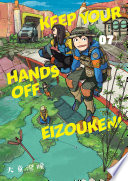
Keep Your Hands Off Eizouken!
A review of Keep Your Hands Off Eizouken! by Sumito Oowara — three high school girls form an anime-making club, and the manga keeps stepping inside their imaginations to show you what making something actually feels like.
Slice of Life / Comedy
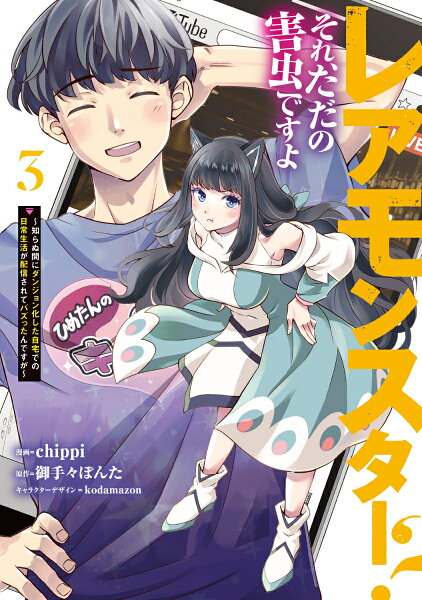
Nichijou: My Ordinary Life
Yu's review of Nichijou — a high school slice-of-life where ordinary situations escalate to catastrophic absurdity, a robot girl tries to hide what she is, and the Professor is an eight-year-old genius who made her.
Comedy / Slice of Life
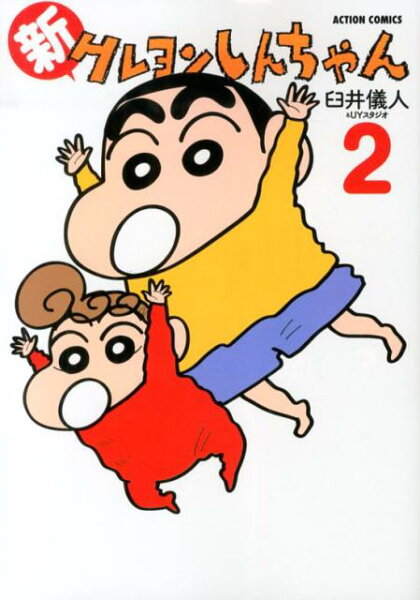
Crayon Shin-chan
A review of Crayon Shin-chan, Yoshito Usui's gag manga about a shameless five-year-old in suburban Saitama who says every embarrassing thing adults are too polite to say out loud.
Slice of Life / Comedy
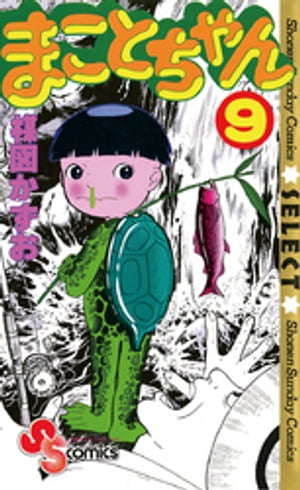
Makoto-chan
Makoto-chan follows an elementary school boy named Makoto whose irrepressible energy, endless mischief, and complete refusal to behave like a normal child make him a terror to everyone around him — depicted in the purest gag manga tradition by Kazuo Umezu.

Slice of Life
The Ryuo's Work Is Never Done!
A review of The Ryuo's Work Is Never Done! — the manga about a teenage shogi champion who ends up coaching a precocious elementary school girl, becoming entangled with a cast of passionate junior players.
Slice of Life / Comedy
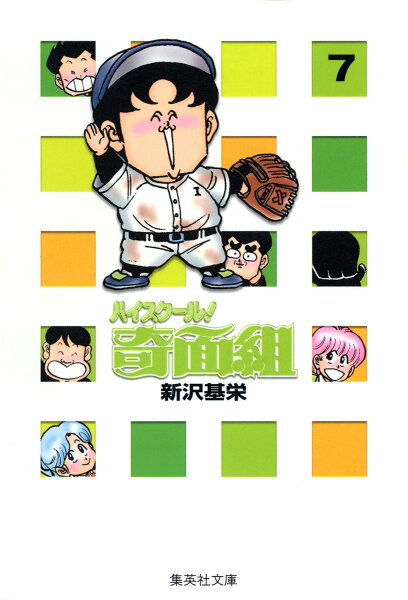
High School! Kimengumi
High School! Kimengumi follows five boys who turn their strange faces into a way of life, building one of the loudest, weirdest gag manga of 1980s Shonen Jump.
Written by
Yu
Manga Enthusiast from Japan
I grew up in Japan and manga literally saved me during a tough time in elementary school. My English isn't perfect, but my love for manga is real — and I want to share it with you.
Disclosure: This post contains affiliate links. As an Amazon Associate, I earn from qualifying purchases at no extra cost to you.