
D-Frag! Review: A Delinquent Who Wants to Be Feared, Trapped in the Loudest Club in School
by Tomoya Haruno
Read the first volume. If it doesn't hook you, put it down. It'll hook you.
Buy D-Frag! on Amazon →*Affiliate link — I earn a small commission at no extra cost to you.
When I was a kid I wanted to be scary. I thought if people were a little afraid of me, they would stop bothering me. It never worked. I am not a scary person, and everyone could tell. Kenji Kazama is the same, and that is why I laughed so hard at D-Frag!. He spends every chapter trying to be a feared delinquent, and the people around him simply do not cooperate. They are not impressed. They are not afraid. They just pull him into whatever stupid thing they are doing next.
I want to be honest with you up front. D-Frag! is not a deep manga. It is loud, fast, and it runs mostly on one engine. But it is a very good engine, and after a long week I sometimes just want to be made to laugh. This one does that.
Quick Take
- A school comedy built on one strong joke: a delinquent who wants to be feared, surrounded by people who are completely unafraid of him
- The Game Creation Club (provisional) members each push a different kind of chaos at him, which keeps the same joke from going stale across many volumes
- Rated T (Teen) — slapstick violence and some crude humor, nothing graphic
Who Is This Manga For?
- Readers who like a delinquent-meets-chaos setup where the delinquent is the straight man
- Anyone who enjoys loud ensemble comedy where each character has a distinct flavor of weird
- Fans of "club that doesn't do its club activity" school manga
- People who want a reliable laugh, not a plot to follow closely
Story Overview
Kenji Kazama is a first-year at Fujou High and the leader of his own little gang, the "Kazama Party." He wants a reputation. He wants to be one of the heavy delinquents in school. So he goes poking into the Game Creation Club's room looking to make trouble — and finds the four girls there have accidentally set their own clubroom on fire.
He helps put it out. That is his mistake. From that moment they decide he belongs to them. Roka Shibasaki, the club president, treats his recruitment as already settled. When he tries to resist and leave, the situation escalates until they "save" him from going out a window, and he caves. He is now a member of the Game Creation Club (provisional), a club that mostly does not create games.
There is no single overarching plot here. The structure is sketch comedy: Kazama tries to get away from the club, and the more he tries, the more he runs into not just the four girls but the rest of the school's lunatics. One running thread is that there is also a "real" Game Creation Club, led by a girl named Takao, who calls Kazama's group the fakes — and who, to Kazama's horror, slowly grows attached to him too. The series doesn't build to an ending so much as keep widening its circle of people who refuse to leave Kazama alone.
Characters
Kenji Kazama — The protagonist and the straight man. He genuinely wants to be a feared delinquent, and he genuinely fails at it, because everyone around him is too strange to be intimidated. The quiet truth of the series is that he keeps showing up for the club even while complaining, because he actually cares about these idiots.
Roka Shibasaki — The club president. She looks small and harmless and is openly called the strongest person in the school. Her "element" is Darkness, which in practice means she pulls a paper bag over your head so all you see is black. She carries spares. She is the one who decides Kazama is joining whether he likes it or not.
Chitose Karasuyama — The student council president, aligned with "Earth." She is the most powerful student politically and not shy about using it, and she develops a crush on Kazama that she expresses mostly by making his life harder.
Sakura Mizukami — A loud, energetic first-year tied to the "Water" element, who throws herself into the club's nonsense with full force and zero hesitation.
Takao — Leader of the "real" Game Creation Club, who insists Kazama's group are imposters, sets herself up as his rival, and then quietly starts catching feelings for him, which mortifies them both.
What I Love About It
The thing I love is how completely Kazama's intended image fails, over and over, in different ways. He walks in wanting to be feared, and the manga never once lets him have it. Roka doesn't argue with him about whether he's a tough guy — she just bags his head and moves on. Chitose doesn't take his threats seriously because she has more real power than he ever will. There is no moment where the cool delinquent finally gets respect. The joke is that he has decided who he is, and reality has decided otherwise, and reality is winning.
What keeps that from being mean is the second layer underneath it. Kazama complains about the club constantly. He says he wants nothing to do with them. And then he is always there. He helps. He worries about them. The series doesn't make a big speech about it — it just lets his actions quietly contradict his attitude, chapter after chapter. That gap, between the scary guy he wants to be and the soft guy his behavior reveals, is the warm center under all the shouting. I came for the gag and stayed because I liked him.
Memorable Scene ⚠️ Spoiler Warning
The one that sets the whole tone is the very beginning. Kazama, full of swagger, goes to the Game Creation Club's room expecting to assert himself — and instead finds the room is literally on fire and the girls are flailing around it. He ends up helping put it out, and that act of basic decency is treated by the club as a binding contract. There is no scary first impression for him to make. The room is burning. He's holding the extinguisher. And the girls have already decided he's theirs.
What I love about that opening is that it tells you the rule of the entire manga in one scene: Kazama does not get to control how anyone sees him. He wanted to walk in as a threat. He walks out as a club member who got volunteered against his will. Every later gag is just a new variation on that same powerlessness, and it's funny every time because he never stops trying.
Pros & Cons
Pros
- One strong, reliable joke executed with real energy
- Each club member adds a different flavor, so the ensemble keeps the premise fresh
- Kazama is genuinely likeable once you see through his act
- Easy to read in any order, easy to put down and pick back up
Cons
- Very little ongoing plot; it's a string of sketches, not a story with a destination
- The energy is relentless — it can feel like being shouted at for 200 pages
- Releases have been slow and irregular in Japan after a long hiatus
- It runs on one joke, and if that joke doesn't land for you in volume 1, it won't suddenly start working later — this one really won't work for everyone
Is D-Frag! Worth Reading?
If you want a smart, plotted story, no — this isn't that, and it never pretends to be. But if you want a loud, fast, genuinely funny school comedy about a guy who wants to be feared and is constantly denied that by the chaos around him, D-Frag! delivers exactly that, with enough variety in its cast to keep going for twenty volumes. It's comfort comedy. I reach for it when I'm tired and want to laugh.
Similar Manga
| Title | Its Approach | How D-Frag! Differs |
|---|---|---|
| Daily Lives of High School Boys | School ensemble comedy built on small everyday absurdities | D-Frag! is louder and centers one straight-man delinquent |
| Sket Dance | A school club that helps with odd jobs, mixing comedy and heart | D-Frag!'s club barely does anything and leans harder into pure gag energy |
| Nichijou | Surreal, high-energy slapstick about ordinary school life | D-Frag! keeps a single fixed protagonist as the anchor for its chaos |
Official English Translation Status
Seven Seas licensed D-Frag! for English release starting in 2014 and has published it steadily since; 19 volumes are out or scheduled in English while the Japanese series continues at 20 volumes and counting. It is ongoing.
Where to Buy
Read the first volume. If it doesn't hook you, put it down. It'll hook you.
This post contains affiliate links. If you purchase through these links, I may earn a small commission at no extra cost to you. As an Amazon Associate, I earn from qualifying purchases.
*Affiliate link — I earn a small commission at no extra cost to you.
More Manga You Might Like

Slice of Life / Comedy
Slow Start
Yu's review of Slow Start — Hana Ichinose started high school a year late due to illness, making her a year older than her classmates; the series follows her trying to fit in with her new friends while carrying the secret that she is different, in Tokumi Yuiko's characteristic warm and gentle 4-koma style.

Slice of Life
Ms. Koizumi Loves Ramen Noodles
Yu's review of Ms. Koizumi Loves Ramen Noodles — Koizumi is beautiful, cold, and unapproachable; she also has a complete and total dedication to ramen; she knows every shop, every regional style, every topping combination; Naru Narumi's food manga about a woman whose single passion is executed with absolute seriousness.
Slice of Life
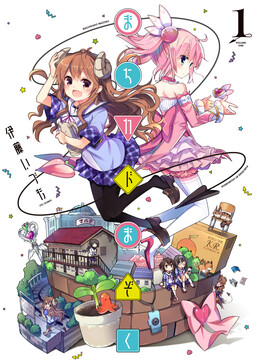
The Demon Girl Next Door (Machikado Mazoku)
Yu's review of The Demon Girl Next Door — Yuko Yoshida wakes up one day with horns and a tail, awakened as a descendant of a demon clan; her clan's curse can only be lifted by defeating a magical girl; she confronts her school's magical girl, Momo Chiyoda; the magical girl turns out to be friendly, competent, and far stronger; Izumo Ito's comedy manga about the most gentle rivalry.
Slice of Life
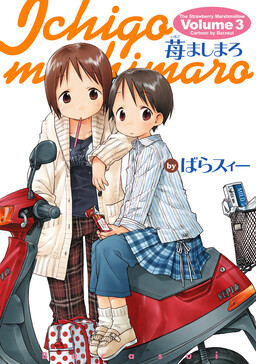
Ichigo Mashimaro
Yu's review of Ichigo Mashimaro — Nobue Itoh and the four grade-schoolers around her (her sister Chika, the chaotic Miu, the timid Matsuri, and British transplant Ana Coppola) drift through ordinary days in suburban Hamamatsu. Barasui's long-running deadpan comedy is built on Miu's relentless schemes and the cruel running joke of Ana forgetting her own English.
Slice of Life
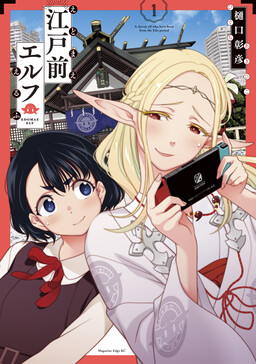
Otaku Elf (Edomae Elf)
Yu's review of Otaku Elf — Elda is a 600-year-old elf summoned to Japan by Tokugawa Ieyasu and enshrined as a goddess at Tokyo's Takamimi Shrine, but she's become a video-game-loving shut-in. Sixteen-year-old miko Koito Koganei tries to coax her out of her shell. Akihiko Higuchi's cozy comedy from Kodansha, in English from Seven Seas.

Slice of Life
Kill Me Baby
A review of Kaduho's Kill Me Baby — ongoing in Manga Time Kirara Carat since July 2008, 16+ volumes in Japan. Sonya is a trained assassin; Yasuna is her completely unfazed school friend. Yen Press publishes the English edition.
Written by
Yu
Manga Enthusiast from Japan
I grew up in Japan and manga literally saved me during a tough time in elementary school. My English isn't perfect, but my love for manga is real — and I want to share it with you.
Disclosure: This post contains affiliate links. As an Amazon Associate, I earn from qualifying purchases at no extra cost to you.