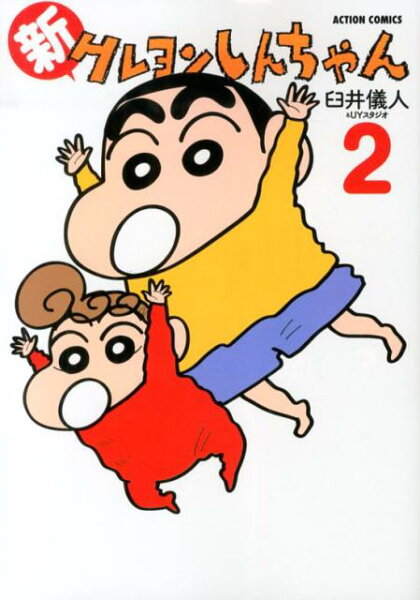
Crayon Shin-chan Review: A Five-Year-Old Who Says the Thing You're Not Allowed to Say
by Yoshito Usui
Read the first volume. If it doesn't hook you, put it down. It'll hook you.
Buy Crayon Shin-chan on Amazon →*Affiliate link — I earn a small commission at no extra cost to you.
I will be honest with you. The first time I read Crayon Shin-chan, I was a kid myself, and I read it because it was the rudest thing I could get my hands on. A five-year-old drawing an elephant on himself and dancing — that is the whole joke, and to a small boy who had no friends, it was the funniest thing in the world. I laughed where I was not supposed to laugh.
I came back to it as an adult and found something I did not expect. The jokes are still crude. But now I am closer to Hiroshi, the tired dad, than I am to Shin-chan. And reading it from that side of the page hits different. This is a gag manga about a terrible little boy, yes. It is also, quietly, about a family that loves each other anyway.
Quick Take
- A gag manga built around Shinnosuke "Shin-chan" Nohara, a five-year-old with zero filter and an instinct for the worst possible thing to say.
- Underneath the toilet humor is a warm, ordinary suburban family — the warmth is what made it last 50 volumes and 148 million copies.
- Age rating: M (Mature) — crude sexual gags and toilet humor performed by a child character. Read the Content Warnings section before you decide.
Story Overview
There is no grand plot here, and pretending otherwise would be lying to you. Crayon Shin-chan is episodic. Each chapter is a short, self-contained gag built around the daily life of the Nohara family in Kasukabe, a suburb in Saitama Prefecture.
The "beginning" is just the setup: Shin-chan is five, he goes to kindergarten, his father Hiroshi is a salaryman at Futaba Corporation, his mother Misae runs the house, and the whole comedy engine is that Shin-chan does not understand — or does not care about — a single social rule that adults live by. He says the embarrassing true thing. He flirts with grown women. He humiliates his parents in public on purpose.
If there is a "turning point" in the run, it is the arrival of Himawari, his baby sister, partway through the series. The family grows, and the gags grow with it. Yoshito Usui drew this from 1990 until his death in 2009 — he died after a fall at Mount Arafune on September 11, 2009. The original manga closed at 50 volumes (released through 2010), and after that his studio team continued it as New Crayon Shin-chan. So the "ending" is not a story ending. It is the loss of the man who created it, and a series that loved him enough to keep going.
Characters
Shinnosuke "Shin-chan" Nohara — five years old, in kindergarten, and completely shameless. His personality is the whole show: he is obsessed with butt-related humor, he has no embarrassment reflex, and he treats every adult social situation as a stage for the most inappropriate thing imaginable. The one person he tries (and fails) to behave for is his crush.
Hiroshi Nohara — the father. A salaryman at Futaba Corporation who leaves the household money to Misae. He is the most relatable character in the book if you are an adult: exhausted, decent, and constantly humiliated by his own son. The older I get, the more this is who I read the manga for.
Misae Nohara — the mother and housewife. The series gives her real flaws on purpose: she is caring but short-tempered and quick to jealousy, and her "menacing scowl" when Shin-chan crosses the line is a running visual gag. She is not a saint, which is exactly why she feels like a real mom.
Himawari Nohara and Shiro — Himawari is Shin-chan's baby sister, precocious and already showing her brother's mischief. Shiro is the family's small white dog, who is frequently smarter and more sensible than the humans around him. Both are added warmth to a household that runs on chaos.
What I Love About It
The gag I always come back to is "Zou-san" — Mr. Elephant. Shin-chan exposes himself, draws a little elephant, and wiggles while singing "Zou-san, Zou-san," which is a real, gentle Japanese children's song every Japanese kid grows up singing. That double layer is the whole genius of the manga in one bit. On the surface it is the dumbest, crudest toilet joke you can imagine. Underneath, Usui is taking something sweet and innocent — a nursery song — and weaponizing it through a child who has no idea he is being obscene. The humor is not that Shin-chan is dirty. It is that he is genuinely, totally innocent, and the adults around him are the ones who are horrified. The shame is theirs, not his.
That is what I did not understand as a kid and love now. Crayon Shin-chan is not laughing at a bad boy. It is laughing at all of us — at how much energy adults spend pretending, performing, staying polite. Shin-chan's "buri buri" butt dance, his shameless flirting with women three times his age, his refusal to read any room: every one of those gags is a small crack in the wall of adult composure. Watching Hiroshi and Misae try to hold their dignity together while their son detonates it is the comedy, and the love underneath the comedy is that they never stop being his parents. They are mortified and they stay. That is the part that stuck with me.
Memorable Scene ⚠️ Spoiler Warning
For me the most quietly memorable thread is not a single punchline but Shin-chan and Nanako Ohara. Nanako is a college student who dreams of becoming a kindergarten teacher, and she is the one person Shin-chan has a genuine crush on. The joke is that this shameless five-year-old, who will embarrass anyone anywhere, actually tries to behave when she is around — and fails, because of course he does.
What gets me is that Usui plays it straight enough that you feel a tiny real thing inside the gag: a little kid's first clumsy idea of liking someone, dressed up as a comedy bit. It is still crude. Shin-chan is still Shin-chan. But that small flicker of sincerity inside all the toilet jokes is why this manga is not disposable. Usui kept slipping warmth in where you least expected it.
Pros & Cons
Pros:
- The "Zou-san" / "buri buri" gags are genuinely, durably funny — and smarter than they look.
- The Nohara family is warm and real under the chaos; that is why it ran 50 volumes.
- Episodic format means you can open any chapter and start laughing.
Cons:
- The humor is crude and very sexual for a series about a five-year-old — that lands badly for some readers.
- It is episodic with no overarching story; if you need plot momentum, you will not find it here.
- The full English release was never completed, so collecting it in English is genuinely hard.
- Crude gag comedy about a child won't work for everyone — this is a manga you either click with on page one or never do.
Is Crayon Shin-chan Worth Reading?
If you want a story with an arc, no — this is not that book. But if you want one of the warmest, crudest, most quotable gag manga Japan ever produced, and you can laugh at a five-year-old who has no shame and a family that loves him through it, then yes, absolutely. It earned its 148 million copies honestly.
Content Warnings & Age Rating
Age Rating: M (Mature)
Content Warnings: crude sexual humor, toilet humor, and repeated inappropriate behavior performed by a five-year-old child character (exposure gags, flirting with adult women). The CMX English edition was rated for mature readers for exactly these reasons. This is not a kids' manga despite its kid protagonist — go in knowing that.
Similar Manga
| Title | Its Approach | How Crayon Shin-chan Differs |
|---|---|---|
| Yotsuba&! | Gentle, wholesome wonder of a small child discovering the world | Crayon Shin-chan goes for crude, mischievous shock instead of sweetness |
| Chi's Sweet Home | All-ages slice-of-life comedy centered on a pet | Crayon Shin-chan is firmly adult humor built around a human child |
| Azumanga Daioh | Observational school-life gag comedy with a soft touch | Crayon Shin-chan is louder, ruder, and built on one chaotic kid |
Official English Translation Status
This is the part to be honest about. Crayon Shin-chan has had English editions, but none of them finished the series, and none are in print today. ComicsOne released about ten volumes in the early 2000s with the content Americanized and edited. DC Comics' CMX imprint then published an uncensored, mature-rated version — eleven volumes from 2008 to 2010 — before CMX shut down. One Peace Books later reprinted the CMX translation in omnibus format starting in 2012, but that too stalled far short of all 50 volumes.
So there is no complete, currently-in-print official English release. The original Japanese edition from Futabasha is the only way to read the whole thing. I am treating it as Unlicensed for that reason.
Where to Buy
No English release yet. That just means you find it before everyone else does.
This post contains affiliate links. If you purchase through these links, I may earn a small commission at no extra cost to you. As an Amazon Associate, I earn from qualifying purchases.
*Affiliate link — I earn a small commission at no extra cost to you.
More Manga You Might Like
Slice of Life / Comedy
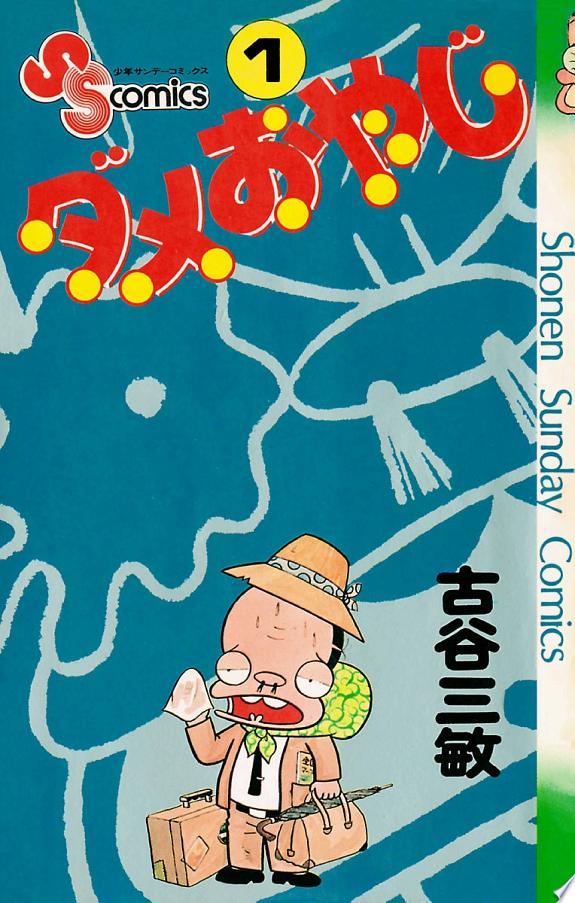
Dame Oyaji
A review of Mitsutoshi Furuya's Dame Oyaji — 39 volumes in Weekly Shōnen Sunday from 1970 to 1982. A dark gag manga about a salaryman father with no power at home, winner of the 1979 Shogakukan Manga Award.
Slice of Life / Comedy
Mainichi Kaasan
Mainichi Kaasan is a newspaper comic strip that ran in the Mainichi Shimbun for over a decade — autobiographical 4-koma strips about being a mother, a manga artist, a wife, and eventually a widow, drawn with humor and complete honesty.
Slice of Life / Comedy
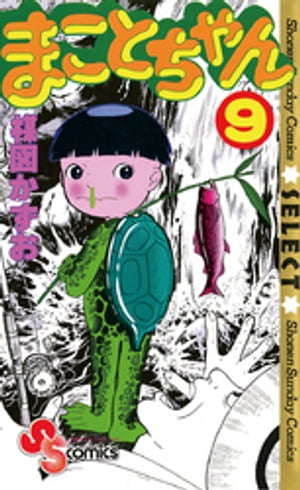
Makoto-chan
Makoto-chan follows an elementary school boy named Makoto whose irrepressible energy, endless mischief, and complete refusal to behave like a normal child make him a terror to everyone around him — depicted in the purest gag manga tradition by Kazuo Umezu.
Slice of Life / Comedy
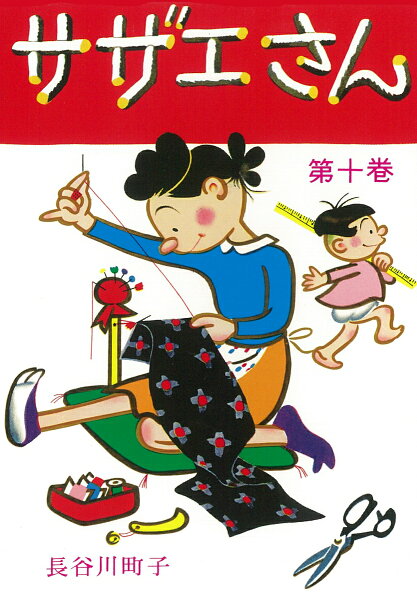
Sazae-san
Sazae-san is Japan's most enduring manga — a newspaper 4-koma that began in 1946 and ran for 28 years, following a cheerful, impulsive young woman named Sazae and her extended family through postwar Japan's transformation from devastation to prosperity.
Comedy / Slice of Life
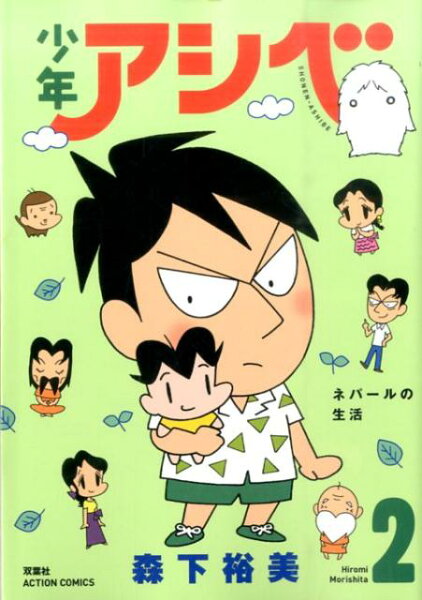
Shonen Ashibe
Shonen Ashibe follows Ashibe, an energetic young boy, and his pet baby seal Goma-chan — a white, round, extremely photogenic animal that causes chaos wherever it goes and is beloved by everyone who encounters it, to the exhausted amusement of Ashibe's father.
Comedy / Slice of Life
Chibi Maruko-chan
A review of Chibi Maruko-chan, Momoko Sakura's semi-autobiographical comedy about a lazy, scheming third-grade girl in 1970s Shimizu — and why the original manga is sharper than the gentle anime everyone knows.
Written by
Yu
Manga Enthusiast from Japan
I grew up in Japan and manga literally saved me during a tough time in elementary school. My English isn't perfect, but my love for manga is real — and I want to share it with you.
Disclosure: This post contains affiliate links. As an Amazon Associate, I earn from qualifying purchases at no extra cost to you.