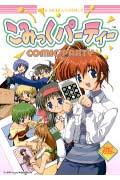
Comic Party Review: A Manga About Making Doujinshi, Drawn by Someone Who Actually Does It
by Sekihiko Inui
Read the first volume. If it doesn't hook you, put it down. It'll hook you.
Buy Comic Party on Amazon →*Affiliate link — I earn a small commission at no extra cost to you.
I have never drawn a doujinshi in my life. But I have stood in a Comiket line at 6 a.m. with my legs aching, holding a list of circles I needed to reach before they sold out, and I have watched friends pour months into 30 stapled pages they would sell for almost nothing. That world — the one Comic Party lives in — is a real place to me, even if I only ever stood on the buyer's side of the table. So when I read this manga, I kept smiling at how much it gets right.
Comic Party started as a Leaf/Aquaplus visual novel (not a Key game — I want to correct that, because people mix the two studios up). The manga version I'm reviewing here is by Sekihiko Inui, and the thing that makes it worth reading is simple: Inui actually sells doujinshi himself. He draws under his own circle. When he draws people sweating over a deadline, he isn't imagining it.
Quick Take
- A five-volume manga adaptation of the Leaf/Aquaplus visual novel, told mostly as comedy about the doujinshi scene and Comiket from the inside
- Drawn by Sekihiko Inui, a working doujinshi artist — the convention and deadline scenes have a lived-in accuracy you can feel
- Age rating: T (Teen) — otaku humor, light romance, and one running gag where the heroine swings a spiked bat. Nothing graphic
Story Overview
Kazuki Sendo is a college freshman who failed to get into the art school he was aiming for. He still wants to draw, and he tells his worried childhood friend Mizuki Takase that he can do that without the school name. Then his best friend Taishi Kuhonbutsu drags him to an event called Comic Party — a doujinshi convention — and something clicks. Kazuki sees thousands of people who made their own comics and sold them on their own terms, and decides he wants in.
Kazuki and Taishi form a circle they call "Brother 2," and the manga becomes the story of Kazuki learning to actually produce — to go from "I want to draw" to "I have a finished book to sell by the deadline." Along the way he runs into other creators: Eimi Ohba, a high-schooler who is already a star doujin artist, and Yu Inagawa, a mid-tier creator grinding away in the same scene. Mizuki, meanwhile, doesn't really get the obsession and worries that this hobby is swallowing the boy she grew up with.
Inui's adaptation leans hard into the making-doujinshi part and away from the visual novel's dating-sim structure. The game was, frankly, a romance fantasy about getting closer to girls while drawing comics. The manga keeps the romance light and puts the work itself — the panic, the all-nighters, the table on convention day — at the center. It also drops Subaru Mikage, a character who wasn't in the original PC release.
Characters
Kazuki Sendo — The reluctant entry point. He starts as a kid who wanted art school and got rejected, and the series is about him finding a different door into making things. His arc is the quiet discovery that drawing for an audience, on a deadline, for an event, feels different from drawing alone in his room — harder and more alive.
Taishi Kuhonbutsu — Kazuki's best friend and the one who lights the fuse. He's the evangelist, the guy whose enthusiasm doesn't leave room for "no." He pulls Kazuki to Comic Party in the first place and co-founds Brother 2. The series runs on his momentum.
Mizuki Takase — The childhood friend and main heroine, red hair in a ponytail. She's the outsider's voice — she doesn't share the doujin obsession and is half-worried, half-exasperated watching Kazuki disappear into it. Inui gives her a manga-original running gag (more on that below) that makes her the comedic anchor of the whole book.
Eimi Ohba and Yu Inagawa — The scene around Kazuki. Eimi is a high-school doujin star, already successful, a benchmark of what's possible. Yu is a mid-level creator, the kind of person who fills out the real ecosystem of a convention — not a celebrity, just someone who keeps showing up and making her books.
What I Love About It
The deadline scenes. There is a very specific feeling that doujinshi people know: you committed to a slot at an event months ago, the date is now real and close, and you have far too few finished pages. It's a panic with no villain in it — nobody is doing this to you, you did it to yourself, and the only way out is to keep drawing. Inui draws that state with the calm authority of someone who has lived it, because he has. The all-nighters, the despair at the page count, the grim push toward the convention morning — it lands because it isn't researched, it's remembered.
What I also love is how affectionate the whole thing is. A lot of media about otaku culture treats it as a punchline — look at these weird people. Comic Party never does that. It's funny, but the comedy comes from love, not contempt. The convention isn't a freak show; it's a place where ordinary people make something and put it in front of strangers, which is genuinely brave. As someone who only ever bought at those tables and never had the courage to sit behind one, the manga made me respect the people who do.
Memorable Scene ⚠️ Spoiler Warning
The single most memorable thing in Inui's version is a gag he invented for the manga that exists in neither the game nor the anime: Mizuki, the level-headed heroine, delivering her tsukkomi — her "are you serious right now" retorts — by swinging a spiked nail bat. The fandom literally nicknamed her "釘バット瑞希," Spiked-Bat Mizuki. When Kazuki or Taishi say something delusional about their grand doujinshi ambitions, the comedy beat is Mizuki winding up with this absurd weapon. It shouldn't work — it's pure cartoon violence — but it becomes the rhythm of the book, the way you know a joke has landed. It's the clearest example of Inui not just transcribing the source material but actually making the manga his own.
Pros & Cons
Pros
- Drawn by a real doujinshi artist — the Comiket and deadline scenes have genuine authenticity
- Light, fast, and complete in five volumes
- Treats otaku culture with affection instead of mockery
- Mizuki's spiked-bat gag gives it a distinct comedic identity the game and anime don't have
Cons
- Character development stays shallow by necessity of the short, gag-driven format
- Some cultural familiarity with Comiket and doujinshi helps a lot
- The romance is deliberately underplayed — if you came from the dating-sim game expecting that, you'll feel it missing
- It's a light comedy about a niche hobby; if you don't already find the doujin world interesting, this probably won't be the manga that changes your mind — and that's fine, it isn't trying to be for everyone
Is Comic Party Worth Reading?
For anyone curious about how Comiket and the doujinshi scene actually feel from the inside — yes, and the fact that the artist works in that scene himself is the selling point. It's an affectionate, fast, five-volume comedy with one genuinely memorable running gag. For readers who don't already care about doujin culture, it's a pleasant light read that doesn't demand much and doesn't pretend to be deep.
Similar Manga
| Title | Its Approach | How Comic Party Differs |
|---|---|---|
| Genshiken | Otaku club life with a deep, slow-built character ensemble | Genshiken is longer and more character-driven; Comic Party is lighter, gaggier, and centered on making doujinshi |
| Bakuman | The serious professional manga-making grind | Bakuman is ambitious and dramatic; Comic Party is comedic and about amateur doujin self-publishing |
| Wotakoi | Adult otaku romance in the workplace | Wotakoi is romance-first; Comic Party puts the creative process and the convention first |
Official English Translation Status
Tokyopop published all five volumes in English between 2004 and 2006. Because Tokyopop's manga line wound down years ago, the books are out of print, so you'll mostly be hunting used copies. Volume 1 (ISBN 1591828546) is the place to start.
Where to Buy
Read the first volume. If it doesn't hook you, put it down. It'll hook you.
This post contains affiliate links. If you purchase through these links, I may earn a small commission at no extra cost to you. As an Amazon Associate, I earn from qualifying purchases.
*Affiliate link — I earn a small commission at no extra cost to you.
More Manga You Might Like

Slice of Life / Comedy
Lucky Star
Yu's review of Lucky Star — Konata Izumi, an anime-obsessed high schooler, and her friends Kagami, Tsukasa, and Miyuki talk their way through school life in Kagami Yoshimizu's 4-koma comedy. It starts with a debate about how to eat a chocolate cornet and somehow never needs more plot than that.
Slice of Life / Comedy
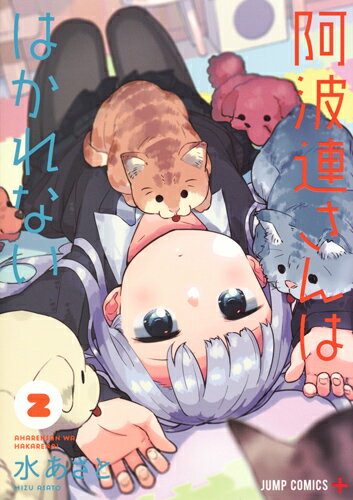
Aharen-san wa Hakarenai
Yu's review of Aharen-san wa Hakarenai — Raido can never read the distance with his tiny, near-inaudible deskmate Aharen, who has no sense of personal space; a gentle, absurd romantic comedy about two awkward people slowly finding their rhythm.
Slice of Life / Comedy
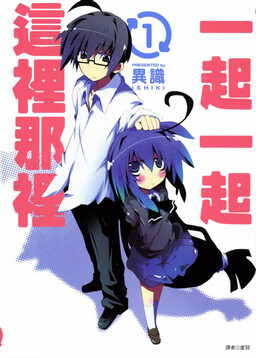
Acchi Kocchi
Yu's review of Acchi Kocchi — a four-panel comedy built around the unbearably cute mutual crush between tiny tsundere Tsumiki and gently oblivious cool-guy Io, surrounded by a warm group of friends.
Romance / Slice of Life
Hitomi-chan Is Shy With Strangers
A review of Hitomi-chan Is Shy With Strangers — the gap-moe romcom about a terrifying-looking girl who is secretly too shy to speak. Plot, characters, and whether it's worth reading.
Slice of Life / Comedy
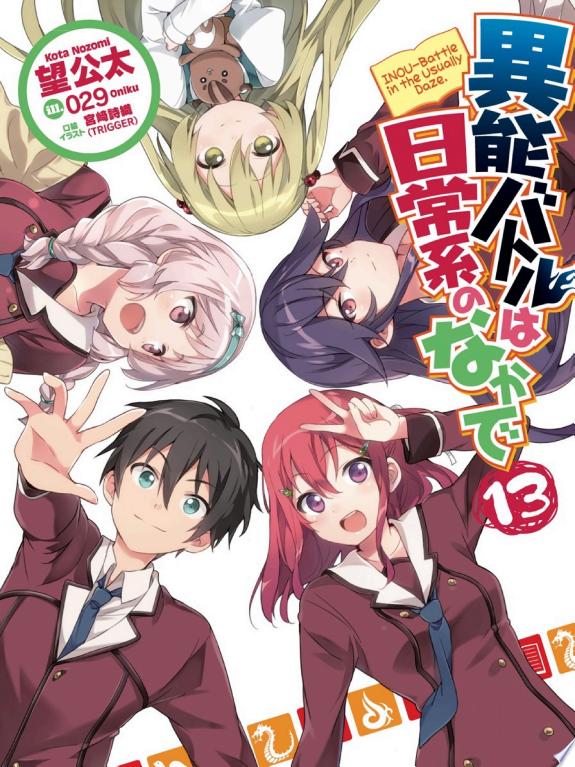
When Supernatural Battles Became Commonplace
When Supernatural Battles Became Commonplace follows the literature club members of Senko High School who suddenly develop supernatural powers — and then find that having powers changes absolutely nothing about their ordinary club activities and romantic dramas.
Slice of Life / Comedy
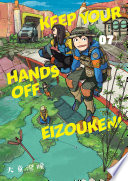
Keep Your Hands Off Eizouken!
A review of Keep Your Hands Off Eizouken! by Sumito Oowara — three high school girls form an anime-making club, and the manga keeps stepping inside their imaginations to show you what making something actually feels like.
Written by
Yu
Manga Enthusiast from Japan
I grew up in Japan and manga literally saved me during a tough time in elementary school. My English isn't perfect, but my love for manga is real — and I want to share it with you.
Disclosure: This post contains affiliate links. As an Amazon Associate, I earn from qualifying purchases at no extra cost to you.