Comic Girls Review: A Manga About Being Too Scared to Show Anyone Your Work
by Kaori Hanzawa
Read the first volume. If it doesn't hook you, put it down. It'll hook you.
Buy Comic Girls on Amazon →*Affiliate link — I earn a small commission at no extra cost to you.
When I was a kid, I drew too. Not well. I filled the backs of my notebooks with terrible little ninja, because in those years manga heroes were the only friends who never left the room. I never showed anyone. The fear that someone would look and not care was worse than being alone. So when I read about Kaoruko Moeta — a girl whose manga comes dead last in a reader survey and who panics over every small mistake — I felt like the book had reached into a part of me I keep quiet about.
Comic Girls is a soft little Kirara comedy on the surface. Cute girls, a dorm, deadlines, snacks. But underneath the moe softness it is about something I find very hard: making a thing, putting your name on it, and letting other people decide whether it was any good. That is the whole job of a manga artist. And this manga is honest about how scary that is.
Quick Take
- A gentle four-panel-style comedy about four teenage girls who all draw manga, living together in a dormitory and dragging each other toward their next deadline.
- It is light and warm, but the creator anxiety underneath feels real — the fear of bad survey results, the panic over a smudged page, the shame of work you think isn't good enough.
- Age rating: All Ages. Nothing graphic, nothing dark — safe for any reader.
Story Overview
Kaoruko Moeta draws four-panel (yonkoma) manga under the pen name "Kaos." The problem: her manga lands at the very bottom of a reader survey. Rather than drop her, her editor, Mayu Amisawa, recommends she move into the Bunhousha Dormitory — a residence specifically for female manga artists, run by housemother Ririka Hanazono, who used to draw yuri manga herself.
There Kaoruko rooms with Koyume Koizuka, a cheerful shōjo artist who can't draw boys, and lives alongside two slightly older serialized creators: Ruki Irokawa, who draws steamy "teens' love" romance despite being painfully shy, and Tsubasa Katsuki, a boyish-looking shōnen artist who is the most professional of the four. The series follows their daily life — school, deadlines, helping each other ink pages at 3 a.m., trying to figure out what kind of artist each of them wants to be.
There is no big dramatic plot. The turning point is internal: Kaoruko slowly stops measuring herself only by the survey numbers and starts to understand that drawing is something she does with people, not alone in a corner. By the end of the run's nine volumes (serialized in Manga Time Kirara Max from 2014 to 2023), the growth is quiet but real — she is still anxious, still cries easily, but she keeps drawing, and she lets people see it.
Characters
Kaoruko "Kaos" Moeta — The protagonist. A shy first-year who panics over the smallest mistake and bursts into tears when criticized. Her arc is not about becoming confident; it's about learning to keep going despite the fear. Her admiration for Tsubasa's professionalism and her friendship with Koyume are what pull her forward when the survey numbers don't.
Koyume Koizuka — Kaoruko's roommate, a bright and sociable shōjo artist with a huge appetite for sweets. Her running struggle is that she can't draw male characters well — a real problem for someone who wants to draw romance — and over the series she develops feelings for the boyish Tsubasa, which complicates both her drawing and her heart.
Ruki Irokawa — A senior in the dorm who produces popular, mature "teens' love" manga while being one of the most timid people in the building. The gap between the steamy pages she draws and the shrinking girl who draws them is the source of a lot of comedy, but it also says something real: the work and the person who makes it are not the same thing.
Tsubasa Katsuki — The boyish, serious shōnen artist, and the most grounded of the group. She becomes the steady professional the younger two look up to, and the unwitting object of Koyume's affection. She is the closest thing the dorm has to a role model for "this is what taking your craft seriously looks like."
What I Love About It
There is a quiet scene that stuck with me more than any of the comedy. Kaoruko gets so wound up over her work that she stops eating properly. Ririka, the housemother, doesn't lecture her. Instead she quietly contacts Kaoruko's parents to ask what foods she likes, and starts making them, so the dorm begins to feel like home and Kaoruko starts eating again. That's it. That's the whole scene. But it floored me.
Because that is exactly the kind of care I never had when I was the scared kid drawing in secret. Nobody noticed I was struggling; I made very sure of that. This manga understands that the thing a frightened young creator needs is not "work harder" or "believe in yourself." It's someone who notices you've gone quiet and stopped eating, and who responds with a plate of food instead of advice. Comic Girls keeps doing this — wrapping its anxiety in warmth, never letting Kaoruko fall too far before someone catches her. For a story about a girl who is terrified of being seen, it is deeply, deliberately gentle about the act of being seen.
Memorable Scene ⚠️ Spoiler Warning
Early on, Kaoruko helps Tsubasa finish a manuscript under a tight deadline. She's never really worked with professional ink-and-paper tools before, and she keeps making mistakes — smudging, ruining lines, the kind of small disasters that make her want to disappear. Watching her hands shake over someone else's important pages, knowing one slip could cost them, I felt the specific panic of it in my chest.
What makes the scene land is that nobody yells. Tsubasa and the others reassure her and keep her in the room instead of sending her away. For a girl whose entire fear is that she ruins things and lets people down, being allowed to make mistakes on real work — and being kept at the table anyway — is the whole arc in miniature. It's a small night of inking pages, but it's where Kaoruko first learns that being part of a team of artists means your mistakes don't get you exiled. They just get fixed, together.
Pros & Cons
Pros
- The creator anxiety feels genuine — the survey dread, the deadline panic, the fear of being judged are all drawn with real sympathy.
- Warm, low-stakes ensemble that's easy to relax into; the dorm setting gives it a cozy "found family" feeling.
- Each girl draws a different genre (yonkoma, shōjo, teens' love, shōnen), so the manga-about-manga jokes stay varied.
- All-ages clean — you can hand it to anyone.
Cons
- Almost no overarching plot; it's mood and character, not story.
- Kaoruko's growth is slow and gentle to the point that some readers will want more.
- It is firmly in the moe Kirara tradition, and that softness is either the whole appeal or a wall you bounce off — this one genuinely won't work for everyone.
Is Comic Girls Worth Reading?
If you want a cozy, all-ages comedy about young artists supporting each other through the terror of putting their work in front of the world, yes — it's one of the warmer entries in the Kirara catalog, and the creator anxiety underneath gives it more heart than its cute surface suggests. If you need plot, tension, or fast growth, this gentle dorm comedy will feel too slow for you.
Similar Manga
| Title | Its Approach | How Comic Girls Differs |
|---|---|---|
| Bakuman | Serious, dramatic look at two boys chasing manga stardom | Comic Girls is soft, all-ages comedy, not a high-stakes career drama |
| Hidamari Sketch | Kirara slice-of-life about art students sharing an apartment | Comic Girls centers on the specific terror of publishing and reader surveys |
| New Game! | All-female workplace comedy in game development | Comic Girls is about teenage creators and school life, not a professional office |
Where to Buy
No English release yet. That just means you find it before everyone else does.
There's no licensed English edition of Comic Girls — the Japanese print and digital release is the only legitimate way to read it right now.
Find こみっくがーるず on Amazon.co.jp →
This post contains affiliate links. If you purchase through these links, I may earn a small commission at no extra cost to you. As an Amazon Associate, I earn from qualifying purchases.
*Affiliate link — I earn a small commission at no extra cost to you.
More Manga You Might Like

Slice of Life
Asteroid in Love
Yu's review of Asteroid in Love (Koisuru Asteroid) by Quro — Mira promised to find an asteroid and name it after her friend Ao, because there's already a star called Mira but nothing in the sky carries Ao's name. A Manga Time Kirara Carat earth-sciences-club story about astronomy, geology, and a childhood promise that grows up with the girls keeping it.
Slice of Life
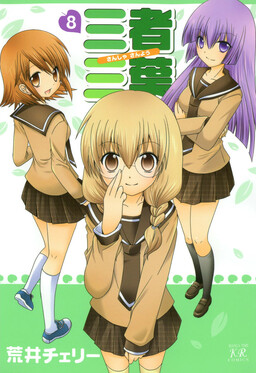
Sansha Sanyou
Yu's review of Sansha Sanyou — Youko Nishikawa (formerly wealthy), Futaba Odagiri (enthusiastic eater), and Teru Hayama (smiling sadist) are three incompatible high school girls who end up eating lunch together and become friends; Cherry Arai's gentle comedy about the friendships that form despite personality differences.
Slice of Life / Comedy
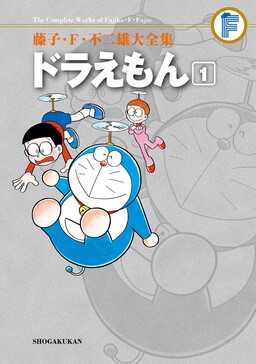
Doraemon
Yu's review of Doraemon — a robot cat from the 22nd century, sent back to help a hopeless boy named Nobita with gadgets from his four-dimensional pocket. Fujiko F. Fujio's most beloved work, and the manga every Japanese kid grows up inside.

Slice of Life / Comedy
Squid Girl
Yu's review of Squid Girl — Ika Musume (Squid Girl) emerges from the sea to conquer humanity as revenge for ocean pollution; she is immediately defeated by the Aizawa sisters who run a beach house and ends up working there to pay for property damage; world conquest is repeatedly delayed.
Slice of Life / Comedy
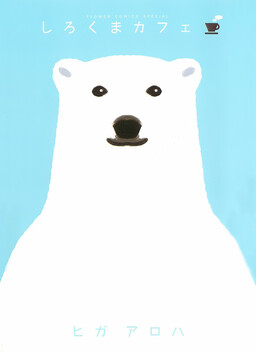
Shirokuma Cafe
Yu's review of Shirokuma Cafe — a polar bear named Shirokuma runs a café near the zoo; Panda works part-time there (poorly), Penguin is a regular customer, and the humor comes from animal characters behaving with human social conventions while remaining animals.
Slice of Life / Comedy
Non Non Biyori
Yu's review of Non Non Biyori — five students in a tiny rural school (total enrollment: five) experience the small, seasonal rhythms of countryside life in a mountain village far from anything.
Written by
Yu
Manga Enthusiast from Japan
I grew up in Japan and manga literally saved me during a tough time in elementary school. My English isn't perfect, but my love for manga is real — and I want to share it with you.
Disclosure: This post contains affiliate links. As an Amazon Associate, I earn from qualifying purchases at no extra cost to you.