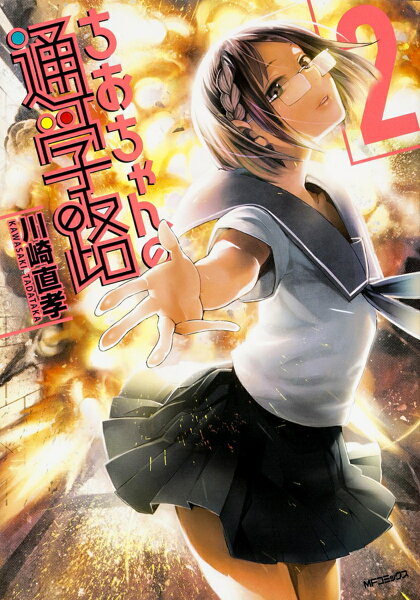
Chio's School Road Review: The Walk to School Is the Most Dangerous Part of a Gamer Girl's Day
by Tadataka Kawasaki
Read the first volume. If it doesn't hook you, put it down. It'll hook you.
Buy Chio's School Road on Amazon →*Affiliate link — I earn a small commission at no extra cost to you.
I was the kind of kid who knew the exact route to school that avoided the most people. Which alley to cut through so I wouldn't have to walk past the noisy group. Which timing meant I'd reach the gate alone. The walk to school was never just a walk for me. It was planning. So when I opened Chio's School Road and found a girl who turns her commute into a full tactical operation — except she's doing it because she stayed up too late playing games, not because she's hiding from anyone — I laughed harder than I had in a long time. It's the dumbest possible version of something I took very seriously, and that's exactly why I love it.
Quick Take
- A gamer girl named Chio Miyamo treats the ordinary walk to school like a video game level, applying parkour, stealth, and FPS logic to problems that did not need any of it.
- Tadataka Kawasaki builds each chapter on escalation — one small premise (a closed road, a delinquent, an awkward classmate) pushed past the edge of reason.
- Rated T (Teen): slapstick, delinquent/gang comedy, and some mild crude humor, but nothing graphic.
Story Overview
The setup is almost insultingly simple. The series is, on paper, about "high school girl Chio Miyamo walking from her house to her school." That's it. That's the whole map.
The problem is Chio herself. She stays up too late playing Western video games — Assassin's Creed-style climbers, stealth games, first-person shooters — and her brain has rewired itself so that every obstacle on the way to school becomes a level to be cleared. In the very first chapter, her usual route is blocked by construction, and instead of just walking around, she remembers the assassin game she was playing hours earlier and decides to take to the rooftops. In her head it's effortless. In reality she can barely haul herself onto the roof, and once she's up there she's completely wrecked.
From there the series cycles through the cast of people she meets on that road — her best friend Manana, a delinquent she humiliates by accident, polite classmates, a morals-committee girl — and each one becomes a new "stage" Chio has to survive. Because it's serialized comedy built around a single walk, there's no grand finale; the series simply runs its premise for nine volumes and stops when the joke has been fully explored. The English release from Yen Press covers all nine and ends with Chio, fittingly, still just trying to make it to school before the bell.
Characters
Chio Miyamo — The "below average" gamer at the center of it all. Her defining trait isn't that she games; it's that her gaming brain has completely colonized her common sense. She genuinely believes the climbing, the stealth crawling, and the combat reflexes she's built up in games are transferable life skills, and the comedy is watching that belief collide with reality every single morning. She's also desperate not to be seen as weird by her classmates, which is hopeless, because everything she does is weird.
Manana Nonomura — Chio's best friend since elementary school. On the surface they're close, but the relationship runs on a current of low-grade mutual betrayal — they'll cheerfully sell each other out for a small advantage or a laugh. Manana is the one who escalates situations Chio wanted to keep small, and their bickering, scheming friendship is the emotional spine the comedy hangs off of.
Mayuta Andou — A delinquent biker who has one of the best running arcs in the series. Chio accidentally elbows him off his motorcycle, and to escape the situation she puts on her online gamer persona, "Bloody Butterfly," acting unhinged enough to genuinely scare him. It works too well: terrified, he quits gang life entirely, ends up working as a convenience store clerk, and develops a clumsy crush on the girl he now thinks is some kind of terrifying badass. He's not a "good guy" by normal standards, and he's one of the most likable people in the book.
The school-road regulars — Yuki Hosokawa, the polite sports ace; Momo Shinozuka, a morals-committee member nursing a crush on a teacher; and others who turn each commute into a fresh social minefield Chio is hilariously unequipped to navigate.
What I Love About It
The Andou arc is the moment the series clicked for me. Chio elbows a biker gang member off his bike — already an absurd accident — and instead of apologizing or running, she defaults to the only confrontation skill she actually has: pretending to be her edgelord online avatar. She summons "Bloody Butterfly," the persona she uses in games, and commits to it so completely that this hardened delinquent decides she must be genuinely dangerous and noped out of his entire criminal lifestyle.
What I love is that it's not a power fantasy. Chio doesn't beat him. She doesn't earn the reputation. She lucks into it by being a weird gamer who can't read a normal social situation, and then the manga has the patience to follow the consequences for chapters and chapters. Andou becomes a convenience store clerk, still half-scared of her, slowly turning his fear into a crush. That's the engine of this whole manga to me — the gap between what Chio is actually doing (panicking, improvising, being a dork) and how the world chooses to interpret it. I spent my school years terrified of being seen as strange. Chio is constantly seen as strange and it keeps accidentally working out for her. There's something genuinely freeing in that.
Memorable Scene ⚠️ Spoiler Warning
The rooftop opening is the scene that sells the whole concept in a couple of pages. Chio's normal route to school is closed off by construction. A normal person walks around the block. Chio, running on a few hours of sleep and a head full of the assassin-climber game she just put down, looks at the buildings and decides the rooftops are the obvious solution.
The art does the heavy lifting here. There's the version in Chio's imagination — smooth, cinematic, a hooded protagonist flowing across the skyline — cut hard against the reality of an exhausted teenage girl scrabbling and grunting just to get her body onto a single roof, then lying there gassed out, having gained nothing and lost a lot of time. It's the entire thesis of the manga in miniature: video game logic is real to Chio and only to Chio, and the universe charges her full price for believing in it. Once you've seen this scene you understand exactly what every later chapter is going to do to you.
Pros & Cons
Pros
- Complete in 9 volumes from Yen Press — a clean, contained comedy you can actually finish.
- The escalation structure is consistent and tightly executed; chapters build instead of repeating.
- Andou and Manana are excellent recurring characters with real comedic arcs, not just one-note gags.
- Very fast, very high joke density — easy to read in big chunks.
Cons
- It's almost pure comedy; if you need emotional weight or a plot that "goes somewhere," it deliberately doesn't.
- A few jokes lean on knowing Western video games (stealth and FPS references) to land fully.
- The humor is loud, absurd, and frequently crude — that's either the whole appeal or a dealbreaker, depending entirely on your tolerance for nonsense. It won't work for everyone.
Is Chio's School Road Worth Reading?
Yes, if you want a tight, finished comedy that does one ridiculous thing extremely well. It has no grand ambitions beyond making the walk to school the funniest part of your day, and across nine volumes it delivers that with smart escalation and a genuinely lovable supporting cast. Skip it only if you're looking for emotional depth or a story with stakes — Chio is here to make you laugh, nothing more.
Similar Manga
| Title | Its Approach | How Chio's School Road Differs |
|---|---|---|
| Daily Lives of High School Boys | Sketch-style school comedy built on escalating dumb premises | Chio funnels everything through one girl and one walk, with a gaming-logic gimmick driving the absurdity |
| Nichijou | Surreal everyday comedy where mundane moments explode into chaos | Chio keeps a consistent realistic-ish setting; the chaos comes from Chio's choices, not reality bending |
| Daily Lives... aside, Wagnaria!! (Working!!) | Character-defined ensemble comedy, gags from personality clashes | Chio is more premise-driven and solo-protagonist focused, structured around the commute itself |
Where to Buy
Read the first volume. If it doesn't hook you, put it down. It'll hook you.
This post contains affiliate links. If you purchase through these links, I may earn a small commission at no extra cost to you. As an Amazon Associate, I earn from qualifying purchases.
*Affiliate link — I earn a small commission at no extra cost to you.
More Manga You Might Like

Slice of Life / Comedy
Nichijou: My Ordinary Life
Yu's review of Nichijou — a high school slice-of-life where ordinary situations escalate to catastrophic absurdity, a robot girl tries to hide what she is, and the Professor is an eight-year-old genius who made her.
Slice of Life / Comedy
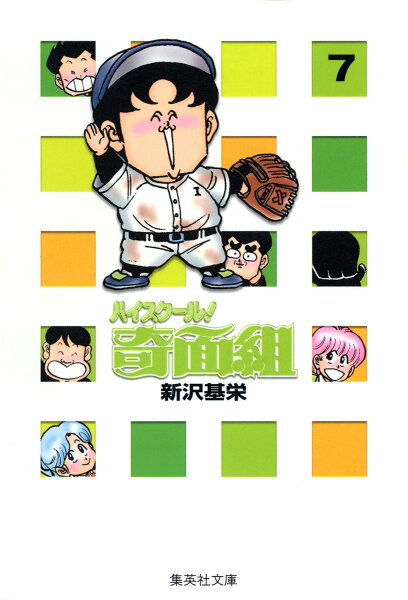
High School! Kimengumi
High School! Kimengumi follows five boys who turn their strange faces into a way of life, building one of the loudest, weirdest gag manga of 1980s Shonen Jump.
Slice of Life / Comedy
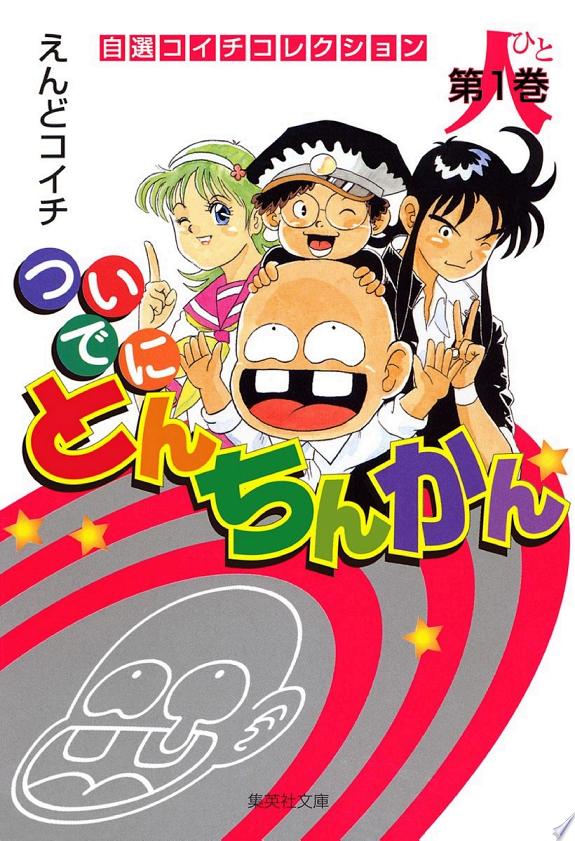
Tondemo-kun
Tondemo-kun follows a trio of delinquent students whose plans to cause trouble consistently backfire in ways that are so spectacularly wrong they accidentally create good outcomes — a comedy built entirely on the gap between intention and result.
Comedy / Slice of Life
Macaroni Houren-sou
Macaroni Houren-sou follows three high school students living together in a boarding house — Toshio Shingami, the energetic straight man; Kinoshita, the eccentric wildcard; and Trapp, the cool foreigner — in a surreal comedy that uses the school-life setting as a launching pad for increasingly unhinged humor.

Slice of Life / Comedy
Yugami-kun ni wa Tomodachi ga Inai
Yugami-kun ni wa Tomodachi ga Inai (Yugami Has No Friends) follows Yugami Yuuichirou, a high schooler who has chosen — actively, deliberately — not to have friends, and Chihiro Otsuka, the transfer student determined to understand why. A 17-volume Sunday comedy about friendship's value examined through its absence.
Slice of Life / Comedy
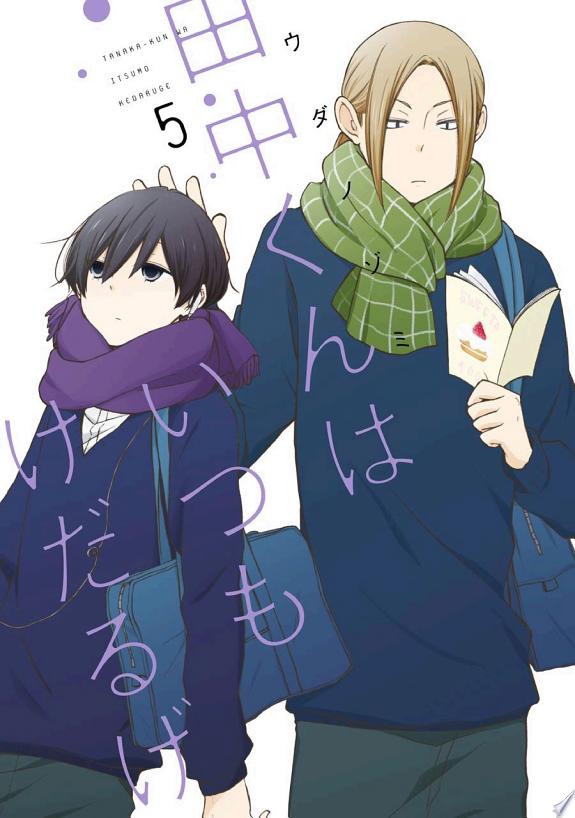
Tanaka-kun Is Always Listless
Yu's review of Tanaka-kun Is Always Listless — Tanaka is a high school boy whose entire being is devoted to doing as little as possible; his best friend Ohta carries him when necessary; the series follows Tanaka's profound listlessness encountering the energetic, enthusiastic people around him without disturbing his fundamental peace.
Written by
Yu
Manga Enthusiast from Japan
I grew up in Japan and manga literally saved me during a tough time in elementary school. My English isn't perfect, but my love for manga is real — and I want to share it with you.
Disclosure: This post contains affiliate links. As an Amazon Associate, I earn from qualifying purchases at no extra cost to you.