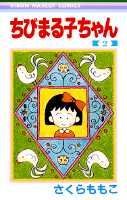
Chibi Maruko-chan Review: The Lazy, Honest Little Girl Who Is Funnier on Paper Than on TV
by Momoko Sakura
Read the first volume. If it doesn't hook you, put it down. It'll hook you.
Buy Chibi Maruko-chan on Amazon →*Affiliate link — I earn a small commission at no extra cost to you.
Almost everyone in Japan knows Maruko from the TV anime — the pink theme song, the round little face, the warm Sunday-evening feeling. That is the version I grew up hearing in the background. But the manga came first, and when I finally sat down and read Momoko Sakura's actual pages, I was honestly a little shocked. The Maruko on TV is sweet. The Maruko in the manga is lazy, a little greedy, and brutally honest about it. She schemes. She judges people in her head. And somehow that made me love her more, not less.
I think that is because the manga Maruko is closer to how children actually are. When I was a lonely kid, I was not a noble little hero either. I was tired, I cut corners, I told myself small lies to feel okay. Reading Maruko, I felt seen in a way the cleaned-up anime never quite reached. This is a review of the original manga — not the show.
Quick Take
- The original manga is sharper and more cynical than the famous anime — the same world, but with the edges left on.
- It is single-episode comedy: no big plot, just one perfectly observed slice of 1970s childhood after another.
- Rated All Ages — there is nothing graphic here, just an honest, slightly mischievous kid.
Story Overview
Chibi Maruko-chan is the semi-autobiographical work of Momoko Sakura, based on her own childhood. The "Maruko" of the title is a third-grade girl living in Shimizu, Shizuoka, in the 1970s, with her parents, her older sister Sakiko, and her grandparents. There is no ongoing storyline in the usual manga sense — almost every chapter is a self-contained episode about ordinary life: a school excursion, a summer afternoon, a chorus contest, a stomachache no one believes.
The "turning point" of the series is not in the plot but in the format. Sakura began it in the magazine Ribon in 1986, drawing from memories of her grade-school years. It ran on and off for decades, and after Sakura's death in 2018, her assistants at Sakura Production continued it from her notes. The series finally closed with its 18th and final collected volume in October 2022. So the ending is real-world and quietly sad: the author who turned her own small-town childhood into a national treasure passed away, and the last volume gathered the final chapters she left behind.
Characters
Maruko (Momoko Sakura) — The third-grade narrator. In the manga she is far less idealized than on TV: easygoing to the point of laziness, quick to scheme, and openly self-interested in her inner monologue. Her arc is not growth toward perfection — it is the slow, funny acceptance that she is who she is. Her famous line, roughly "I'll be a fool my whole life, so I might as well be a cheerful, lively fool," is basically her whole worldview.
Sakiko — Maruko's older sister, in sixth grade. She is the responsible, image-conscious one, which makes her the perfect foil. Where Maruko shrugs and cuts corners, Sakiko frets about appearances, and a lot of the household comedy comes from the gap between them.
Tomozou (Grandpa) — In the work he is Maruko's gentle, doting ally, always on her side. The fascinating part, which Sakura herself admitted, is that her real grandfather was cold and unkind — she drew Tomozou as the ideal grandfather she wished she'd had. Knowing that turns his warmth into something a little heartbreaking.
The classmates — Tamae ("Tama-chan"), the gentle, dependable best friend; Hanawa, the absurdly wealthy, gentlemanly boy; the gloomy Nagasawa whose house burns down; and the goofy Hamaji. Each one exists to bounce off Maruko's flaws and let the small dramas of grade school play out.
What I Love About It
What I love is how honest the manga lets a child be. There is a school-excursion episode where Maruko is given a small budget — 200 yen — for snacks, and she sits down and strategizes: a portion for snacks everyone can share, a portion for treats just for herself, a portion for the familiar candy she always likes. It is such a small thing, but I laughed out loud, because that is exactly how a real kid thinks. Not generous, not selfish — just carefully, seriously balancing her own little economy of joy.
The anime would smooth that into something cute. The manga lets it stay a tiny, true portrait of a self-interested nine-year-old, and it respects her enough not to judge her for it. That is what hit me. As a kid I was full of these small private calculations and felt ashamed of them, like good children didn't think that way. Sakura's manga says: yes they do, all of them, and it's funny and human and fine. Reading it as an adult felt like getting permission to forgive the kid I used to be.
Memorable Scene ⚠️ Spoiler Warning
The episode that stayed with me is "Ono-kun and Sugiyama-kun." Two boys in Maruko's class who are always inseparable have a serious falling-out. The whole class feels the chill of it. Then the school chorus contest becomes the thing that slowly pulls them back together — singing in the same group, they find their way back to being friends.
And then comes the gut-punch: Ono-kun is transferring schools. Just as they reconcile, one of them is leaving for good. It is the rare Chibi Maruko-chan story that is built to make you cry as much as laugh, and it became a theatrical-film episode for exactly that reason. What I remember is how unsentimental Sakura keeps it — childhood friendships repair right at the moment they end, and life simply moves the pieces apart anyway. That quiet honesty about how friendships end without anyone doing anything wrong is something I felt in my own bones.
Pros & Cons
Pros:
- The original manga is funnier and more truthful than the beloved anime — the cynicism and small cruelties of childhood are left intact.
- Self-contained episodes make it easy to pick up and put down.
- A precise, warm record of 1970s small-town Japanese life.
Cons:
- No overarching plot — if you need momentum and stakes, this has none.
- Some 1970s references (idols, products, customs) need context for non-Japanese readers.
- It is gentle, episodic, slow comedy. If you came for drama or adventure, this won't work for you — that quietness is either the whole point or a dealbreaker depending on who you are.
Is Chibi Maruko-chan Worth Reading?
Yes — if you want honest, observational comedy about being a kid more than you want a story that goes somewhere. The original manga is sharper than its famous anime, and Maruko's lazy, scheming, openly human inner voice is one of the most truthful child characters in manga. Come for nostalgia and gentle laughs; stay for how kindly it treats a flawed little girl.
Where to Buy
No English release yet. That just means you find it before everyone else does.
There is no licensed English edition of the manga — the Japanese print and digital release is the only legitimate way to read it.
Search Japanese editions on Amazon.co.jp →
This post contains affiliate links. If you purchase through these links, I may earn a small commission at no extra cost to you. As an Amazon Associate, I earn from qualifying purchases.
*Affiliate link — I earn a small commission at no extra cost to you.
More Manga You Might Like
Slice of Life / Comedy
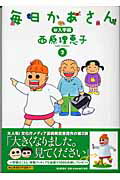
Mainichi Kaasan
Mainichi Kaasan is a newspaper comic strip that ran in the Mainichi Shimbun for over a decade — autobiographical 4-koma strips about being a mother, a manga artist, a wife, and eventually a widow, drawn with humor and complete honesty.
Slice of Life / Comedy
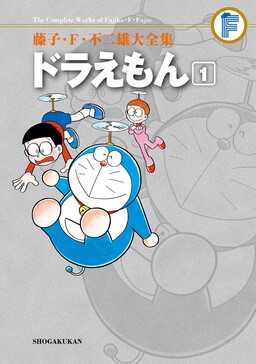
Doraemon
Yu's review of Doraemon — a robot cat from the 22nd century, sent back to help a hopeless boy named Nobita with gadgets from his four-dimensional pocket. Fujiko F. Fujio's most beloved work, and the manga every Japanese kid grows up inside.
Comedy / Slice of Life
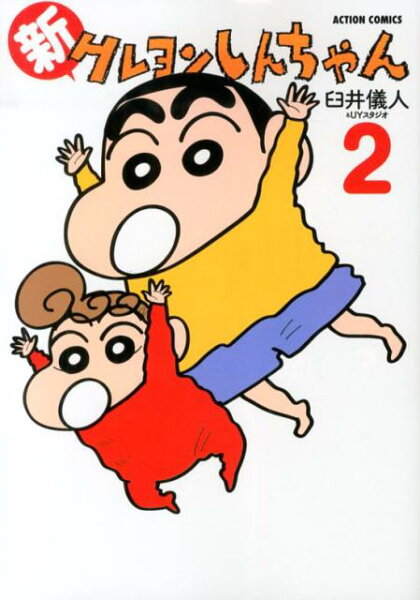
Crayon Shin-chan
A review of Crayon Shin-chan, Yoshito Usui's gag manga about a shameless five-year-old in suburban Saitama who says every embarrassing thing adults are too polite to say out loud.
Slice of Life / Comedy
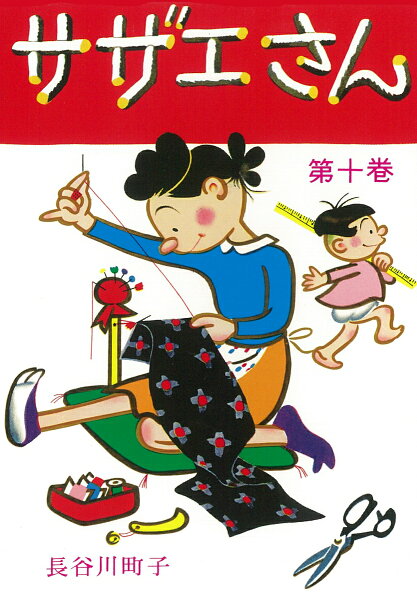
Sazae-san
Sazae-san is Japan's most enduring manga — a newspaper 4-koma that began in 1946 and ran for 28 years, following a cheerful, impulsive young woman named Sazae and her extended family through postwar Japan's transformation from devastation to prosperity.
Comedy / Slice of Life
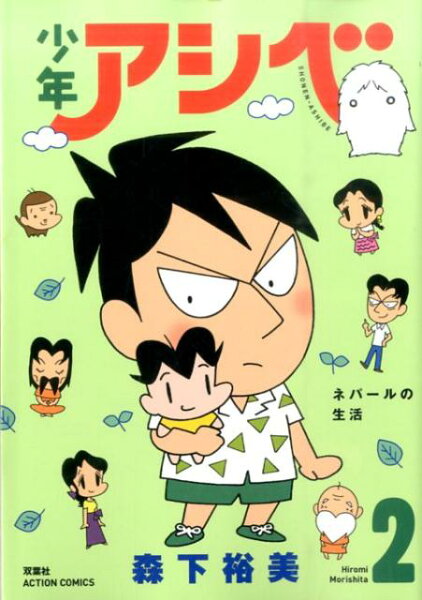
Shonen Ashibe
Shonen Ashibe follows Ashibe, an energetic young boy, and his pet baby seal Goma-chan — a white, round, extremely photogenic animal that causes chaos wherever it goes and is beloved by everyone who encounters it, to the exhausted amusement of Ashibe's father.
Slice of Life / Comedy
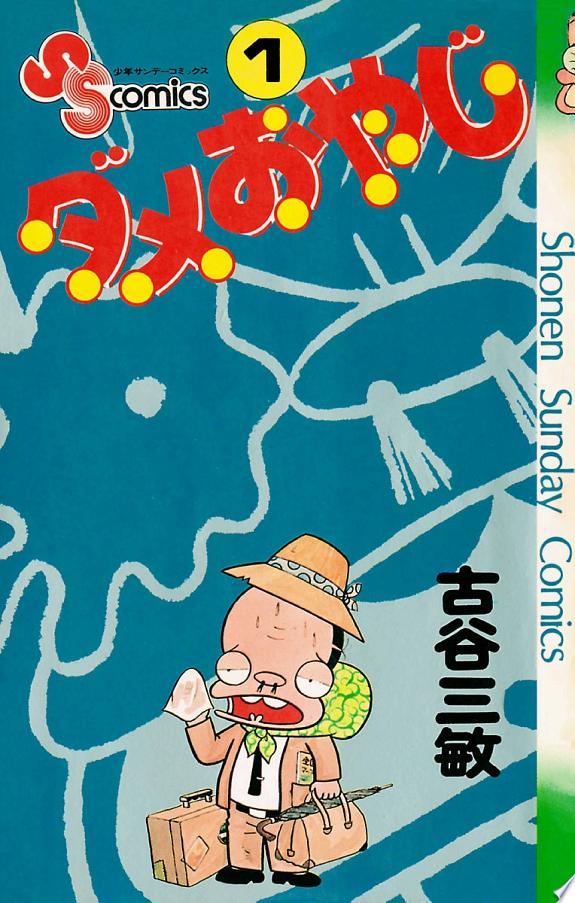
Dame Oyaji
A review of Mitsutoshi Furuya's Dame Oyaji — 39 volumes in Weekly Shōnen Sunday from 1970 to 1982. A dark gag manga about a salaryman father with no power at home, winner of the 1979 Shogakukan Manga Award.
Written by
Yu
Manga Enthusiast from Japan
I grew up in Japan and manga literally saved me during a tough time in elementary school. My English isn't perfect, but my love for manga is real — and I want to share it with you.
Disclosure: This post contains affiliate links. As an Amazon Associate, I earn from qualifying purchases at no extra cost to you.