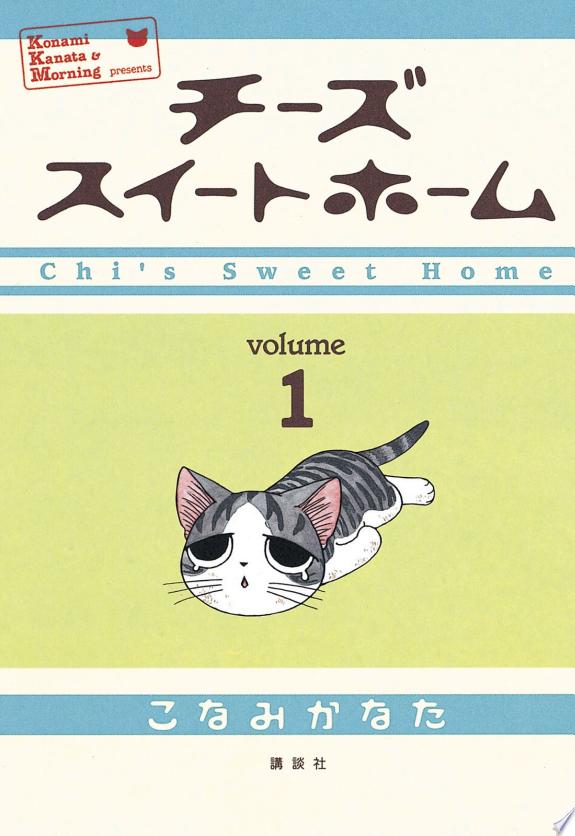
Chi's Sweet Home Review: The Cat Manga That Made Me Want to Apologize to Every Cat I've Ignored
by Konami Kanata
Read the first volume. If it doesn't hook you, put it down. It'll hook you.
Buy Chi's Sweet Home on Amazon →*Affiliate link — I earn a small commission at no extra cost to you.
I am not really a cat person. I grew up with no pets at all — when you have no friends, your parents do not exactly rush to hand you a living thing to take care of. So when people told me Chi's Sweet Home was "the best cat manga," I shrugged. I figured it was cute pictures and nothing under them.
I was wrong, and it embarrassed me. This is a manga told almost entirely from inside a kitten's head, in full color, and by the time I closed the last volume I genuinely wanted to apologize to every cat I had ever walked past without looking at. Chi does not know she is in a story. She knows there is a warm lap, something good smelling in the kitchen, a small loud human, and a big scary world outside the window. That is the whole magic of it.
Quick Take
- A lost kitten named Chi is taken in by the Yamada family — who live in a no-pets apartment — and the manga follows her growing up almost entirely from her own cat-brain point of view
- Full color from start to finish, with art so precise about cat body language that owners will recognize their own cat on every page
- All Ages — genuinely one of the most universally readable manga there is; safe to hand to a child and still quietly moving for an adult
Story Overview
Chi is a tiny kitten who gets separated from her mother and littermates while out on a walk. She wanders, scared and alone, until she is found in a park by Yohei Yamada, a kindergarten-age boy, and his mother. The family already lives in an apartment building with a strict no-pets rule, so the plan at first is simple: find this kitten a new home and let her go.
They cannot do it. She stays. The turning point of the whole series is that quiet failure to give her away — the moment a temporary problem becomes a permanent family member they now have to hide from the landlord. From there the manga settles into Chi's daily life: learning what a litter box is, discovering sunbeams, meeting the neighborhood cats, being terrified of dogs, slowly understanding that this apartment is "home." Eventually the secret-pet tension is resolved when the family moves to a place where Chi can live openly.
The final stretch, in volume 12, is where the gentle comedy turns into something real. Yohei's father gets a job that means the family is preparing to move to France — and at the same time, a lost-cat poster of Chi surfaces, leading back toward the mother cat Chi was separated from at the very start. The manga that spent eleven volumes being adorable suddenly asks one hard question: where, and with whom, is Chi's actual home?
Characters
Chi — The protagonist, a grey-and-white kitten, written as an astonishingly accurate cat rather than a cute mascot. Her arc is simply growing up: from a frightened lost baby who cannot understand why her mother is gone, into a confident cat who has claimed a territory, a family, and a best friend. The masterstroke is that we hear her think and the humans never can — so the whole emotional weight of the ending rests on the fact that Chi does not consciously understand the choice being made about her life.
Yohei Yamada — The young boy who finds Chi. Cheerful, kind, completely devoted to her. His arc is the mirror of Chi's: he is the one who actually grasps, in the final volume, that reuniting Chi with her birth mother might mean losing her, and his refusal to let that happen is the most human moment in the book.
Miwa and Kento Yamada — Yohei's parents. Miwa is the stay-at-home mother who first brings Chi in; Kento is a graphic designer who works from home and grows openly fond of the cat he keeps pretending is an inconvenience. Their arc is the slow, unspoken admission that this animal is family — and in volume 12, the genuine moral knot of whether the "right" thing is to return Chi to her original owner.
Blackie — A large black tomcat (Kuroino in Japanese) Chi meets outside, the first cat she encounters who is not her own family. He becomes her mentor and protector, teaching her how to actually be a cat — how to fight, hunt, and survive outdoors. He is the one who introduces the wider world that exists beyond the Yamadas' apartment.
What I Love About It
What got me was the naming. Early on, the family is trying to think of what to call this kitten, and the name they land on — Chi — comes from Yohei. When Yohei needs the bathroom, he yells "chii!" And so the kitten they are quietly housebreaking, who keeps having accidents in the wrong places, ends up named after a toddler's word for needing to pee. And Chi has absolutely no idea. She thinks it is simply her name, a proud and important sound the humans make at her.
I love this because it is the whole manga in miniature. The reader is in on a joke the character will never understand, and yet the joke is not cruel — it is tender. That gap, between what Chi knows and what we know, is where every good moment in this series lives. Konami Kanata never breaks it. Chi is never secretly wise, never a stand-in for a human child with a tail. She is a cat, gloriously limited to food, warmth, fear, and curiosity, and the author trusts that her honest little point of view is enough to carry twelve full-color volumes. It is. That trust is rare, and I did not appreciate how rare until I tried to imagine a lazier version of this book.
Memorable Scene ⚠️ Spoiler Warning
The one that stays with me is in the final volume. Chi, out in the world, runs into traffic — and is saved from a car by an adult cat who turns out to be her birth mother, the one she lost in chapter one. The Yamadas take the injured mother cat in and nurse her back to health, and it is during this time that Chi, slowly, on her own, begins to remember the truth: that this family was never her first family, that there was a "before."
What makes it land is the structure of the secret the whole series has kept. We always knew Chi was lost. Chi did not. For twelve volumes she has been perfectly, blissfully home, and now the manga gently forces the question she was never able to ask. Yohei understands what is at stake before anyone — that reuniting Chi with her mother could mean giving her up — and clings to her. The parents are caught between doing the "right" thing and breaking their son's heart. It is the only stretch of the series aimed squarely at the adult reader, and after eleven volumes of warmth it hit much harder than a cat manga has any right to.
Pros & Cons
Pros
- The most accurate, least sentimental cat characterization I have read in manga
- Full color throughout — the art genuinely is the selling point
- Completely all-ages, the rare manga you can hand to a child and still be quietly moved by as an adult
- A final volume that finds real emotional weight without betraying its gentle tone
Cons
- Low plot density by design — most of it is small daily moments, not story arcs
- The no-pets-apartment tension can feel repetitive before it resolves
- It is slow and soft and quiet, and if you want incident on every page, this won't work for you — that softness is the entire point, or it is a dealbreaker, depending on the reader
Is Chi's Sweet Home Worth Reading?
Yes — especially if you have ever loved a cat. It is gentle, beautiful, genuinely funny, and it earns a surprisingly emotional finish, all while staying completely accessible to any age. Go in expecting daily-life comfort reading rather than a plot, and the final volume will still catch you off guard.
Similar Manga
| Title | Its Approach | How Chi's Sweet Home Differs |
|---|---|---|
| Yotsuba&! | Wonder-at-small-things slice of life from a child's view | Trades the human child for a cat, and stays inside her limited animal point of view |
| What's Michael? | Earlier Kodansha cat manga, gag-comedy and variety | Follows one continuous story and one kitten growing up, not standalone jokes |
| Flying Witch | Calm, warm, low-stakes everyday magic | Same gentle warmth, but built entirely around an animal's perspective rather than people's |
Where to Buy
Read the first volume. If it doesn't hook you, put it down. It'll hook you.
This post contains affiliate links. If you purchase through these links, I may earn a small commission at no extra cost to you. As an Amazon Associate, I earn from qualifying purchases.
*Affiliate link — I earn a small commission at no extra cost to you.
More Manga You Might Like
Comedy / Slice of Life
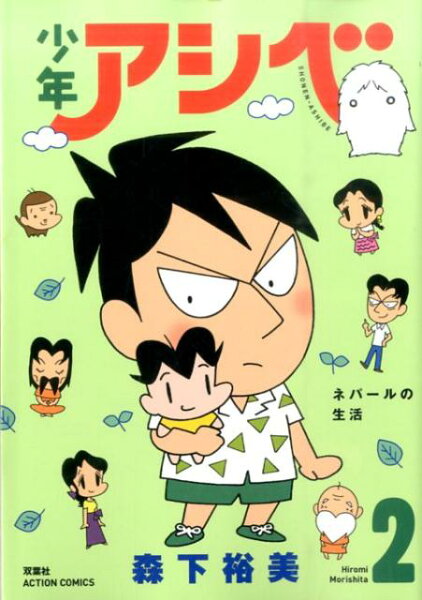
Shonen Ashibe
Shonen Ashibe follows Ashibe, an energetic young boy, and his pet baby seal Goma-chan — a white, round, extremely photogenic animal that causes chaos wherever it goes and is beloved by everyone who encounters it, to the exhausted amusement of Ashibe's father.
Slice of Life / Comedy
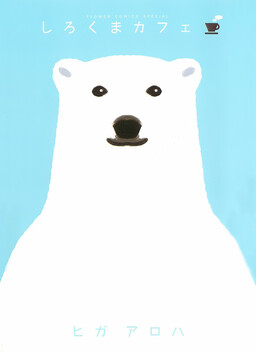
Shirokuma Cafe
Yu's review of Shirokuma Cafe — a polar bear named Shirokuma runs a café near the zoo; Panda works part-time there (poorly), Penguin is a regular customer, and the humor comes from animal characters behaving with human social conventions while remaining animals.
Slice of Life / Comedy
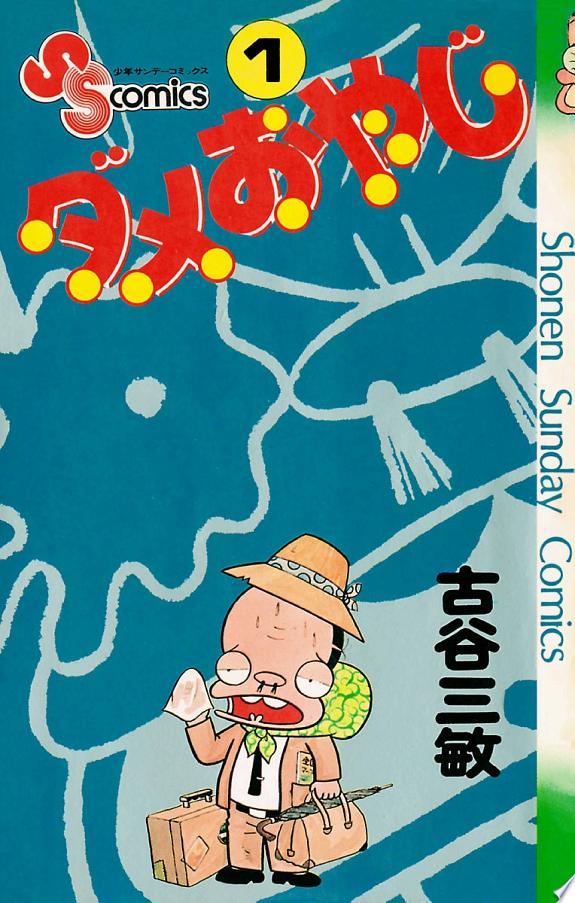
Dame Oyaji
A review of Mitsutoshi Furuya's Dame Oyaji — 39 volumes in Weekly Shōnen Sunday from 1970 to 1982. A dark gag manga about a salaryman father with no power at home, winner of the 1979 Shogakukan Manga Award.
Slice of Life / Comedy
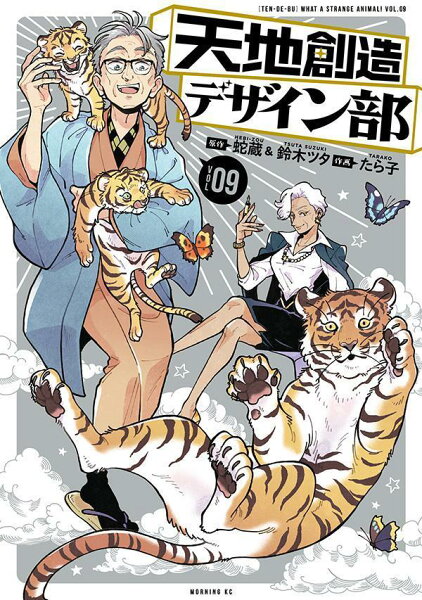
Heaven's Design Team
Heaven's Design Team imagines that God outsourced the creation of Earth's animals to a design firm of demigods. Each chapter is a new brief — 'I want a creature that does X' — and the team argues, prototypes, and engineers its way to an animal that actually exists, with real biology notes at the end.
Slice of Life / Comedy
Tensai Bakabon
Tensai Bakabon is Fujio Akatsuka's landmark gag manga about the Bakabon family — a household where the father's complete detachment from logic is presented as wisdom, and the world's attempts to impose reason are the actual problem.
Slice of Life / Comedy
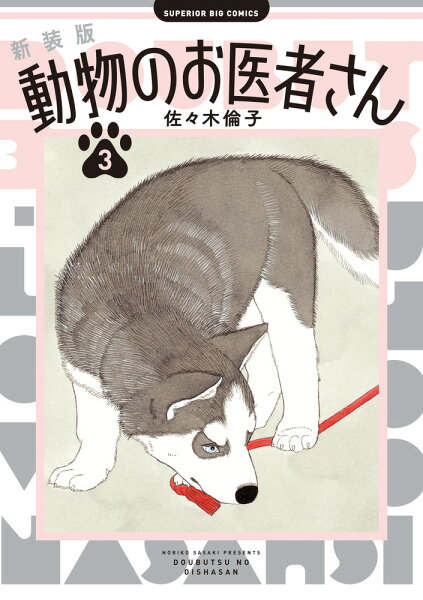
Doubutsu no Oisha-san
Doubutsu no Oisha-san follows Hamutaro, a quiet veterinary student in Hokkaido, his deadpan husky Chobi, and the warm chaos of vet-school life — a 12-volume Hana to Yume comedy so popular it set off a real Siberian Husky boom across Japan.
Written by
Yu
Manga Enthusiast from Japan
I grew up in Japan and manga literally saved me during a tough time in elementary school. My English isn't perfect, but my love for manga is real — and I want to share it with you.
Disclosure: This post contains affiliate links. As an Amazon Associate, I earn from qualifying purchases at no extra cost to you.