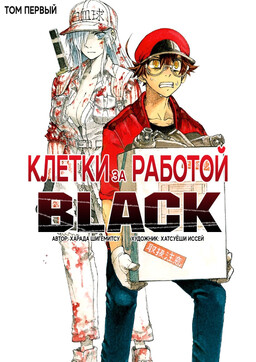
Cells at Work! CODE BLACK Review: The Same Biology Lesson, But Now the Body Is Killing Its Workers
by Shigemitsu Harada (story) / Issei Hatsuyoshiya (art) / Akane Shimizu (supervision)
Read the first volume. If it doesn't hook you, put it down. It'll hook you.
Buy Cells at Work! CODE BLACK on Amazon →*Affiliate link — I earn a small commission at no extra cost to you.
I loved the original Cells at Work!. It taught me biology while making me smile — the white blood cells were heroes, the platelets were tiny and adorable, and even a cold felt like an adventure. So when I picked up CODE BLACK, I thought I was getting more of that. I was not. About thirty pages in, I realized I was reading a horror story about overwork, and the monster was a man who would not stop drinking. This is the same cellular world I loved, but the body it lives inside is slowly destroying the workers who keep it alive. It scared me more than most actual horror manga I have read.
Quick Take
- Same anthropomorphized-cell premise as Cells at Work!, but set inside an unhealthy adult man who smokes, drinks heavily, and ignores his health — turning a cute biology lesson into a brutal workplace tragedy
- The cells are not having adventures; they are exhausted laborers in a "black company" (Japanese slang for an abusive employer), fighting threats their own boss creates
- Rated M (Mature) — graphic disease, a sexually transmitted infection chapter, smoking and drinking throughout, and the death of a major character
Story Overview
The structure copies the original on purpose. Cells are workers. Red blood cells deliver oxygen. White blood cells (neutrophils) kill invaders. The difference is the workplace: this body belongs to a stressed adult man who smokes, drinks too much, eats badly, and does not rest.
The story begins with AA2153, a brand-new red blood cell, starting his first day full of idealism. He quickly learns the truth — the blood vessels are clogged with cholesterol, the oxygen supply is unreliable, and his coworkers are dying at a rate the cheerful original never showed. The body lurches from crisis to crisis: a smoking-poisoned lung, a fatty liver drowning in alcohol, a gonorrhea infection, a kidney stone, a gout attack where cells literally riot.
The turning point is the death of AA2153's best friend (see the spoiler section). After that, the manga stops pretending it is fun. The ending comes when the body finally suffers a myocardial infarction — a heart attack — caused by everything the man did to himself. The cells fight through it; the human collapses and is resuscitated by an external defibrillator and a stent. Afterward, the man finally quits smoking and drinking. The body improves. For the first time, the cells get to work in something close to peace. It is a hopeful ending, but it is earned through real loss.
Characters
AA2153 (Red Blood Cell) — The rookie protagonist. He starts idealistic, gets ground down by the brutal conditions, and is nearly broken by grief partway through. His arc is the whole point: he has to decide whether to keep doing his job in a system that does not deserve him. By the end, after the body recovers, he matures into someone who works with purpose rather than naive cheer.
U-1196 (Neutrophil / White Blood Cell) — The white blood cell, presented as a dependable senior-sister figure who mentors AA2153. She fights a constant losing battle against the infections that flood a body with a compromised immune system, struggling with overwork and self-doubt while refusing to quit. Her grim competence is the emotional spine of the series.
AC1677 (Red Blood Cell) — AA2153's best friend. Cowardly, anxious, loyal. His fate is the hinge the entire story turns on, and what he does in his final moment recolors everything that comes after.
J-1178 (Neutrophil) — An experienced, jaded white blood cell who eventually pairs with U-1196. Where U-1196 carries hope, J-1178 carries cynicism, and the two together form what the series frames as the strongest partnership — two workers who have stopped expecting the body to ever treat them fairly.
What I Love About It
What I love is that CODE BLACK never lets the cells off the hook and never blames them either. In the original, when something goes wrong, the cells fix it and you feel good. Here, when something goes wrong, you slowly understand it is not their fault — it is the man's fault. He smoked. He drank. He skipped sleep. And these tiny workers pay for it with their lives, doing their jobs with exhausted professionalism while their employer poisons the building they work in.
That is what makes it hit so hard for me. I grew up in Japan, where "black company" is a word everyone knows and karoshi — death from overwork — is a real, documented thing people die from. CODE BLACK takes that exact dread and makes it literal. The cells are us. The body is the company. When U-1196 keeps fighting infections she cannot possibly win because nobody else will, I did not see a white blood cell. I saw every coworker I have watched burn out for a boss who would replace them in a week. The cute art style from the original makes it worse, not better — these are the same adorable cells, smiling, dying. That contrast is the cruelest, smartest thing the manga does.
Memorable Scene ⚠️ Spoiler Warning
The death of AC1677 is the scene I cannot forget. The body develops a gastric ulcer — the stress and bad habits damage the stomach lining, and gastric acid breaks loose. AA2153 and AC1677 are caught as the floor collapses beneath them. AC1677, the timid friend who was scared of everything, grabs AA2153's collar and throws him to safety — and the motion sends AC1677 himself straight into the gastric acid. Then the Gastric Chief Cell orders the platelets to seal the wound, closing off any chance of rescue. He is gone.
What wrecked me was the aftermath. Back home, AA2153 sits alone in the dark and says he is done — he does not want to work anymore. Death had been normalized in this body; cells die constantly here. But losing his best friend is the thing that finally breaks him. He had faced every horror with courage until this one, and this one shattered him. I have rarely seen a "cute biology manga" earn a moment of grief this real. It stops being a clever gimmick and becomes a story about what it costs to keep showing up.
Pros & Cons
Pros
- The cellular allegory makes overwork culture viscerally real in a way most direct stories cannot
- The biology stays accurate and genuinely educational even as the tone darkens
- AC1677's death and AA2153's grief give the series real emotional weight
- A complete 8-volume run with a hard-earned, genuinely hopeful ending
Cons
- It is bleak — the darkness is intentional but relentless, and the M-rated content (the STD chapter, graphic disease) is uncomfortable on purpose
- It hits hardest if you have read the original first, since the contrast is the engine
- If you came to Cells at Work! for comfort and cute platelets, this will feel like a betrayal — that grimness is either the whole appeal or a dealbreaker, depending entirely on you
Is Cells at Work! CODE BLACK Worth Reading?
Yes — if you want the cute biology premise turned into a sharp, mature tragedy about overwork and bad choices catching up with you. The science is accurate, the grief is real, and the 8-volume run lands a hopeful ending. Just know it is bleak by design; if you wanted the warm comfort of the original, this is the opposite of that.
Content Warnings & Age Rating
Age Rating: M (Mature)
Content Warnings: Graphic depictions of disease and bodily dysfunction; the death of a major character; a chapter centered on a sexually transmitted infection; constant smoking and heavy drinking; and a sustained overwork-and-despair tone. This is a seinen series, not the family-friendly original.
Similar Manga
| Title | Its Approach | How CODE BLACK Differs |
|---|---|---|
| Cells at Work! | The original — same cell premise inside a generally healthy body, warm and educational | Sets the same world inside a dying, abused body and makes it a tragedy |
| Moyasimon | Microorganisms anthropomorphized for educational comedy, college setting | Trades comedy for grief and a brutal overwork allegory |
| Aggretsuko | Cute character design hiding a sharp critique of Japanese work culture | Uses biology instead of office life, and pushes far darker |
Where to Buy
Read the first volume. If it doesn't hook you, put it down. It'll hook you.
This post contains affiliate links. If you purchase through these links, I may earn a small commission at no extra cost to you. As an Amazon Associate, I earn from qualifying purchases.
*Affiliate link — I earn a small commission at no extra cost to you.
More Manga You Might Like
Slice of Life / Romance
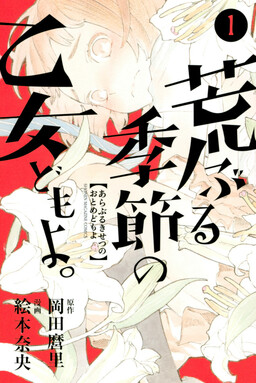
O Maidens in Your Savage Season
Yu's review of O Maidens in Your Savage Season — five high school girls in a literature club encounter adult themes through their reading and must suddenly reckon with their own desires, confusion, and the specific terror of not knowing what you want or whether what you feel is acceptable.
Slice of Life / Comedy
Wagnaria!! (Working!!)
Yu's review of Wagnaria!! — Souta Takanashi starts working at a family restaurant because a tiny girl asked him to; his coworkers include a woman with androphobia, a katana-carrying floor chief, an invisible manager, and a girl who thinks she might be in love with him; chaos is the default state.
Slice of Life / Romance
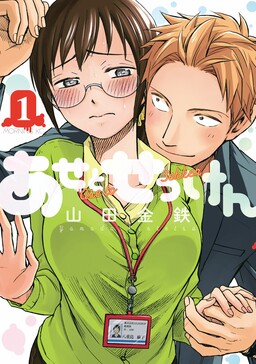
Sweat and Soap
Yu's review of Sweat and Soap — Asako Yaeshima sweats profusely and has always been ashamed of it; Kotaro Natori works in product development for a hygiene company and has an extremely sensitive nose; he encounters Asako and finds her natural scent extraordinary; what follows is an adult romance about two people whose specific qualities fit together in an unexpected way.

Slice of Life / Romance
It's Not Meguro-san's First Time
Yu's review of It's Not Meguro-san's First Time — Seiya Furutachi confesses to Ryo Meguro, an unusual woman at his workplace who doesn't fit the typical romance heroine template; both of them are adults who have had previous relationships, which makes their developing relationship proceed differently than the typical manga romance.

Comedy / Slice of Life
Detroit Metal City
Yu's review of Detroit Metal City — Soichi Negishi moved to Tokyo to write gentle acoustic pop about kisses and raspberries, and ended up as Johannes Krauser II, the demonic frontman of a death metal band the fans believe murdered his own parents. He hates it. He is incredibly good at it. That gap is the whole joke, and it never stops being funny.
Slice of Life / Comedy
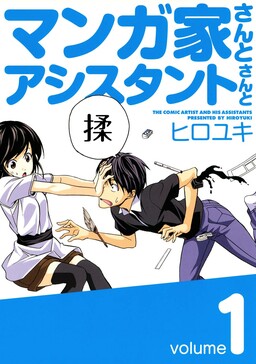
Mangaka-san to Assistant-san to
Yu's review of Mangaka-san to Assistant-san — manga artist Aito Yuuki draws romance manga but has never had a girlfriend; his assistant Ashisu Sahoto helps him understand women so he can write them authentically, which leads to increasingly absurd 'research' situations.
Written by
Yu
Manga Enthusiast from Japan
I grew up in Japan and manga literally saved me during a tough time in elementary school. My English isn't perfect, but my love for manga is real — and I want to share it with you.
Disclosure: This post contains affiliate links. As an Amazon Associate, I earn from qualifying purchases at no extra cost to you.