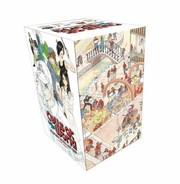
Cells at Work! Review: A Biology Lesson That Made Me Cry Over a White Blood Cell
by Akane Shimizu
Read the first volume. If it doesn't hook you, put it down. It'll hook you.
Buy Cells at Work! on Amazon →*Affiliate link — I earn a small commission at no extra cost to you.
In school, biology was the subject I failed the hardest. I remember staring at a diagram of the immune system and feeling nothing — just lines and arrows and words I would forget by the test. Nobody told me that inside my own body, trillions of workers were running around keeping me alive while I sat there bored.
Then I read Cells at Work!, and a manga did in one volume what my textbook never could. It made me care about my own blood. I am not exaggerating when I say I got emotional over a white blood cell doing his job. If you have ever thought science was cold and dead, this is the manga that proves it is the opposite.
Quick Take
- One of the few "educational" manga that is genuinely funny and genuinely moving — the cell characters' jobs map exactly onto real biology, so you learn without noticing
- Red Blood Cell AE3803 and White Blood Cell U-1146 carry the whole series with warmth you do not expect from a science lesson
- 6 volumes, complete. Rated T (Teen) — the immune response is drawn as combat with some blood, but nothing disturbing
Story Overview
The setting is the inside of a human body, drawn as an enormous city. Akane Shimizu personifies the cells as workers: Red Blood Cell AE3803 is a rookie delivery girl carrying boxes of oxygen and nutrients through the circulatory system, and she has a terrible sense of direction. White Blood Cell U-1146 is a neutrophil — calm, polite, and absolutely lethal to any pathogen that gets inside. Early on, AE3803 keeps stumbling into danger, and U-1146 keeps showing up to save her. That is the thread that runs through everything.
Each chapter is a biological event told as a story. A bacterial invasion through a scrape wound. A pollen allergy that turns the body into a war zone. A common cold. Heatstroke. The cells respond exactly the way real cells do, which is the whole trick — the drama is the biology. The turning point in tone comes with the cancer cell chapters, where the comedy gives way to something genuinely sad, and you realize the series was never only a joke.
It ends after six volumes, having walked through a full catalogue of what a body goes through, while never losing the small relationship at its center: the red blood cell who is always lost, and the white blood cell who always finds her.
Characters
Red Blood Cell (AE3803) — The protagonist and our point-of-view rookie. She is earnest, energetic, and constantly lost, which is the point: her getting lost is how Shimizu shows you how complicated the circulatory system actually is. Over the series she grows more confident at her deliveries, and her bond with U-1146 deepens from "person who keeps rescuing me" into real trust.
White Blood Cell (U-1146) — A neutrophil, dressed all in white, stained with the blood of the pathogens he kills. His arc is the gap between his gentle manner and his brutal job. He is unfailingly kind to AE3803 and the other cells, then turns terrifying the instant a germ appears. He is far more than his role on paper — the cancer cell arc forces him to confront an enemy he cannot simply hate.
The Platelets — Drawn as small children in hard hats because real platelets are tiny. They handle wound repair, dragging fibrin nets to seal injuries. Led by a little girl with a whistle, they are the most beloved characters in the series, and the joke works because their cuteness hides how essential they are.
Killer T Cell — A muscular, aggressive soldier-type who leads the immune system's direct assault forces. He is loud, hot-blooded, and has a running rivalry with the macrophages and others. He embodies the cell-mediated immune response, and his role becomes central in the cancer cell confrontation.
What I Love About It
The scrape wound chapter is the moment I fell for this manga. A wound opens, bacteria pour in, and U-1146 and the other white blood cells fight to hold them back — but the chapter quietly tells you they cannot win on defense alone. Then U-1146 points out the bacteria's one fatal mistake: the Platelets. These tiny kids in hard hats march in under the neutrophils' protection, haul out their fibrin nets, attach their coagulation factors, and throw the netting over the wound to seal it shut. The invading bacteria are stunned. The body wins not through the strongest fighter but through the smallest workers doing exactly their job.
What got me is that this is literally how hemostasis works. Shimizu did not invent a fantasy to make biology exciting — she just drew the real process and trusted it to be moving, and it is. I had genuinely never understood what platelets did until I watched a group of cartoon children seal a cut with a net. The fact that the "weakest looking" characters are the ones who close the wound is the most elegant idea in the whole series, and it taught me a real thing I have never forgotten. That is what good educational art does, and almost nothing else pulls it off this cleanly.
Memorable Scene ⚠️ Spoiler Warning
The cancer cell arc is where Cells at Work! stops being only funny. The cancer cell explains that he did not choose to be what he is — when the original cell he was copied from was made, an error crept into his DNA, and he was simply born wrong. He is not evil. He is a mistake the body itself produced, hunted by the very cells he was born among.
After his fight with U-1146, the cancer cell is dying, and U-1146 comes to him and listens to his final words — explaining, almost gently, why the cells have no choice but to cut him down. It is brutal and sad at the same time. The series asks you to feel for a cancer cell, then makes you accept why he still has to go. I did not expect a comedy about anthropomorphized blood to land a punch like that, and it stayed with me long after I closed the volume.
Pros & Cons
Pros
- The biology is accurate, and it is woven into the story instead of lectured at you
- The Platelets are pure delight, and the chapter where they seal the wound is perfect
- The cancer cell arc handles a heavy subject with real emotional weight
- Six volumes is the right length — it never overstays
Cons
- It is episodic, so there is no big sustained plot building across the volumes
- If you already know your biology well, some of the "wow, that's how it works" magic is lost
- It is gentle and structured by design — if you want one driving long-form story, this isn't that, and that won't work for everyone
Is Cells at Work! Worth Reading?
Yes — especially if you ever found science dull. It is accurate, it is funny, it is short, and the cancer cell arc proves it has a real heart. It is episodic rather than one big story, so don't come for an epic; come to finally understand your own body and be surprised at how much you care about a white blood cell.
Where to Buy
Read the first volume. If it doesn't hook you, put it down. It'll hook you.
This post contains affiliate links. If you purchase through these links, I may earn a small commission at no extra cost to you. As an Amazon Associate, I earn from qualifying purchases.
*Affiliate link — I earn a small commission at no extra cost to you.
More Manga You Might Like
Slice of Life / Comedy
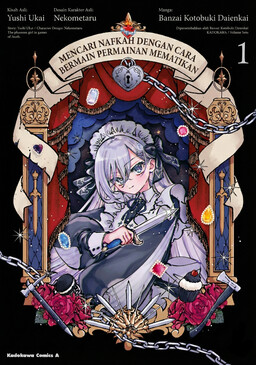
Phantom of the Idol
Yu's review of Phantom of the Idol — Yuuya Niyodo is an idol who hates performing and tries to be fired; Asahi Mogami is the ghost of an idol who died before she could reach her dreams; when she possesses Yuuya during a performance, they strike a deal — she performs through his body, he reaps the rewards.
Slice of Life
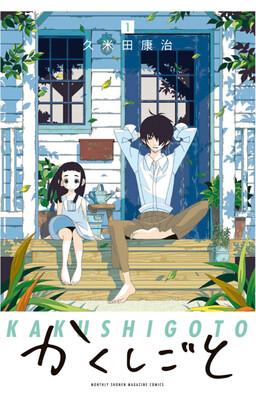
Kakushigoto
Yu's review of Kakushigoto by Koji Kumeta — an ecchi manga artist hides his job from his daughter Hime, and a daily gag comedy slowly reveals itself as a father-daughter love story across ten years.
Slice of Life
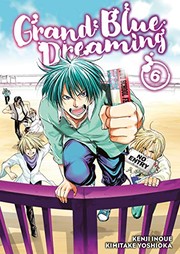
Magical Sempai
Yu's review of Magical Sempai — the assistant joins the magic club to fill a club requirement and meets his sempai: a girl who loves magic with genuine passion but suffers from stage fright severe enough that every public performance goes catastrophically wrong.
Slice of Life
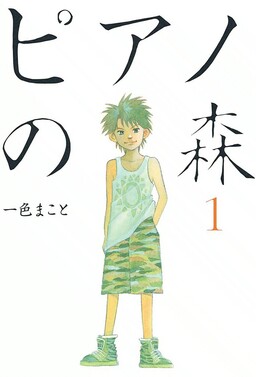
Piano Forest
Yu's review of Piano Forest — Kai Ichinose grows up poor in a forest community and has been playing an abandoned piano in the woods since childhood; when the talented but pressured Shuhei Amamiya moves to his town, their friendship and their different relationships with music begin a story about what playing truly means.
Slice of Life / Fantasy
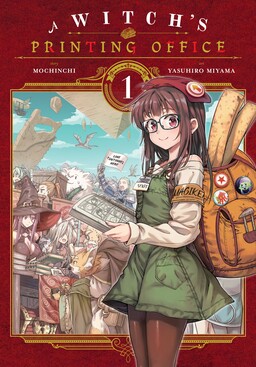
A Witch's Printing Office
Yu's review of A Witch's Printing Office — Mika is a modern Japanese woman who worked at Comiket (the giant doujinshi convention) and wakes up in a fantasy world where magical festivals share printed pamphlets; using her knowledge of convention organization and printing logistics, she builds a business that transforms how the fantasy world shares information.
Slice of Life / Music
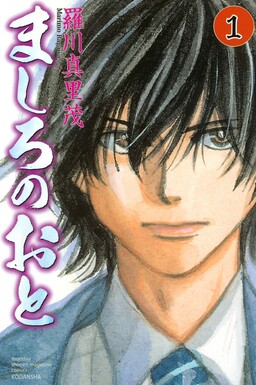
Those Snow White Notes
Yu's review of Those Snow White Notes — Setsu Sawamura is a shamisen prodigy whose grandfather, the legendary Matsugorou Sawamura, has just died; unable to play since losing his teacher, Setsu leaves his rural home and arrives in Tokyo, where he must find his own sound separate from his grandfather's influence.
Written by
Yu
Manga Enthusiast from Japan
I grew up in Japan and manga literally saved me during a tough time in elementary school. My English isn't perfect, but my love for manga is real — and I want to share it with you.
Disclosure: This post contains affiliate links. As an Amazon Associate, I earn from qualifying purchases at no extra cost to you.