The Cats of the Louvre Review: The Most Famous Museum in the World Has a Door Only Cats Can Find
by Taiyo Matsumoto
Read the first volume. If it doesn't hook you, put it down. It'll hook you.
Buy The Cats of the Louvre on Amazon →*Affiliate link — I earn a small commission at no extra cost to you.
I have never been to Paris. I have never stood in front of the Mona Lisa. But I have spent a lot of nights alone in rooms full of things, listening to a building settle, feeling like I was the only person awake in the world. That feeling is what this book is made of. Taiyo Matsumoto took the most famous museum on earth, emptied it of people, and let the cats have it. When I read it, I did not feel like a tourist. I felt like one of the cats — small, quiet, watching the paintings when nobody is looking.
I came to this expecting a cute cat story. It is not a cute cat story. It is a story about grief, drawn by a man who can make a kitten's face look like a child's face, and it broke my heart in a way I was not ready for.
Quick Take
- Taiyo Matsumoto (Tekkonkinkreet, Sunny, Ping Pong) builds a fairy tale around a colony of cats living secretly in the Louvre's attic — and one kitten who can walk into the paintings.
- It looks gentle and reads dark: this is a story about loss, obsession, and what it costs to disappear into something you love. Not all the cats survive.
- Age rating: T (Teen) — the themes of death and grief, plus a couple of upsetting animal-death scenes, make it a teen read rather than an all-ages picture book.
Story Overview
A group of cats lives hidden in the attic of the Louvre, keeping out of human sight. Among them is a small white kitten the colony calls Snowbébé (ゆきのこ / Yukinoko in the original). He is six years old but still looks and acts like a tiny, dreamy child — as if he stopped growing. He wanders the museum alone, listening for the voice of a painting that seems to be calling him.
The turning point comes through two humans. Cécile Garnier, a tour guide who is bored with her job and gave up on being an artist years ago, spots the white kitten near the Mona Lisa. And Marcel, the elderly night guard who has secretly fed and protected the attic cats for decades, carries a wound that never closed: when he was a boy, his sister Arietta — who had the same gift Snowbébé has — walked into a painting and never came back. She stopped aging, then vanished, and everyone but Marcel decided she was dead.
When Snowbébé starts slipping in and out of the paintings, his ability becomes the thread Marcel grabs onto. If a cat can do it, maybe Arietta really is still in there somewhere. The book follows the search for the painting that is calling — while inside the colony, a fierce older cat decides the kitten's wandering is a danger to them all and moves to stop him. The ending lands as a quiet, mournful tear-jerker rather than a triumphant one, closer in feeling to Tekkonkinkreet than to a children's book.
Characters
Snowbébé (Yukinoko) — The white kitten at the center. Six years old but frozen as a child, dreamy and barely tethered to the real world, he drifts toward a painting whose voice he hears. His gift to enter the art is exactly the thing that endangers him: like Arietta before him, the deeper he goes, the harder it is to come back.
Marcel — The night guard, now in his seventies, who has quietly cared for the attic cats for years. His whole interior life is bent around the sister he lost as a child. He is not a hero so much as a man who never finished grieving, and Snowbébé gives that grief a target after decades of having nowhere to go.
Cécile Garnier — A disillusioned tour guide and former art student who abandoned painting. Seeing Snowbébé pulls her back toward the part of herself that still believes art matters, and she ends up joining Marcel's search. She is the reader's way in — an adult who walked away from her own dream and gets a second look at it.
Arietta — Marcel's sister, mostly a memory. She had Snowbébé's ability, stopped aging, and disappeared into a painting. She is the absence the whole story orbits.
What I Love About It
The thing I keep coming back to is how Matsumoto draws the cats. When you see them through human eyes, they are cats. But when the cats are among themselves — talking, scheming, being a little society in the attic — he draws them as these strange, soft, human-faced creatures, somewhere between a child and an animal. Snowbébé in those panels reads like a quiet kid who does not quite understand the room he is in. The first time the art flipped from "cat" to "this hairless, big-eyed almost-human face," I actually put the book down for a second. It is unsettling and tender at the same time, and that is the whole tone of the book in one drawing choice.
What got me, though, is that the cat-faces are not a gimmick. They are the argument. Snowbébé being drawn like a child is why his danger hurts: it is not a pet wandering off, it is a little kid wandering toward a place adults cannot follow. And it rhymes exactly with Marcel's memory of Arietta. Matsumoto is saying something about how the things we love most — art, a museum, a person who is already gone — can pull you in until you forget to come back. I grew up using manga as a place to disappear into when the real world was unbearable. This book is the first time I have seen someone draw that impulse as both the most beautiful thing in the world and a genuine danger. That double feeling is why it stayed with me.
Memorable Scene ⚠️ Spoiler Warning
The scene I cannot shake is the black cat's attempt on Snowbébé's life. A sharp-toothed older cat in the colony decides the dreamy kitten's painting-wandering is a threat to all of them — and tries to kill him for it. After pages of soft, fairy-tale stillness, the violence is sudden and the death scenes around it are genuinely upsetting; the review consensus is right that not every cat makes it out and that the deaths are drawn without softening.
What makes it stick is the timing. Matsumoto spends so long lulling you with quiet attic life and dreamlike paintings that you forget this is the same man who drew Tekkonkinkreet. Then the colony's fear turns into teeth. It reframes everything: the cats are not a whimsical chorus, they are scared animals who will hurt one of their own to feel safe. And it ties the kitten's fate back to Arietta — the sense that wandering into the paintings is not a magic trick but a way of being lost — which is why the ending reads as mournful instead of magical.
Pros & Cons
Pros
- Matsumoto operating at the height of his craft — the human-faced cats are one of the most striking visual ideas in his whole catalog.
- A real story underneath the cuteness: grief, obsession, and the pull of art, handled with weight.
- Complete and self-contained — two slim Japanese volumes collected into a single English hardcover.
- The Louvre setting is used for meaning, not decoration; it became an official museum collaboration for a reason.
Cons
- It looks like a gentle all-ages cat book and is not one — the tonal whiplash and the animal deaths can blindside readers who came for comfort.
- The dreamlike, drifting pacing leaves some character threads more suggested than resolved.
- The anthropomorphized cat-faces are divisive — some readers find them uncanny and off-putting. If "soft horror in a museum about cats" sounds wrong to you, this won't work for everyone, and that is fine.
Is The Cats of the Louvre Worth Reading?
Yes — if you go in knowing it is a sad, strange fairy tale and not a feel-good cat comic. It is gorgeous, complete in one volume, and it earned its 2020 Eisner Award. Come for Matsumoto's art, stay for a quiet gut-punch about grief and the things we disappear into.
Where to Buy
Read the first volume. If it doesn't hook you, put it down. It'll hook you.
This post contains affiliate links. If you purchase through these links, I may earn a small commission at no extra cost to you. As an Amazon Associate, I earn from qualifying purchases.
*Affiliate link — I earn a small commission at no extra cost to you.
More Manga You Might Like

Slice of Life
Sunny
Yu's review of Sunny — at a group home for children whose families cannot take care of them, a broken-down old car called Sunny becomes a private space where the children go to be alone; Taiyo Matsumoto's meditation on childhood longing, on what it means to be left, and on how children find ways to survive what adults do to them.
Slice of Life / Memoir
Blank Canvas: My So-Called Artist's Journey
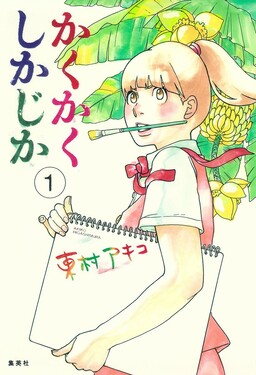
Yu's review of Blank Canvas (Kakukaku Shikajika) — Akiko Higashimura's autobiographical manga about Hidaka-sensei, the bamboo-sword-wielding art teacher in rural Miyazaki who screamed 'Draw!' until she became the artist she is. A memoir, a comedy, and a eulogy all at once.
Slice of Life / Fantasy
A Witch's Printing Office
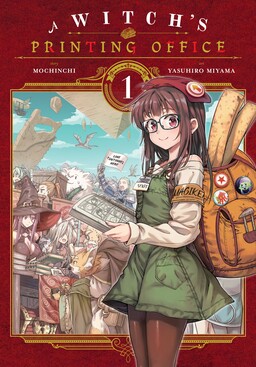
Yu's review of A Witch's Printing Office — Mika is a modern Japanese woman who worked at Comiket (the giant doujinshi convention) and wakes up in a fantasy world where magical festivals share printed pamphlets; using her knowledge of convention organization and printing logistics, she builds a business that transforms how the fantasy world shares information.

Slice of Life
Behind the Scenes!!
Yu's review of Behind the Scenes!! — Ranmaru Kurisu, a pessimistic art student who feels useless next to his fisherman family, gets dragged into a university Art Squad after wandering onto a zombie movie shoot, and learns that the people who build the props no one notices are exactly the people a production can't live without.

Slice of Life / Historical
Arte
Yu's review of Arte by Kei Ohkubo — a noble girl in Renaissance Florence cuts off her hair, gets rejected by eighteen workshops, and forces the painter Leo to take her as an apprentice. A historical slice of life about a woman fighting a system, not a villain.
Slice of Life / Drama
Wandering Son
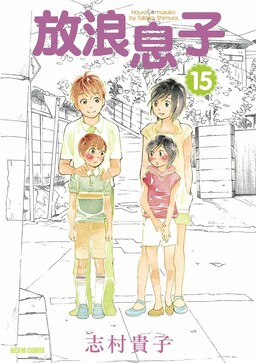
Yu's review of Wandering Son — Shuichi Nitori is a boy who wants to be a girl; his new friend Yoshino Takatsuki is a girl who wants to be a boy; the manga follows both of them from elementary school through adolescence as they navigate gender identity, friendship, and growing up; a gentle, serious work about transgender experience.
Written by
Yu
Manga Enthusiast from Japan
I grew up in Japan and manga literally saved me during a tough time in elementary school. My English isn't perfect, but my love for manga is real — and I want to share it with you.
Disclosure: This post contains affiliate links. As an Amazon Associate, I earn from qualifying purchases at no extra cost to you.