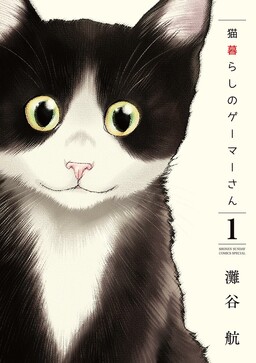
Cat + Gamer Review: A Woman Who Optimized Her Whole Life Around Games Now Has to Optimize Around a Cat
by Wataru Nadatani
Read the first volume. If it doesn't hook you, put it down. It'll hook you.
Buy Cat + Gamer on Amazon →*Affiliate link — I earn a small commission at no extra cost to you.
For most of my life, the one thing I was actually good at was games. People were hard. A controller was not. When everyone else was outside, I was at home, and the screen never asked me why I didn't have any friends. So I understand Riko Kozakura more than I want to admit. She is a woman who decided, very calmly, that her free time belongs to her games and to nobody else — and the manga never treats that as a problem to be cured. That alone made me like it.
Then a cat shows up. And the question of the whole series is not "will the cat fix her life." It is "what happens when a person who has optimized her entire existence around games suddenly has a small animal that does not care about her optimization at all."
Quick Take
- A comedy where the joke is that Riko keeps trying to understand her cat using video-game logic — leveling up, item drops, hidden mechanics — and the cat just keeps being a cat
- The cat behavior is observed accurately, not cartoonishly; if you have ever owned a cat you will laugh at things you have actually lived
- All Ages — there is genuinely nothing in here that any reader needs to be warned about
Story Overview
Riko Kozakura is a 29-year-old office worker whose colleagues cannot figure her out. She skips the after-work drinks, avoids overtime, keeps her private life private — all so she can get home and play games. She is not sad about this. She built this life on purpose.
The turning point is small and ordinary: a stray kitten is found in the office parking lot, and Riko ends up taking him in. She names him Musubi. From there the series is the slow, funny process of two creatures learning each other — Riko learning the stages of a kitten's growth, his favorite toys, his sleeping spots; Musubi learning how to tell Riko when it is time to be fed.
What I appreciated is that it doesn't escalate into drama. By the final eighth volume the big "event" is that Riko's company is relocating and she has to deal with her apartment — and by then she has two cats, not one. The ending stays exactly the kind of quiet it promised to be. No twist, no tragedy. Just a life that has more cats in it than it used to.
Characters
Riko Kozakura — The thing the series gets right about Riko is that she does not change in the way pet stories usually demand. She doesn't "open up" or get cured of her introversion. What changes is smaller and truer: her routines quietly rearrange themselves around Musubi without her ever deciding to let them. She is still a gamer at the end. She just also schedules her life around a cat now.
Musubi — A black-and-white kitten found in the parking lot. He is the most carefully drawn character in the book, and I mean that as praise. He behaves like an actual cat — losing interest in a favorite toy for no reason, getting attached to objects on his own logic — rather than a cartoon cat who exists to be cute. The comedy works because he is real.
Riko's coworkers — They function as the outside world's confusion. They don't understand why she rushes home, and their gentle bafflement is what makes Riko's contentment readable. They are the people I always felt watching me as a kid, except this manga is kind to her instead of cruel.
What I Love About It
The engine of the whole thing is that Riko cannot stop filtering Musubi through games. She approaches raising a kitten the way she would approach clearing a new title — reading up on "mechanics," treating his growth stages like levels, treating his preferences like stats she has to discover. It would be easy for this to be a one-note gag. It isn't, because the manga always shows you the cat's real reason underneath Riko's game-brained interpretation, and the two readings click into the same moment.
That's the part that got me. When her gamer framing and Musubi's plain cat-reality line up and mean the same thing, the joke stops being about gaming at all. It becomes an honest little observation about how we reach for whatever language we already have to understand someone we love. Riko only has games. So she loves a cat in the vocabulary of games. As somebody who also only really had games to think with for a long time, I found that quietly moving in a way I did not expect from a comedy about a cat.
Memorable Scene ⚠️ Spoiler Warning
The one that made me put the book down and laugh out loud is in the third volume: Riko carefully gathers up all of Musubi's scattered cat toys, finally getting them all in one place — and Musubi immediately loses one again, about half a second later. I have done this. Every cat owner has done this. The reason it works is that Riko's whole personality is wanting to solve and complete a system, and the cat is a system that refuses to stay completed. That single beat is the entire thesis of the manga in one panel: you do not clear a cat. You just live with one.
Pros & Cons
Pros
- The game-logic-versus-real-cat structure is consistent and keeps finding new angles across all 8 volumes
- Musubi's behavior is observed honestly, not exaggerated for cuteness
- Genuinely all-ages; warm without being saccharine
- Complete in English — you can read the whole thing start to finish
Cons
- The gentleness means there are basically no stakes; nothing dramatic ever happens
- The premise is narrow by design — it is one good joke explored thoroughly, not a story that grows
- If you don't care about cats or games, there isn't much here for you. This one really won't work for everyone, and that's fine — it's not trying to.
Is Cat + Gamer Worth Reading?
If you want comfort reading — a warm, accurate, consistently funny comedy about an introvert and her cat — yes, easily. If you need plot, tension, or characters who transform, this will feel like nothing happens, because almost nothing does. It is a quiet book that does one thing very well.
Who Is This Manga For?
- People who play games and own a cat (or want one)
- Readers who like slice-of-life that stays gentle and doesn't manufacture drama
- Anyone who appreciates a comedy built on one premise executed with care
- Readers of any age — this is truly all-ages
Similar Manga
| Title | Its Approach | How Cat + Gamer Differs |
|---|---|---|
| With a Dog AND a Cat | Diary-style four-panel gags about owning two very different pets | Cat + Gamer runs a single sustained premise — gamer logic vs. real cat — instead of standalone strips |
| My Roommate Is a Cat | Alternates between the owner's view and the cat's view, with a writer lead | Cat + Gamer filters everything through one specific lens: video games |
| Chi's Sweet Home | Told largely from the kitten's perspective, aimed younger and softer | Cat + Gamer keeps the human adult, Riko, as the comedic center |
Where to Buy
Read the first volume. If it doesn't hook you, put it down. It'll hook you.
This post contains affiliate links. If you purchase through these links, I may earn a small commission at no extra cost to you. As an Amazon Associate, I earn from qualifying purchases.
*Affiliate link — I earn a small commission at no extra cost to you.
More Manga You Might Like
Slice of Life / Comedy
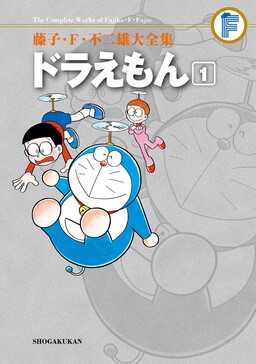
Doraemon
Yu's review of Doraemon — a robot cat from the 22nd century, sent back to help a hopeless boy named Nobita with gadgets from his four-dimensional pocket. Fujiko F. Fujio's most beloved work, and the manga every Japanese kid grows up inside.

Slice of Life / Comedy
Squid Girl
Yu's review of Squid Girl — Ika Musume (Squid Girl) emerges from the sea to conquer humanity as revenge for ocean pollution; she is immediately defeated by the Aizawa sisters who run a beach house and ends up working there to pay for property damage; world conquest is repeatedly delayed.

Slice of Life / Comedy
Shirokuma Cafe
Yu's review of Shirokuma Cafe — a polar bear named Shirokuma runs a café near the zoo; Panda works part-time there (poorly), Penguin is a regular customer, and the humor comes from animal characters behaving with human social conventions while remaining animals.
Slice of Life / Comedy
Non Non Biyori
Yu's review of Non Non Biyori — five students in a tiny rural school (total enrollment: five) experience the small, seasonal rhythms of countryside life in a mountain village far from anything.
Slice of Life / Comedy
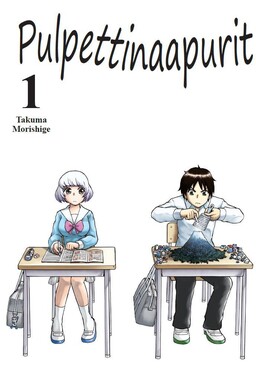
My Neighbor Seki
Yu's review of My Neighbor Seki — Rumi Yokoi sits next to Seki in class; Seki never pays attention to lessons and instead constructs elaborate in-desk activities of increasing complexity; Rumi, who is trying to pay attention, keeps getting distracted; a one-joke manga that executes its joke perfectly.
Slice of Life / Comedy
Comic Girls
Yu's review of Comic Girls (こみっくがーるず) by Kaori Hanzawa — Kaoruko 'Kaos' Moeta is a shy four-panel manga artist who ranks dead last in a reader survey and gets sent to a dormitory full of other young female manga creators. A gentle Manga Time Kirara comedy about making things while terrified you aren't good enough.
Written by
Yu
Manga Enthusiast from Japan
I grew up in Japan and manga literally saved me during a tough time in elementary school. My English isn't perfect, but my love for manga is real — and I want to share it with you.
Disclosure: This post contains affiliate links. As an Amazon Associate, I earn from qualifying purchases at no extra cost to you.