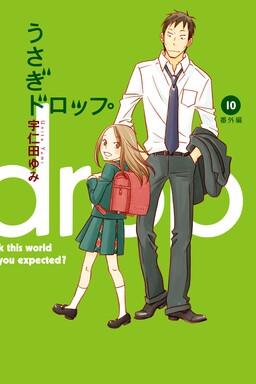
Bunny Drop Review: The Best Parenting Manga Ever Written, Until It Decided to Become Something Else
by Yumi Unita
Read the first volume. If it doesn't hook you, put it down. It'll hook you.
Buy Bunny Drop on Amazon →*Affiliate link — I earn a small commission at no extra cost to you.
I need to be honest with you before we start, because this is not a normal review for me. Most of the time I write about a manga I love and I just want you to love it too. Bunny Drop is different. For the first four volumes it is one of the most tender, most true things I have ever read about taking care of a child. And then it becomes something else, and a lot of readers — me included — wish it had stopped. I am not going to hide that from you. I am going to tell you exactly what the second half does, because I think you deserve to know before you buy, not after. You can still get something beautiful out of this manga. You just have to know where the road forks.
Quick Take
- The first half (volumes 1–4) is parenting and family manga at its absolute best — quiet, specific, no melodrama, just one man learning to raise a child.
- A ten-year time skip in volume 5 turns it into a different story, and the ending is genuinely controversial — I explain the whole thing below, no dodging.
- Ten volumes complete in English from Yen Press; rated T+ (Older Teen) — the early volumes are warm and gentle, the later ones get into adult emotional territory.
Story Overview
Daikichi Kawachi is a thirty-year-old single man with a normal office job. He goes to his grandfather Souichi's funeral and finds the family standing around a quiet six-year-old girl named Rin. She is, the relatives whisper, his grandfather's illegitimate daughter — which technically makes her Daikichi's aunt, even though she is a small child. Nobody wants her. They talk about her like she is a problem to be filed away. Daikichi, angry at how cold everyone is, blurts out that he will take her. And then he has to actually do it.
The first half is about that "actually doing it." He has no idea how to raise a child. He puts Rin in daycare and works late, and one night she is the last kid left waiting, sitting alone after all the others have gone home. She starts wetting the bed again because she is afraid — afraid of being left, afraid of death after the funeral. So Daikichi does the un-dramatic, deeply adult thing: he requests a transfer at work to a less demanding department, killing his career momentum, so he can leave on time and pick her up. That is the whole engine of the early story. Love shown as logistics. He learns to tie her hair, finds a better daycare, befriends another single parent, Yukari Nitani, and her son Kouki.
Then volume 5 jumps ten years forward. Rin is now a sixteen-year-old high schooler and the perspective shifts to her. The story stops being about parenting and becomes about Rin's adolescence and her feelings. Late in the series, it is revealed that Rin was not actually Souichi's biological daughter at all — Souichi had adopted her; her real mother was a manga artist named Masako who gave her up to chase her career. That revelation removes the blood relationship between Rin and Daikichi. And the manga uses it to end with Rin choosing Daikichi romantically: she confesses, he tells her to wait until after graduation, and the final beat has her saying she wants to have his child. That is the ending. The anime and live-action film deliberately stop before the time skip and never go there.
Characters
Daikichi Kawachi — The heart of the first half. A regular guy whose defining trait is that he does what he says he will do, even when it costs him. His arc is competence: he starts knowing nothing and becomes genuinely good at the small daily labor of parenting. When the story time-skips, he ages into a forty-year-old man, and the manga repositions him as the object of Rin's romantic feelings — a turn many readers feel betrays the careful, paternal character built in the first half.
Rin Kaga — Introduced as a watchful, un-sentimental six-year-old who has already learned not to expect much from adults. In the first half she is one of the most honest child characters in manga — not cute filler, a real person. After the time skip she becomes the protagonist, a high schooler navigating her own identity, the truth about her birth, and feelings for the man who raised her. Whether her arc reads as poignant or deeply uncomfortable is the whole debate.
Yukari Nitani — A single mother Daikichi meets through their kids. She and Daikichi form a warm, grown-up friendship that for much of the first half feels like the natural emotional direction for both of them. The story raising and then abandoning that thread is one of the reasons the ending lands so strangely for a lot of readers.
Kouki — Yukari's son and Rin's childhood friend. He grows up alongside Rin and, in the second half, becomes a clear romantic alternative for her — a peer her own age — which makes the path the manga actually chooses feel like a deliberate rejection of the obvious one.
What I Love About It
I want to point at one specific stretch, because it is the thing I will defend forever: the work transfer. After Rin gets left alone at daycare and starts wetting the bed from fear, Daikichi doesn't have a big speech. There is no breakdown, no music-swell moment. He just goes into work and quietly asks to be moved to a department with lighter hours, knowing exactly what it means for his career, knowing everyone will be surprised, and he does it anyway. That is the whole scene. It is almost nothing. And it is everything.
The reason it hit me so hard is that this is what love actually looks like when you grow up. Not declarations — schedules. Not grand sacrifice you announce — the quiet kind nobody claps for, where you trade your own ambition for someone else's bedtime. I grew up feeling like a burden, like the kid nobody wanted to rearrange their life for. Reading a man calmly rearrange his entire life for a child who isn't even "his," with no fuss, no resentment, treating it as simply the correct thing to do — that undid me. Unita draws these volumes with clean, soft lines and a lot of small domestic space, and she never oversells the emotion. She trusts the logistics to carry it. They do. For four volumes, this is the gentlest, truest family manga I know.
Memorable Scene ⚠️ Spoiler Warning
The image I cannot shake is little Rin alone at the daycare. The other children have all been picked up, one by one, and she sits there waiting while the room empties, because Daikichi is stuck at work. We see her small and still, the kind of quiet a kid learns when she has already been left before. Nothing violent happens. It is just a child waiting in an emptying room. And it is devastating, because it is the exact fear the whole funeral planted in her, made physical.
What makes it the most important scene in the book is that it is the one that changes Daikichi. He doesn't lecture himself about being a better parent — he sees this, understands what it does to her, connects it to the bed-wetting and her fear, and acts. The transfer comes out of this moment. It is the manga's quiet thesis: pay attention to the small signal, and then actually change your life. I just wish the series had kept faith with that thesis all the way through, instead of, years later, asking this same little girl to fall in love with the man who answered that fear.
Pros & Cons
Pros
- The first half is, full stop, some of the best parenting and family manga ever made.
- Love expressed through small concrete actions instead of speeches — emotionally honest in a rare way.
- Rin and Daikichi are both real, specific characters, not types.
- A genuine josei adult perspective on single parenthood, grief, and work-life balance.
Cons
- The ten-year time skip changes the genre and many readers feel it abandons the story's best instincts.
- The romantic ending between Rin and her former guardian is divisive to the point that many fans disown the second half entirely.
- The warm Yukari thread is raised and then dropped, which feels like a loss.
- This one genuinely won't work for everyone — the ending is a wall some readers simply cannot get over, and that's a completely fair reaction, not a failure to "understand" it.
Is Bunny Drop Worth Reading?
Yes — with a map. The first four volumes are a near-perfect parenting story and stand completely on their own; a lot of readers stop there on purpose and treasure it. If you continue past the volume 5 time skip, go in knowing the ending pairs Rin romantically with Daikichi after revealing they aren't blood-related. If that premise is a dealbreaker for you, it's an honest dealbreaker, and you lose nothing by reading only the first half. The art and the early emotional craft are worth it either way.
Where to Buy
Read the first volume. If it doesn't hook you, put it down. It'll hook you.
This post contains affiliate links. If you purchase through these links, I may earn a small commission at no extra cost to you. As an Amazon Associate, I earn from qualifying purchases.
*Affiliate link — I earn a small commission at no extra cost to you.
More Manga You Might Like

Slice of Life
Three Days of Happiness
Yu's review of Three Days of Happiness — in a world where you can sell your remaining lifespan for money, Kusunoki sells most of his and discovers he has only three months left; manga adaptation of Sugaru Miaki's novel about what matters when time is finite.
Slice of Life / Drama
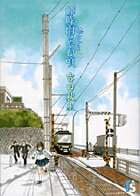
Umimachi Diary
Umimachi Diary follows three adult sisters in Kamakura who invite their half-sister — whom they barely know — to live with them after their estranged father's death, and the slow process of becoming a family.
Slice of Life / Drama
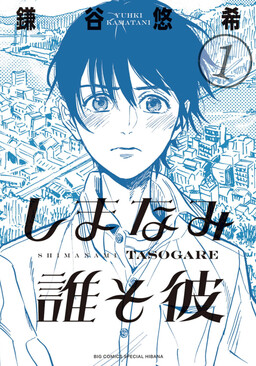
Our Dreams at Dusk: Shimanami Tasogare
Yu's review of Our Dreams at Dusk — Tasuku Kaname is outed to his classmates; he goes to a building to jump; a woman in white tells him to come to a drop-in center; the center is a community of people across the LGBTQ spectrum who have found a way to be in the world; Tasuku begins to find his own way through them.
Slice of Life / Drama
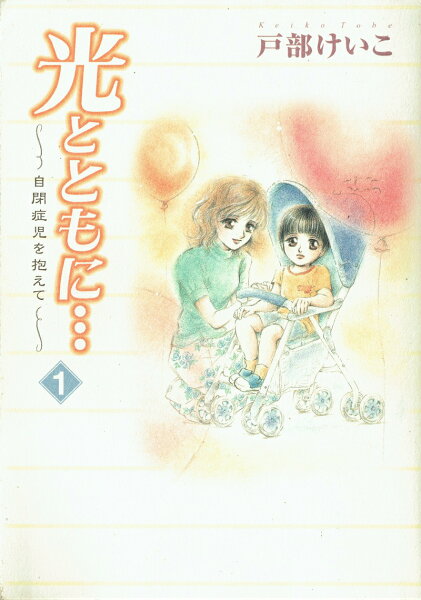
With the Light: Raising an Autistic Child
A review of With the Light: Raising an Autistic Child, Keiko Tobe's landmark manga about a mother raising an autistic son — honest, educational, and deeply human.
Slice of Life
Ciguatera
Yu's review of Ciguatera — Minoru Furuya's coming-of-age seinen about Yusuke Ogino, a bullied, anxious 17-year-old who dreams of a motorcycle and falls for Yumi Nagumo. A youth story that never sands down the discomfort.

Slice of Life
Stella Women's Academy, High School Division Class C³
Yu's review of Stella Women's Academy — Yura Yamamoto transfers to Stella Women's Academy and joins the C³ Club, a survival game (airsoft) club; Millitarko's manga about a shy girl finding her place through competitive gaming, with character development that turns darker before finding resolution.
Written by
Yu
Manga Enthusiast from Japan
I grew up in Japan and manga literally saved me during a tough time in elementary school. My English isn't perfect, but my love for manga is real — and I want to share it with you.
Disclosure: This post contains affiliate links. As an Amazon Associate, I earn from qualifying purchases at no extra cost to you.