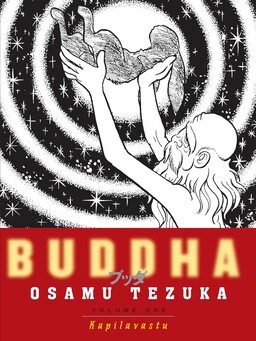
Buddha Review: Tezuka Dramatizes the Life of Siddhartha — and Uses It to Ask Every Question That Matters
by Osamu Tezuka
*Affiliate link — I earn a small commission at no extra cost to you.
Quick Take
- Tezuka's most accessible major work — the historical drama format and the universal subject make it readable to anyone, and the invented characters who surround the historical narrative give it emotional stakes that pure biography cannot
- Buddha is drawn as fully human in Tezuka's telling — his doubts, his failures, his gradual progress toward understanding are as important as his eventual enlightenment
- 8 volumes complete; one of the most affecting and significant works in manga history
Who Is This Manga For?
- Readers who want Tezuka through his most emotionally accessible work
- Anyone interested in the historical and philosophical context of early Buddhism through a dramatic rather than documentary approach
- Fans of historical manga with large cast and genuine emotional investment
- Readers who want completed manga that asks the largest questions through specific human stories
Content Warnings & Age Rating
Age Rating: T (Teen) Content Warnings: Caste system violence is depicted directly — the oppression of those born into lower castes, including violence against them, is a central element of the historical setting; war and death across multiple arcs; some mature content; the series dramatizes rather than accurately depicts Buddhist doctrine
The historical violence is serious. This is not comfortable reading in its most difficult sections.
Yu's Rating
| Category | Score |
|---|---|
| Story Depth | ★★★★★ |
| Art Style | ★★★★★ |
| Character Development | ★★★★★ |
| Accessibility for Non-Japanese Readers | ★★★★★ |
| Reread Value | ★★★★★ |
Story Overview
The series begins not with Siddhartha but with Chapra — a member of the untouchable caste who dreams of becoming a warrior. His story and Siddhartha's intersect throughout the early volumes. This choice is characteristic of Tezuka's approach: the historical Buddha is seen through the eyes of the people around him, not only through his own development.
Siddhartha is born a prince in Kapilavastu. He is protected from suffering — literally, his father arranges that he will not see poverty, sickness, or death. When he encounters all three for the first time as a young man, he is shattered and leaves the palace to find the answer to why suffering exists.
The series follows his decades of searching — through extreme asceticism, through study with teachers who cannot give him what he is looking for, through the encounters that eventually lead to his enlightenment under the Bodhi tree. Tezuka surrounds this historical narrative with invented characters who embody the questions the historical story raises.
Characters
Siddhartha/Buddha — Tezuka's Buddha is not serene from birth. He is frustrated, uncertain, capable of failure, and drawn with the specific quality of someone whose understanding comes slowly and at cost. His enlightenment is earned.
The invented cast — Chapra, Tatta, Ananda, and the other invented characters are the series' emotional instruments. Their sufferings and joys make the philosophical content of Siddhartha's search concrete rather than abstract.
Art Style
Tezuka's art across the eight volumes is consistently excellent — his historical dramatization skills, developed across Phoenix and other period work, are at full strength. The Indian historical settings are rendered with genuine visual specificity. The emotional expressiveness that characterizes his character work is deployed at scale across a very large cast.
Cultural Context
Buddha was serialized across multiple publications from 1972 to 1983, fitting around Tezuka's simultaneous work on Black Jack and other series. Despite its subject, it is not a work of religious instruction — Tezuka treats the historical Buddha as a human being navigating real questions, and the series' philosophical content is his own synthesis rather than doctrine. It was among the first manga to achieve significant recognition outside Japan as a literary work.
What I Love About It
The sections where Siddhartha fails. His decades of searching include periods where he is certain he has found the answer and is wrong. Tezuka does not shorten these — the failure and the search after failure are depicted with the same care as the eventual understanding. This is what makes the enlightenment feel earned rather than inevitable.
What English-Speaking Fans Say
Western readers describe Buddha as the most surprising of Tezuka's works — the expectation of hagiography is replaced by a historical drama of genuine complexity. The caste violence is cited as uncomfortable but essential — it makes the social context of the Buddha's teaching concrete. Tezuka's invented characters are consistently praised as equal in interest to the historical narrative.
Memorable Scene ⚠️ Spoiler Warning
Chapra's conclusion — what happens to him, and how it connects to the larger questions the series has been asking about what suffering is for and whether it can be redeemed — is the series' most affecting single arc resolution and the moment that most fully demonstrates Tezuka's control of the material.
Similar Manga
- Phoenix — Same author, similar philosophical scope, different structure
- Black Jack — Same author, more focused, same serious engagement with life and death
- Vagabond — Historical Japanese drama, similar commitment to depicting a historical figure as fully human
- Vinland Saga — Historical epic, similar scale of time and violence
Reading Order / Where to Start
Volume 1 — Chapra's story and Siddhartha's birth establish both narrative threads.
Official English Translation Status
Vertical Inc. published the complete 8-volume English edition. All volumes available.
Pros & Cons
Pros
- The most emotionally accessible of Tezuka's major works
- The invented cast makes abstract philosophical content concrete
- Buddha is drawn as genuinely human throughout
- Complete and among the most significant manga ever published
Cons
- The caste violence in early volumes is difficult
- Some invented narrative liberties with the historical and religious material
- 8 volumes requires significant investment for readers new to Tezuka
Format Comparison
| Format | Notes |
|---|---|
| Individual Volumes | Vertical Inc.; 8 volumes |
| Digital | Available |
Where to Buy
This post contains affiliate links. If you purchase through these links, I may earn a small commission at no extra cost to you. As an Amazon Associate, I earn from qualifying purchases.
*Affiliate link — I earn a small commission at no extra cost to you.
Written by
Yu
Manga Enthusiast from Japan
I grew up in Japan and manga literally saved me during a tough time in elementary school. My English isn't perfect, but my love for manga is real — and I want to share it with you.
Disclosure: This post contains affiliate links. As an Amazon Associate, I earn from qualifying purchases at no extra cost to you.