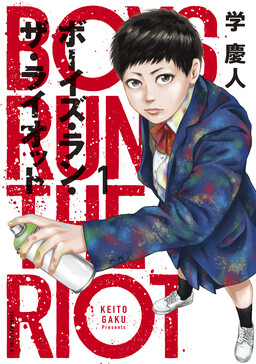
Boys Run the Riot Review: A Fashion Manga Where the Clothes Say What the Boy Can't
by Keito Gaku
Read the first volume. If it doesn't hook you, put it down. It'll hook you.
Buy Boys Run the Riot on Amazon →*Affiliate link — I earn a small commission at no extra cost to you.
When I was a kid, I had clothes I hated wearing. School clothes. The clothes that said "be this person, sit there, be quiet." I'd come home and change as fast as I could, like the day didn't really start until I was wearing something that felt like me. I don't talk about this much, because next to what some people carry it feels small. But it's the door I walked through into this manga, and once I was inside I couldn't put it down.
Boys Run the Riot opens with Ryo Watari changing out of his school uniform in a train station bathroom. The uniform is a girl's uniform, and Ryo is a boy, and every morning the school makes him wear a body that isn't his. I read that first scene and thought: I know one corner of this feeling, and Keito Gaku knows the whole house.
Quick Take
- A fashion manga that is really about identity — Ryo can't say who he is out loud yet, so he says it in fabric, in graffiti, in a brand
- Keito Gaku is a transgender man, and the manga's grasp of dysphoria and of what putting on the right clothes feels like is specific and lived-in, not borrowed
- Four volumes, complete; rated T (Teen) — heavy emotionally, but nothing graphic
Story Overview
Ryo Watari is a high schooler who knows he's a trans boy and has no one to tell. His mom keeps asking why he "dresses like a boy." He has a crush on his best friend and can't say that either. He moves through school presenting as a girl, hating the uniform, swapping into clothes he likes in station bathrooms where no one is watching.
The turning point is Jin Sato, a transfer student with piercings and a haircut that breaks every school rule — at first he looks like one more bully. He isn't. Jin is loud, meticulous, and obsessed with streetwear, and after he learns a little of Ryo's situation he hits him with the line the whole series turns on: do you want to start a brand with me? They build a clothing label together, pulling in a photographer and a social-media influencer as the operation grows, and run straight into adults who laugh at the idea of teenagers running a fashion brand.
Across four volumes the brand is the spine and the self is the story. By the end Ryo has moved from a boy who could only express himself when nobody was looking to one who puts his own work — and himself — out in front of people on purpose. It's compact, and it lands.
Characters
Ryo Watari — The protagonist, a trans boy stranded in a girl's uniform and a life where no one knows him. His arc is the slow, painful distance between feeling something true and being able to show it. Early on, clothing is the only place he can be honest; by the end, he's learned to make that honesty public. Gaku draws his dysphoria with autobiographical precision — what the wrong clothes do to him, what the right ones give back.
Jin Sato — The cis transfer student who looks like trouble and turns out to be the opposite: big-hearted, weirdly meticulous, and ready to accept Ryo the moment he understands him. His role is not to rescue Ryo. It's to hand him a project — the brand — that becomes the space where Ryo can work out who he is. Jin pushes Ryo to use his art to speak.
The brand crew — As the label grows, a photographer and a social-media influencer join, turning a two-boy idea into something real enough that grown-ups start taking shots at it. They expand the story from a private struggle into a public stand, which is the point: the brand drags Ryo's identity out of the bathroom and onto people's bodies.
What I Love About It
There's a panel early on where Ryo, alone, thinks: "when I wear my favorite clothes, I feel at ease. It's the only time I don't see a version of myself that I hate." I stopped on that line. Because that's the whole engine of the book in one sentence — clothing isn't fashion here, it's the one room where Ryo gets to exist. Gaku doesn't explain it or make a speech about it. He just shows a kid in a bathroom feeling, for a second, okay. And then the bell rings and he has to put the wrong life back on.
What gets me is how the manga treats clothes as a language for someone who can't yet use words. Ryo can't tell his mom, can't tell his crush, can't tell the school. But he can choose what's on his body, and later he can design what's on it, and then he can put a design on a stranger and watch them wear who he is. That progression — from secret, to private, to public — is the real plot, and the brand is just the machine Gaku built to carry it. I've read manga that announce their themes with a megaphone. This one says it in a graphic tee that reads "No shame in my game," and trusts you to feel the weight of a trans kid being the one who made it.
Memorable Scene ⚠️ Spoiler Warning
The image I keep coming back to is the opening: Ryo, in a train station bathroom, peeling off the school uniform and changing into the clothes that feel like him. On paper it's nothing — a teenager getting dressed. But Gaku frames it so you understand the bathroom is the only safe room Ryo has, the only place the day pauses and he gets to be a person. It's not triumphant. It's small and stolen and a little sad.
What makes it stay with me is everything that grows out of it. That furtive change in a public bathroom is where Ryo starts — and the entire series is the arc of him no longer needing to hide it. By the time the brand is real, the same boy who could only be himself where no one could see is putting his work, and his name, in front of people on purpose. The first scene is the cage. The brand is the door. Reading the second half, I kept flashing back to that bathroom and feeling how far he'd walked.
Pros & Cons
Pros
- Transgender representation drawn from the creator's own experience — the dysphoria reads as true, not researched
- The streetwear content is genuinely knowledgeable; the designs feel like real fashion
- Four volumes is the exact right length — no padding, no overstaying
- Ryo's growth is fully realized inside the page count
Cons
- Four volumes go fast; readers who want a long saga will wish there were more
- The fashion-brand mechanics (logos, drops, social media) carry a lot of the middle, and if streetwear leaves you cold that part will too
- This is a quiet, interior story about identity more than a plot-driven one — if you came for incident over feeling, it won't work for everyone
Is Boys Run the Riot Worth Reading?
Yes — especially if you want a short, honest story told from inside an experience rather than about it. It's a manga where clothes do the talking, drawn by a creator who knows exactly why that matters. Come for the streetwear, stay for the boy learning to be seen. Just know it's compact and quiet by design.
Similar Manga
| Title | Its Approach | How Boys Run the Riot Differs |
|---|---|---|
| Wandering Son | Trans kids in school, soft and melancholy over many volumes | Tighter, four volumes, and uses a fashion brand as the vehicle for self-expression |
| Blue Period | Creative work as a way to find yourself, set in the art world | Same "make something to know yourself" engine, but rooted in gender identity and streetwear |
| Princess Jellyfish | Fashion and self-image as comedy and transformation | Drops the comedy register for a grounded, first-person look at being trans |
Where to Buy
Read the first volume. If it doesn't hook you, put it down. It'll hook you.
This post contains affiliate links. If you purchase through these links, I may earn a small commission at no extra cost to you. As an Amazon Associate, I earn from qualifying purchases.
*Affiliate link — I earn a small commission at no extra cost to you.
More Manga You Might Like
Slice of Life / Drama
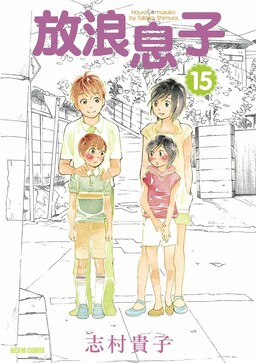
Wandering Son
Yu's review of Wandering Son — Shuichi Nitori is a boy who wants to be a girl; his new friend Yoshino Takatsuki is a girl who wants to be a boy; the manga follows both of them from elementary school through adolescence as they navigate gender identity, friendship, and growing up; a gentle, serious work about transgender experience.

Slice of Life
Smile Down the Runway
Yu's review of Smile Down the Runway — Chiyuki Fujito dreams of being a Paris Collection runway model but is told she's too short at 158cm; Ikuto Tsumura dreams of being a fashion designer but can't afford design school; they push each other toward impossible goals; Kotoba Inoya's fashion manga about the gap between dreams and physical reality.
Slice of Life
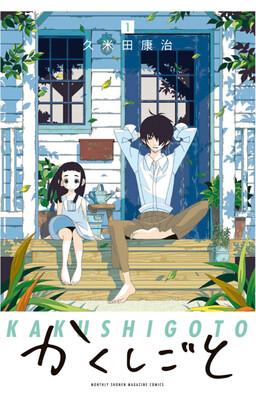
Kakushigoto
Yu's review of Kakushigoto by Koji Kumeta — an ecchi manga artist hides his job from his daughter Hime, and a daily gag comedy slowly reveals itself as a father-daughter love story across ten years.

Slice of Life
Sunny
Yu's review of Sunny — at a group home for children whose families cannot take care of them, a broken-down old car called Sunny becomes a private space where the children go to be alone; Taiyo Matsumoto's meditation on childhood longing, on what it means to be left, and on how children find ways to survive what adults do to them.
Slice of Life
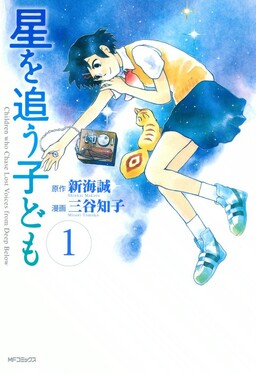
Stargazing Dog
Yu's review of Stargazing Dog — Daddy adopts a puppy named Happie; the manga follows Happie's life with Daddy through family happiness, family collapse, and the road journey that is their final chapter together; narrated from Happie's perspective, the story is exactly as emotionally devastating as its premise suggests.
Slice of Life
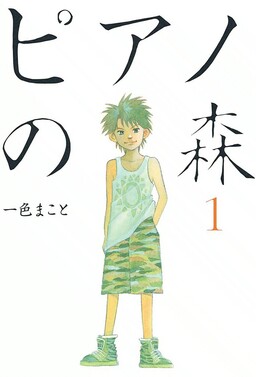
Piano Forest
Yu's review of Piano Forest — Kai Ichinose grows up poor in a forest community and has been playing an abandoned piano in the woods since childhood; when the talented but pressured Shuhei Amamiya moves to his town, their friendship and their different relationships with music begin a story about what playing truly means.
Written by
Yu
Manga Enthusiast from Japan
I grew up in Japan and manga literally saved me during a tough time in elementary school. My English isn't perfect, but my love for manga is real — and I want to share it with you.
Disclosure: This post contains affiliate links. As an Amazon Associate, I earn from qualifying purchases at no extra cost to you.