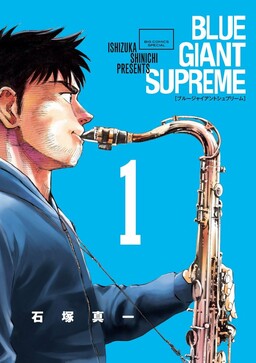
Blue Giant Supreme Review: The Sequel Where Jazz Becomes a Language You Speak Without Words
by Shinichi Ishizuka
Read the first volume. If it doesn't hook you, put it down. It'll hook you.
Buy Blue Giant Supreme on Amazon →*Affiliate link — I earn a small commission at no extra cost to you.
I'll be honest with you. When I finished the first Blue Giant, the one set in Sendai and Tokyo, I sat there a little afraid to start Supreme. The first series ended in a place that felt complete to me. I didn't want a sequel to ruin it. I have been burned before by sequels that exist only because the first thing sold well.
So I want to tell you why I was wrong, and why I now think Supreme might be my favorite part of the whole saga. In the first series, Dai Miyamoto could always talk his way through. He is in Japan, he speaks Japanese, when words run out he can still explain himself. Supreme takes that away from him. It drops him alone in Germany with a saxophone case and almost no German and almost no English. And it asks a very simple, very scary question: if you take away his words, is the music still enough?
I am not a confident English speaker myself. You can probably tell from how I write. So this manga hit a nerve in me I didn't expect. Watching Dai try to make people understand him with no language except the one coming out of his horn — I felt that in my chest.
Quick Take
- The middle chapter of the Blue Giant saga: Dai leaves Japan and tries to build a real career in the actual European jazz world, starting from zero contacts and zero language.
- The heart of it is the band NUMBER FIVE — four musicians from four countries learning to sound like one person — and it earns every bit of its emotion.
- Rated T (Teen): some mild language, some drinking, nothing graphic. Safe for most readers.
Story Overview
The first Blue Giant ended with Dai having made it in Japan. Supreme begins with him throwing that away. He flies to Germany alone, lands in Munich, and starts again as a complete unknown — a Japanese guy with a tenor sax and no way to even ask for directions.
The turning point is when he hears a bassist named Hannah playing and knows, instantly, that this is the partner he came to Europe to find. From there the two of them go looking for the rest. In Berlin they find Bruno, a pianist of Polish background whose playing is delicate but whose personality is sharp and aggressive, and Bruno pulls in Raphaël, a French drummer. The four of them become NUMBER FIVE. Their very first concert together in Berlin is a mess — they have the talent but not yet the trust, and you can feel the cacophony in the panels as much as on the imagined stage.
The rest is the slow, real work of becoming a band: small German venues, an album, a tour that pushes across Europe toward Paris and beyond. The climax builds toward the North Sea Jazz Festival, one of the biggest jazz events in Europe — and the cruel twist of the ending is that, right as NUMBER FIVE finally reaches the top of the wave, Dai is already thinking about dissolving the band. The arc closes on him saying goodbye to the people who made him, so he can go chase a bigger world. That door leads directly into the next series, Blue Giant Explorer, in America.
Characters
Dai Miyamoto — The same stubborn furnace from the first series, but now he is the outsider. In Japan he was the local kid with the impossible dream. In Europe he is a foreigner who can barely order food, and his certainty that he will become the world's greatest jazz player sounds insane to everyone who meets him. His arc here is learning that being the best soloist in the room is not the same as being a bandmate. By the end, his hardest act is not playing — it is telling NUMBER FIVE he has to leave.
Hannah Peters — The bassist Dai hears and immediately latches onto. She is the first person in Europe to take him seriously, and she becomes the steady center the band forms around. Her arc is tied to the band itself: she is the one who has the most to lose when Dai decides to walk away from the thing they built together.
Bruno Kaminski — The pianist of Polish background, brought in out of Berlin. His playing is described as delicate and precise, but his character is combative and proud. The friction between Bruno's ego and Dai's is part of what nearly sinks NUMBER FIVE early, and part of what makes their eventual chemistry mean something. He is the one who recruits Raphaël.
Raphaël — The French drummer Bruno drags in. He is the last piece of the quartet, and Dai openly hopes Raphaël can bring a kind of "revolution" to the band's rhythm as they push toward Paris. He completes the four-country, one-sound idea at the core of the group.
What I Love About It
There is a stretch where NUMBER FIVE — a jazz quartet — ends up booked to play a rock festival. Wrong crowd, wrong genre, wrong everything. The audience is there for loud guitars, not for a Japanese saxophonist and his oddball international band. On paper it is a disaster waiting to happen, and Ishizuka draws it like one: you feel the indifference of the crowd before a single note lands.
And then they play, and the manga makes the argument it has been building toward the whole series — that music, played honestly enough, is bigger than the genre it's filed under. The rock crowd gets pulled in despite themselves. I love this part because it is the cleanest version of what Supreme is actually about. Dai can't win these people over with words. He doesn't share their language or their taste. All he has is sound, and the manga insists that sound is enough — that if you mean it completely, strangers who have nothing in common with you will still feel it.
That landed on me hard. I spend a lot of my life unable to say what I mean in English. This scene felt like Ishizuka telling me that being misunderstood in words doesn't mean you can't reach anyone. You just have to find the thing you can do completely, and do it completely, in front of people who weren't ready for you.
Memorable Scene ⚠️ Spoiler Warning
The one that stays with me is the ending, when Dai decides to dissolve NUMBER FIVE.
Here's why it's so cruel and so good. The band has just played miracles. They've conquered that rock festival, they've made their album, they're invited to the North Sea Jazz Festival, the biggest stage Europe could offer them. This is the dream. This is the thing they bled for. And at exactly this moment — riding the highest wave of his life — Dai realizes he has to leave it.
What gets me is how hard it is for him to actually say it. This is a character who has never been afraid to declare he'll be the best in the world to anyone's face. But telling Hannah, Bruno and Raphaël that he's breaking up the band that made him — that he can barely do. The final concerts become a goodbye none of them fully say out loud. It reframes the whole series: Supreme isn't the story of a band succeeding, it's the story of Dai using a band to grow past it, and paying for that growth by walking away from the people who gave it to him. Then he sets his eyes on America, and the next series begins.
Pros & Cons
Pros
- Takes Dai out of his comfort zone completely and uses the language barrier as real dramatic fuel, not set dressing.
- NUMBER FIVE is a genuinely great band of characters — four nationalities, four temperaments, one sound.
- The performance art is everything fans of the first series come for: kinetic, loud-feeling, emotional.
- A real, earned ending that flows straight into the next chapter of the saga.
Cons
- You truly need to read the original Blue Giant first; Supreme assumes you already love Dai.
- It is the middle of a larger story, so the ending is a transition, not a final bow.
- There is still no licensed English edition, so reading it legally means reading the Japanese volumes — which won't work for everyone.
Is Blue Giant Supreme Worth Reading?
Yes — if you've read the original Blue Giant, Supreme is essential and might even be the best stretch of the saga. Dropping Dai into Europe with no words and only his horn deepens everything the first series promised about music as a universal language, and NUMBER FIVE is worth the trip alone. The only real catch is access: it isn't licensed in English yet, so you'll be reading the Japanese release.
Where to Buy
No English release yet. That just means you find it before everyone else does.
Find Blue Giant Supreme on Amazon.co.jp →
This post contains affiliate links. If you purchase through these links, I may earn a small commission at no extra cost to you. As an Amazon Associate, I earn from qualifying purchases.
*Affiliate link — I earn a small commission at no extra cost to you.
More Manga You Might Like
Slice of Life
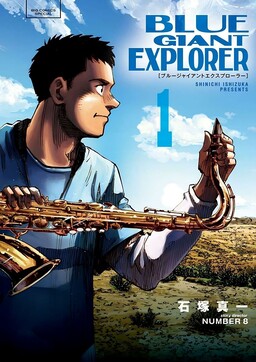
Blue Giant Explorer
Yu's review of Blue Giant Explorer — Dai Miyamoto lands in Seattle with a tenor sax and a thousand dollars, buys a used Honda, and drives across America building a band from strangers. The third chapter of the Blue Giant saga, complete in 9 volumes, only in Japanese.
Slice of Life / Drama
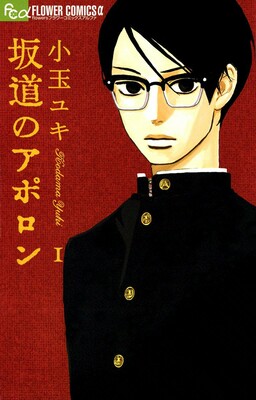
Kids on the Slope
Yu's review of Kids on the Slope (Sakamichi no Apollon) — 1966 Sasebo, Kyushu. Kaoru is a lonely classical pianist; Sentaro is a half-American delinquent who plays jazz drums in the basement of a record shop. Their friendship grows through music, the school festival, and a reunion years later at a church.

Slice of Life / Music
Blue Giant
Yu's review of Blue Giant — Dai Miyamoto, a Sendai high schooler with no talent and no friends in jazz, decides he will become the greatest jazz saxophonist in the world, moves to Tokyo, and forms the trio JASS with a cocky pianist and a total drumming beginner.
Slice of Life
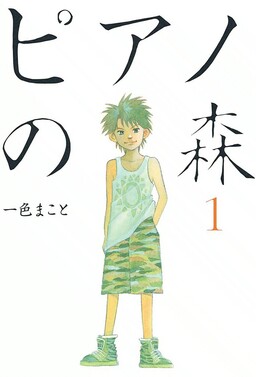
Piano Forest
Yu's review of Piano Forest — Kai Ichinose grows up poor in a forest community and has been playing an abandoned piano in the woods since childhood; when the talented but pressured Shuhei Amamiya moves to his town, their friendship and their different relationships with music begin a story about what playing truly means.
Slice of Life / Music
Those Snow White Notes
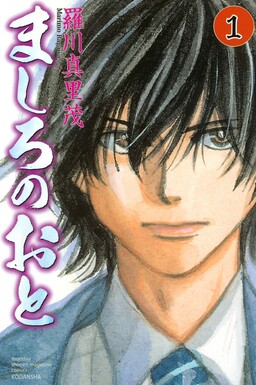
Yu's review of Those Snow White Notes — Setsu Sawamura is a shamisen prodigy whose grandfather, the legendary Matsugorou Sawamura, has just died; unable to play since losing his teacher, Setsu leaves his rural home and arrives in Tokyo, where he must find his own sound separate from his grandfather's influence.
Comedy / Slice of Life
I Can't Understand What My Husband Is Saying
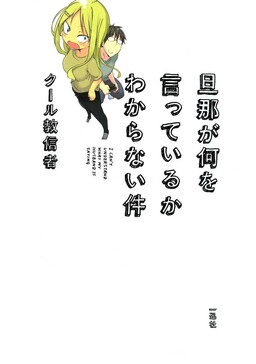
Yu's review of I Can't Understand What My Husband Is Saying (旦那が何を言っているかわからない件) — a 5-volume 4-koma comedy by Coolkyousinnjya about Kaoru, an ordinary office worker, and Hajime, her shut-in otaku-blogger husband. Their marriage works precisely because she doesn't always get the reference.
Written by
Yu
Manga Enthusiast from Japan
I grew up in Japan and manga literally saved me during a tough time in elementary school. My English isn't perfect, but my love for manga is real — and I want to share it with you.
Disclosure: This post contains affiliate links. As an Amazon Associate, I earn from qualifying purchases at no extra cost to you.