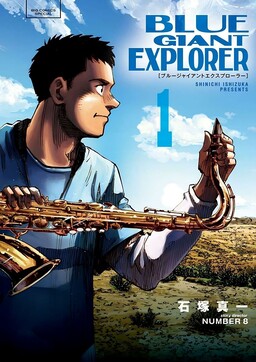
Blue Giant Explorer Review: Dai Crosses America Alone With One Tenor Sax and a Used Honda
by Shinichi Ishizuka (story di: NUMBER8)
Read the first volume. If it doesn't hook you, put it down. It'll hook you.
Buy Blue Giant Explorer on Amazon →*Affiliate link — I earn a small commission at no extra cost to you.
I have followed Dai Miyamoto since he was a high schooler honking his sax on a riverbank in Sendai, scaring the birds. I read the first Blue Giant. I read Supreme, where he tore through Europe. So when Explorer started and he landed in Seattle with nothing but a tenor sax and about a thousand dollars, I felt nervous for him, like a friend watching someone go too far from home. America is where jazz was born. That is a heavy place to walk into alone. I read all 9 volumes, and I want to tell you why this one stayed with me even more than the others.
Quick Take
- The third Blue Giant series: Dai crosses the United States by car, building a band from strangers, chasing the music in the country that invented it
- It is the loneliest and most road-movie entry of the saga — the loneliness is the point, and the payoff hits harder because of it
- 9 volumes, complete. Rated T (Teen) — clean, but emotionally heavy in places
Who Is This Manga For?
- Readers who loved Blue Giant and Blue Giant Supreme and need to see Dai's American chapter
- People who love road stories — crossing a country, picking up companions, leaving some behind
- Jazz fans who want a manga that treats the music as something worth bleeding for
- Anyone okay reading in Japanese, since there is no English edition yet
Story Overview
Dai gets his driver's license in Japan, then flies to Seattle. At immigration he says plainly that he came to become the best player in the world. He has almost no money. He buys a used Honda Civic with a car stereo from a body-shop owner named Jack, who sees something in him and gives him a deal, and he works at the shop to cover what he is short.
The turning point is that Dai does not stay in one city. He drives. He picks up a hitchhiker named Jason, who is not a musician but ends up helping book his gigs. In Mexico — Tijuana — he meets a pianist, Antonio, and asks him to come along. Slowly a band forms: Antonio on piano, Zodd, a New York music-school drummer who joins after a poker game, and eventually bassist Joe down in Miami. They play Portland, San Francisco, Los Angeles, New Orleans, city after city, and Dai's name grows.
The ending lands in the northeast. Dai reaches Boston, then New York. America that began on the west coast closes on the east coast, and the road that was Explorer hands him over to the next chapter of his life.
Characters
Dai Miyamoto — The same stubborn, sincere kid, but more alone than he has ever been. In Japan he had JASS. In Europe he had a trio. Here he starts from zero in a foreign language, and the manga is about a player who keeps walking forward even when no one is waiting for him at the next city.
Antonio — A pianist Dai meets in Tijuana. Dai basically talks him into abandoning his life to chase music across a country that is not his either. He becomes the emotional anchor of the American band, and one of the most loyal people Dai meets.
Zodd — A drummer trained at a New York music school, who joins the band after a poker match. He brings real technical schooling into a band that is otherwise built on raw drive.
Yukinori Sawabe — Not new, but his return is the heart of this series. In the original Blue Giant he was the pianist of JASS whose right hand was crushed in a truck accident the night before the biggest show of his life. In Explorer he reappears in Boston, studying composition at Berklee, playing with only his left hand.
What I Love About It
What I love is how honest this series is about being far from home. The other Blue Giant books have momentum — a band, a city, a goal in front of you. Explorer takes most of that away. For long stretches it is just Dai in a used Honda, sleeping cheap, working a body shop, talking to strangers in a language he barely controls. Ishizuka draws those empty American highways with so much air around them that you feel how small one Japanese kid with a sax is against all of it.
And yet that emptiness is exactly what makes the music land. When Dai finally plays, the loneliness of all those miles pours out of the horn. The series is not about America being kind to him or cruel to him. It is about a person who decided that the only way to find his own sound was to throw himself into the country where the sound came from, and then survive the distance. As someone who spent a lot of childhood alone, that quiet, stubborn forward motion — keep driving, keep playing, do not wait to be invited — is the most personal thing in the whole saga to me.
Memorable Scene ⚠️ Spoiler Warning
In Boston, Dai is playing a show, and in the crowd he spots Yukinori Sawabe. The last time JASS-era readers really saw Yukinori whole, his right hand was destroyed by a truck the night before So Blue. Seeing him here, alive and at Berklee, Dai breaks down crying in the bar — full sobbing — because his old bandmate kept going.
Then Antonio takes Dai's mic and announces that the piano on this song should be played by the man who composed it. He gives the stage to Yukinori. Yukinori plays with his left hand alone, beautifully — and then, out of sheer will, he starts forcing his ruined right hand to move on the keys too. The room erupts. Two old bandmates from a riverbank in Japan, reunited on a stage in America, one of them dragging a dead hand back to life by stubbornness. I had to put the book down. That is the page that justifies the entire lonely road that came before it.
Pros & Cons
Pros
- The most emotionally complete arc of the saga, with the Boston reunion as a genuine high point
- Ishizuka's performance pages still hit like nothing else in music manga
- The road-trip structure gives a fresh shape to Dai's familiar drive
- The American band — Antonio, Zodd, Joe — are real characters, not background
Cons
- You really need the original Blue Giant first for the ending to mean anything
- The middle stretches are slow and lonely on purpose
- There is no licensed English edition, so right now you need Japanese to read it — that won't work for everyone
Is Blue Giant Explorer Worth Reading?
Yes — if you have read the earlier books. On its own it is a strong road story about a musician crossing America alone; as the third act of a saga you have already loved, the Boston reunion makes it the best entry of the three. The only real barriers are that it leans on the original and that it is Japanese-only for now.
Where to Buy
No English release yet. That just means you find it before everyone else does.
Find Blue Giant Explorer on Amazon.co.jp →
This post contains affiliate links. If you purchase through these links, I may earn a small commission at no extra cost to you. As an Amazon Associate, I earn from qualifying purchases.
*Affiliate link — I earn a small commission at no extra cost to you.
More Manga You Might Like
Slice of Life
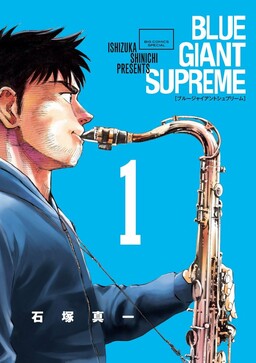
Blue Giant Supreme
Yu's review of Blue Giant Supreme — Dai Miyamoto leaves Japan with his tenor sax, lands alone in Munich, and builds a band across Europe. The Europe arc of Shinichi Ishizuka's jazz manga. No English release yet, but the Japanese volumes are out there.
Slice of Life / Drama
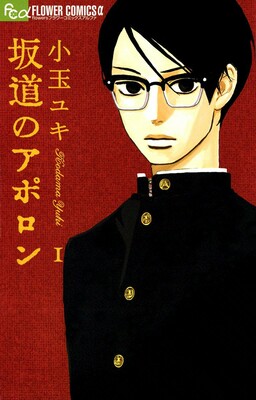
Kids on the Slope
Yu's review of Kids on the Slope (Sakamichi no Apollon) — 1966 Sasebo, Kyushu. Kaoru is a lonely classical pianist; Sentaro is a half-American delinquent who plays jazz drums in the basement of a record shop. Their friendship grows through music, the school festival, and a reunion years later at a church.

Slice of Life / Music
Blue Giant
Yu's review of Blue Giant — Dai Miyamoto, a Sendai high schooler with no talent and no friends in jazz, decides he will become the greatest jazz saxophonist in the world, moves to Tokyo, and forms the trio JASS with a cocky pianist and a total drumming beginner.
Slice of Life
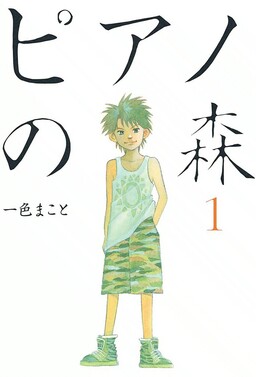
Piano Forest
Yu's review of Piano Forest — Kai Ichinose grows up poor in a forest community and has been playing an abandoned piano in the woods since childhood; when the talented but pressured Shuhei Amamiya moves to his town, their friendship and their different relationships with music begin a story about what playing truly means.

Slice of Life / Music
Those Snow White Notes
Yu's review of Those Snow White Notes — Setsu Sawamura is a shamisen prodigy whose grandfather, the legendary Matsugorou Sawamura, has just died; unable to play since losing his teacher, Setsu leaves his rural home and arrives in Tokyo, where he must find his own sound separate from his grandfather's influence.
Comedy / Slice of Life
I Can't Understand What My Husband Is Saying
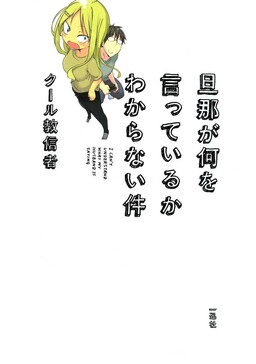
Yu's review of I Can't Understand What My Husband Is Saying (旦那が何を言っているかわからない件) — a 5-volume 4-koma comedy by Coolkyousinnjya about Kaoru, an ordinary office worker, and Hajime, her shut-in otaku-blogger husband. Their marriage works precisely because she doesn't always get the reference.
Written by
Yu
Manga Enthusiast from Japan
I grew up in Japan and manga literally saved me during a tough time in elementary school. My English isn't perfect, but my love for manga is real — and I want to share it with you.
Disclosure: This post contains affiliate links. As an Amazon Associate, I earn from qualifying purchases at no extra cost to you.