
Blue Giant Review: A Boy With No Talent Decides He Will Be the Greatest Jazz Saxophonist Alive
by Shinichi Ishizuka
Read the first volume. If it doesn't hook you, put it down. It'll hook you.
Buy Blue Giant on Amazon →*Affiliate link — I earn a small commission at no extra cost to you.
When I was a kid with no friends, I used to think dreams were for the people who already had something. The talented ones. The popular ones. The ones who were allowed to want things out loud. If you were nobody, you kept your head down and you didn't say what you wanted, because saying it out loud just gave people something to laugh at.
Then I read Blue Giant. And there is this boy, Dai Miyamoto, who decides — with no talent, no training, nothing — that he is going to be the greatest jazz saxophonist in the world. And he just says it. Out loud. To people. He says it like it is already decided. The first time I read that, something in my chest hurt. Because I never let myself say a thing like that, not once in my whole childhood. This manga is about a person who does.
Quick Take
- Blue Giant is the rare music manga that refuses shortcuts — there is no hidden genius, no sudden gift; Dai practices outdoors by the river for hours, for years, and you watch the work pile up
- Shinichi Ishizuka cannot make sound in a silent medium, so instead he draws the feeling of sound — the bodies, the sweat, the listeners' faces — and somehow you hear it anyway
- The original series runs 10 volumes, complete in English from Seven Seas; it is rated T (Teen) and earns every page of it
Story Overview
Dai Miyamoto is an ordinary high schooler in Sendai. He hears jazz, something cracks open in him, and he decides he will become the greatest jazz player in the world. He has never touched a saxophone. He gets one, and he goes down to the riverbank and the bridges and he plays, badly, loudly, for hours, in every season, for years.
The turning point comes when he finishes school and moves to Tokyo. There he meets Yukinori Sawabe, a piano prodigy with a chip on his shoulder, and the two of them pull in Shunji Tamada, a guy who has never played drums in his life but decides, watching them, that he wants in. They name the band JASS. Their goal is enormous and specific: to play at So Blue, the most prestigious jazz club in Japan, the stage Sawabe has dreamed about since he was a child.
The ending is not the triumphant group bow you might expect. Just as So Blue comes within reach, a traffic accident injures Sawabe's right hand. What happens to the trio after that is the real point of the whole series, and it is not a clean victory. It is the truth about what chasing something this big actually costs.
Characters
Dai Miyamoto — A boy whose conviction is never explained and never needs to be. He doubts the distance, never the direction. Ishizuka tracks his growth through the body — the calluses, the breath, the posture — more than through any "now he's good" moment. He is loud, sincere, and completely without irony, and that is exactly what makes him hard to look away from.
Yukinori Sawabe — The pianist. Cocky, technically brilliant, and the one who writes JASS's original songs. So Blue has been his childhood dream, which makes his arc the cruelest in the book. When the accident takes his right hand, the question is no longer whether he is good enough — it is whether his hand will ever come back at all.
Shunji Tamada — The drummer who starts as a total novice. He hears Dai and Sawabe and decides, with no experience whatsoever, that he wants to play. He puts in hour after hour just to become competent. By the end he makes a quiet, devastating choice about whether he belongs on the same stage as the other two.
What I Love About It
What I love is that Ishizuka cannot cheat, and he knows it. You cannot play a saxophone on paper. Sound does not exist on a page. So when Dai plays, the panels don't show music — they show effort. They show his ribs working, his face, the people in the room leaning forward without meaning to. There is a moment early on when Dai is just playing alone by the river, and the art makes you feel the cold air and the loneliness and the absolute refusal to stop, and I realized I was reading the panels as if I could hear them. That is a magic trick, and Ishizuka does it on purpose, page after page.
But the deeper reason it hit me is the practice. So many manga about being great give the hero a gift and then stage a tournament. Blue Giant gives Dai nothing but time and a riverbank. The work is the whole story. As a kid who believed dreams were only for people who already had something, watching a boy with nothing simply out-work the gap, year by year, season by season — that reached the exact place where I had given up. It made me feel like maybe wanting something, out loud, isn't the thing that gets you laughed at. Maybe it's the thing that saves you.
Memorable Scene ⚠️ Spoiler Warning
The ending. In the movie version, JASS gets to perform together at So Blue one last time, and it is beautiful. But the manga does not do that, and that is why I will never forget it.
In the manga, Sawabe's hand is injured in the accident and the trio never gets to play So Blue as a unit. Sawabe is the one who proposes that they disband — partly because there is no guarantee his hand heals, partly because Dai's ambition is already pulling him beyond a single band. And Tamada, who started as a complete beginner, makes his own choice to walk away, because he understands he cannot keep pace with Dai and Sawabe. Dai, who almost never breaks, gets genuinely upset — one of the only times in the whole series. His dream is what separated him from the two people who were with him from the very start.
I sat with that for a long time. It refuses the easy version. It says: this is what it costs. You chase the impossible thing, and sometimes the people beside you cannot come the whole way, and that is not anyone's fault — it is just the shape of it. The flash-forward interview panels that hint at where each of them ends up are almost cruel, because they let you imagine the heights they each reach apart, after the band that made them is already gone.
Pros & Cons
Pros
- The dedication is depicted with real, physical, years-long honesty — no gifted-genius shortcut
- Ishizuka's "draw the feeling of sound" approach genuinely makes you hear silent panels
- The jazz culture — clubs, sessions, So Blue — is rendered by someone who clearly loves it
- The ending refuses the easy triumph and is more devastating for it
Cons
- Dai's conviction is presented as a given; if you need it explained or justified, he can read as flat
- The manga ending is sadder and more open than the famous film, which surprises some readers
- It is a quiet, work-focused story with no villains or stakes beyond the music — if you need plot tension and fast turns, this slow, sincere grind won't work for everyone
Is Blue Giant Worth Reading?
Yes — and especially if you have ever been too afraid to say what you wanted out loud. It is the most honest manga I know about wanting something enormous when you start with nothing. The work is real, the music almost becomes audible, and the ending tells you the truth instead of a fantasy. You do not need to like jazz going in. You will by the time you finish.
Similar Manga
| Title | Its Approach | How Blue Giant Differs |
|---|---|---|
| Your Lie in April | Classical music wrapped in romance and grief | Blue Giant strips out melodrama for raw, physical practice |
| Beck | A rock band's rise told as a coming-of-age road | Blue Giant is narrower and harder-edged, fixed on one craft |
| Haikyu!! | Sports manga built on relentless team effort | Blue Giant applies that same grind to a solitary art form |
Where to Buy
Read the first volume. If it doesn't hook you, put it down. It'll hook you.
This post contains affiliate links. If you purchase through these links, I may earn a small commission at no extra cost to you. As an Amazon Associate, I earn from qualifying purchases.
*Affiliate link — I earn a small commission at no extra cost to you.
More Manga You Might Like
Slice of Life
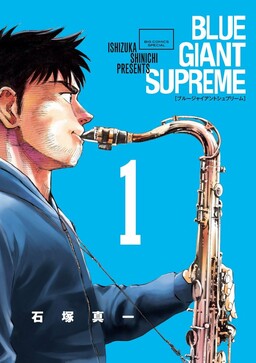
Blue Giant Supreme
Yu's review of Blue Giant Supreme — Dai Miyamoto leaves Japan with his tenor sax, lands alone in Munich, and builds a band across Europe. The Europe arc of Shinichi Ishizuka's jazz manga. No English release yet, but the Japanese volumes are out there.
Slice of Life
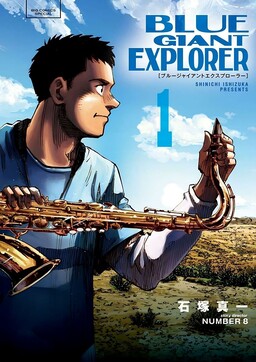
Blue Giant Explorer
Yu's review of Blue Giant Explorer — Dai Miyamoto lands in Seattle with a tenor sax and a thousand dollars, buys a used Honda, and drives across America building a band from strangers. The third chapter of the Blue Giant saga, complete in 9 volumes, only in Japanese.
Slice of Life
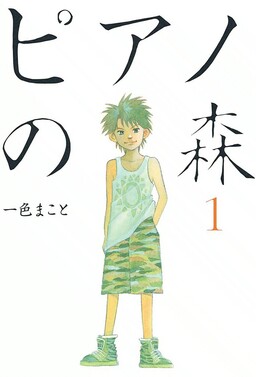
Piano Forest
Yu's review of Piano Forest — Kai Ichinose grows up poor in a forest community and has been playing an abandoned piano in the woods since childhood; when the talented but pressured Shuhei Amamiya moves to his town, their friendship and their different relationships with music begin a story about what playing truly means.

Slice of Life / Memoir
My Lesbian Experience with Loneliness
Yu's review of My Lesbian Experience with Loneliness — Nagata Kabi's autobiographical manga about her experiences with depression, an eating disorder, her difficult relationship with her parents, and her gradual understanding of her own sexuality and loneliness; one of the most honest mental health memoirs in manga form.
Slice of Life / Drama
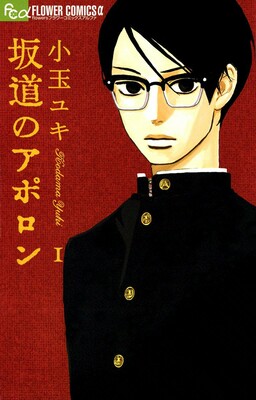
Kids on the Slope
Yu's review of Kids on the Slope (Sakamichi no Apollon) — 1966 Sasebo, Kyushu. Kaoru is a lonely classical pianist; Sentaro is a half-American delinquent who plays jazz drums in the basement of a record shop. Their friendship grows through music, the school festival, and a reunion years later at a church.
Slice of Life / Drama
I Want to Eat Your Pancreas
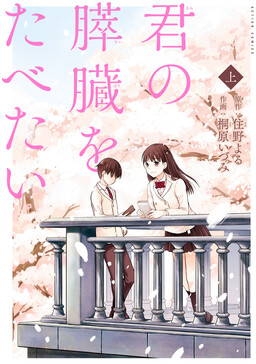
Yu's review of the I Want to Eat Your Pancreas manga — Idumi Kirihara's adaptation of Yoru Sumino's novel. A withdrawn boy finds classmate Sakura Yamauchi's secret diary and learns she's dying of a pancreatic illness. She chooses him precisely because he won't treat her like a dying girl. Seven Seas collected the two Japanese volumes into one English omnibus.
Written by
Yu
Manga Enthusiast from Japan
I grew up in Japan and manga literally saved me during a tough time in elementary school. My English isn't perfect, but my love for manga is real — and I want to share it with you.
Disclosure: This post contains affiliate links. As an Amazon Associate, I earn from qualifying purchases at no extra cost to you.