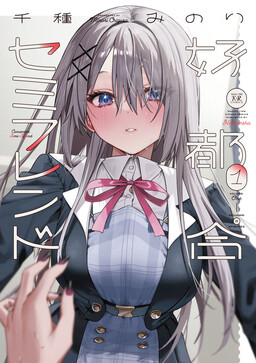
Blend S Review: The Sweetest Girl in the Café Plays the Cruelest Role
by Miyuki Nakayama
Read the first volume. If it doesn't hook you, put it down. It'll hook you.
Buy Blend S on Amazon →*Affiliate link — I earn a small commission at no extra cost to you.
I have a face that makes people think I'm angry when I'm not. When I was a kid, teachers used to ask me what was wrong when nothing was wrong. So when I opened Blend S and met a girl whose smile looks like she wants to destroy you — even though she's the gentlest person in the room — I laughed out loud, but it also poked a small sad spot in me. I know what it's like to be misread by your own face. Maika gets a whole comedy out of it. I just got detention.
This is a short, warm four-panel comedy, and I don't want to oversell it. But the central idea is so clean, and so kind underneath, that it stayed with me longer than I expected.
Quick Take
- Maika's smile reads as "sadistic" no matter how sweet she actually is — the whole café roleplay premise grows out of that one perfect joke
- It's a gentle Manga Time Kirara Carat comedy: low stakes, character-type humor, the kind of book you read with tea
- Age rating: T (Teen) — the "sadist/masochist" café gag is comedic and tame, nothing graphic
Story Overview
Maika Sakuranomiya is a 16-year-old who desperately wants a part-time job — partly to fund a dream of studying abroad. The problem is her face. When she smiles, her eyes go sharp and menacing, so she keeps failing interviews on first impression alone.
The turning point is when Dino, the Italian manager of a themed café called Stile, sees that exact terrifying smile and lights up. Stile is a concept café where every waitress performs an exaggerated character "type" for the customers — tsundere, little sister, big sister, idol. Dino recruits Maika to play the sadistic type, because her natural expression already does the work for her.
From there the manga isn't really plot-driven; it's the daily life of the Stile staff. Maika slowly stops being a nervous newcomer and becomes part of the family. Dino's hopeless crush on her runs underneath everything as the long, slow romantic engine. The Japanese run finished at eight volumes, so the gentle arc does eventually reach a resting point — but the appeal is the day-to-day, not a big climax.
Characters
Maika Sakuranomiya — The heart of the book. She's earnest, eager to please, and saving up for a future abroad, but her face betrays her at every turn. On the floor she "succeeds" as the sadist mostly by accident and clumsiness; the second a customer leaves, she snaps back into a worried, apologetic girl asking if she went too far. Her arc is learning to be comfortable around people who see past the scary smile.
Dino — The café's Italian manager, an anime-obsessed foreigner who scouted Maika in the first place. His unspoken crush on her is the series' slow-burn thread, played gently for comedy rather than drama — his feelings always tripping over his role as her boss.
Miu Amano — The "big sister" type, and secretly a doujin manga artist. The running joke I love most: she starts drawing an original manga starring a sadistic maid and a masochist butler, both very obviously based on Maika and Dino. The café becomes her reference material.
Hideri Kanzaki — Hired to play the "idol" type. The twist is that Hideri is actually a boy who dreams of becoming an idol and crossdresses convincingly to chase it. The comedy comes from how committed and self-serious the ambition is.
What I Love About It
The thing that won me over is how kind the joke is. A premise like "sadist café" could easily be mean or leering. Instead, the engine of every gag is that Maika is fundamentally too gentle to be cruel. She's not insulting customers because she enjoys it — she's panicking, overcorrecting, and somehow landing the persona anyway. And the moment the masochist customers walk out the door satisfied, she immediately worries she was awful to them.
That worry is the whole reason it works for me. The series understands that watching someone try to be mean and fail because they're too good-hearted is funnier — and sweeter — than watching someone actually be mean. The gap between her face and her heart isn't cruelty played for laughs; it's gentleness disguised as cruelty, and the disguise keeps slipping. As someone who spent years being told my face said things my heart didn't, that landed for me in a way a lot of "wacky café" comedies never could.
Memorable Scene ⚠️ Spoiler Warning
Maika's very first day on the floor. She's terrified, she doesn't understand the rules of the place, and she's seated with a pair of masochist customers who want to be treated harshly. Dino has told her the customers enjoy being insulted, but her instinct to be polite keeps warring with the role. Through sheer clumsy nervousness, she comes off as exactly the dominant, cutting "sadist" the customers were hoping for — they leave delighted.
And then, the instant they're gone, the menace drains out of her face and she's wringing her hands, mortified, asking if she was too harsh on them. That single beat — devastating sadist one second, apologizing softie the next — is the entire series compressed into one scene. It's the moment she decides to take the job, and it's the moment I decided to keep reading.
Pros & Cons
Pros
- One of the cleanest comedic premises in the Kirara catalog — the joke explains itself instantly
- Maika is a genuinely lovable lead; the humor is warm, never cruel
- Very accessible to non-Japanese readers — you don't need deep otaku knowledge to get the core gag
- Short and easy to read in four-panel format
Cons
- Low stakes by design — there's no real tension or plot momentum
- The character "types" mean some side cast stay fairly one-note
- It's slow, cozy, plot-light comfort food — if you want story and progression, this gentleness will read as "nothing happens," and that's fair.
Is Blend S Worth Reading?
If you want a short, warm, character-type comedy with a premise that pays off in the first chapter, yes — Blend S is an easy recommendation. If you need plot, stakes, or emotional weight, this isn't that book. It's tea-and-blanket reading built around one wonderful joke: the sweetest girl in the room is the one everyone's scared of.
Similar Manga
| Title | Its Approach | How Blend S Differs |
|---|---|---|
| Working!! | Workplace ensemble comedy where the gag is each coworker's quirk | Blend S builds its whole café around performed "types" instead of natural quirks |
| Is the Order a Rabbit? | Gentle Kirara café slice-of-life, pure cozy daily life | Blend S adds a sharper comedic hook and a slow-burn romance under it |
| New Game! | Kirara workplace comedy following a young newcomer finding her place | Blend S leans on roleplay-versus-real-personality gaps rather than the job itself |
Where to Buy
Read the first volume. If it doesn't hook you, put it down. It'll hook you.
This post contains affiliate links. If you purchase through these links, I may earn a small commission at no extra cost to you. As an Amazon Associate, I earn from qualifying purchases.
*Affiliate link — I earn a small commission at no extra cost to you.
More Manga You Might Like

Slice of Life / Comedy
Slow Start
Yu's review of Slow Start — Hana Ichinose started high school a year late due to illness, making her a year older than her classmates; the series follows her trying to fit in with her new friends while carrying the secret that she is different, in Tokumi Yuiko's characteristic warm and gentle 4-koma style.
Slice of Life / Comedy
Monthly Girls' Nozaki-kun
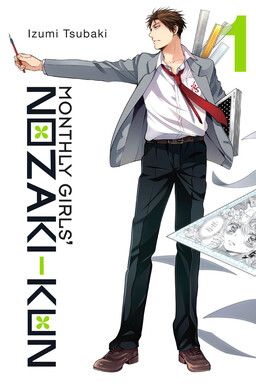
Yu's review of Monthly Girls' Nozaki-kun — Chiyo Sakura confesses to her crush Umetaro Nozaki and he hands her his autograph; she discovers he is the author of a popular shojo manga and accidentally becomes his assistant; the series is a comedy about manga creation that uses the genre conventions of shojo manga as its comedic material.

Slice of Life / Comedy
Is the Order a Rabbit?
Yu's review of Is the Order a Rabbit? (Gochuumon wa Usagi Desu Ka?) by Koi — Cocoa Hoto moves to a European-styled town and ends up boarding at the Rabbit House café, where she meets quiet barista-in-training Chino and a small circle of friends who slowly become family. A CGDCT comfort manga where the house Angora rabbit, Tippy, carries the spirit of Chino's grandfather.
Slice of Life
Ichigo Mashimaro
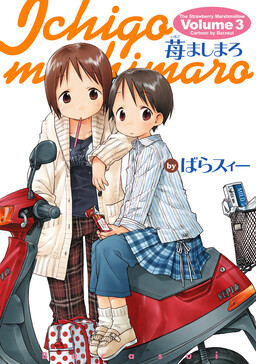
Yu's review of Ichigo Mashimaro — Nobue Itoh and the four grade-schoolers around her (her sister Chika, the chaotic Miu, the timid Matsuri, and British transplant Ana Coppola) drift through ordinary days in suburban Hamamatsu. Barasui's long-running deadpan comedy is built on Miu's relentless schemes and the cruel running joke of Ana forgetting her own English.

Slice of Life / Comedy
Gabriel DropOut
Yu's review of Gabriel DropOut — Gabriel White Tenma graduates top of her angel class, gets sent to Earth to guide humans toward happiness, discovers online games, and rots into a slovenly NEET. Her demon classmate Vignette is the responsible one; demon Satania keeps losing her melon bread to a dog; angel Raphiel just enjoys watching everyone suffer.

Slice of Life
Kill Me Baby
A review of Kaduho's Kill Me Baby — ongoing in Manga Time Kirara Carat since July 2008, 16+ volumes in Japan. Sonya is a trained assassin; Yasuna is her completely unfazed school friend. Yen Press publishes the English edition.
Written by
Yu
Manga Enthusiast from Japan
I grew up in Japan and manga literally saved me during a tough time in elementary school. My English isn't perfect, but my love for manga is real — and I want to share it with you.
Disclosure: This post contains affiliate links. As an Amazon Associate, I earn from qualifying purchases at no extra cost to you.