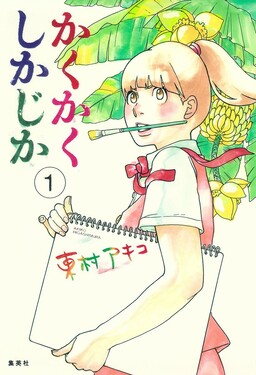
Blank Canvas Review: The Teacher Who Hit Her With a Bamboo Sword and Saved Her Life
by Akiko Higashimura
Read the first volume. If it doesn't hook you, put it down. It'll hook you.
Buy Blank Canvas: My So-Called Artist's Journey on Amazon →*Affiliate link — I earn a small commission at no extra cost to you.
I draw badly. I want to say that out loud before I talk about this manga, because Blank Canvas is about a girl who also drew badly, and who had someone scream at her for years until she didn't. When I was a kid hiding from the world inside other people's manga, I never once thought about the person who made the marks on the page — how they learned to do it, who taught them, who believed in them before anyone had a reason to. This book is that story, told by one of Japan's most beloved manga artists, and it broke me in a way I wasn't ready for.
Akiko Higashimura wrote and drew this herself. You might know her from Princess Jellyfish or Tokyo Tarareba Girls — funny, sharp, fast. Blank Canvas (Kakukaku Shikajika in Japanese) is her looking back at where all of that came from. And the honest answer is: a small art classroom in rural Miyazaki, and a man with a bamboo sword who would not let her quit.
Quick Take
- Autobiographical manga by Akiko Higashimura (Princess Jellyfish) — five volumes, complete in English from Seven Seas, and it won the 2015 Manga Taishō Award
- It's funny for most of its length and then it quietly destroys you — a comedy about hard work that turns into a eulogy for the teacher who made the work possible
- Rated T (Teen) — no graphic content, but the emotional weight of grief and regret is real
Story Overview
Teenage Akiko grows up in Miyazaki, a rural prefecture in southern Kyushu, fully convinced she's already a great artist. Her family praised her, she believed them, and she figures becoming a pro mangaka is basically a formality. To polish things up before art-school exams, she signs up for a local art class — expecting an easy stamp of approval.
Instead she meets Hidaka-sensei: a gruff, bamboo-sword-wielding teacher who looks at her drawings, tells her flatly that they suck, and informs her she'll never pass exams at her current level. He demands she come five days a week and draw the same objects over and over. The turning point isn't a big speech — it's small. After Akiko fakes a stomachache to escape, Hidaka, who has no car, walks her all the way to a distant bus stop and waits an hour with her for the next bus. That quiet act of care reframes everything.
She keeps going to that classroom for eight years — through art college, where she drifts and parties and abandons painting, through a soul-draining post-graduation job during the recession, and into her first desperate manga submissions at 22. She keeps going right up until a year before Hidaka-sensei dies. The memoir's ending is the adult Akiko, successful and busy, reckoning with the fact that she stopped showing up, never properly thanked him, and ran out of time. Blank Canvas is the thank-you she never got to say.
Characters
Akiko Higashimura (young) — She starts as an overconfident teenager coasting on family praise, certain she's special. Her arc is the slow, humiliating, necessary collapse of that certainty: discovering she can't actually draw, freezing in front of work, running away from the very discipline that's saving her. Higashimura draws her younger self with brutal, affectionate self-mockery — she does not let herself off the hook.
Hidaka-sensei — The heart of the book. He runs his small atelier with a bamboo sword and one relentless command: draw. He's loud, demanding, and tells students their work is bad without softening it. But he is not a cartoon tyrant — his harshness comes from total, almost innocent faith in the act of drawing as the answer to everything. His care surfaces in actions, not words: walking her to the bus, riding a scooter an hour in summer heat to help her. His arc, glimpsed across the years, ends in illness and death — and in how much he never said he was proud, and how much she never said thank you.
Akiko's mother and family — The early enablers of her delusion, and later a quiet anchor when she returns home broke and defeated. They're the soft cushion Hidaka refuses to be, and the contrast is the whole point: love that comforts versus love that demands you become more than you are.
What I Love About It
There's a scene early in Akiko's college years that I keep returning to. She's facing her first real assessment, a literal blank canvas in front of her, and she completely freezes — paralyzed, unable to make a single mark. And Hidaka-sensei, who lives an hour away, gets on his scooter and rides through the brutal summer heat to reach her, just to deliver three words: "Just draw." Then he leaves. That's it. That's the whole lesson.
I love this because it's the least sentimental version of mentorship I've ever read, and somehow the most moving. He doesn't give her confidence. He doesn't tell her she's talented. He doesn't fix her feelings. He gives her the one thing that actually works — the instruction to put the pencil down on the page and move it, even when it's bad, even when you're scared, even when the canvas is empty and so are you. As someone who has stared at empty pages and convinced myself I had nothing, that phrase lands like a slap and a hug at the same time. The whole manga is built on it. "Just draw" is the answer to despair, to fear, to grief, to a wasted life. You don't feel better and then draw. You draw, and the rest follows.
Memorable Scene ⚠️ Spoiler Warning
The part that wrecked me is the ending — the adult Higashimura confronting what she did, or rather what she didn't do. For eight years that classroom was her sanctuary, and Hidaka-sensei was always there, always waiting. And then she got busy. She became a real, working, successful mangaka — exactly what he trained her to be — and she stopped going. She stopped visiting. And one day there was no more time.
The line she gives herself is unforgiving: she calls herself a greedy person who only thought about herself, who ran away and abandoned her teacher. There's no melodrama in how she draws it — it's quieter than that, which is why it hurts more. The whole book reframes in that moment. Every gag about the bamboo sword, every joke about his weird intensity, every scene of her grumbling through drills — it was all her saying the goodbye she never said in life. Blank Canvas isn't a manga about how to become an artist. It's a manga drawn at a grave. By the last page I understood that she made an entire five-volume work just to tell one dead man thank you, and that she knew it would never reach him, and she did it anyway. That's the part I can't shake.
Pros & Cons
Pros
- One of the most honest depictions of artistic training ever put in manga — no inspirational shortcuts, just years of grind
- Hidaka-sensei is a genuinely great character: funny, frightening, and quietly loving all at once
- The comedy-to-grief turn is masterfully paced; you don't see the gut-punch coming
- Complete in five volumes, so the whole arc lands without waiting
Cons
- The harsh, yelling style of mentorship may read as cruel to readers who want kindness from their teachers
- The Miyazaki rural setting and Japanese art-school context take a little orientation
- It's a memoir that ends in grief and regret — if you're looking for a tidy feel-good triumph, this isn't quite that, and that ambiguity won't work for everyone
Is Blank Canvas Worth Reading?
Yes — emphatically, if you've ever wanted to make something and felt too small to do it. It's funny enough to read for laughs and deep enough to leave a mark, and its final volume is one of the most quietly devastating endings I've read in any memoir manga. Come for the bamboo-sword comedy, stay for the eulogy.
Where to Buy
Read the first volume. If it doesn't hook you, put it down. It'll hook you.
This post contains affiliate links. If you purchase through these links, I may earn a small commission at no extra cost to you. As an Amazon Associate, I earn from qualifying purchases.
*Affiliate link — I earn a small commission at no extra cost to you.
More Manga You Might Like
Slice of Life / Memoir
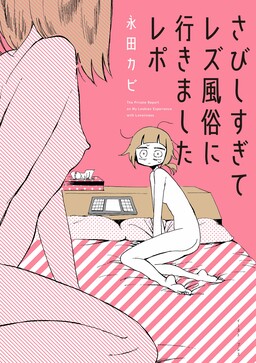
My Lesbian Experience with Loneliness
Yu's review of My Lesbian Experience with Loneliness — Nagata Kabi's autobiographical manga about her experiences with depression, an eating disorder, her difficult relationship with her parents, and her gradual understanding of her own sexuality and loneliness; one of the most honest mental health memoirs in manga form.
Slice of Life / Drama
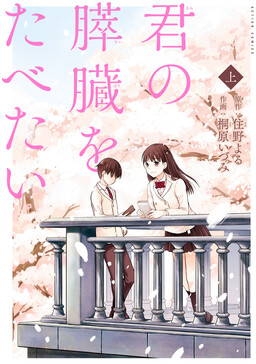
I Want to Eat Your Pancreas
Yu's review of the I Want to Eat Your Pancreas manga — Idumi Kirihara's adaptation of Yoru Sumino's novel. A withdrawn boy finds classmate Sakura Yamauchi's secret diary and learns she's dying of a pancreatic illness. She chooses him precisely because he won't treat her like a dying girl. Seven Seas collected the two Japanese volumes into one English omnibus.
Slice of Life / Music
Blue Giant
Yu's review of Blue Giant — Dai Miyamoto, a Sendai high schooler with no talent and no friends in jazz, decides he will become the greatest jazz saxophonist in the world, moves to Tokyo, and forms the trio JASS with a cocky pianist and a total drumming beginner.
Slice of Life
Satoko and Nada
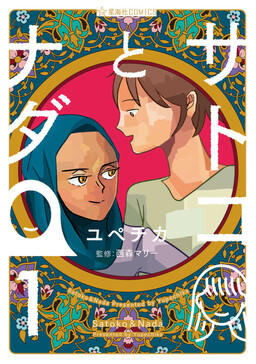
Yu's review of Satoko and Nada — Satoko is a Japanese student at an American university; Nada is her Saudi Arabian roommate; neither knows much about the other's culture; Yupechika's slice-of-life manga about two women sharing an apartment, sharing their lives, and learning that the gap between their worlds is smaller than they assumed.
Slice of Life / Comedy
New Game!
Yu's review of New Game! — Aoba Suzukaze joins Eagle Jump, the game company that made her favorite childhood game, as a character designer; the series follows her first year in professional game development alongside an all-female team; a workplace slice-of-life that treats game development with genuine procedural interest.
Slice of Life
Maria Watches Over Us (Marimite)
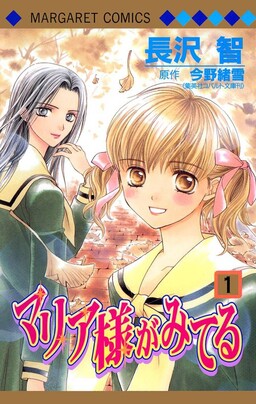
Yu's review of Maria Watches Over Us — Yumi is a first-year student at the Lillian Girls' Academy, a Catholic school with a tradition of 'soeur' relationships between older and younger students; she is noticed by the beautiful third-year Sachiko; Nagasawa's adaptation of Konno's beloved light novel about ritual, belonging, and the specific intensity of all-girls school friendships.
Written by
Yu
Manga Enthusiast from Japan
I grew up in Japan and manga literally saved me during a tough time in elementary school. My English isn't perfect, but my love for manga is real — and I want to share it with you.
Disclosure: This post contains affiliate links. As an Amazon Associate, I earn from qualifying purchases at no extra cost to you.