
Bartender Review: The Right Drink at the Right Moment Is a Quiet Kind of Mercy
by Araki Joh (story) / Kenji Nagatomo (art)
Read the first volume. If it doesn't hook you, put it down. It'll hook you.
Buy Bartender on Amazon →*Affiliate link — I earn a small commission at no extra cost to you.
I am not really a drinker. I want to say that up front, because Bartender is a manga about alcohol, and you might think it is for people who know their single malts from their blends. It is not. I came to it the way I come to most of the manga I love — alone, late, wanting something gentle. And it gave me that. Every chapter of Bartender is one person sitting down at a bar with something heavy on their chest, and a young man on the other side of the counter who looks at them, really looks, and then makes them a drink. That is the whole thing. And somehow it is enough.
I think when you grow up lonely, you learn the difference between someone giving you advice and someone actually paying attention to you. Bartender is built entirely out of that difference. Ryu Sasakura never tells anyone what to do. He just sees them. For a kid who spent years feeling invisible, that lands harder than any shonen speech ever did.
Quick Take
- Each chapter is a self-contained story: one customer, one burden, and the single drink that meets it
- The cocktail and spirits knowledge is real research — you will close the book knowing the history behind drinks you have never heard of
- Age rating: T (Teen) — alcohol is central, but it is treated as craft and comfort, never as glamour or escape
Story Overview
Ryu Sasakura is a young bartender who, after training in Paris, ends up at Eden Hall, a small bar tucked into a quiet nook of Tokyo's Ginza district. He is unassuming and soft-spoken, and he happens to be a prodigy. People in the trade talk about his "Glass of the Gods" (神のグラス) — the idea that, faced with any person in any situation, Ryu knows exactly the right drink to serve.
The series is episodic by design. There is no overarching villain, no escalating tournament. Instead, customer after customer comes through the door carrying something: a man who just failed in front of everyone, a craftsman whose era has passed him by, a person who cannot forgive themselves for an old choice. Ryu listens. He asks the right question. He makes the drink — and because he knows the history and meaning behind every recipe, the drink becomes a kind of answer.
There is no grand finale; the manga simply keeps proving its quiet thesis across 21 volumes and then closes. The one recurring thread that gives the series a spine is Miwa Kurushima, who pulls Ryu out of pure walk-in episodes and into the larger world of the hotel industry — and into a longer story about her own past.
Characters
Ryu Sasakura — The protagonist whose talent is expressed through attention rather than action. He trained as a bartender in Paris and returns to Japan as someone who can read a customer's real need before they can say it themselves. He is not a fixer; he never manages anyone's problem for them. He builds a space — and a glass — in which a person can finally see their own situation clearly.
Miwa Kurushima — Introduced around volume 3, a young woman (26) who works in the beverage division of the Hotel Cardinal. She lost both her parents when she was very small and was raised by her grandfather, the hotel's chairman. She becomes the series' most consistent recurring character, the bridge between Eden Hall and the formal world of hotel bars, and she carries an unspoken, mostly unrealized affection for Ryu. Her own buried memory drives one of the series' most affecting early arcs.
The customers — The true ensemble. Each chapter's guest is the protagonist of their own short story, and the range is the range of adult life: professional humiliation, marital exhaustion, grief, the slow ache of being left behind by your own field. Ryu does not appear in their lives again. One night is all they get, and all they need.
What I Love About It
I love that Bartender makes an argument I happen to believe in — that the most valuable thing one person can give another is genuine attention — and then refuses to cheat to prove it.
Ryu could so easily be written as a magician. The setup invites it: the genius who fixes broken people with a cocktail. But the manga is careful never to let him solve anyone's life. He cannot give the failed man his job back. He cannot un-break a marriage. What he can do is pay complete attention — to what the customer said, to what they pointedly did not say — and respond with something so precisely calibrated that the person feels, maybe for the first time in a long while, truly seen. The drink is the physical form of that attention. It says: I looked at you, and this is what I understood.
What gets me is how the series insists, chapter after chapter, that this is enough. Not a solution. Just the right glass, handed across a counter at the right moment, by someone who actually looked. As a kid who would have given anything for one adult to look at me like that, I find the whole premise almost unbearably kind. The fact that the manga also teaches you the real history of each drink — who invented it, what era gave it meaning — only makes the gift feel more deliberate.
Memorable Scene ⚠️ Spoiler Warning
The arc that stays with me is Miwa's, the one usually called "Menu of the Heart." Miwa comes to Eden Hall not as a casual customer but with a question she has carried since childhood. When she was very young, her father had a special drink he wanted to present to her grandfather — something meaningful enough that he wanted the older man to taste it himself. On that day, little Miwa got hold of the bottle, gripped it, and ran toward her grandfather. She tripped. The bottle, wrapped in a bag, broke, and its contents spilled out before anyone could taste it.
Not long after, both of Miwa's parents were killed in a car accident. With them died any chance of learning what that drink had been — the last thing her father wanted to share, gone, unnamed. She grows up with that hole in her: a memory of something precious she destroyed by accident and can never name.
She brings this to Ryu. Not as a cocktail order — as a mystery. And through careful, patient questioning, working backward from a child's fragmentary memory, Ryu identifies the drink. It was Suntory's Kakubin, a humble, beloved Japanese whisky — nothing rare or extravagant, which is exactly what makes it land. The point was never the bottle's prestige. It was a father's small, sincere wish to share something with the man who raised his wife. By naming it, Ryu gives Miwa back the one thing the accident took: the chance, at last, to let her grandfather taste what her father meant for him. I think about that scene whenever I imagine grief as a thing that can be quietly, partly, mended.
Pros & Cons
Pros
- Genuinely educational — real, researched history of cocktails and spirits woven into the drama
- Some of the best episodic, self-contained storytelling in the "food as healing" genre
- Quiet and warm; the opposite of an anxious read
- Complete at 21 volumes, with a clear vision held the whole way through
Cons
- No English license, so reading it means the Japanese edition (or learning to)
- The episodic format means limited long-arc character growth — most guests appear once and vanish
- Some readers will find the loving detail about drink history slow. The calm, low-stakes rhythm is either the whole appeal or a dealbreaker depending entirely on what you came for — this won't work for everyone.
Is Bartender Worth Reading?
Yes — if you want a manga that is patient, kind, and quietly smart rather than loud. It is one of the finest "food as emotional resolution" series, with cocktail knowledge that is actually accurate and a recurring belief that being truly seen can change how a person feels about their life. If you need plot momentum and a big finale, the episodic calm may not hold you. If you want something gentle to read alone at night, few manga do it better.
Similar Manga
| Title | Its Approach | How Bartender Differs |
|---|---|---|
| Oishinbo | Food as cultural knowledge and a vehicle for human drama | Trades the rivalry framing for pure one-night encounters at a bar |
| Drops of God | Wine as emotional archaeology, with a competitive mystery plot | No contest, no stakes — just one customer and the right glass |
| Wakako-zake | Solitary drinking as quiet personal comfort, very short episodes | Adds a bartender who reads and answers each person's deeper need |
Where to Buy
No English release yet. That just means you find it before everyone else does.
Search for Bartender on Amazon.co.jp →
This post contains affiliate links. If you purchase through these links, I may earn a small commission at no extra cost to you. As an Amazon Associate, I earn from qualifying purchases.
*Affiliate link — I earn a small commission at no extra cost to you.
More Manga You Might Like
Slice of Life / Drama
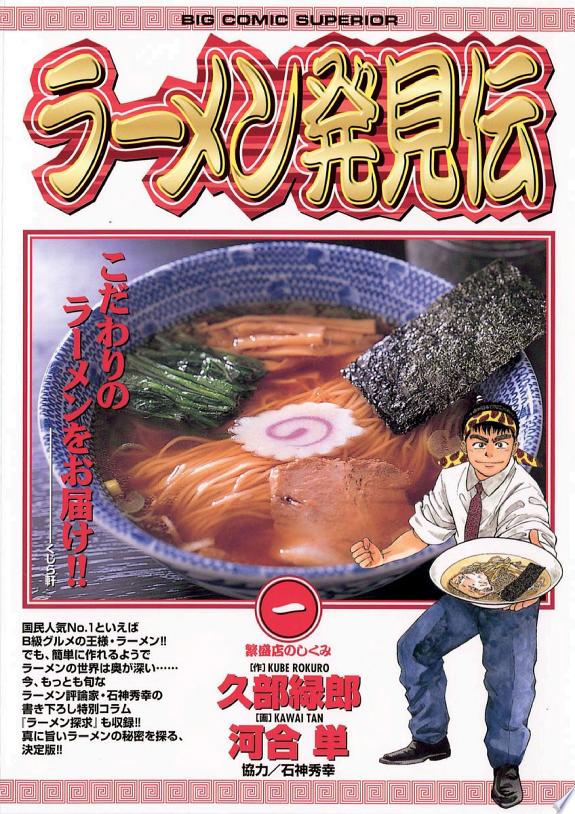
Ramen Discovery Legend
Ramen Discovery Legend follows Fuuta Kajiwara, an ordinary salaryman with extraordinary ramen sensitivity, as he encounters and evaluates Japan's ramen culture — from regional styles to legendary shops — becoming an unexpected authority through pure palate.
Slice of Life / Drama
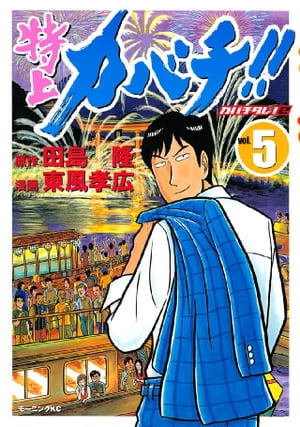
Tokujou Kabachi!!
Tokujou Kabachi!! follows Daisuke Kanie, a paralegal at an administrative scrivener's office, as he takes on bureaucratic injustice and legal gray areas armed only with his knowledge of Japanese administrative law — and a willingness to argue until someone listens.
Slice of Life / Drama
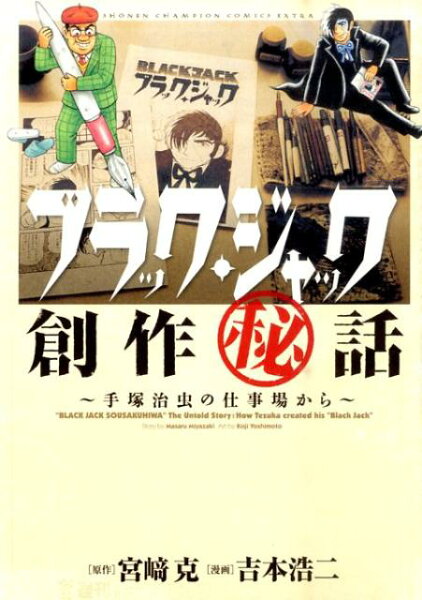
Black Jack Sousaku Hiwa
Black Jack Sousaku Hiwa is a documentary manga about how Osamu Tezuka created Black Jack — told through the editors and assistants who worked beside him, capturing both the genius and the human cost of his impossible work ethic.
Slice of Life / Drama
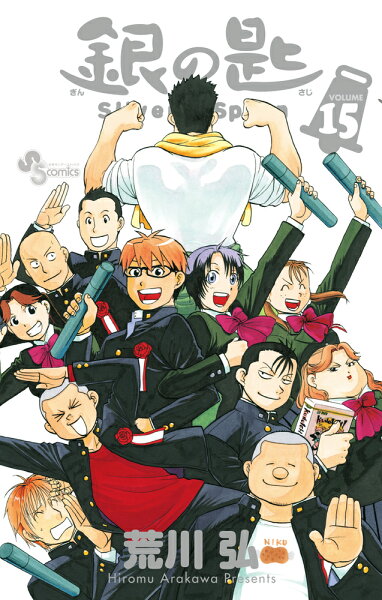
Silver Spoon
Yu's review of Silver Spoon — a city kid escapes to an agricultural high school to avoid his family, and discovers that farming, animal husbandry, and the people who feed the country have lessons no classroom ever taught him.
Slice of Life / Drama
Drops of God
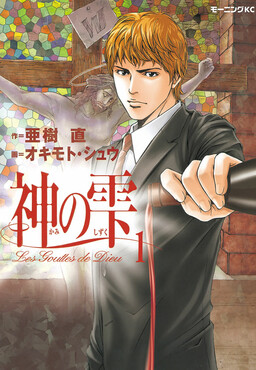
Yu's review of Drops of God — Shizuku Kanzaki, a young beer-company salesman who hates wine, has to identify the twelve 'Apostles' and a final wine called the Drops of God from his late father's will to inherit a legendary cellar, racing the adopted wine prodigy Issei Tomine. Written by Tadashi Agi, drawn by Shu Okimoto, complete in English from Kodansha.
Slice of Life / Drama
Deaimon
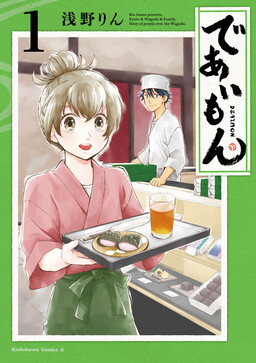
Yu's review of Deaimon (であいもん) by Rin Asano — Nagomu Irino comes home to his family's Kyoto wagashi shop after ten failed years chasing music, and finds a ten-year-old girl named Itsuka already living there, already learning the craft, already named his rival for the shop he walked out on.
Written by
Yu
Manga Enthusiast from Japan
I grew up in Japan and manga literally saved me during a tough time in elementary school. My English isn't perfect, but my love for manga is real — and I want to share it with you.
Disclosure: This post contains affiliate links. As an Amazon Associate, I earn from qualifying purchases at no extra cost to you.