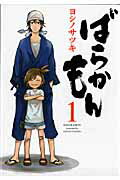
Barakamon Review: The Calligrapher Who Had to Lose His Talent to Find His Voice
by Satsuki Yoshino
Read the first volume. If it doesn't hook you, put it down. It'll hook you.
Buy Barakamon on Amazon →*Affiliate link — I earn a small commission at no extra cost to you.
I was good at one thing as a kid. Just one. And when you only have one thing, you guard it so hard that it stops being a joy and becomes a fence you stand behind. So when I read the first chapter of Barakamon — a young man who is told his life's work is "textbook, boring," and answers with his fist — I did not laugh at him. I understood him. That punch is not arrogance. It is fear wearing arrogance like a coat.
This is the manga I hand to people who tell me slice-of-life is "nothing happens." Something happens here. A man learns to be a person. It just happens quietly, between a kid stealing his snacks and the sea being too loud at night.
Quick Take
- A prize-winning calligrapher punches an elderly critic, gets shipped off to a remote island, and the island's children dismantle his idea of what "good" even means
- It is about creative block, perfectionism, and the slow discovery that the chaos you keep trying to push away is the exact thing your art is missing
- 19 volumes, complete in English, age rating T (Teen) — broadly safe, with the occasional joke that flies over the kids' heads
Story Overview
Seishu Handa is twenty-three and a professional calligrapher from a prestigious family. He has won the competitions, he has the technique, and he has never once had to ask whether his work is alive — because everyone around him kept telling him it was. Then, at an exhibition, an elderly man looks at his award-winning piece and calls it textbook. Rigid. Boring. Handa punches him. His father, embarrassed and maybe a little wise, sends him to live alone on the Goto Islands off the western coast of Kyushu to cool down and rethink things.
The turning point is not a dramatic one. It is a small girl named Naru who has been using his rented house as her clubhouse and refuses to understand that an adult might want to be left alone to work. The village children follow. The neighbors walk in unannounced. The fishermen and farmers measure a man by things that have nothing to do with calligraphy hierarchies. Handa spends the early volumes annoyed, then bewildered, then — without quite noticing — changed.
By the end, the question the whole series quietly asks gets answered: when Handa finally produces calligraphy that surprises even him, it is not because he drilled harder. It is because he lived more. The series ran 18 main volumes plus a 19th "18+1" fan volume of extra stories, and it lets Handa keep the island in him even as his career calls him back to the city.
Characters
Seishu Handa — A technical prodigy who has confused "correct" with "good." His arc is the whole point: he arrives unable to hear criticism without violence and slowly becomes someone who can absorb the world instead of defending against it. Watching the prickliness melt is the main event.
Naru Kotoishi — A seven-year-old who lives with her grandfather and treats Handa's house, time, and snacks as communal property. She has no concept that adults might not want a child around constantly. She is not a plot device for Handa's growth — she is a real, reckless, loud kid, and the manga lets her be one.
Hiroshi Kido — The village chief's son, a teenager quietly weighed down by feeling average in a place where everyone knows everyone. His friendship with Handa gives him someone who takes him seriously, and Handa someone who reminds him being ordinary is not a verdict.
Miwa Yamamura and Tama (Tamako Arai) — Middle-school girls who hold keys to Handa's house and treat him as half big-brother, half live-in entertainment. Miwa is the tomboy from the sake-shop family; Tama is the aspiring manga artist whose own creative ambition quietly rhymes with Handa's struggle.
What I Love About It
The thing Barakamon understands — and the reason it stuck a fence-post straight through me — is that the interruptions are not interruptions. The kids who barge in while Handa is trying to work, the neighbor who cannot understand why he won't just come to the festival, the noise of a life that is not the work — Handa spends volumes treating all of it as the enemy of his calligraphy. And the manga gently, patiently argues that it is the opposite. Those are not distractions from the art. They are the inputs the art was starving for.
What gets me is how the story refuses to make this a lecture. There is no scene where a wise islander sits Handa down and explains the meaning of life. Instead he writes a single character, looks at it, and finds something in it he did not put there on purpose — something that could only have come from a summer of being annoyed and fed and dragged to the beach by a seven-year-old. Handa's breakthrough is not earned through suffering or discipline, the two things he was raised to believe in. It is earned by accident, by being present, by losing the death-grip on his one talent long enough to let life leave fingerprints on it. I needed to read that. I think a lot of people who were good at exactly one thing as kids need to read that.
Memorable Scene ⚠️ Spoiler Warning
The scene that defines the early series is the inciting punch and what it reveals. At the exhibition, Handa's piece has won — by every metric he was raised to respect, he succeeded. Then the elderly critic dismisses it as textbook and lifeless, and Handa, the well-mannered prodigy, decks him. It plays as comedy, and the manga lets you laugh, but it is doing something serious underneath: it shows you exactly how fragile a person becomes when their entire identity is welded to one narrow excellence. The critic was right, and being right is what made it unbearable.
The payoff lands much later, midway through, when Handa finally produces a piece that is genuinely new — work that feels like the island and the noise and Naru running through his house, all of it pushed out through the brush. The contrast with that opening punch is the whole story in two images: a man who once answered honest criticism with his fist, now making something so honest it surprises him. That quiet moment, with no fanfare, is the manga's real climax.
Pros & Cons
Pros
- Handa's arc is one of the most satisfying character transformations in all of slice-of-life
- The Goto Islands setting is drawn with real affection — the sea, the old houses, the light
- Naru is one of manga's great child characters: loud, specific, never cloying
- 19 volumes, complete in English, with a real and earned ending
Cons
- The calligraphy world's competitive hierarchy may feel unfamiliar to non-Japanese readers
- The later volumes drift a little as the village ensemble grows
- It is genuinely low-stakes and slow — that is either the whole appeal or a dealbreaker, and which one depends entirely on you
Is Barakamon Worth Reading?
Yes — if you want a story about a person, not a plot. It is the rare slice-of-life that has a real arc hiding inside the warmth: a fragile, talented man learning that his art was never the problem, his life was too small to feed it. If you have ever been good at one thing and scared of losing it, this one will find you.
Similar Manga
| Title | Its Approach | How Barakamon Differs |
|---|---|---|
| Silver Spoon | A city teen thrown into an agricultural world he didn't expect to love | Barakamon centers an adult professional in creative crisis, not a student finding direction |
| Non Non Biyori | Gentle rural comedy built around children and an unhurried countryside | Barakamon carries a clear personal arc beneath the warmth instead of staying episodic |
| Yotsuba&! | A small child as a perspective-changer in everyday life, near-plotless | Barakamon uses that same child energy to drive one man's measurable growth |
Where to Buy
Read the first volume. If it doesn't hook you, put it down. It'll hook you.
This post contains affiliate links. If you purchase through these links, I may earn a small commission at no extra cost to you. As an Amazon Associate, I earn from qualifying purchases.
*Affiliate link — I earn a small commission at no extra cost to you.
More Manga You Might Like
Slice of Life / Comedy
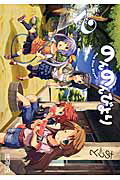
Non Non Biyori
Yu's review of Non Non Biyori — five students in a tiny rural school (total enrollment: five) experience the small, seasonal rhythms of countryside life in a mountain village far from anything.
Slice of Life / Comedy
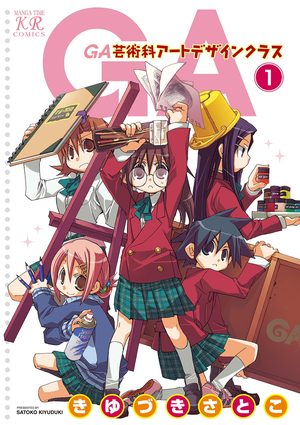
GA: Geijutsuka Art Design Class
Yu's review of GA: Geijutsuka Art Design Class — a four-panel comedy about five girls in a high-school art and design course, where color theory and a freeze-tag game become the punchline.
Slice of Life / Comedy
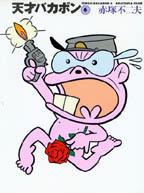
Tensai Bakabon
Tensai Bakabon is Fujio Akatsuka's landmark gag manga about the Bakabon family — a household where the father's complete detachment from logic is presented as wisdom, and the world's attempts to impose reason are the actual problem.
Slice of Life / Comedy
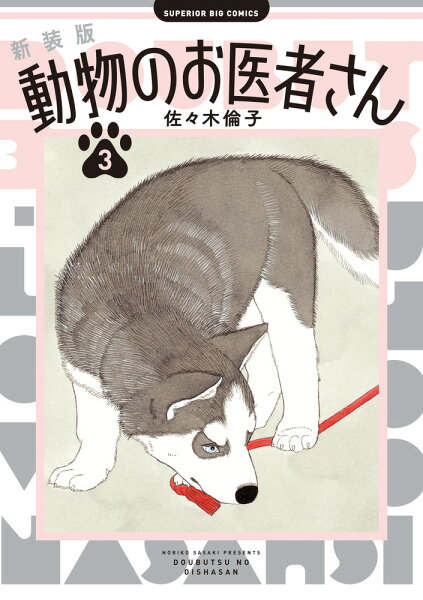
Doubutsu no Oisha-san
Doubutsu no Oisha-san follows Hamutaro, a quiet veterinary student in Hokkaido, his deadpan husky Chobi, and the warm chaos of vet-school life — a 12-volume Hana to Yume comedy so popular it set off a real Siberian Husky boom across Japan.
Slice of Life / Comedy
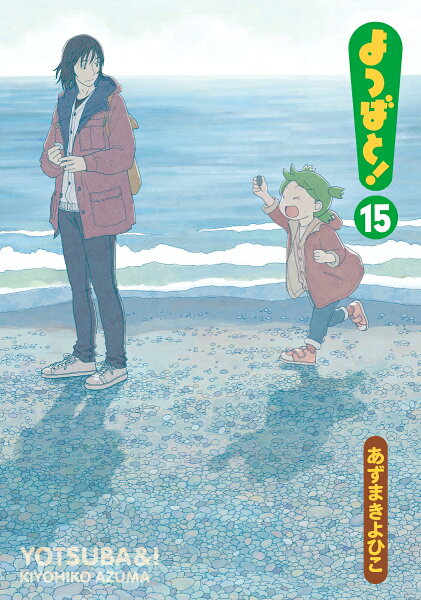
Yotsuba&!
A review of Yotsuba&!, the manga about a green-haired five-year-old experiencing ordinary things for the first time — and the most purely joyful manga I have ever read.
Slice of Life / Comedy
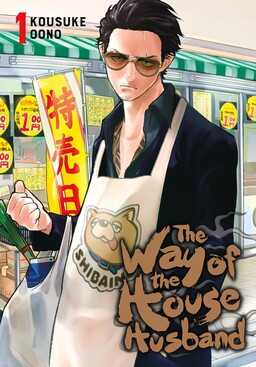
The Way of the Househusband
Yu's review of The Way of the Househusband — Tatsu, once the most feared yakuza boss in Japan, has retired to become a stay-at-home husband for his career-focused wife Miku; he applies the intensity, dedication, and specific vocabulary of organized crime to grocery shopping, cooking, and housework.
Written by
Yu
Manga Enthusiast from Japan
I grew up in Japan and manga literally saved me during a tough time in elementary school. My English isn't perfect, but my love for manga is real — and I want to share it with you.
Disclosure: This post contains affiliate links. As an Amazon Associate, I earn from qualifying purchases at no extra cost to you.