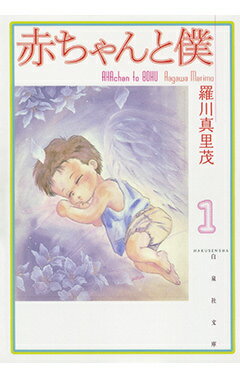
Baby and Me Review: The Manga About a Boy Forced to Be a Mother
by Marimo Ragawa
Read the first volume. If it doesn't hook you, put it down. It'll hook you.
Buy Baby and Me on Amazon →*Affiliate link — I earn a small commission at no extra cost to you.
When I was a kid, I was the one who came home to an empty house. Nobody was waiting for me, and I learned early that you can be very small and still carry something heavy. So when I picked up Baby and Me — a shojo manga about a boy who has to be a parent before he is even done being a child — I thought I knew what I was getting. I was wrong. It hit a place in me I had forgotten was there.
I am not great at English, but I want to tell you about this one carefully, because it deserves it. This is a manga about a grade-schooler who becomes a mother and a brother at the same time, and it never once cheats you with easy tears.
Quick Take
- A grief story disguised as a family comedy, and it earns both halves
- Takuya's slow shift from resenting his baby brother to loving him is some of the most honest sibling writing I have read
- Rated All Ages — but "all ages" here means a six-year-old and a forty-year-old will cry at completely different parts
Story Overview
Takuya Enoki is a grade-schooler whose mother, Yukako, has died in a car accident. His father, Harumi, is a system engineer who works hard to keep the family running, which leaves Takuya as the one who feeds, carries, and looks after his two-year-old brother, Minoru.
At the start, Takuya does not want this. He resents it. Minoru cries constantly, and Takuya is still a kid who wants his own life. The turning point is brutal in its simplicity: one day picking Minoru up, Takuya imagines just walking faster and leaving his little brother behind — and then, ashamed, runs back to find Minoru cornered and terrified by a dog. He saves him. Back home, watching Minoru sob, Takuya understands that his brother is not just annoying — he is lonely. That is where the real story begins.
From there the manga runs as mostly self-contained chapters across 18 volumes and 103 stories. It never resolves grief in one clean catharsis. It accumulates — through Minoru learning to talk, through Takuya's friends carrying their own family burdens, through the slow rebuilding of a household that lost its center.
Characters
Takuya Enoki — The heart of the series. He starts as a resentful kid drafted into parenthood and grows into someone genuinely tender, cooking and caring without losing the fact that he is still a child who wants to play. His arc is the whole point: love here is a thing you learn to do, not a thing you are born feeling.
Minoru Enoki — Takuya's two-year-old brother. A crybaby, spoiled, and completely attached to Takuya — a textbook little-brother complex. What makes him work is that the manga lets him be genuinely exhausting, not just cute, so his moments of unguarded affection actually land.
Harumi Enoki — The father. A system engineer who is well-liked at his company and works to provide while still loving his sons deeply. The manga resists turning him into either a deadbeat or a saint; he is a widower doing his best, and his bond with Takuya deepens across the series.
Tadashi "Gon" Gotō — Takuya's classmate, who looks after his own younger sister Hiroko at the family grocery store. He is a mirror: another kid quietly shouldering an adult-sized load, which keeps Takuya's situation from feeling like a lonely exception.
What I Love About It
The dog scene is the one I think about. Takuya, tired of being chained to a toddler, lets himself imagine just leaving — walking faster, pretending Minoru is not behind him. It is an ugly, human thought, and the manga does not flinch from putting it in a child's head. Then he turns around and his brother is in real danger, and every bit of that resentment evaporates into pure panic.
What I love is what comes after. Not the rescue itself, but Takuya sitting at home watching Minoru cry, and realizing the crying was never about being spoiled. Minoru is lonely. He lost his mother too, and he is too small to even know that is what happened to him. Takuya is ashamed of himself — and that shame is where his love actually starts.
This is why the series stays with me. It does not pretend that loving your family is automatic. It shows a kid choosing it, on purpose, after almost failing to. That felt truer to me than any tearful deathbed scene. Love that you decide to keep showing up for, especially when nobody made you — that is the kind I trust.
Memorable Scene ⚠️ Spoiler Warning
For me the gut-punch is everything orbiting Yukako, the mother who is already gone before page one. The manga never lets her death become a single event you move past. It keeps surfacing in ordinary moments — in how Harumi keeps the house going, in Minoru being too young to understand that the word "mother" is missing from his life, in Takuya quietly becoming the thing the family lost. The series lets a small child grieve someone he can barely remember, and lets an older brother grieve by becoming a parent he was never ready to be. Two brothers carrying the same absence in completely different ways, in a story that calls itself a comedy. That is the part I could not shake.
Pros & Cons
Pros
- A genuinely honest take on grief that refuses easy resolution
- Takuya's character arc is patient and fully earned
- The supporting kids (Gon especially) widen the theme without diluting it
- All-ages rating means you can share it with almost anyone
Cons
- 18 volumes of mostly episodic chapters is a real commitment
- The early volumes are slower while the daily routine gets established
- The 90s shojo art and gentle, sentimental pace won't work for everyone — if you need plot momentum over quiet accumulation, this isn't your manga
Is Baby and Me Worth Reading?
Yes — if you are willing to let a slow, episodic family comedy sneak up on you. It is a long, gentle read that hides a sharp emotional core, and it rewards patience rather than thrills. If you have ever carried something too big for your age, this one will find you.
Where to Buy
Read the first volume. If it doesn't hook you, put it down. It'll hook you.
This post contains affiliate links. If you purchase through these links, I may earn a small commission at no extra cost to you. As an Amazon Associate, I earn from qualifying purchases.
*Affiliate link — I earn a small commission at no extra cost to you.
More Manga You Might Like
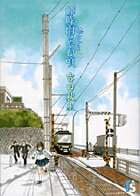
Slice of Life / Drama
Umimachi Diary
Umimachi Diary follows three adult sisters in Kamakura who invite their half-sister — whom they barely know — to live with them after their estranged father's death, and the slow process of becoming a family.
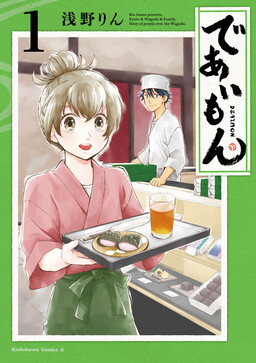
Slice of Life / Drama
Deaimon
Yu's review of Deaimon (であいもん) by Rin Asano — Nagomu Irino comes home to his family's Kyoto wagashi shop after ten failed years chasing music, and finds a ten-year-old girl named Itsuka already living there, already learning the craft, already named his rival for the shop he walked out on.
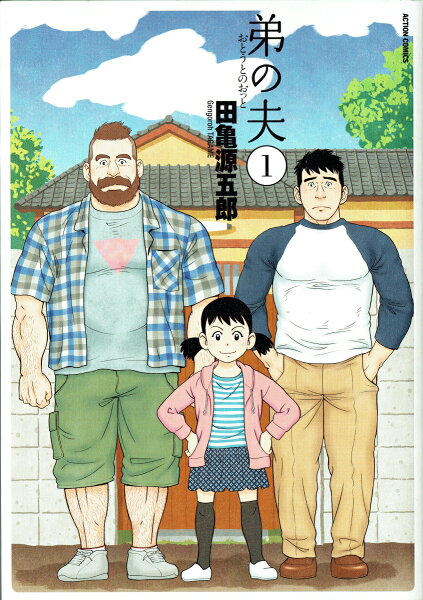
Slice-of-Life / LGBTQ
My Brother's Husband
A single father in Japan welcomes his late twin brother's Canadian husband — and confronts everything he didn't know about his own family.
Slice of Life / Drama
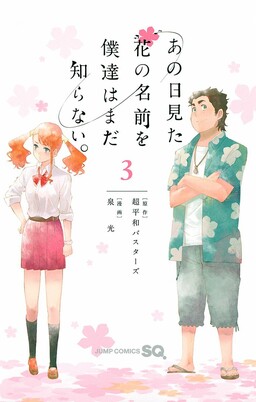
AnoHana: The Flower We Saw That Day
Yu's review of AnoHana — Jinta, a teenage shut-in, is visited by the ghost of his childhood friend Menma, who died years ago and wants a wish granted she can't remember; reuniting their fractured friend group forces all of them to finally face the grief they buried.
Slice of Life
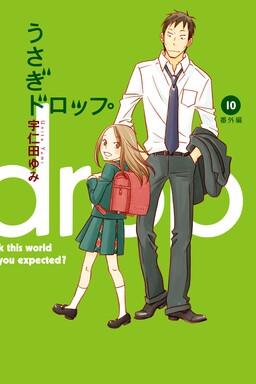
Bunny Drop
Yu's honest review of Bunny Drop (Usagi Drop) by Yumi Unita — bachelor Daikichi adopts Rin, his late grandfather's young illegitimate daughter, on impulse and learns to parent. The first half is some of the best family manga ever made; the second half time-skips and turns into something many readers reject. I tell you exactly what happens so you can decide.
Slice of Life / Historical Drama
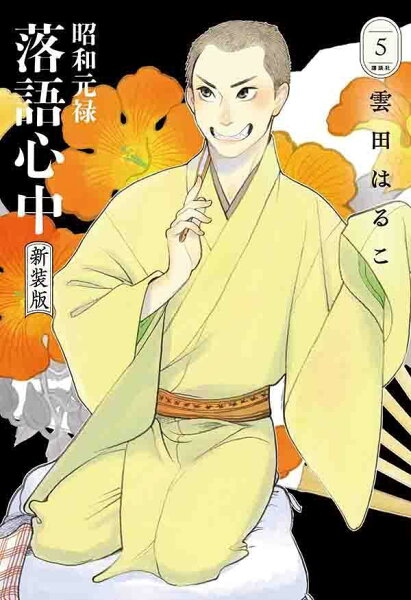
Shouwa Genroku Rakugo Shinjuu
Shouwa Genroku Rakugo Shinjuu follows the world of rakugo — traditional Japanese comic storytelling — through two performers across two generations: the transcendent and self-destructive Yakumo, and the student Yotaro who inherits what Yakumo cannot save.
Written by
Yu
Manga Enthusiast from Japan
I grew up in Japan and manga literally saved me during a tough time in elementary school. My English isn't perfect, but my love for manga is real — and I want to share it with you.
Disclosure: This post contains affiliate links. As an Amazon Associate, I earn from qualifying purchases at no extra cost to you.