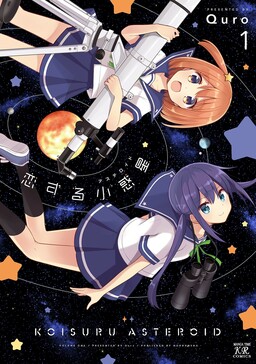
Asteroid in Love Review: A Promise to Put Her Friend's Name in the Sky
by Quro
Read the first volume. If it doesn't hook you, put it down. It'll hook you.
Buy Asteroid in Love on Amazon →*Affiliate link — I earn a small commission at no extra cost to you.
I almost skipped this one. A "cute girls in a club" manga about astronomy and geology — I figured I knew exactly what it would be before I opened it. Soft art, no stakes, nothing to hold onto. I was wrong about the last part.
What pulled me in wasn't the club. It was the promise. When Mira was little, she learned that there is a real star in the sky named Mira — the variable star in Cetus that Johannes Hevelius called "the wonderful one" centuries ago. And the first thing she felt wasn't pride. It was that her new friend Ao had nothing in the sky with her name on it. So she promised she would find an asteroid and have it named after Ao. I read that and I stopped thinking of this as a club manga. It's a manga about keeping a small, impossible promise for years and never letting go of it.
Quick Take
- A childhood promise — find an asteroid, name it after Ao — quietly drives every gentle club scene
- The astronomy and geology are real: equipment, observation, field surveys, a genuine asteroid-hunting workshop
- All Ages — nothing graphic, gentle yuri undertones, safe for any reader
Story Overview
As children at a stargazing camp, Mira Konohata meets a quiet kid she first mistakes for a boy: Ao Manaka. Ao shares her binoculars, and Mira falls into astronomy on the spot. When Mira realizes there's already a star named "Mira" but nothing carries Ao's name, she makes the promise that becomes the spine of the whole series — she'll discover an asteroid and name it after Ao.
The turning point comes years later, in high school. Mira enrolls determined to join the astronomy club so she can chase that promise — only to find the astronomy and geology clubs have merged into a single Earth Sciences Club because membership was shrinking. And there, in the clubroom, is Ao. The reunion is awkward, both girls fumbling for words, the old gender mix-up hanging in the air. But the promise is still alive, and now they're in the same room with telescopes and a reason to use them.
From there the series follows the club through observation nights, geological field surveys, a school festival, and a summer that builds toward the Kira Hoshi Challenge — a real asteroid-hunting workshop held on Ishigaki Island. Mira qualifies for a slot and Ao doesn't, which stings, though Ao later comes along as an observer. By the end the focus widens past the single asteroid to the harder question underneath it: what each girl wants to do with her life once the promise is no longer the only thing pulling her forward. The series ran six volumes and is complete.
Characters
Mira Konohata — The bright, headlong heart of the club. She's the one who made the promise, and her arc isn't really about whether she finds the asteroid — it's about confronting what comes after a goal you've carried since childhood. She hands out affectionate nicknames and drags reluctant people into doing things, and by the later volumes she has to sit with the fact that "find an asteroid for Ao" can't be the whole shape of a future.
Ao Manaka — Quiet, reserved, the friend the whole promise is built around. She was talkative as a small child; a slip of the tongue in sixth grade is what turned her inward. She carries the same memory of the pact Mira does, and her steadiest arc is the slow choice to pursue astronomy formally — to make it her actual path, not just a shared dream. A family relocation threatens to separate them again, until she ends up moving into Mira's home.
Mari Morino — Third-year, the astronomy side's first club president, and the older-sister figure. Her stated dream is to become an astronaut. Beneath the cheer she quietly wrestles with whether she genuinely loves the club work or just performs the role, and finds her answer in the support of the underclassmen.
Mikage Sakurai — Third-year geology specialist, knowledgeable and a little prickly and socially awkward. Her arc is self-doubt about her own direction, and learning to take the challenges her determined juniors keep throwing at her instead of retreating into what's safe.
What I Love About It
The astronomy isn't decoration. So many club manga pick a hobby as a flavor and never actually look at it. This one looks. You get the equipment, the patience, the way you actually hunt a minor planet — comparing images of the same patch of sky across time to catch the one point of light that moved. The Kira Hoshi Challenge isn't an invented anime event either; it's modeled on a real asteroid-search workshop, the kind where students pore over survey data hoping their dot of light turns out to be something nobody had logged yet. That grounding is why the girls' goal never feels like a cute mascot of a plot. It feels like something a high schooler could genuinely, plausibly do.
But what stays with me is smaller than all of that. It's the logic of the promise itself. A kid finds out there's a star with her name and her instinct isn't "look at me" — it's "wait, my friend doesn't have one." That's the whole personality of this manga in a single beat. The astronomy gives the story scale, the literal size of the universe, and then it points all of that scale at one tiny, specific kindness: I want your name to exist up there too. Every observation night, every cold field survey, every grind through workshop data is in service of that. For a manga that looks this soft, the thing underneath it is surprisingly stubborn — and stubborn is exactly the word I'd use for keeping a childhood promise long enough to grow up inside it.
Memorable Scene ⚠️ Spoiler Warning
The scene I keep coming back to is the origin, the camp at the very start. Young Mira is stargazing when she notices Ao — and mistakes her for a boy. Ao, without much fuss, just shares her binoculars and shows Mira the sky. That's the door Mira walks through into astronomy: a stranger handing over a view of the stars.
Then comes the line that sets up everything. Mira learns there's a star named Mira already — the real variable star, Omicron Ceti. And instead of being delighted for herself, she's bothered that nothing up there is named after Ao. So she promises: she'll find an asteroid and put Ao's name on it. What makes it land for me is how the series pays this off years later in the clubroom reunion — both girls older, more guarded, fumbling to even talk, the old "I thought you were a boy" awkwardness in the way — and the promise is still just quietly sitting there between them, unspoken and unbroken. The distance between that bright certain kid at the camp and the careful teenager in the clubroom is the real emotional measurement the series is taking. The asteroid is just the instrument.
Pros & Cons
Pros
- The central promise — find an asteroid, name it after Ao — gives every gentle scene real weight
- Astronomy and geology are depicted accurately, including a workshop based on a real asteroid hunt
- Genuinely warm cast where the side characters get their own arcs, not just personalities
- Complete at six volumes, so it actually resolves
Cons
- It's a Kirara slice-of-life: the stakes are emotional and small, never dramatic
- The science can occasionally ask for a little patience from readers who'd rather skip the explanations
- The pace is gentle and unhurried — that's either the whole point or a dealbreaker, depending entirely on what you came for
Is Asteroid in Love Worth Reading?
Yes, if you want a warm, accurate, complete slice-of-life with an actual ache underneath the softness — a promise about putting a friend's name in the sky and the years of quiet work it takes to chase it. Skip it only if you need plot and tension; this is a calm story that rewards patience, not adrenaline.
Similar Manga
| Title | Its Approach | How Asteroid in Love Differs |
|---|---|---|
| Laid-Back Camp | Kirara series built on a real outdoor hobby (camping), rendered with loving accuracy | Swaps camping for astronomy and geology, and ties the hobby to a single childhood promise |
| Is the Order a Rabbit? | Pure Kirara coziness with no real-world subject to learn | Keeps the warmth but anchors it in genuine science and a concrete goal |
| New Game! | Kirara series that takes a real professional craft (game dev) seriously | Trades the workplace for a school club and aims at amateur discovery, not a career deadline |
Where to Buy
No English release yet. That just means you find it before everyone else does.
There's no licensed English edition — the Japanese print and digital release from Houbunsha is the only legitimate way to read it.
Search Asteroid in Love (恋する小惑星) on Amazon.co.jp →
This post contains affiliate links. If you purchase through these links, I may earn a small commission at no extra cost to you. As an Amazon Associate, I earn from qualifying purchases.
*Affiliate link — I earn a small commission at no extra cost to you.
More Manga You Might Like
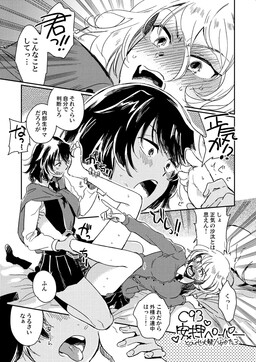
Slice of Life / Comedy
Comic Girls
Yu's review of Comic Girls (こみっくがーるず) by Kaori Hanzawa — Kaoruko 'Kaos' Moeta is a shy four-panel manga artist who ranks dead last in a reader survey and gets sent to a dormitory full of other young female manga creators. A gentle Manga Time Kirara comedy about making things while terrified you aren't good enough.

Slice of Life
Sansha Sanyou
Yu's review of Sansha Sanyou — Youko Nishikawa (formerly wealthy), Futaba Odagiri (enthusiastic eater), and Teru Hayama (smiling sadist) are three incompatible high school girls who end up eating lunch together and become friends; Cherry Arai's gentle comedy about the friendships that form despite personality differences.
Slice of Life
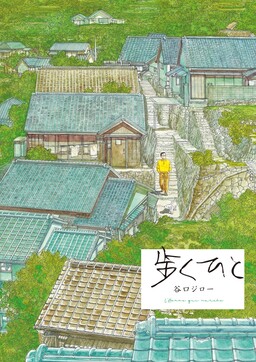
The Walking Man
Yu's review of The Walking Man — a man takes walks through his neighborhood and surrounding areas; Jiro Taniguchi's single-volume manga about the specific quality of attention paid to ordinary things, rendered with exceptional visual detail; perhaps the most peaceful manga in existence.

Slice of Life / Drama
Kids on the Slope
Yu's review of Kids on the Slope (Sakamichi no Apollon) — 1966 Sasebo, Kyushu. Kaoru is a lonely classical pianist; Sentaro is a half-American delinquent who plays jazz drums in the basement of a record shop. Their friendship grows through music, the school festival, and a reunion years later at a church.
Slice of Life
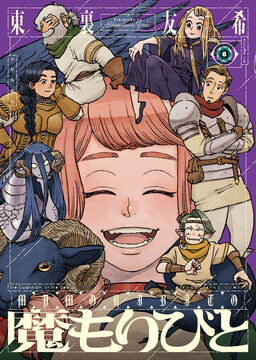
Guardians of the Louvre
Yu's review of Guardians of the Louvre — Jiro Taniguchi's commission for the Louvre's comics collection. A Japanese manga artist falls ill in Paris and is guided through the museum by the spirit of the Winged Victory, meeting Van Gogh, Corot, and the people who saved the Louvre during World War II.
Slice of Life / Comedy
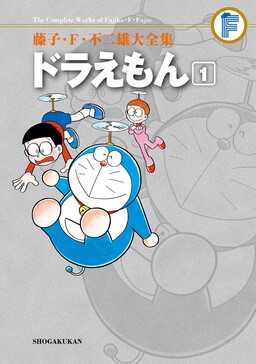
Doraemon
Yu's review of Doraemon — a robot cat from the 22nd century, sent back to help a hopeless boy named Nobita with gadgets from his four-dimensional pocket. Fujiko F. Fujio's most beloved work, and the manga every Japanese kid grows up inside.
Written by
Yu
Manga Enthusiast from Japan
I grew up in Japan and manga literally saved me during a tough time in elementary school. My English isn't perfect, but my love for manga is real — and I want to share it with you.
Disclosure: This post contains affiliate links. As an Amazon Associate, I earn from qualifying purchases at no extra cost to you.