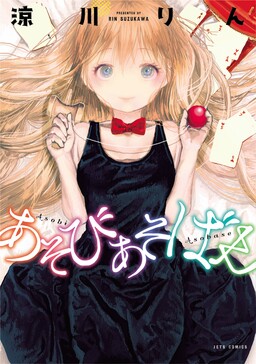
Asobi Asobase Review: The Cutest Cover On The Shelf Is Lying To You
by Rin Suzukawa
Read the first volume. If it doesn't hook you, put it down. It'll hook you.
Buy Asobi Asobase on Amazon →*Affiliate link — I earn a small commission at no extra cost to you.
I have a soft spot for manga that looks like one thing on the shelf and turns out to be another. When I was a kid hiding in books because I had no one to sit with, I learned that the cover almost never tells you the truth about what is inside. Asobi Asobase made me laugh out loud, alone, in my room — which for a comedy manga is the only review that matters. The cover shows three pretty girls in a soft pastel haze. Open it, and those same girls are pulling faces so ugly and so committed that you can't believe they belong to the same drawing hand.
That gap is the whole joke. And honestly, it's one of the best gags in any manga I've read.
Quick Take
- A gag comedy built almost entirely on facial expressions — beautiful character designs that distort into grotesque, hyper-detailed faces the second anything goes wrong, which is constantly
- The "games" give the chaos a frame: rock-paper-scissors variants, thumb war, faux sumo, shoe-throwing contests, all played with absurdly high stakes
- Rated T (Teen) — comedic violence and crude humor, nothing graphic
Story Overview
It starts with a deal that is a lie from the first page. Kasumi Nomura is terrible at English and desperate to improve. Olivia looks like a foreign transfer student, so Kasumi assumes she can tutor her. The problem: Olivia is actually Japanese and can't speak English at all — she just maintains the act of being a clumsy foreigner. Hanako Honda, loud and rich and overconfident, drags both of them into forming an unofficial club.
The turning point is the club's name itself. They call it the "Pastimers Club" (遊び人研究会), and the pun lands them in trouble immediately — "asobi" can read as innocent "playing games" or as something far more adult, so half the school assumes these three are up to something they very much are not. From there the structure locks in: each chapter is a self-contained game that escalates into disaster, and the school slowly fills with side characters just as deranged as the leads.
There's no grand finale arc — the manga ran 15 volumes and concluded in 2022, and its "ending" is simply the cast growing up a little while staying exactly as unhinged as they started. The comedy is the plot.
Characters
Hanako Honda — The loud one. She comes from a wealthy family with a butler, she's athletically gifted despite not caring about sports, and she is hopelessly, openly boy-crazy underneath the tomboy energy. Her defining trait is total confidence in conclusions that are completely wrong, which is what makes her the engine of most disasters. Her face does the most work in the entire manga.
Olivia — The foundational lie of the series. She looks foreign, so everyone assumes she's a Western transfer student, and she leans into a "still learning Japanese" act — except she was raised in Japan and speaks no English whatsoever. The whole house of cards exists to be threatened in new ways every chapter. She's also genuinely upset to learn women can't be professional sumo wrestlers, which tells you exactly where her head is.
Kasumi Nomura — The "quiet nerd" who is by far the most terrifying when she gets competitive. She hates games because of childhood teasing, secretly writes BL fiction, and is afraid of men. She's also weirdly, inhumanly flexible — she'll bend her thumb the wrong way in thumb war or fold her whole upper body backward at a right angle to dodge in faux sumo, prompting Hanako to mutter about her "Chinese contortionist shit." Her slow, reluctant attachment to these two idiots is the closest thing the manga has to a heart.
The supporting cast — A teacher who's blackmailed into being the club's reluctant advisor and despairs about not being married, Hanako's butler, and a steadily expanding pile of rival club members and weirdos. One rival club president gets so badly injured during a shoe-kicking contest that she's effectively hospitalized for most of the series.
What I Love About It
The thing I keep coming back to is the contrast — the way Rin Suzukawa draws these girls genuinely cute in the establishing panels and then absolutely destroys those faces the instant a game turns. It's not lazy "ugly face" comedy. The distorted faces are rendered with so much detail and effort that they're funnier than a simpler cartoon would be. You can feel how much work went into making someone look that horrible. That commitment is what sells it.
What I love most is that the comedy comes from the reactions being more extreme than the situations. Nothing that happens in Asobi Asobase actually matters — it's thumb war, it's looking the other way, it's throwing your shoe. But the girls treat each game like life and death, and the manga films their faces like they're in a war epic. As someone who took small childhood humiliations far too seriously, I find something weirdly cathartic about a manga that says: yes, losing a stupid game CAN feel like the end of the world, and that feeling is hilarious in hindsight. It let me laugh at a version of my own younger over-seriousness.
Memorable Scene ⚠️ Spoiler Warning
The faux sumo bout is the one that stuck with me. Hanako and Kasumi stage a sumo demonstration to show Olivia — who's devastated that women can't go pro — what the sport looks like. Instead of being pushed out of the ring, Kasumi simply bends her entire upper body backward into a 90-degree right angle to avoid the shove, holding the pose like it's nothing. The panel is the joke: a "normal" school sumo match interrupted by a girl folding herself in half horizontally, completely deadpan, while Hanako reacts in horror and writes it off as Kasumi "doing her Chinese contortionist shit again."
It's a perfect little Asobi Asobase sequence. A mundane premise (let's play sumo), a sudden physical impossibility played 100% straight, and the gap between the soft art and the grotesque pose doing all the comedic lifting. No punchline gets explained. The drawing IS the punchline.
Pros & Cons
Pros
- The facial-expression comedy is genuinely best-in-class
- The game framework gives the absurdity real structure instead of random chaos
- Self-contained chapters mean you can pick it up anywhere
- The side cast keeps expanding and the running gags compound nicely over 15 volumes
Cons
- It's gag comedy with very little ongoing plot or character growth — by design
- The humor leans crude and surreal in spots
- This is comedy taste, and comedy taste is personal — if exaggerated-face slapstick doesn't make you laugh, no amount of craft will win you over, and that's just how comedy works
Is Asobi Asobase Worth Reading?
If you want a complete gag comedy that made me laugh alone in a quiet room, yes. It's surreal, crude, beautifully drawn, and it never overstays a joke because every chapter resets. If you need plot, arcs, or emotional payoff, look elsewhere — this is pure comedy craft and nothing more, which is exactly why it works.
Where to Buy
Read the first volume. If it doesn't hook you, put it down. It'll hook you.
This post contains affiliate links. If you purchase through these links, I may earn a small commission at no extra cost to you. As an Amazon Associate, I earn from qualifying purchases.
*Affiliate link — I earn a small commission at no extra cost to you.
More Manga You Might Like
Slice of Life / Comedy
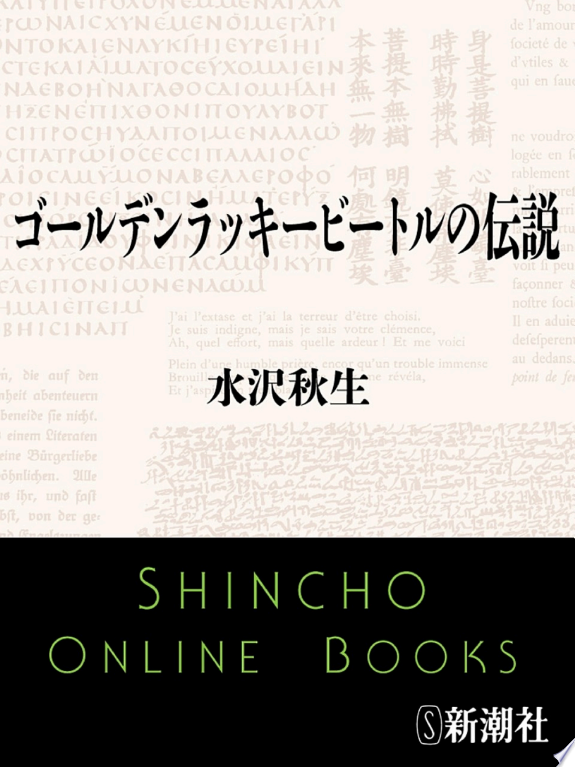
Golden Lucky
Golden Lucky is Shunji Enomoto's surreal 4-panel gag manga, serialized in Kodansha's Morning from 1990 to 1996. Famous for finishing dead last in reader polls for years — and surviving because of it.
Slice of Life / Fantasy
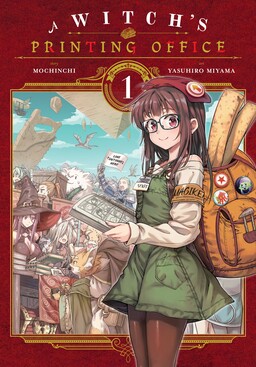
A Witch's Printing Office
Yu's review of A Witch's Printing Office — Mika is a modern Japanese woman who worked at Comiket (the giant doujinshi convention) and wakes up in a fantasy world where magical festivals share printed pamphlets; using her knowledge of convention organization and printing logistics, she builds a business that transforms how the fantasy world shares information.
Slice of Life / Comedy
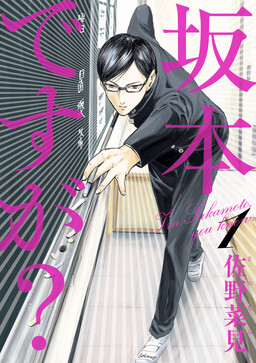
Haven't You Heard? I'm Sakamoto
Yu's review of Haven't You Heard? I'm Sakamoto — Sakamoto is the coolest student at his high school; every situation, challenge, or attempt to embarrass him resolves in the coolest possible way; the manga is a pure comedic statement about the concept of cool.

Slice of Life / Comedy
Phantom of the Idol
Yu's review of Phantom of the Idol — Yuuya Niyodo is an idol who hates performing and tries to be fired; Asahi Mogami is the ghost of an idol who died before she could reach her dreams; when she possesses Yuuya during a performance, they strike a deal — she performs through his body, he reaps the rewards.
Slice of Life / Comedy
New Game!
Yu's review of New Game! — Aoba Suzukaze joins Eagle Jump, the game company that made her favorite childhood game, as a character designer; the series follows her first year in professional game development alongside an all-female team; a workplace slice-of-life that treats game development with genuine procedural interest.
Slice of Life / Comedy
Minami-ke
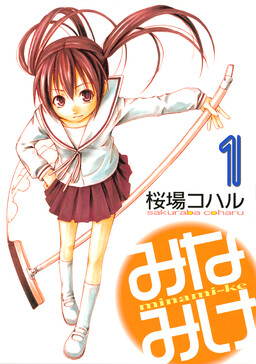
Yu's review of Minami-ke — three sisters at different schools (eldest Haruka in high school, middle Kana in middle school, youngest Chiaki in elementary) share an apartment and their daily life generates endless comedy from their completely different personalities and the rotating cast of friends, admirers, and chaos that follows them home.
Written by
Yu
Manga Enthusiast from Japan
I grew up in Japan and manga literally saved me during a tough time in elementary school. My English isn't perfect, but my love for manga is real — and I want to share it with you.
Disclosure: This post contains affiliate links. As an Amazon Associate, I earn from qualifying purchases at no extra cost to you.