
Arte Review: A Noblewoman Who Cuts Off Her Hair to Pick Up a Brush
by Kei Ohkubo
Read the first volume. If it doesn't hook you, put it down. It'll hook you.
Buy Arte on Amazon →*Affiliate link — I earn a small commission at no extra cost to you.
When I was a kid with no friends, I used to draw in the margins of my notebooks. Nobody asked to see them. Nobody told me to stop, either, because nobody was looking. So I just kept drawing, quietly, because it was the one thing that was only mine.
I think that is why the first chapter of Arte hit me so hard. There is a girl who draws and draws, and the world keeps telling her she is not allowed. Not "you are not good enough" — that I could understand. The world tells her she is not allowed, because she is a woman, and that is a different kind of cruelty. I am not great with English and I am definitely not an art history person. But I read this manga and I felt like Arte was fighting the exact wall I used to feel as a lonely kid, just a much bigger and older wall. I want to tell you about it.
Quick Take
- A historical slice of life set in early 16th-century Florence, where the heroine's ambition is not blocked by a bad guy but by the entire structure of guilds and gender in the Renaissance.
- Arte's determination is the engine, but Kei Ohkubo keeps showing you what that determination costs her — it is never free, and it is never easy.
- 21 volumes, complete in Japanese (2013–2025), and rated T (Teen) — the discrimination is real and on-page, but nothing is graphic.
Story Overview
Arte Spalletti is the only daughter of a fading noble house in Florence. Her father has died, the family money is gone, and her mother wants her to do the one thing a noble girl is supposed to do — marry well and save the household. Arte wants to paint.
The series opens with her getting rejected. Not once. Workshop after workshop turns her away, eighteen of them, all for the same reason: a woman cannot be a craftsman. In a fit of rage she renounces being a woman and cuts off her long hair right there in the street. That is when the painter Leo sees her. He has no real intention of taking her on, so he sets her an absurd task — prime all of his drawing boards by the time he gets back — expecting her to fail and disappear. She doesn't. She finishes them. Impressed despite himself, Leo accepts her as his apprentice.
From there the manga becomes the long, patient story of Arte actually learning the trade — grinding pigments, the guild politics, the technical reality of Renaissance workshop life. The turning point comes when she leaves Florence for Venice, hired by the merchant nobleman Yuri Falier to tutor his difficult niece Katarina in etiquette. The Venice arc widens the whole story: Arte meets the courtesan Veronica, paints her, and through that friendship starts to understand her own heart. The series runs all the way to her growth into a real artist, ending after 105 chapters and 21 volumes.
Characters
Arte Spalletti — She is earnest, a little naive, and almost stubbornly hardworking. What I love is that Ohkubo never makes her a genius. Her gift is that she refuses to quit, and the manga is honest that this is sometimes naivety and sometimes strength. Her arc is the slow conversion of raw anger ("the world won't let me, so I'll force it") into actual craft and self-knowledge.
Leo — The painter who takes her on. He is talented and short-tempered, and he came up from nothing — a former beggar, not a man born into comfort. His mentorship is harsh and his standards are real Renaissance standards, no softening for her. Over the series his pragmatic acceptance of Arte slowly becomes genuine respect, and Arte's feelings for him become part of her story.
Veronica — A courtesan in Venice, cultured and sharp, who hires Arte for a portrait. She expects to be judged and isn't, and that is the start of their friendship. Veronica is the one who actually names what Arte herself can't see — that Arte is in love with Leo. She is one of the most adult, generous characters in the book.
Katarina Falier — The young noble girl Arte is sent to tutor in Venice. She has run off every previous tutor and secretly loves cooking, sneaking out to host banquets for the city's poor. Her standoffishness slowly cracks, and by the end of the Venice arc the two become real friends.
What I Love About It
The chapters about the actual work are the ones I keep going back to. Ohkubo clearly did the research — the priming of boards, the grinding of pigment, the rules of who is allowed to do what inside a workshop and a guild. When Arte learns a technique, you learn it next to her, and because the manga treats the craft as genuinely hard, every small win she gets feels earned. I have read plenty of "follow your dream" stories where the dream just sort of happens. This one makes you feel the hours.
But what really got me is the emotional honesty under all that history. Arte is not fighting a single villain she can punch. She is fighting a system — a whole society that has already decided what she is allowed to be. That is so much harder to write than a bad guy, and so much closer to how the real wall felt to me as a kid. Ohkubo never lets the discrimination be cartoonish, and never lets Arte's win be easy. She has to be twice as good and stay twice as patient, and the manga respects you enough to show that and not flinch. That mix — meticulous craft plus a heroine who is angry for the right reasons — is why I think about Arte long after closing it.
Memorable Scene ⚠️ Spoiler Warning
The hair-cutting in chapter one is the image that stays with me. Arte has just been turned away from her eighteenth workshop. Everyone has told her the same thing — a woman cannot do this. And instead of crying or going home, she takes a blade to her own long hair and cuts it off in the street, declaring she gives up being a woman if that is what it takes. It is reckless and it is furious and it is heartbreaking, because you understand she would rather mutilate her own identity than give up the brush.
Leo appears in that moment, stops her before she does worse, and instead of comforting her he tests her with the drawing boards. The whole emotional logic of the series is in that one sequence: the world will not give Arte a door, so she breaks part of herself trying to make one, and the man who finally helps her does it not out of pity but because she proved she would do the work. I have never forgotten how that page made me feel — equal parts "no, don't" and "yes, fight."
Pros & Cons
Pros
- The historical and craft research is exceptional — you actually learn how a Renaissance workshop worked.
- Arte's growth is earned across the full 21 volumes, never handed to her.
- The conflict is structural and honest, not a cardboard villain.
- Side characters like Veronica and Katarina get real arcs of their own.
Cons
- The pace is patient — this is a slow-burn about labor and learning, not big dramatic turns.
- The romance with Leo is very understated, slow enough to frustrate some readers.
- Because it is historically accurate, the discrimination is constant and quiet rather than triumphantly "defeated." If you want a wish-fulfillment story where the heroine crushes every doubter fast, this slow, grinding realism won't work for everyone.
Is Arte Worth Reading?
Yes — if you want a historical slice of life that takes both its craft and its heroine seriously. It is patient, deeply researched, and emotionally honest about what it costs a woman to fight a whole system instead of a single enemy. If you need fast payoffs and loud drama, look elsewhere. If you want to feel every earned inch of a dream, this is one of the best.
Similar Manga
| Title | Its Approach | How Arte Differs |
|---|---|---|
| Blue Period | Modern teen discovers painting and grinds through art school | Arte trades the modern setting for Renaissance Florence and the obstacle is the law and the era, not exam pressure |
| Emma | Romance across class lines in Victorian England, quiet and historical | Arte centers a woman's career and craft first, with romance as a slow undercurrent |
| Vinland Saga | Heavily researched historical fiction with serious period detail | Arte aims that same research at art and daily workshop life instead of war |
Where to Buy
Read the first volume. If it doesn't hook you, put it down. It'll hook you.
This post contains affiliate links. If you purchase through these links, I may earn a small commission at no extra cost to you. As an Amazon Associate, I earn from qualifying purchases.
*Affiliate link — I earn a small commission at no extra cost to you.
More Manga You Might Like
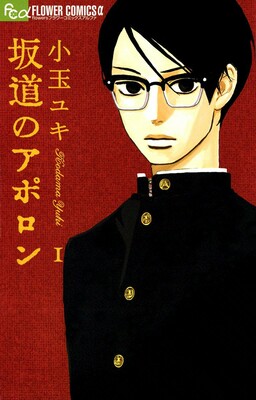
Slice of Life / Drama
Kids on the Slope
Yu's review of Kids on the Slope (Sakamichi no Apollon) — 1966 Sasebo, Kyushu. Kaoru is a lonely classical pianist; Sentaro is a half-American delinquent who plays jazz drums in the basement of a record shop. Their friendship grows through music, the school festival, and a reunion years later at a church.
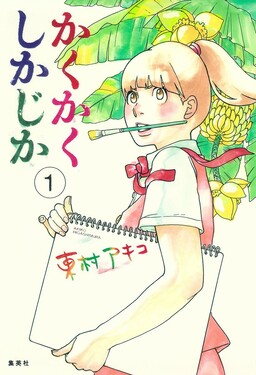
Slice of Life / Memoir
Blank Canvas: My So-Called Artist's Journey
Yu's review of Blank Canvas (Kakukaku Shikajika) — Akiko Higashimura's autobiographical manga about Hidaka-sensei, the bamboo-sword-wielding art teacher in rural Miyazaki who screamed 'Draw!' until she became the artist she is. A memoir, a comedy, and a eulogy all at once.
Slice of Life
Shirley
Yu's review of Shirley — a young girl named Shirley becomes maid to a young independent woman in Victorian England; Kaoru Mori's earlier work, smaller in scope than Emma or A Bride's Story but carrying her characteristic attention to period detail and domestic life.
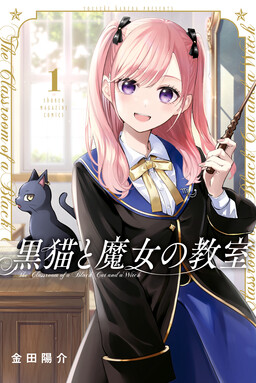
Slice of Life
The Cats of the Louvre
Yu's review of The Cats of the Louvre (ルーヴルの猫) by Taiyo Matsumoto — a colony of cats living in the Louvre's attic, a kitten who can walk into the paintings, and an old night guard still searching for the sister who vanished into the art decades ago. Published in English by VIZ Media.
Slice of Life / Historical Drama
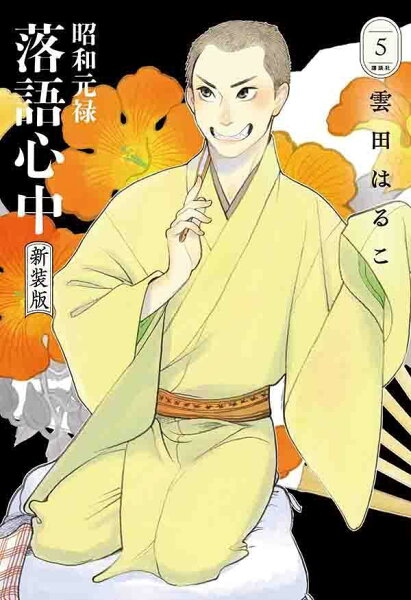
Shouwa Genroku Rakugo Shinjuu
Shouwa Genroku Rakugo Shinjuu follows the world of rakugo — traditional Japanese comic storytelling — through two performers across two generations: the transcendent and self-destructive Yakumo, and the student Yotaro who inherits what Yakumo cannot save.
Slice of Life / Drama
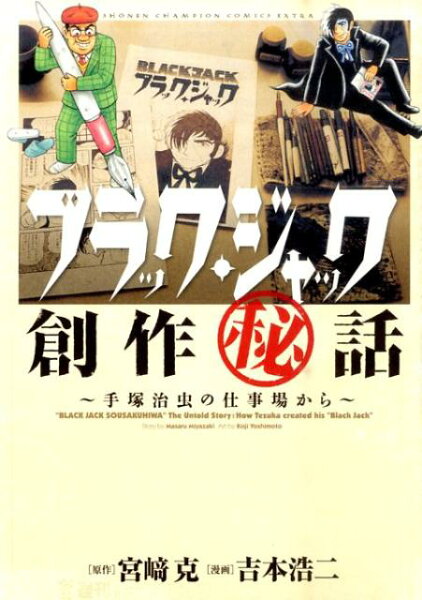
Black Jack Sousaku Hiwa
Black Jack Sousaku Hiwa is a documentary manga about how Osamu Tezuka created Black Jack — told through the editors and assistants who worked beside him, capturing both the genius and the human cost of his impossible work ethic.
Written by
Yu
Manga Enthusiast from Japan
I grew up in Japan and manga literally saved me during a tough time in elementary school. My English isn't perfect, but my love for manga is real — and I want to share it with you.
Disclosure: This post contains affiliate links. As an Amazon Associate, I earn from qualifying purchases at no extra cost to you.