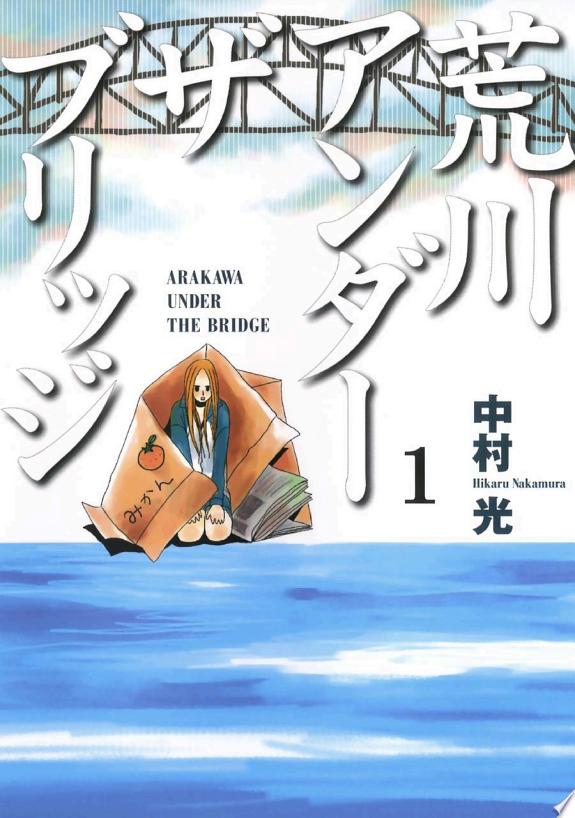
Arakawa Under the Bridge Review: An Elite Man Who Owes No One Falls in Love With a Woman From Venus
by Hikaru Nakamura
Read the first volume. If it doesn't hook you, put it down. It'll hook you.
Buy Arakawa Under the Bridge on Amazon →*Affiliate link — I earn a small commission at no extra cost to you.
Arakawa Under the Bridge is one of the few manga that made me laugh out loud and then, a few chapters later, quietly tear up. It opens as pure absurdist comedy — a control-freak rich kid moves under a bridge to repay a life debt to a woman who claims to be from Venus — and slowly reveals itself to be about the specific loneliness of people who were taught that needing others is weakness. I came for the jokes and stayed for the heart.
It's strange, sincere, and one of my favorites.
Quick Take
- An absurdist comedy about an elite young man who joins an eccentric community living under a Tokyo bridge
- Beneath the surreal humor, a sincere story about debt, community, and learning to let people in
- Rated T (Teen); complete in 15 volumes, available in English (digitally via Crunchyroll and in print via Vertical/Kodansha)
Who Is This Manga For?
- Readers who love absurdist humor with genuine emotional depth
- Fans of Nichijou or Excel Saga who want something with more heart
- Anyone who enjoys romance where both characters are equally strange
- People drawn to oddball-found-family stories
Content Warnings & Age Rating
Age Rating: T (Teen) Content Warnings: Absurdist content; mild adult themes referenced obliquely for comedy
Appropriate for older teens and up — the content is comedic absurdism, not explicit material.
Yu's Rating
| Category | Score |
|---|---|
| Story Depth | ★★★★☆ |
| Art Style | ★★★★☆ |
| Character Development | ★★★★★ |
| Accessibility for Non-Japanese Readers | ★★★★☆ |
| Reread Value | ★★★★★ |
Story Overview
Kou Ichinomiya has lived his entire life by one rule: never be indebted to anyone. Born to a powerful business family and raised on the philosophy that accepting help is weakness, he has built his identity on total self-sufficiency. Then he falls into the Arakawa River and is saved from drowning by Nino — a young woman who lives under the bridge and calmly believes she is from Venus. Having saved his life, she's created the one thing Kou cannot tolerate: a debt. The only repayment she'll accept is for him to be her boyfriend.
So he moves under the bridge.
The riverside community turns out to be populated by an extraordinary cast of people living outside ordinary society: a man in a kappa costume who insists he's a real kappa and serves as the village chief, a former military man who dresses as a star, a nun with a heavy build and a flamethrower, a musician, and others, each with their own private reasons for being there. Kou — renamed "Recruit" (Ric) by the chief — has never had to coexist with people who don't need anything from him, and the series follows his slow, comedic, genuinely moving education in how to be part of a community. The romance with Nino develops in parallel, entirely on its own strange terms.
Characters
Kou "Ric" Ichinomiya — The hyper-competent, emotionally walled-off protagonist whose comedy comes from the gap between his enormous practical ability and his total inability to understand people operating outside normal social rules. His arc — from a man who cannot let anyone help him to one who learns what belonging means — is the genuine emotional spine beneath the absurdity.
Nino — The series' greatest creation: utterly sincere, completely impractical about everything except fishing, and somehow the most emotionally stable person under the bridge. Whether she's actually from Venus is never confirmed or denied. Her love for Kou is real and expressed entirely in her own way, and she's unforgettable.
The bridge community — The kappa Village Chief, Sister, Hoshi, the Iron Star Maria, and the rest form one of manga's finest ensemble casts — each a distinct, deadpan absurdity with an unexpected sliver of genuine humanity.
What I Love About It
It's very funny for about two chapters, and then it quietly becomes something more. There's a moment where Kou realizes the people under the bridge have already accepted him as one of their own — not conditionally, not in exchange for anything, but simply because he's there — and he has no idea what to do with it, because his entire framework for relationships has no category for unconditional acceptance. Underneath the surreal comedy, Arakawa is about the specific loneliness of people who were taught that needing others is a failure, and about what it costs to unlearn that. That sincerity, smuggled inside absurdist gags, is exactly what makes it special.
Memorable Scene ⚠️ Spoiler Warning
Late in the series, Kou tells Nino — seriously, not as a joke — that the thing that changed his life was falling into the river, and that he's genuinely glad it happened. After fifteen volumes of a man who couldn't bear to owe anyone anything, hearing him express open gratitude for the debt that upended his whole self-made philosophy is quietly enormous. Nino's response is entirely her own, and it's one of the most genuinely romantic exchanges I've read in any manga — strange, sincere, and earned by everything that came before it.
Pros & Cons
Pros
- One of the funniest manga around, with inventive, consistent comedy
- A romance and emotional core unlike anything else in the genre
- An exceptional ensemble cast — everyone under the bridge is someone
- Genuinely moving as well as genuinely funny; complete at 15 volumes
Cons
- The absurdist humor can be disorienting for readers wanting conventional logic
- Some cultural references (especially later) benefit from context
- The tonal mix of gag comedy and sincerity won't click for everyone
Is Arakawa Under the Bridge Worth Reading?
Absolutely — it's one of my favorite comedies in manga, and one of the few that earns real emotion alongside the laughs. If you can get on its absurdist wavelength, the payoff is enormous.
Where to Buy
Read the first volume. If it doesn't hook you, put it down. It'll hook you.
This post contains affiliate links. If you purchase through these links, I may earn a small commission at no extra cost to you. As an Amazon Associate, I earn from qualifying purchases.
*Affiliate link — I earn a small commission at no extra cost to you.
More Manga You Might Like

Slice of Life / Comedy
Nichijou: My Ordinary Life
Yu's review of Nichijou — a high school slice-of-life where ordinary situations escalate to catastrophic absurdity, a robot girl tries to hide what she is, and the Professor is an eight-year-old genius who made her.

Slice of Life / Romance
Dasei 67%
Dasei 67% follows art-school student Minami Yoshizawa and the three friends who never leave her tiny apartment, drifting through a college life that runs on about 67% effort and 100% dumb, lovable inertia.
Slice of Life / Romance
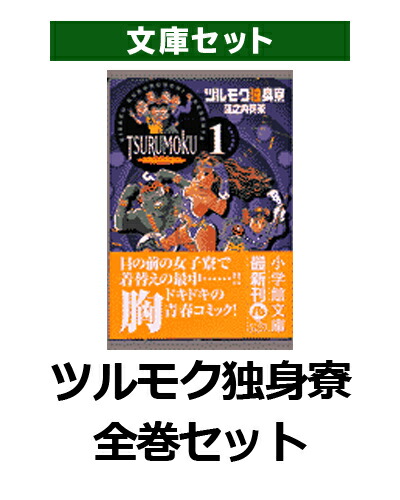
Tsurumoku Dokusin-ryo
Tsurumoku Dokusin-ryo follows young workers living in their company's bachelor dormitory — a comedy of closeness, romantic complications, and the specific texture of young adult working life in Japan when everyone you know also lives where you work.
Slice of Life / Comedy
Golden Lucky
Golden Lucky is Shunji Enomoto's surreal 4-panel gag manga, serialized in Kodansha's Morning from 1990 to 1996. Famous for finishing dead last in reader polls for years — and surviving because of it.
Slice of Life / Comedy
Wagnaria!! (Working!!)
Yu's review of Wagnaria!! — Souta Takanashi starts working at a family restaurant because a tiny girl asked him to; his coworkers include a woman with androphobia, a katana-carrying floor chief, an invisible manager, and a girl who thinks she might be in love with him; chaos is the default state.

Slice of Life / Comedy
Play It Cool, Guys
A comprehensive review of Play It Cool, Guys — plot, characters, art style, and whether it's worth reading.
Written by
Yu
Manga Enthusiast from Japan
I grew up in Japan and manga literally saved me during a tough time in elementary school. My English isn't perfect, but my love for manga is real — and I want to share it with you.
Disclosure: This post contains affiliate links. As an Amazon Associate, I earn from qualifying purchases at no extra cost to you.