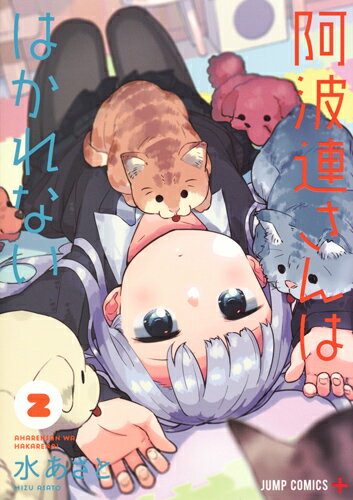
Aharen-san wa Hakarenai Review: The Tiny Girl He Can't Hear and the Boy Who Reads Everything Wrong
by Asato Mizu
Read the first volume. If it doesn't hook you, put it down. It'll hook you.
Buy Aharen-san wa Hakarenai on Amazon →*Affiliate link — I earn a small commission at no extra cost to you.
I've always been bad at judging the distance with people — too far to seem friendly, then suddenly too close and making it weird. Aharen-san wa Hakarenai is an entire comedy built on that exact anxiety, and somehow it turns the awkwardness into warmth instead of pain. That's a rare trick, and it's why I keep this one around for the days the world feels too loud.
Quick Take
- A gentle, absurd romantic comedy about two socially awkward classmates who keep misjudging the distance between them
- Aharen's tininess and near-inaudible voice are the engine; Raido's overthinking is the fuel
- Rated All Ages; the Japanese series is complete at 17 volumes, with the English edition (2-in-1 omnibus) ongoing from Seven Seas Entertainment
Who Is This Manga For?
- Fans of deadpan school comedies like Tanaka-kun is Always Listless or Komi Can't Communicate
- Readers who want gentle, low-conflict slice of life
- Anyone who enjoys odd-couple chemistry without melodrama
- People who like short, self-contained comedic chapters
Content Warnings & Age Rating
Age Rating: All Ages Content Warnings: Nothing significant
Wholesome throughout — safe for any reader.
Story Overview
Matsuboshi Raido is a high schooler with an intimidating face and a gentle, chronically over-thinking mind. His deskmate, Reina Aharen, is extremely small, speaks so quietly he genuinely cannot hear her, and has no sense of personal distance — she's either keeping a continent away or suddenly pressed right up against him with no warning.
Raido, determined to be a good neighbor, keeps trying to "read the distance" with Aharen and keeps getting it spectacularly wrong. Each misread spawns an escalating internal monologue and an absurd imagined scenario, while Aharen — far stranger and more capable than her tininess suggests — just rolls with whatever he comes up with. The series is episodic and low-stakes: their friendship deepens into a gentle romance across short chapters, joined by a small cast including the energetic Mitsuki Oshiro and Aharen's eccentric circle. There's no real conflict engine; the pleasure is watching two odd people gradually sync up over the course of the whole run.
Characters
Matsuboshi Raido — The narrator and straight man, whose sharp, delinquent-looking face hides a sincere, anxious overthinker. His habit of misinterpreting Aharen's quirks and then committing fully to the wrong conclusion is the comedy's reliable engine, and his genuine kindness keeps it from ever feeling mean.
Reina Aharen — Tiny, near-inaudibly quiet, and equipped with a deadpan that hides surprising competence and a mischievous streak. She's not a fragile object for Raido to protect — she's a weirdo in her own right who happily plays along with, and sometimes outpaces, his strange ideas.
Mitsuki Oshiro — A loud, energetic classmate who functions as a high-volume contrast to Aharen's silence and pulls the cast into livelier situations.
What I Love About It
The humor never punches down. The premise — a boy who can't hear or read his tiny classmate — could easily curdle into making Aharen a punchline, but Mizu never does that. The jokes come from Raido's overthinking and the genuine affection between the two, not from Aharen being small or strange. That single choice is why the series stays warm instead of tiresome across seventeen volumes. It understands that the funniest thing about awkward people is how hard they try to be kind to each other.
Memorable Scene ⚠️ Spoiler Warning
The series' signature rhythm is the recurring gag where Raido, unable to hear Aharen, constructs an entire elaborate narrative about what she must be thinking — and the panel cuts to Aharen actually doing something completely mundane or completely unexpected. The best of these escalate his imagined version into something epic while the reality is tiny and deadpan, and the gap is the joke. There's no single climactic scene to spoil; the defining experience is that gap between Raido's overblown inner world and Aharen's quiet reality, refreshed by genuine affection so it never goes stale.
Pros & Cons
Pros
- Wholesome and consistently funny
- Genuinely warm odd-couple chemistry that never mocks its characters
- Short, easy-to-read chapters perfect for dipping in and out
- The Japanese run is complete, so the story has a real endpoint
Cons
- Low stakes — may feel slight to readers wanting plot or drama
- The chapter structure is repetitive by design
- The romance develops very slowly — that's the comfort-read appeal or the frustration, depending on you
Is Aharen-san wa Hakarenai Worth Reading?
Yes — if you want a gentle, reliably funny comfort comedy with two genuinely likable leads. It's not trying to surprise you with plot; it's trying to make you smile every few pages, and it succeeds.
Where to Buy
Read the first volume. If it doesn't hook you, put it down. It'll hook you.
This post contains affiliate links. If you purchase through these links, I may earn a small commission at no extra cost to you. As an Amazon Associate, I earn from qualifying purchases.
*Affiliate link — I earn a small commission at no extra cost to you.
More Manga You Might Like

Slice of Life / Comedy
Acchi Kocchi
Yu's review of Acchi Kocchi — a four-panel comedy built around the unbearably cute mutual crush between tiny tsundere Tsumiki and gently oblivious cool-guy Io, surrounded by a warm group of friends.

Romance / Slice of Life
Hitomi-chan Is Shy With Strangers
A review of Hitomi-chan Is Shy With Strangers — the gap-moe romcom about a terrifying-looking girl who is secretly too shy to speak. Plot, characters, and whether it's worth reading.

Slice of Life / Comedy
Comic Party
A review of Comic Party — Sekihiko Inui's five-volume manga adaptation of the Leaf/Aquaplus visual novel, following a college freshman who gets dragged into the doujinshi scene and Comiket by his best friend, drawn by a mangaka who sells doujinshi himself.

Slice of Life / Comedy
When Supernatural Battles Became Commonplace
When Supernatural Battles Became Commonplace follows the literature club members of Senko High School who suddenly develop supernatural powers — and then find that having powers changes absolutely nothing about their ordinary club activities and romantic dramas.

Slice of Life / Comedy
Keep Your Hands Off Eizouken!
A review of Keep Your Hands Off Eizouken! by Sumito Oowara — three high school girls form an anime-making club, and the manga keeps stepping inside their imaginations to show you what making something actually feels like.
Slice of Life / Romance
Teasing Master Takagi-san
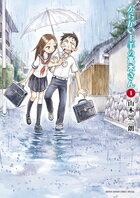
Yu's review of Teasing Master Takagi-san — Takagi teases her desk neighbor Nishikata every single day; he keeps making plans to get back at her; she always wins; the series is about two middle school students who are clearly in love with each other before either of them knows how to say it.
Written by
Yu
Manga Enthusiast from Japan
I grew up in Japan and manga literally saved me during a tough time in elementary school. My English isn't perfect, but my love for manga is real — and I want to share it with you.
Disclosure: This post contains affiliate links. As an Amazon Associate, I earn from qualifying purchases at no extra cost to you.