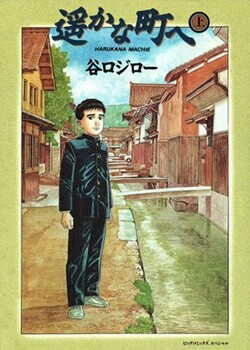
A Distant Neighborhood Review: A Tired Salaryman Wakes Up as His 14-Year-Old Self
by Jiro Taniguchi
Read the first volume. If it doesn't hook you, put it down. It'll hook you.
Buy A Distant Neighborhood on Amazon →*Affiliate link — I earn a small commission at no extra cost to you.
If you've ever wished you could go back and pay closer attention to a moment you didn't know was precious, A Distant Neighborhood will quietly take you apart. It's a time-travel story with no spectacle — just a tired adult given the unbearable gift of being young again, in the months before his family came apart, knowing exactly what's coming.
Jiro Taniguchi was a master of the gentle and the profound, and this is him at his finest.
Quick Take
- A literary, melancholy time-travel drama from the acclaimed Jiro Taniguchi
- A 48-year-old man returns to his 14-year-old self, just before his father will abandon the family
- Rated All Ages; complete in 2 volumes (also available as a single omnibus), published in English by Fanfare/Ponent Mon
Who Is This Manga For?
- Readers who want literary, emotionally rich manga over genre thrills
- Fans of nostalgic, reflective storytelling about memory and regret
- Anyone who appreciated the quiet humanism of The Walking Man or The Gourmet
- People who like understated art and slow, deliberate pacing
Content Warnings & Age Rating
Age Rating: All Ages Content Warnings: Family abandonment and its emotional aftermath; adult melancholy and regret
Gentle and clean, but emotionally heavy in a quiet, adult way.
Story Overview
Hiroshi Nakahara is a 48-year-old salaryman — a husband and father, mildly worn down by his ordinary life. After a business trip and a few drinks, he boards the wrong train and ends up, half by accident, in his rural hometown, where he visits his mother's grave. There, he falls asleep — and wakes up in his own 14-year-old body, in the year 1963, with all his adult memories intact.
At first the experience is wondrous: he is young, strong, and healthy again, reliving his school days, seeing his late mother alive, moving through a hometown he'd half-forgotten. But the wonder is shadowed by knowledge. Hiroshi knows that in a few months his father will vanish without explanation, abandoning the family forever — an event that defined his entire life. Armed with adult understanding, he tries to comprehend why, perhaps even to change it: to talk to his father as an equal, to understand the man's unhappiness before he disappears. The story becomes a meditation on whether you can ever truly understand your parents, on the gap between the children we were and the adults we became, and on what it means to revisit the past with the heart of someone who already knows how it ends.
Characters
Hiroshi Nakahara — A middle-aged everyman given a second pass through his adolescence. His dual perspective — a 14-year-old body holding a 48-year-old's grief and knowledge — is the engine of the story's poignancy. He's not a hero out to fix the timeline; he's a son trying, too late, to understand his father.
Hiroshi's father — The quiet center of the mystery. Knowing he is about to abandon the family, adult-Hiroshi watches him with new eyes, searching for the unhappiness or longing that will drive him away. Taniguchi refuses easy answers about him.
Hiroshi's mother — Alive again in the past, her presence is one of the story's tenderest gifts and sharpest aches, since Hiroshi knows what the future holds for her too.
What I Love About It
It uses a fantastical premise to ask an entirely ordinary, universal question: could you understand your parents if you met them as people instead of as parents? Taniguchi isn't interested in time-travel mechanics or paradoxes; he's interested in the ache of hindsight. The art is precise and calm, full of carefully observed everyday detail — streets, rooms, weather — so that the emotional weight sneaks up through the mundane. By the end, the manga had me thinking less about Hiroshi and more about the small moments with my own family that I didn't know to hold onto at the time. That's the rare power of it.
Memorable Scene ⚠️ Spoiler Warning
The quiet conversations between adult-Hiroshi and his father in the weeks before the abandonment — Hiroshi knowing this man will soon walk out of his life, trying to reach him, to find the reason, perhaps to say goodbye properly this time. The unbearable tension isn't dramatic; it's the simple, crushing fact that Hiroshi can see the loss coming and may not be able to stop it, and that even with all his adult knowledge, his father remains partly unknowable. The resolution — what Hiroshi ultimately learns and accepts about whether the past can be changed, and about carrying that knowledge back — is gentle, sad, and quietly perfect.
Pros & Cons
Pros
- A profound, beautifully understated meditation on family, memory, and regret
- Taniguchi's calm, detailed, deeply humane art
- A universal emotional core anyone with a complicated family will feel
- Complete and self-contained in 2 volumes
Cons
- Very slow, contemplative pacing
- The melancholy is the whole experience — not a pick-me-up
- Readers wanting plot momentum or sci-fi mechanics will be disappointed; this is pure literary drama
Is A Distant Neighborhood Worth Reading?
Absolutely — it's one of the finest literary manga available in English and a perfect introduction to Taniguchi. If you want a story that treats nostalgia and family with genuine depth, few works do it better.
Where to Buy
Read the first volume. If it doesn't hook you, put it down. It'll hook you.
This post contains affiliate links. If you purchase through these links, I may earn a small commission at no extra cost to you. As an Amazon Associate, I earn from qualifying purchases.
*Affiliate link — I earn a small commission at no extra cost to you.
More Manga You Might Like
Slice of Life / Drama
Umimachi Diary
Umimachi Diary follows three adult sisters in Kamakura who invite their half-sister — whom they barely know — to live with them after their estranged father's death, and the slow process of becoming a family.
Slice of Life
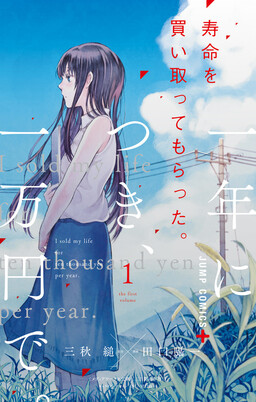
Three Days of Happiness
Yu's review of Three Days of Happiness — in a world where you can sell your remaining lifespan for money, Kusunoki sells most of his and discovers he has only three months left; manga adaptation of Sugaru Miaki's novel about what matters when time is finite.
Slice of Life
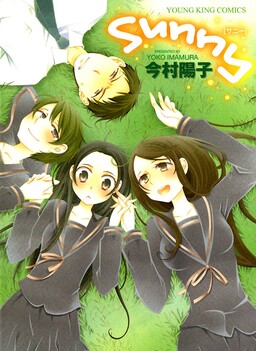
Sunny
Yu's review of Sunny — at a group home for children whose families cannot take care of them, a broken-down old car called Sunny becomes a private space where the children go to be alone; Taiyo Matsumoto's meditation on childhood longing, on what it means to be left, and on how children find ways to survive what adults do to them.
Slice of Life
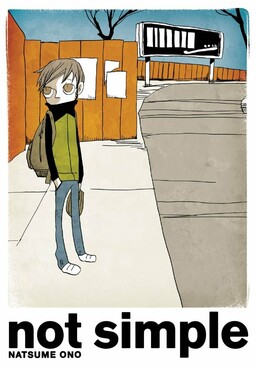
not simple
Yu's review of not simple — Ian is an English young man whose life has been defined by loss, abuse, neglect, and a desperate search for his sister; the manga tells his story in non-linear fragments, assembled by a journalist writing a novel about Ian's life, asking what it means to witness someone's suffering and what fiction can do with it.
Slice of Life / Drama
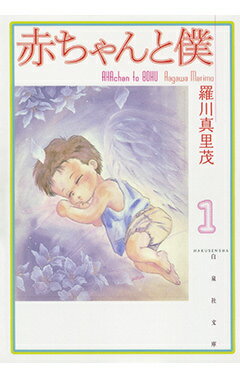
Baby and Me
Baby and Me follows Takuya Enoki, a grade-schooler who becomes a mother and a brother at the same time, raising his toddler brother Minoru after their mother dies and their father works to keep the family going.
Slice of Life / Historical Drama
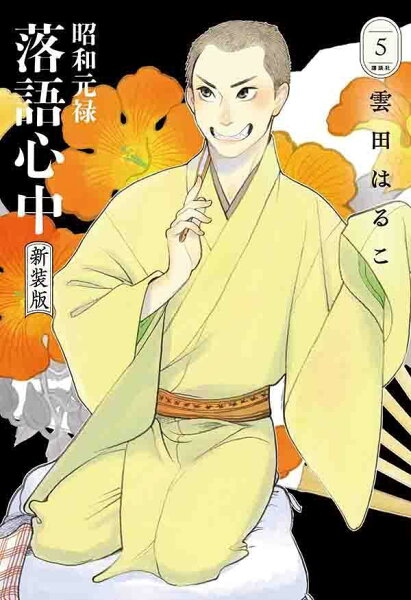
Shouwa Genroku Rakugo Shinjuu
Shouwa Genroku Rakugo Shinjuu follows the world of rakugo — traditional Japanese comic storytelling — through two performers across two generations: the transcendent and self-destructive Yakumo, and the student Yotaro who inherits what Yakumo cannot save.
Written by
Yu
Manga Enthusiast from Japan
I grew up in Japan and manga literally saved me during a tough time in elementary school. My English isn't perfect, but my love for manga is real — and I want to share it with you.
Disclosure: This post contains affiliate links. As an Amazon Associate, I earn from qualifying purchases at no extra cost to you.