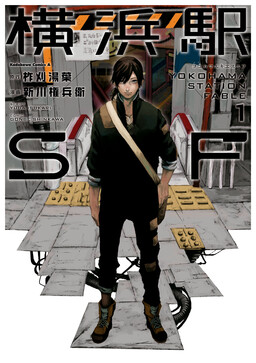
Yokohama Station SF Review: A World Where Yokohama Station Has Consumed All of Honshu
by Yuba Isukari / Tatsuyuki Tanaka
Read the first volume. If it doesn't hook you, put it down. It'll hook you.
Buy Yokohama Station SF on Amazon →*Affiliate link — I earn a small commission at no extra cost to you.
Quick Take
- The premise — Yokohama Station consumed all of Japan through autonomous self-expansion — is original and fully committed to
- The worldbuilding details of how Station society functions are the series' main pleasure
- 5 volumes complete; a genuinely unique science fiction premise in manga form
Who Is This Manga For?
- Readers who want manga with genuinely original science fiction premises
- Anyone interested in infrastructure and city-as-organism worldbuilding
- Fans of post-apocalyptic stories where the apocalypse is absurdist rather than catastrophic
- Readers looking for complete light novel adaptations with unusual premises
Content Warnings & Age Rating
Age Rating: T (Teen) Content Warnings: Post-apocalyptic setting with unsettling infrastructure; some body horror elements in the station biology; some violence
T rating — appropriate for most readers.
Yu's Rating
| Category | Score |
|---|---|
| Story Depth | ★★★★☆ |
| Art Style | ★★★★☆ |
| Character Development | ★★★☆☆ |
| Accessibility for Non-Japanese Readers | ★★★★☆ |
| Reread Value | ★★★★☆ |
Story Overview
Yokohama Station has been self-constructing since the early 21st century. Its expansion programming was never stopped. Across three centuries, it has grown until it covers all of Honshu — the main island of Japan — as a continuous self-constructing interior.
The people who live inside are Station dwellers. The people outside are Outside — and the station's automatic systems treat them as threats.
Hiroto has lived Outside all his life. He acquires a pass that allows him inside. What he finds is a society that has developed around the Station's systems — and a mystery about what the Station is and what it's become.
Characters
Hiroto — An Outside protagonist entering an incomprehensible interior society; his outsider perspective is the reader's guide to the Station's rules.
JR Fukuoka — An AI character whose relationship to the Station's original programming and to Hiroto's quest is the series' central complication.
Art Style
Tanaka's art renders the infinite Station interiors effectively — the visual sense of endless constructed space, escalators descending into darkness, gates and checkpoints without clear logic.
Cultural Context
Yokohama Station SF originated as a web novel on Kakuyomu. The premise is specifically Japanese — Yokohama Station is famously one of Japan's most confusing and labyrinthine transit stations, with exits and connections that seem to multiply. The escalation of this real characteristic into apocalypse is the series' central joke/horror.
What I Love About It
The worldbuilding specificity. The society inside the Station has developed completely around the Station's systems — turnstiles as social hierarchy, Suica cards as identity, IC readers as gods. The extrapolation is both absurd and logically consistent.
What English-Speaking Fans Say
Western readers describe Yokohama Station SF as one of the most original worldbuilding premises in recent manga — specifically noted for the infrastructure-as-world-consuming-entity concept being fully realized, for the Station society details being fascinating, and for the premise being uniquely Japanese in a way that makes it fresh for international readers.
Memorable Scene ⚠️ Spoiler Warning
The first full reveal of the Station's extent — when the scale of what self-expansion for three centuries looks like becomes visible — is the series' most striking visual moment.
Similar Manga
- Blame! — Endless constructed megastructure with similar claustrophobic worldbuilding
- Girls' Last Tour — Post-apocalyptic exploration in different register
- Knights of Sidonia — Japanese sci-fi with complete worldbuilding commitment
- Dorohedoro — Bizarre world with its own complete internal logic
Reading Order / Where to Start
Volume 1 — Hiroto's entry into the Station is the beginning.
Official English Translation Status
Yen Press published the complete 5-volume English series.
Pros & Cons
Pros
- Genuinely original premise
- Worldbuilding specificity is the series' main pleasure
- Complete at 5 volumes
- Unique to Japanese cultural context
Cons
- Character development secondary to worldbuilding
- Absurdist premise not for all readers
- Some cultural context adds appreciation
- Some body horror elements
Format Comparison
| Format | Notes |
|---|---|
| Individual Volumes | Yen Press; complete 5 volumes |
| Digital | Available |
Where to Buy
Read the first volume. If it doesn't hook you, put it down. It'll hook you.
This post contains affiliate links. If you purchase through these links, I may earn a small commission at no extra cost to you. As an Amazon Associate, I earn from qualifying purchases.
*Affiliate link — I earn a small commission at no extra cost to you.
More Manga You Might Like

Sci-Fi / Comedy
The Melancholy of Haruhi Suzumiya
Yu's review of The Melancholy of Haruhi Suzumiya manga — Kyon's ordinary high school life ends when he sits in front of Haruhi Suzumiya, who announces she has no interest in ordinary humans — only aliens, time travelers, ESPers, and sliders; what he doesn't know yet is that she is an unconscious god who has attracted exactly what she wanted.

Sci-Fi
Accel World
Yu's review of the Accel World manga — Hiroyuki Aigamo's adaptation of Reki Kawahara's light novels. Haruyuki Arita, a bullied middle schooler who hides inside online games, is handed Brain Burst by the school's vice president and becomes Silver Crow, the only avatar in the Accelerated World who can fly. Across 8 volumes the manga races from his recruitment through the Dusk Taker arc to the Hermes Cord.

Sci-Fi
A Certain Magical Index
Yu's review of the A Certain Magical Index manga — Touma Kamijou's right hand, the Imagine Breaker, nullifies every supernatural power it touches. When a nun named Index, whose mind holds 103,000 forbidden grimoires, falls onto his balcony, he is pulled into the war between Academy City's science espers and the Church's magicians. Manga adaptation of Kazuma Kamachi's light novel, drawn by Chuya Kogino.
Sci-Fi / Action
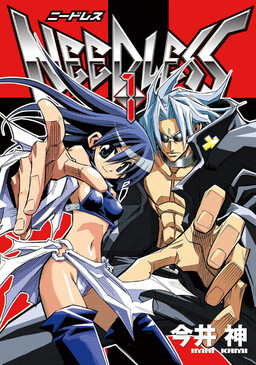
Needless
Yu's review of Needless — set in a post-apocalyptic Japan where mutants called Needless have superpowers derived from fragments of forbidden knowledge; a deliberately over-the-top action comedy that parodies shonen conventions while executing them with genuine craft.
Sci-Fi / Slice of Life
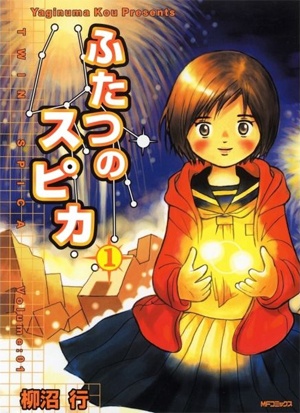
Twin Spica
Yu's review of Twin Spica — Asumi Kamogawa wants to become an astronaut; her mother died when a rocket crashed into their town when Asumi was an infant; a ghost in a lion's mask follows her through childhood and into the competitive astronaut training program, where she discovers what it actually takes to reach space.
Sci-Fi
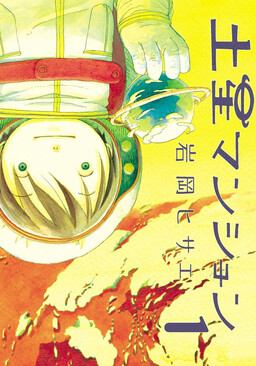
Saturn Apartments
Yu's review of Saturn Apartments — humanity lives in a ring habitat orbiting Earth; the surface is a nature preserve; Mitsu is a young window washer who cleans the outer windows of the habitat; his father was also a window washer and disappeared; Hisae Iwaoka's quiet science fiction manga about class, memory, and the view from the outside.
Written by
Yu
Manga Enthusiast from Japan
I grew up in Japan and manga literally saved me during a tough time in elementary school. My English isn't perfect, but my love for manga is real — and I want to share it with you.
Disclosure: This post contains affiliate links. As an Amazon Associate, I earn from qualifying purchases at no extra cost to you.