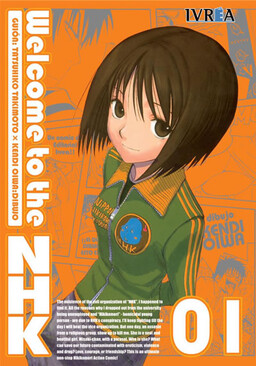
Welcome to the NHK Review: A Hikikomori Believes in a Conspiracy — and the Loneliness Under That Belief Is Real
by Tatsuhiko Takimoto / Kendi Oiwa
Read the first volume. If it doesn't hook you, put it down. It'll hook you.
Buy Welcome to the NHK on Amazon →*Affiliate link — I earn a small commission at no extra cost to you.
Quick Take
- The most honest manga ever written about social withdrawal, loneliness, and the specific way depression constructs conspiracy theories to explain the self
- Welcome to the NHK is classified as dark comedy but the comedy is the cover for something that hits like genuine literature
- 8 volumes complete; among the most important manga about modern Japanese social isolation
Who Is This Manga For?
- Readers who want manga that engages seriously with depression and social anxiety without sanitizing them
- Anyone who has experienced social withdrawal or knows someone who has
- Fans of dark comedy that is actually about something painful
- Readers who want a complete, honest story about a person slowly becoming less broken
Content Warnings & Age Rating
Age Rating: M (Mature) Content Warnings: Depression and social anxiety are the series' subject; hikikomori lifestyle depicted in detail; suicide ideation is present; dark comedy that uses these themes as comedic material
This requires specific reader consideration. The content is heavy and the comedy does not soften it.
Yu's Rating
| Category | Score |
|---|---|
| Story Depth | ★★★★★ |
| Art Style | ★★★★☆ |
| Character Development | ★★★★★ |
| Accessibility for Non-Japanese Readers | ★★★★★ |
| Reread Value | ★★★★★ |
Story Overview
Tatsuhiro Sato has not left his apartment in four years. He believes the NHK — Japan's public broadcaster — is running a conspiracy to create hikikomori (shut-ins) by producing addictive media. This conspiracy theory is the story he tells himself about why he has failed at life.
Misaki Nakahara, a girl his neighbor's age, begins visiting and offering a "project" to help him re-enter society. She never fully explains her motivations. Sato's former friend Yamazaki draws him into creating a visual novel game. His former senpai from high school reappears in his life with her own failures.
What the series is actually about — underneath the conspiracy comedy and the otaku comedy and the romance comedy — is the specific way loneliness constructs false explanations for itself, and what it takes to accept responsibility for your own isolation.
Characters
Tatsuhiro Sato — An unreliable narrator whose conspiracy theories are the series' primary comedic engine and its most honest statement about depression: the beliefs are false, the loneliness that produces them is true.
Misaki Nakahara — Her reasons for helping Sato are withheld until the series' most devastating revelation — what she gets from the project, and what she is actually as broken as Sato in ways she hides better, is the series' most complete character reveal.
Yamazaki — The otaku friend whose own escapism and its consequences run parallel to Sato's in ways that expand the series' examination of withdrawal beyond its specific protagonist.
Art Style
Oiwa's art captures the claustrophobia of Sato's apartment life — the visual language of hikikomori space is specific and consistent. The contrast between Sato's internal delusion-landscape and the mundane physical space he actually occupies is the series' visual central tension.
Cultural Context
Hikikomori — the phenomenon of social withdrawal among young people who stop engaging with outside society — is a genuine and ongoing social concern in Japan. Welcome to the NHK, based on Takimoto's semi-autobiographical novel, is among the most honest cultural documents of this phenomenon, coming from inside the experience rather than observing it.
What I Love About It
The chapter where Sato has to confront that the conspiracy theory — the story that explained everything — was never about the NHK. The moment when the false explanation collapses and what remains is just the actual problem is the series' most important and most uncomfortable scene.
What English-Speaking Fans Say
Welcome to the NHK is discussed in English-speaking spaces as one of the manga works most directly about the reader — the specificity of Sato's psychology resonates with readers who have experienced social anxiety, depression, or the specific kind of life-failure that feels too embarrassing to explain. The "this manga described my life exactly" response is more common than for almost any other work.
Memorable Scene ⚠️ Spoiler Warning
Misaki's revelation — what her project is actually for, what she needs from Sato's improvement — and the specific form her own isolation takes reframes every previous scene and establishes that the series was always about two broken people simultaneously failing and helping each other.
Similar Manga
- Oyasumi Punpun — Depression, loneliness, brutal honesty
- I Am a Hero — Social anxiety protagonist in crisis
- Gantz — Social alienation, different register
- The Flowers of Evil — Psychological, social failure, similar honesty
Reading Order / Where to Start
Volume 1 — Sato's situation establishes immediately and the conspiracy theory premise is presented directly.
Official English Translation Status
Tokyopop (later Del Rey) published the complete 8-volume run. Currently out of print but available secondhand.
Pros & Cons
Pros
- Among the most honest manga about depression and social isolation ever written
- The character development across 8 volumes is genuinely complete
- The ending is honest rather than falsely hopeful
- Essential cultural document of Japanese social anxiety
Cons
- Currently out of print — requires secondhand market
- The content is heavy and not appropriate for readers in vulnerable states
- The comedy can make the serious content harder to read seriously
Format Comparison
| Format | Notes |
|---|---|
| Individual Volumes | Tokyopop / Del Rey; OOP — available secondhand |
| Digital | Check availability |
Where to Buy
Read the first volume. If it doesn't hook you, put it down. It'll hook you.
This post contains affiliate links. If you purchase through these links, I may earn a small commission at no extra cost to you. As an Amazon Associate, I earn from qualifying purchases.
*Affiliate link — I earn a small commission at no extra cost to you.
More Manga You Might Like
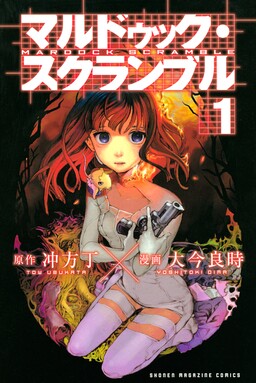
Sci-Fi / Thriller
Mardock Scramble
Yu's review of Mardock Scramble — Rune Balot, a teenage prostitute, is murdered by casino mogul Shell Septinos; resurrected under Mardock Scramble 09, an emergency law that allows dead people to be brought back as cyborgs to testify, she must survive long enough to bring Shell to justice with the help of her partner Oeufcoque.
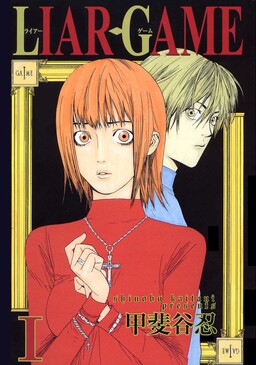
Sci-Fi / Psychological Thriller
Liar Game
Yu's review of Liar Game — Nao Kanzaki, an honest person to the point of being a liability, receives a package with 100 million yen and instructions for the Liar Game: she must deceive and be deceived; the last person holding the most money wins; she enlists the help of a recently released con man named Shinichi Akiyama.
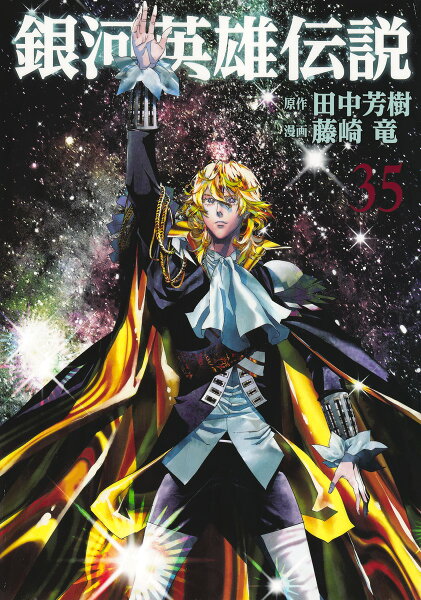
Sci-Fi / Military
Legend of the Galactic Heroes
Yu's review of Legend of the Galactic Heroes — the manga adaptation of the classic novel series following Yang Wen-li of the Free Planets Alliance and Reinhard von Lohengramm of the Galactic Empire across a war that neither believes in the same terms as the people who sent them to fight it.
Sci-Fi / Military
Mobile Suit Gundam: The Origin
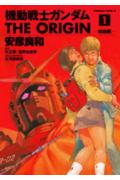
Yu's review of Mobile Suit Gundam: The Origin — Yoshikazu Yasuhiko, the original character designer for the 1979 Gundam anime, re-adapts and expands the One Year War, giving Char Aznable the backstory the original never showed and drawing the Universal Century with 40 years of additional craft.

Sci-Fi / Mystery
From the New World (Shinsekai Yori)
Yu's review of From the New World — a millennium from now, a small society of psychic humans lives in apparent peace; Saki and her friends begin to notice the gaps between what they are taught and what is real, and what they discover rewrites everything they thought their world was.
Sci-Fi / Drama
Bokurano
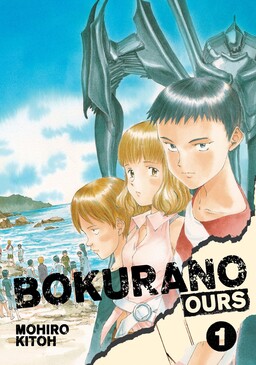
Yu's review of Bokurano by Mohiro Kitoh — fifteen children sign a contract to pilot a giant robot called Zearth, only to learn each victory costs the pilot's life, and that every battle won erases another Earth.
Written by
Yu
Manga Enthusiast from Japan
I grew up in Japan and manga literally saved me during a tough time in elementary school. My English isn't perfect, but my love for manga is real — and I want to share it with you.
Disclosure: This post contains affiliate links. As an Amazon Associate, I earn from qualifying purchases at no extra cost to you.