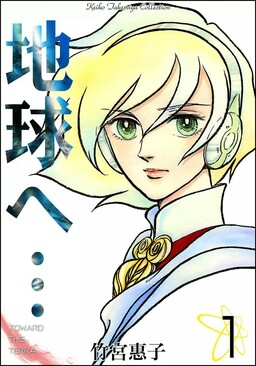
Toward the Terra Review: Keiko Takemiya's 1977 Sci-Fi Classic About Psychic Humans and a Forbidden Planet
by Keiko Takemiya
Read the first volume. If it doesn't hook you, put it down. It'll hook you.
Buy Toward the Terra on Amazon →*Affiliate link — I earn a small commission at no extra cost to you.
Toward the Terra appeared in 1977, and it anticipated the concerns that would define science fiction for decades: AI governance of human society, the persecution of human variation, what the concept of "home" means to people who have never had one. Keiko Takemiya wrote and drew it in three volumes, in a magazine primarily associated with boys' manga, with a sensibility drawn from the shoujo tradition she had helped build.
I'm Yu. This is one of those manga that makes you understand what the medium was already doing before most people were paying attention.
Quick Take
- Keiko Takemiya's Toward the Terra (地球へ…) ran in Asahi Sonorama's Monthly Manga Shōnen starting in 1977 — 3 tankōbon volumes.
- Vertical published the complete 3-volume English edition.
- Rated T (Teen) — persecution themes central to the premise; violence appropriate to the period and genre; existential and identity themes throughout.
Story Overview
In the distant future, Earth is closed to humanity. Humans live on colonized planets under the governance of the Superior Dominion — an AI system that controls reproduction, information, and social order. Psychic humans called Mu are identified as threats and eliminated at birth.
Jomy Marcus Shin is a teenager who learns on his coming-of-age day that he is one of the Mu. He is rescued by Soldier Blue — the aging leader of a Mu community who has spent his life keeping his people alive and moving toward the dream of reaching Earth.
As Soldier Blue's life ends, Jomy inherits leadership of the Mu. The series follows their generational journey: their relationship with Keith Anyan, a human raised within the Dominion as the ideal citizen, and the long convergence of these two stories across decades of story time.
The dream at the center of the series — returning to Earth, a place none of them have ever seen but that carries everything they mean by home — is treated without sentimentality. Takemiya does not resolve it cheaply.
Characters
Jomy Marcus Shin — A protagonist whose arc spans decades: resistant teenager to reluctant leader to the central figure in a generational conflict. His growth is visible across the three volumes in ways that feel earned.
Soldier Blue — The series' first deeply affecting character. An old man who has held his people together by force of hope, who passes that hope to someone who is not ready for it. His early chapters establish the emotional register for everything that follows.
Keith Anyan — Jomy's counterpart within the Dominion: the ideal human, raised without the variation the Mu represent. His arc mirrors Jomy's in structure while moving in the opposite direction.
What I Love About It
The series does not let its science fiction be comfortable. The Mu's dream of returning to Earth is genuinely moving, and Takemiya is honest about what pursuing that dream costs — in lives, in time, in the specific people who carry the hope from one generation to the next.
Soldier Blue's death — passing leadership to a Jomy who does not feel ready — is one of the most affecting sequences in classic manga. It defines the emotional stakes for everything after.
Memorable Scene ⚠️ Spoiler Warning
Soldier Blue's final moments with Jomy — the specific transfer of hope from someone who has carried it for too long to someone who hasn't chosen to carry it yet — is the series' most moving passage and the moment that makes the rest of the story inevitable.
Pros & Cons
Pros:
- Landmark historical importance: themes that would define science fiction for decades, published in 1977.
- Three volumes of exceptional density — complete story with genuine emotional weight.
- Takemiya brings a shoujo sensibility to hard science fiction in a combination that remains distinctive.
- Vertical's English edition is well-translated and in print.
Cons:
- 1970s art style requires period adjustment for readers used to contemporary manga.
- Three-volume format means some elements are compressed.
- Less accessible as a starting point for readers new to classic manga.
Is Toward the Terra Worth Reading?
Yes — unconditionally. Three volumes is a minimal commitment for one of manga's most important science fiction works. Readers interested in the medium's history, or in science fiction's engagement with AI governance and human variation, will find it essential.
Who Is This Manga For?
- Readers interested in manga history and what the medium was doing in the 1970s.
- Science fiction readers who want classic themes (AI control, psychic evolution, exile and return) handled with real craft.
- Fans of Takemiya's other foundational work or the broader Year 24 Group of female manga creators.
- Anyone who wants a complete compact science fiction narrative with genuine emotional depth.
Official English Translation Status
Vertical published all 3 volumes in English. Complete and available.
Where to Buy
Vertical's complete 3-volume English edition.
Browse Toward the Terra on Amazon →
This post contains affiliate links. If you purchase through these links, I may earn a small commission at no extra cost to you. As an Amazon Associate, I earn from qualifying purchases.
*Affiliate link — I earn a small commission at no extra cost to you.
More Manga You Might Like
Sci-Fi / Horror
DOMU: A Child's Dream
Yu's review of DOMU — Over several years, residents of the Tsutsumi housing complex have been dying or going mad at an inexplicable rate; a detective investigating the deaths suspects something supernatural; an old man with psychic abilities has been killing residents for entertainment; when a young girl moves into the complex with her own abilities, a confrontation becomes inevitable.
Sci-Fi / Drama
Galaxy Express 999
Galaxy Express 999 follows Tetsuro Hoshino, a young boy who boards the legendary space train 999 toward a planet where he can receive a free mechanical body — accompanied by the mysterious Maetel — and encounters, on each planet the train stops at, a different meditation on what it means to be human and whether eternity is worth what it costs.

Sci-Fi / Drama
Hyakuoku no Hiru to Senoku no Yoru
Hyakuoku no Hiru to Senoku no Yoru is Moto Hagio's manga adaptation of Ryu Mitsuse's celebrated science fiction novel — following the collapse of civilizations across billions of years, centered on figures from different historical periods who are drawn toward a single question: what is the nature of creation, and who is responsible for it?
Sci-Fi
Gin no Sankaku
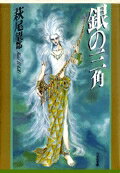
Gin no Sankaku follows characters trapped across multiple timelines by a silver triangle that connects them — a complex, demanding sci-fi work by Moto Hagio that uses time loop mechanics to explore the weight of memory and the impossible arithmetic of rescue and loss.
Sci-Fi / Slice of Life
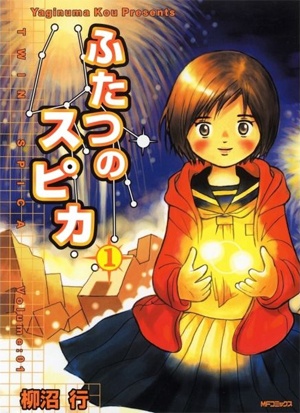
Twin Spica
Yu's review of Twin Spica — Asumi Kamogawa wants to become an astronaut; her mother died when a rocket crashed into their town when Asumi was an infant; a ghost in a lion's mask follows her through childhood and into the competitive astronaut training program, where she discovers what it actually takes to reach space.
Sci-Fi / Political
Sanctuary
Yu's review of Sanctuary — two survivors of the Cambodian killing fields make a pact to change Japan from the inside: one through legitimate politics, one through the yakuza; a politically serious manga by the creators of Crying Freeman and Mai the Psychic Girl about power, ambition, and what it costs to change a corrupt system.
Written by
Yu
Manga Enthusiast from Japan
I grew up in Japan and manga literally saved me during a tough time in elementary school. My English isn't perfect, but my love for manga is real — and I want to share it with you.
Disclosure: This post contains affiliate links. As an Amazon Associate, I earn from qualifying purchases at no extra cost to you.