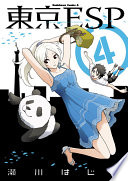
Tokyo ESP Review: The Manga That Proves Superhero Stories Don't Need America to Work
by Hajime Segawa
Read the first volume. If it doesn't hook you, put it down. It'll hook you.
Buy Tokyo ESP on Amazon →*Affiliate link — I earn a small commission at no extra cost to you.
Quick Take
- A girl named Rinka gains ESP powers from a glowing fish and becomes a hero
- Large-scale superhuman conflict set in a very specifically rendered Tokyo
- Fast-paced with good character dynamics; starts strong, builds into a satisfying conclusion
Who Is This Manga For?
- Readers who want superhero action manga with genuine character investment
- Those interested in how Japanese manga handles the superpowered-conflict genre
- Fans of action series with a female protagonist who is physically capable
- Readers looking for a complete series with escalating stakes
Content Warnings & Age Rating
Age Rating: T (Teen) Content Warnings: Action violence, urban destruction, superhuman conflict
Standard action-manga content. Nothing explicit.
Yu's Rating
| Category | Score |
|---|---|
| Story Depth | ★★★☆☆ |
| Art Style | ★★★★☆ |
| Character Development | ★★★★☆ |
| Accessibility for Non-Japanese Readers | ★★★★☆ |
| Reread Value | ★★★☆☆ |
Story Overview
Urushiba Rinka is a high school girl living with her father, scraping by, when a glowing white fish phases through her body and gives her the ability to pass through solid objects.
She is not the only one. Across Tokyo, people are acquiring ESP abilities. Some use them for petty crime. Some for personal gain. And a faction calling itself the Professor's group wants to use the sudden emergence of ESP to overturn the social order entirely — by force.
Rinka, with her power and her determination, ends up in the middle.
The series follows the escalating conflict from street-level encounters to city-wide battles, always anchored in Rinka's specific character: practical, physically capable, genuinely good without being naive.
Characters
Rinka Urushiba is an effective action protagonist: she does not brood excessively, makes decisions under pressure, and her power (phasing) is used creatively. The manga respects her physical competence.
Kyoutarou Azuma is the young man who leads her toward the hero path, with his own powers and backstory. The dynamic between them develops across the series without overwhelming the action.
The antagonists are well-constructed — particularly the Professor, whose philosophy is internally consistent even as his methods are monstrous.
Art Style
Segawa's art is kinetic and detailed. Tokyo is drawn with recognizable landmark accuracy — the series clearly loves the city it is destroying. Character designs are strong and immediately distinguishable.
Action sequences are well-paced and choreographed. The phasing power in particular is used inventively — passing through objects, through attacks, creating visual dynamics that feel specific to this power rather than generic.
Cultural Context
Tokyo ESP was serialized in the same period as the superhero genre was establishing itself globally. Segawa takes the genre's conventions — origin story, escalating threats, hero vs. villain organization — and filters them through a specifically Japanese sensibility.
The setting is emphatically Tokyo, not a fictional city. The Skytree, the waterways, the districts — these are real places being used as the battlefield. This grounds the fantasy in a way that American superhero comics rarely attempt with their New Yorks and Metropolises.
What I Love About It
The first volume of Tokyo ESP is a very good origin story. The flying fish that give ESP powers are strange and specific and immediately memorable. Rinka's reaction to her power — practical concern about how this will affect her ability to take care of her father — is exactly the right response from exactly the right character.
What holds the series together over 15 volumes is Rinka. She does not become a different person when she gains power. She just has more capacity to act on values she already had.
What English-Speaking Fans Say
Western readers discovered this partly through a 2014 anime adaptation and found the manga went deeper on character dynamics. The consensus is that it is a good-quality action series with a better protagonist than the genre average.
The complete status (14 English volumes) makes it an attractive commitment — you can read the whole thing.
Memorable Scene ⚠️ Spoiler Warning
The sequence where Rinka faces an opponent whose power counters hers directly — and has to win through understanding her own ability at a deeper level rather than through raw strength — is the series' best action chapter.
The resolution is inventive and earned.
Similar Manga
- My Hero Academia — superhero genre in school setting; more comedic
- Darker Than Black — ESP-ish powers in a paranoid urban setting; more noir
- A Certain Scientific Railgun — female protagonist with powers in a futuristic city
- Psyren — different structure but similar "people with powers facing an impossible threat"
Reading Order / Where to Start
Start from Volume 1. The origin story works well as an entry point and the series builds from there.
Official English Translation Status
Yen Press published 14 volumes in English. The series is complete.
Pros & Cons
Pros
- Rinka is a genuinely effective action protagonist
- Complete series — 14 English volumes
- The ESP power system is used creatively
- Tokyo as setting is rendered with real care
Cons
- The second half is more conventional than the first
- The scale of conflict becomes large enough to lose the grounded character work
- Some pacing issues in the middle volumes
Format Comparison
| Format | Notes |
|---|---|
| Physical | Yen Press volumes; good quality |
| Digital | Available on Yen Press and Kindle |
| Omnibus | Not currently available |
Where to Buy
Read the first volume. If it doesn't hook you, put it down. It'll hook you.
*Affiliate link — I earn a small commission at no extra cost to you.
More Manga You Might Like
Sci-Fi / Action
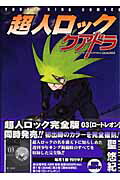
Choujin Locke
Choujin Locke is one of manga's longest-running sci-fi sagas — a galaxy-spanning space opera following Locke, an immortal esper who drifts through humanity's rise and fall, protecting people he knows he will outlive. Begun by Yuki Hijiri in 1967 and continued until his death in 2022.
Sci-Fi / Action
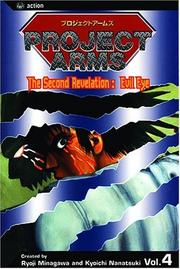
Area 88
Yu's review of Area 88 — Shin Kazama, a Japanese airline trainee, is drugged and tricked by his best friend into signing a three-year mercenary contract with the air force of a fictional desert kingdom. Trapped at Area 88, he can only buy his freedom by killing — earning $1.5 million in combat bonuses. Kaoru Shintani's 1979 aviation classic about a good man becoming an ace he never wanted to be.
Sci-Fi / Action
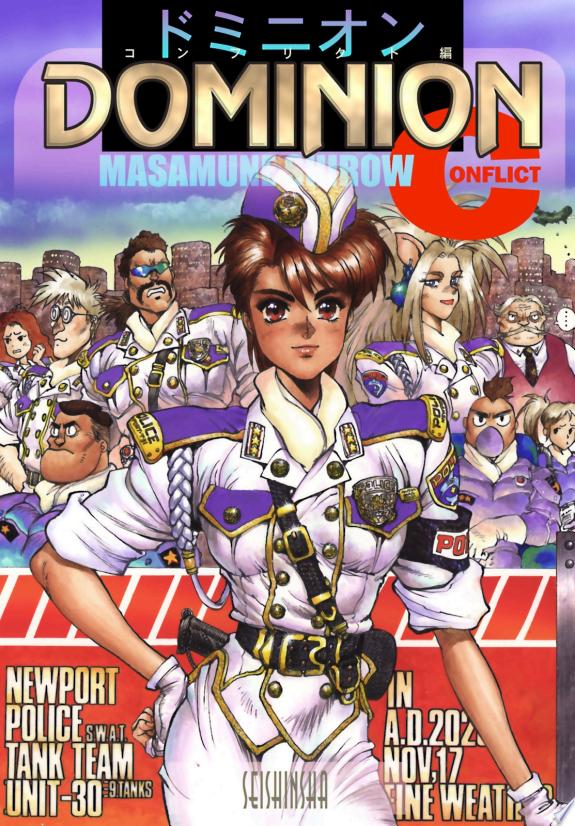
Dominion
A review of Dominion (Dominion Tank Police), Masamune Shirow's anarchic sci-fi action comedy about a tank-obsessed police officer in a polluted future city.
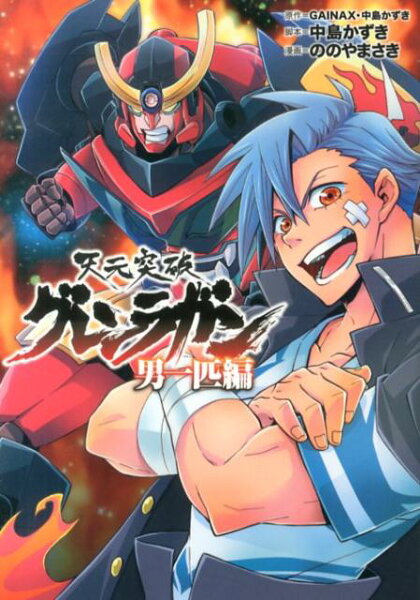
Sci-Fi / Mecha
Gurren Lagann
A review of Gurren Lagann, the hyper-optimistic super robot manga about drilling through despair to reach the stars.
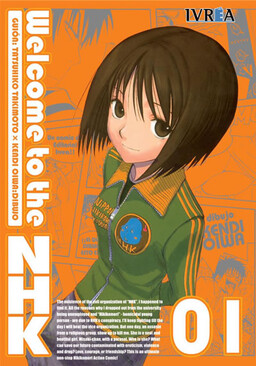
Sci-Fi / Psychological
Welcome to the NHK
Yu's review of Welcome to the NHK — Tatsuhiro Sato has been a hikikomori (shut-in) for four years, convinced that Japan's public broadcaster NHK is running a conspiracy to create hikikomori; a mysterious girl named Misaki begins visiting him and offers to help him rejoin society, for reasons he cannot understand.
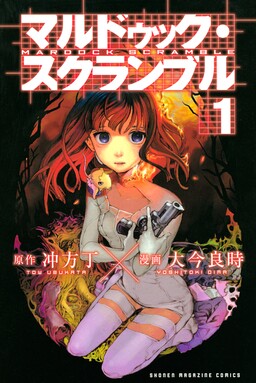
Sci-Fi / Thriller
Mardock Scramble
Yu's review of Mardock Scramble — Rune Balot, a teenage prostitute, is murdered by casino mogul Shell Septinos; resurrected under Mardock Scramble 09, an emergency law that allows dead people to be brought back as cyborgs to testify, she must survive long enough to bring Shell to justice with the help of her partner Oeufcoque.
Written by
Yu
Manga Enthusiast from Japan
I grew up in Japan and manga literally saved me during a tough time in elementary school. My English isn't perfect, but my love for manga is real — and I want to share it with you.
Disclosure: This post contains affiliate links. As an Amazon Associate, I earn from qualifying purchases at no extra cost to you.