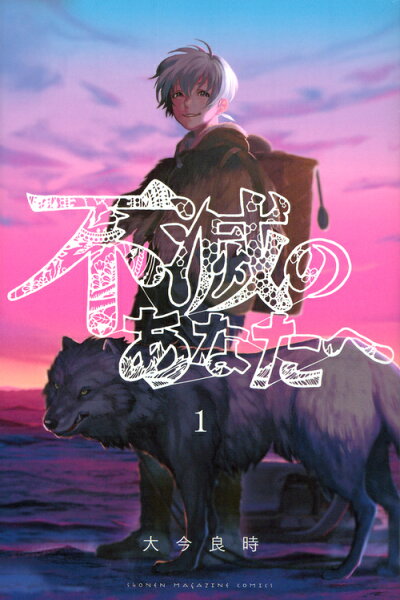
To Your Eternity Review: An Immortal Entity Takes Human Forms and Learns What It Means to Live
by Yoshitoki Oima
Read the first volume. If it doesn't hook you, put it down. It'll hook you.
Buy To Your Eternity on Amazon →*Affiliate link — I earn a small commission at no extra cost to you.
Quick Take
- An immortal entity that starts as a rock, becomes a wolf, becomes a boy, and spends centuries learning what human feeling means through the deaths of everyone it loves
- Yoshitoki Oima (A Silent Voice) at full emotional ambition — the deaths are real and they accumulate
- Completed at 21 volumes in Japan; one of the most emotionally ambitious long-running manga of the 2010s-2020s
Who Is This Manga For?
- Readers who want manga about grief, love, and what it means to be human — from the perspective of something that had to learn
- Fans of A Silent Voice who want Oima's emotional precision over a longer canvas
- Anyone who can handle significant character death as a recurring structural element
- Readers who want completed series with genuine emotional scope
Content Warnings & Age Rating
Age Rating: T (Teen) Content Warnings: Major character death is a recurring structural element — characters the reader is attached to die throughout; grief is the series' primary emotional territory
The deaths are not gratuitous — they are the series' content.
Yu's Rating
| Category | Score |
|---|---|
| Story Depth | ★★★★★ |
| Art Style | ★★★★★ |
| Character Development | ★★★★★ |
| Accessibility for Non-Japanese Readers | ★★★★★ |
| Reread Value | ★★★★★ |
Story Overview
An entity — unnamed, without will or feeling — is sent to Earth. It can mimic the form of anything that stimulates it: first a rock, then a dying wolf, then the boy the wolf belonged to. The boy died alone in the snow waiting for his village to return.
As Fushi — the name it eventually takes — travels through centuries and across cultures, it meets people who love it, who teach it, who die. Each person who dies leaves something in Fushi: their face available for transformation, their memory present in Fushi's accumulated experience of what human life means.
The series' recurring structure — Fushi meets someone, they become significant, they die — is not repetitive because each person changes what Fushi understands, and what Fushi understands changes what the reader understands about what it is learning.
Characters
Fushi — One of manga's most unusual protagonists: it starts without the capacity for human feeling and acquires it slowly, specifically, through loss. Every time it loses someone, it gains exactly what loss teaches.
March — The first human Fushi truly bonds with; her arc is the series' most devastating early sequence and establishes what the series will do with the reader's attachment.
Parona — A young woman whose life connects March, Fushi, and the series' first major conflict; her courage and her eventual fate are the series' first full emotional argument.
Tonari — A later companion whose specific desperation and complexity signal the series' increasing ambition.
Art Style
Oima's art is exceptional — the diverse historical and fantastical settings are rendered with specific detail, character expressions communicate nuance with precision, and the full-page spreads during emotional peak moments are designed for maximum impact. The diversity of settings — from tundra to medieval town to modern Japan — requires and receives different visual approaches.
Cultural Context
To Your Eternity engages with a Buddhist-adjacent concept of accumulated experience across lifetimes — Fushi's immortality is not the Western vampire tradition but something closer to the idea of a being that accumulates the essence of what it has touched. The series' temporal scope crosses cultures and historical periods.
What I Love About It
March. The first child Fushi meets, protects, and loses. The chapter of her death is one of manga's most affecting single chapters — not because it is dramatic but because of what March says about what it means that Fushi exists, and what Fushi does with what she says, and what the reader carries out of the chapter. Oima knew exactly how to introduce what the series would repeatedly do.
What English-Speaking Fans Say
To Your Eternity has a devoted Western readership that describes it as the most they have cried at manga. March's arc is the entry point cited most often as the moment readers understood what they were reading. The series' willingness to kill characters the reader is deeply attached to is described as both brutal and necessary.
Memorable Scene ⚠️ Spoiler Warning
March's final request to Fushi — what she asks it to do, why she asks, and the specific understanding of what she leaves — is the series' first complete statement of its thesis about what immortality means when it is built from the memory of people who did not have it.
Similar Manga
- A Silent Voice — Same author; shorter, different emotional approach
- Frieren — Immortal character processing human connections across time
- Mushishi — Supernatural entities encountering human lives
- Vinland Saga — Long temporal scope, character growth through loss
Reading Order / Where to Start
Volume 1 — the entity's introduction in the tundra must precede the March arc for the emotional investment to function.
Official English Translation Status
Kodansha USA is publishing the series. 20 volumes available in English.
Pros & Cons
Pros
- Completed at 21 volumes in Japan
- The accumulation of human experience across centuries is handled with genuine craft
- Each character death is earned and changes Fushi in specific ways
- Oima's emotional precision is exceptional
Cons
- Recurring character death is difficult to sustain for some readers
- Mid-series introduces a significantly different conflict that divides readers
- English publication is slightly behind Japan
Format Comparison
| Format | Notes |
|---|---|
| Individual Volumes | Kodansha USA; standard |
| Digital | Available |
Where to Buy
Read the first volume. If it doesn't hook you, put it down. It'll hook you.
This post contains affiliate links. If you purchase through these links, I may earn a small commission at no extra cost to you. As an Amazon Associate, I earn from qualifying purchases.
*Affiliate link — I earn a small commission at no extra cost to you.
More Manga You Might Like
Sci-Fi / Drama
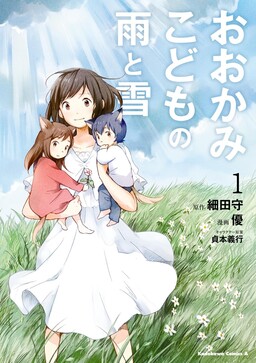
Wolf Children
Yu's review of Wolf Children — Hana falls in love with a man who is the last wolf-human; they have two children, Ame and Yuki, who can transform between human and wolf form; when their father dies suddenly, Hana must raise two wolf-children alone in a society that cannot know what they are.

Sci-Fi / Thriller
Summer Time Rendering
Yu's review of Summer Time Rendering — Shinpei Ajiro returns to Hitogashima island for the funeral of his childhood friend Ushio; something is wrong; the shadows of people on the island are not quite right; Shinpei discovers a supernatural threat that copies humans through their shadows and a time loop mechanic that allows him to restart from the same point when he dies.
Sci-Fi / Fantasy
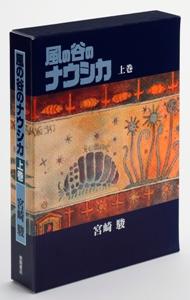
Nausicaa of the Valley of Wind
Yu's review of Nausicaa of the Valley of Wind — the manga Hayao Miyazaki serialized over twelve years, extending far beyond the film's scope: a post-catastrophic world where toxic forests cover Earth, and a princess who understands the insects that everyone else fears.
Slice of Life / Drama
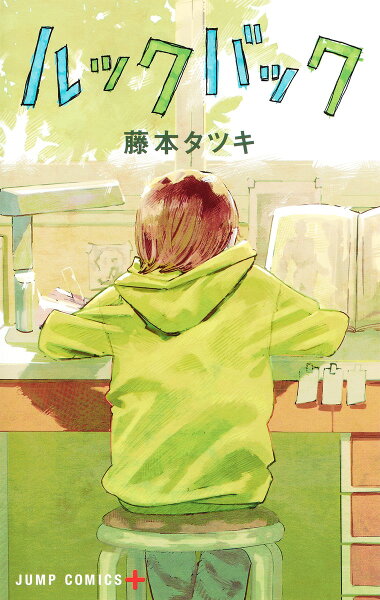
Look Back
Yu's review of Look Back — a single volume about two girls who connect through drawing, whose friendship is the manga's emotional center, and what one page of someone's art can mean to another person across time.
Sci-Fi / Fantasy
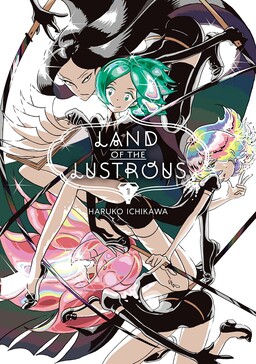
Land of the Lustrous
Yu's review of Land of the Lustrous — in a far future where humanity no longer exists, gem beings called Lustrous fight against Lunarians who wish to capture them for decoration; Phosphophyllite, the youngest and most fragile gem, wants to fight but is unfit for combat; the series follows Phos's transformation into something unrecognizable as their body is replaced piece by piece and their original self becomes inaccessible.
Sci-Fi / Fantasy
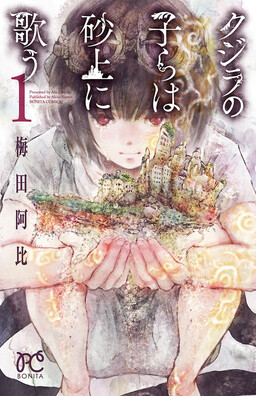
Children of the Whales
Yu's review of Children of the Whales — the Mud Whale drifts across an endless Sea of Sand carrying people called the Marked, who can move things with a power named thymia but die young for it. When archivist Chakuro finds a girl on a ghost ship, the world that has been hidden from his island comes for them.
Written by
Yu
Manga Enthusiast from Japan
I grew up in Japan and manga literally saved me during a tough time in elementary school. My English isn't perfect, but my love for manga is real — and I want to share it with you.
Disclosure: This post contains affiliate links. As an Amazon Associate, I earn from qualifying purchases at no extra cost to you.