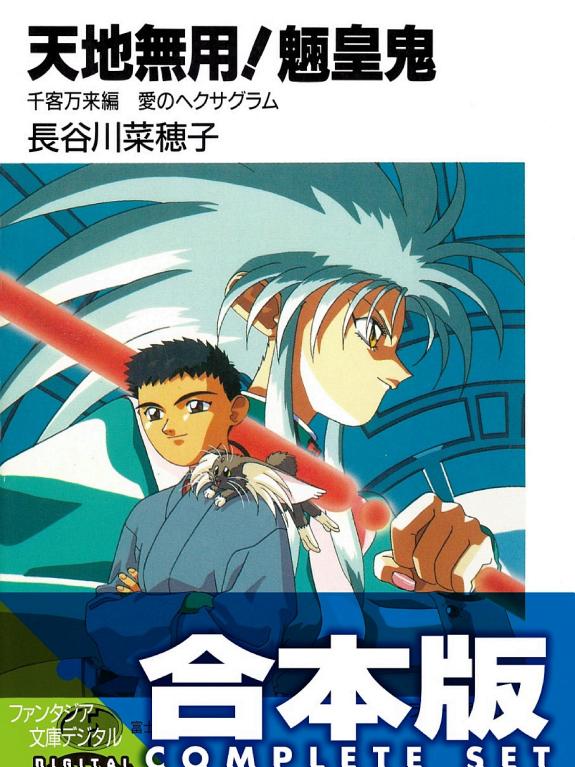
Tenchi Muyo! Review: The Harem Comedy That Accidentally Made Me Think About Free Will
by Hitoshi Okuda
Read the first volume. If it doesn't hook you, put it down. It'll hook you.
Buy Tenchi Muyo! on Amazon →*Affiliate link — I earn a small commission at no extra cost to you.
Quick Take
- The harem comedy that gave the genre its lasting template — but with genuine affection for all its characters
- Tenchi himself is a significantly better protagonist than his genre reputation suggests
- Okuda's manga expands considerably on the OVA anime, giving the story more room to breathe
Who Is This Manga For?
Tenchi Muyo! works well for readers who:
- Have nostalgia for 90s harem comedies — this is where most of them came from
- Want sci-fi adventure alongside the comedy — the galaxy-spanning stakes are real
- Are curious about the genre's origins — essential context for understanding 90s/00s anime and manga
- Appreciate protagonists who are genuinely kind — Tenchi is one of the more decent harem protagonists
Content Warnings & Age Rating
Age Rating: T (Teen) Content Warnings: Harem comedy tropes (multiple women in love with one man), mild sexual humor, sci-fi combat violence
Genre-standard for 90s harem comedy. Not explicit. Some scenes that wouldn't be drawn today are present.
Yu's Rating
| Category | Score |
|---|---|
| Story Depth | ★★★☆☆ |
| Art Style | ★★★★☆ |
| Character Development | ★★★★☆ |
| Accessibility for Non-Japanese Readers | ★★★★☆ |
| Reread Value | ★★★☆☆ |
Story Overview
Tenchi Masaki is a rural Japanese teenager who lives near a Shinto shrine maintained by his grandfather. When he opens a sealed cave (specifically told not to), he releases Ryoko — a space pirate who has been imprisoned there for 700 years.
This is followed in short order by the arrival of Ayeka and Sasami, Juraian princesses looking for their missing brother (and Ryoko); Mihoshi, a Galaxy Police detective who crashes her spaceship in the lake; Washu, the greatest scientific genius in the galaxy; and Ryo-Ohki, a small rabbit-cat creature who is also a spaceship.
All of them, for various reasons, end up living at the Masaki shrine. Tenchi's quiet country life is over.
The manga covers both the domestic comedy of this arrangement and the larger galactic politics that keep following the cast to their rural Japanese doorstep.
Characters
Tenchi Masaki — the protagonist and, genuinely, a decent person. He doesn't encourage the chaos around him; he just tries to keep things calm. His relationship with each woman in the cast is drawn distinctly rather than generically.
Ryoko — the space pirate, chaotic and powerful and deeply attached to Tenchi. Her personality is abrasive and her heart is more vulnerable than she shows. The series' most dynamic character.
Ayeka — the Juraian princess, formal and proud and slowly revealing warmth. Her rivalry with Ryoko is the series' comic spine.
Washu — the genius scientist, nominally an adult, appearance of a child, genuinely the most powerful person in the vicinity. Her relationship with Tenchi is maternal in a way she would immediately deny.
Sasami — Ayeka's younger sister, practically the house's mother figure despite being a child. Her separate secret is one of the OVA's best threads.
Art Style
Hitoshi Okuda's art is clean 90s manga style — clear character distinction, good action sequences, and consistent warm character expression. The series looks like what it is: a polished professional manga of its era.
The character designs are iconic in Japan — Ryoko and Ayeka's looks have genuine cultural staying power from the anime/manga combination.
Cultural Context
Tenchi Muyo! began as an OVA anime in 1992 and became one of the most influential franchises in defining both the harem comedy genre and the "cute alien girls" subgenre that followed. Okuda's manga adaptation ran concurrently and expanded the material considerably.
The Shinto shrine rural setting is not incidental — the blend of ancient Japanese religious tradition with intergalactic science fiction is one of the franchise's most distinctive elements. The grandmother's protective deity manifesting as a spaceship is the series' central metaphor presented as comedy.
What I Love About It
I came to Tenchi Muyo late and with some defensiveness — harem comedy has a complicated reputation for good reasons. What surprised me was how much Okuda clearly likes all of his characters.
Ryoko and Ayeka's rivalry is played for comedy, but they're also both drawn as genuine people with real attachments and real damage. The franchise gets mocked for its genre conventions, and some of that criticism is fair, but the emotional foundation underneath those conventions is more solid than it gets credit for.
Also, Ryo-Ohki is extremely cute. This matters.
What English-Speaking Fans Say
Tenchi Muyo! occupies a specific place in Western anime/manga fandom as one of the first franchises many late-90s fans encountered. The nostalgia is genuine and warm.
Newer readers approaching it without that context generally find it charming in a dated way — the harem comedy genre elements are transparent from a contemporary perspective, but the genuine affection Okuda has for his cast carries.
Memorable Scene ⚠️ Spoiler Warning
A quiet chapter in which Tenchi and his grandfather spend an afternoon together at the shrine — before any of the chaos began, shown in flashback — and you understand what exactly Tenchi had that all these intergalactic powers wanted. Not his bloodline. Not his potential. Just the quality of his ordinary life with the people he loved. The context of everything that follows gives this flashback a weight that isn't in the original images.
Similar Manga
- Oh My Goddess! — similar "supernatural/divine woman arrives in ordinary man's life" premise, played more romantically
- Urusei Yatsura — the ancestor of both series, Rumiko Takahashi's alien girlfriend comedy
- Love Hina — the direct descendant, heavier on comedy and considerably more chaotic
- The World God Only Knows — a self-aware take on harem conventions from the 2000s
Reading Order / Where to Start
Volume 1. The manga is self-contained from the beginning. Some familiarity with the OVA anime helps but isn't required.
Official English Translation Status
VIZ Media published the complete 22-volume run in English. Fully available in physical editions; digital availability varies.
Pros & Cons
Pros
- Foundational text of the harem comedy genre
- Ryoko is one of the genre's best characters
- Okuda genuinely likes all his characters, which shows
- Complete 22-volume run in English
Cons
- Harem comedy conventions are dated by contemporary standards
- Resolution of the central romantic question is not as satisfying as the journey
- 90s art style adjustment required
Format Comparison
| Format | Pros | Cons |
|---|---|---|
| Digital | Convenient for out-of-print volumes | Availability varies |
| Paperback | Classic manga format | Some volumes hard to find |
| Omnibus | N/A | Not available |
Recommendation: Physical if you can find it at a good price; digital for accessibility.
Where to Buy
Read the first volume. If it doesn't hook you, put it down. It'll hook you.
This post contains affiliate links. If you purchase through these links, I may earn a small commission at no extra cost to you. As an Amazon Associate, I earn from qualifying purchases.
*Affiliate link — I earn a small commission at no extra cost to you.
More Manga You Might Like
Sci-Fi / Romance
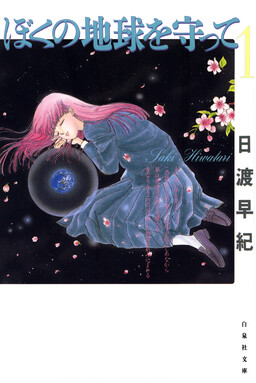
Please Save My Earth
Yu's review of Please Save My Earth — Alice Sakaguchi and six other teenagers in contemporary Tokyo discover they are the reincarnations of seven alien scientists who lived on the Moon observing Earth; their past life memories surface through shared dreams; past life emotions and relationships carry into present lives in ways that are not always welcome.
Sci-Fi / Mecha
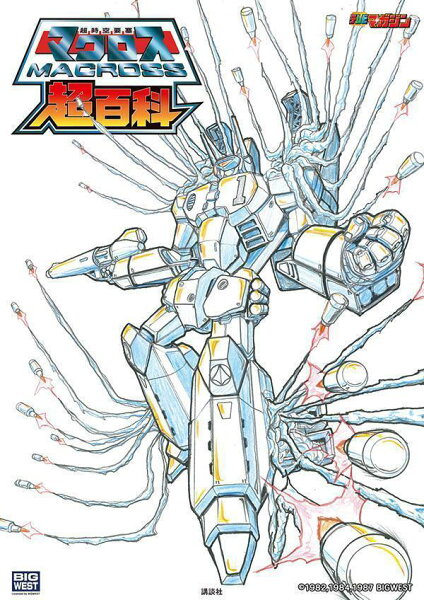
The Super Dimension Fortress Macross
A review of the original Macross manga, the classic that introduced the idea that pop music could end a war between species.

Sci-Fi / Action
Outlaw Star
A review of Outlaw Star, the manga about a freelance outlaw and his crew aboard a unique sentient ship searching for the legendary Galactic Leyline.
Sci-Fi / Adventure
The Three-Eyed One
The Three-Eyed One follows Sharaku Hosuke, a seemingly simple-minded boy who conceals a third eye beneath a bandage — when uncovered, the third eye reveals his true identity as a descendant of a lost civilization with extraordinary mental powers and a ruthless intelligence.
Sci-Fi / Comedy
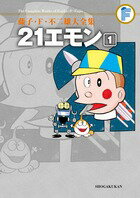
21 Emon
21 Emon is Fujiko F. Fujio's late-1960s sci-fi comedy about the 21st heir to a centuries-old Tokyo hotel who dreams of becoming a space pilot instead of running the family inn — and the robot, alien, and rival-hotel girl who keep his ordinary future tangled up with the extraordinary universe outside.
Sci-Fi / Adventure
Ginga no Sannin
Ginga no Sannin is one of Osamu Tezuka's compact science fiction works — a single-volume story about three people across the galaxy whose lives intersect at a critical historical moment, demonstrating Tezuka's ability to compress epic into modest space.
Written by
Yu
Manga Enthusiast from Japan
I grew up in Japan and manga literally saved me during a tough time in elementary school. My English isn't perfect, but my love for manga is real — and I want to share it with you.
Disclosure: This post contains affiliate links. As an Amazon Associate, I earn from qualifying purchases at no extra cost to you.