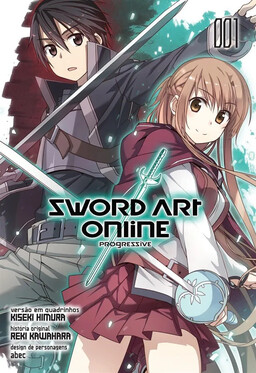
Sword Art Online: Progressive Manga Review — Floor 1 of Aincrad, At Last Given the Pages It Always Needed
by Reki Kawahara (original) / Kiseki Himura (art)
Read the first volume. If it doesn't hook you, put it down. It'll hook you.
Buy Sword Art Online: Progressive on Amazon →*Affiliate link — I earn a small commission at no extra cost to you.
I started reading SAO: Progressive — the manga — out of a kind of grievance. I had liked the original Sword Art Online anime as a teenager and then revisited it as an adult and been frustrated by how much of Aincrad it skipped. The 100-floor death-game premise is one of the strongest hooks in the whole light novel canon, and the original story essentially uses ten of those floors and then time-skips two years. Kawahara himself eventually admitted this and started Progressive as a retelling — a chance to actually show the climb.
I'm Yu, and I went into the Himura manga skeptical. I came out happy in a way that made me a little embarrassed.
Quick Take
- Kiseki Himura's manga adaptation of Reki Kawahara's SAO: Progressive light-novel retelling — ran in Dengeki G's Magazine (later Dengeki G's Comic) from August 2013, concluding at seven volumes.
- All seven volumes are out in English from Yen Press; the Aincrad story continues in Himura's successor manga (Barcarolle of Froth, Scherzo of Deep Night, Canon of the Golden Rule).
- Rated T (Teen) — virtual-reality combat, implied character deaths, no graphic content.
Story Overview
Same starting point as original Sword Art Online: ten thousand players log into the new VRMMORPG Sword Art Online on launch day, November 6, 2022, and discover that the game's creator Akihiko Kayaba has locked them in. Logout is disabled. Dying in the game kills you in real life. Clearing all 100 floors of the floating fortress Aincrad is the only way out.
The original SAO novel covered this scenario by jumping ahead two years to focus on the upper floors and a handful of key moments. Progressive refuses the jump. Volume 1 of the manga is Floor 1. Volume 2 is Floor 2. The seven English volumes published so far have not yet finished Floor 6.
The deliberate pace is the point. The early floors are where the players are still figuring out the rules. Guilds form. Information brokers (Argo) become essential. The "beater" stigma — the small minority of beta testers who already know the game's mechanics, including Kirito — gets named on the very first floor's boss raid and follows the early arc the way it never really followed the original. And Asuna, who in the original SAO was a side character until well into the story, is here from the first dungeon. Her arc is the second spine of the book.
Characters
Kirito — Beta tester, solo player by choice, fourteen years old at lock-in. The manga version is more visibly young than the anime's pretty-boy Kirito; Himura draws him as scrawny and tense. His self-imposed isolation — the "beater" identity he announces on the first floor's boss raid to shield other beta testers from blame — is the version of his early character the original SAO mostly skipped.
Asuna Yuuki — A first-time MMO player who logged into the game out of curiosity and is now trying to climb Aincrad on grim discipline alone. Progressive makes her a co-protagonist from chapter one. Her POV alternates with Kirito's, her early friendship with her real-life classmate Mito gets a quiet, painful arc of its own, and her decision in the early floors to wear gear that looks competent rather than feminine is the kind of detail Progressive has space for that the original didn't.
Argo "the Rat" — Information broker. Charges for everything. Wears whiskers painted on her face. She's barely in the original SAO; in Progressive she's the connective tissue of the lower floors — half of the player politics happens through her information network.
Kibaou and Diavel — The two leaders on the first floor's boss raid, whose dispute over how to share boss-drop rewards triggers Kirito declaring himself a beater. Their dynamic is the manga's first political portrait and it is sharper than I remembered.
Mito — Asuna's real-life classmate who logged in with her. The Progressive original-novel introduces her; the manga has begun her arc as of the recent volumes. Without going into specifics, her early actions toward Asuna are the most quietly painful material in this section of the story.
What I Love About It
It's hard to describe what Progressive does right without using the word "patience." The original Aincrad arc treated the 100-floor premise like a structural metaphor — the players are climbing, the climb is endless, here is a chapter at floor 35 — and the geometry of the actual climb was indicated rather than experienced. Progressive lets you experience it.
The first boss fight (Illfang the Kobold Lord on Floor 1) is given an entire volume. The raid composition is named. The boss's attack patterns are diagrammed by Argo's intelligence. The argument over loot distribution and the politics of "who failed Diavel" are played out in the actual moment. By the time you get to the boss room, you have read a small operations procedural about a fantasy raid party.
What I love is that this is also the version of the story that lets the death-game premise feel heavy. The original SAO showed you maybe twenty people across two years; this version shows you the actual community of trapped players, what they look like in the bar after a hard floor, who is profiteering, who is grieving, who is quietly going off-grid. The premise was always meant to be a society. The manga lets it be one.
Memorable Scene ⚠️ Spoiler Warning
The first-floor boss fight, volume 1, late chapters. Diavel — the player who has organized the raid, who has been positioning himself as a leader for the post-clear politics — takes a hit he should have been able to block, because his attention slipped at the worst possible second.
Himura's panel work on this is genuinely careful. The hit lands across two pages. The HP bar empties. Kirito, who has spent the chapter resentfully cooperating with Diavel, watches the bar empty and understands in real time that Diavel has thirty seconds to live and is going to use them lying to his raid party about why he took the risk.
The conversation Kirito has with him during those seconds is one of the quiet best things in the whole SAO canon. Diavel knows what Kirito is. Kirito knows what Diavel was trying to do. Neither of them says much. The boss is still alive in the next room.
The original SAO summarized this in maybe three paragraphs. Progressive gives it three pages and a panel of an empty corridor afterward. That panel is why I trust this adaptation.
Pros & Cons
Pros:
- Aincrad's early floors actually shown, not summarized.
- Asuna as full co-protagonist from chapter one — the biggest structural improvement over the original.
- Himura's art is consistently strong; the boss-fight choreography is some of the cleanest in any SAO manga.
Cons:
- Slow. By volume 7 we are still in the early floors. Anyone hoping for "the upper floors" is going to wait years.
- The manga is dependent on the source light novels and lags behind them; significant Progressive material isn't adapted yet.
- Requires familiarity with the original SAO setup (or at least its premise) to land.
Is Sword Art Online: Progressive Manga Worth Reading?
Yes, if the original SAO's Aincrad arc felt to you like a sketch of the story that should have existed. No, if you bounced off Sword Art Online entirely; Progressive is more meticulous, not more accessible.
Who Is This Manga For?
- SAO fans frustrated by how quickly the original raced through Aincrad.
- Readers who liked the Aria of a Starless Night / Scherzo of Deep Night anime films and want the manga version of that pace.
- Anyone who wanted Asuna treated like a protagonist from day one.
- VR death-game enthusiasts: Log Horizon, Overlord, Bofuri readers especially.
Official English Translation Status
Yen Press publishes the English manga. All seven volumes of the original Progressive manga are available; the run concluded at volume 7. The Aincrad climb is being continued under new titles by the same artist — Barcarolle of Froth, Scherzo of Deep Night, and Canon of the Golden Rule — all also licensed by Yen Press. Yen Press also publishes the source light novels.
Where to Buy
The Yen Press English print volumes are the easiest way to read this in order. The series is also available digitally through major manga retailers.
Browse SAO Progressive manga on Amazon →
This post contains affiliate links. If you purchase through these links, I may earn a small commission at no extra cost to you. As an Amazon Associate, I earn from qualifying purchases.
*Affiliate link — I earn a small commission at no extra cost to you.
More Manga You Might Like

Sci-Fi
Accel World
Yu's review of the Accel World manga — Hiroyuki Aigamo's adaptation of Reki Kawahara's light novels. Haruyuki Arita, a bullied middle schooler who hides inside online games, is handed Brain Burst by the school's vice president and becomes Silver Crow, the only avatar in the Accelerated World who can fly. Across 8 volumes the manga races from his recruitment through the Dusk Taker arc to the Hermes Cord.

Sci-Fi
A Certain Magical Index
Yu's review of the A Certain Magical Index manga — Touma Kamijou's right hand, the Imagine Breaker, nullifies every supernatural power it touches. When a nun named Index, whose mind holds 103,000 forbidden grimoires, falls onto his balcony, he is pulled into the war between Academy City's science espers and the Church's magicians. Manga adaptation of Kazuma Kamachi's light novel, drawn by Chuya Kogino.
Sci-Fi / Drama
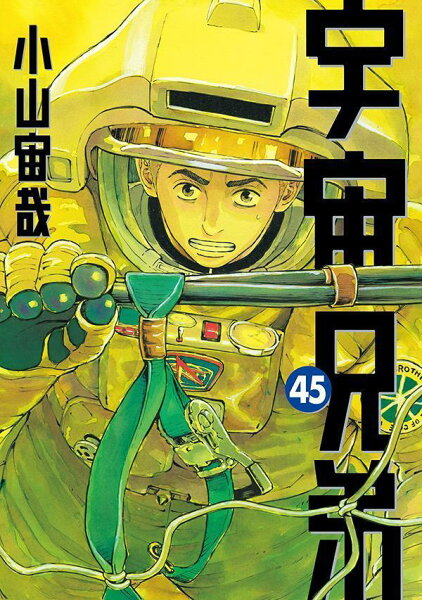
Space Brothers
Yu's review of Space Brothers — a 32-year-old man who was fired from his job reapplies to become a JAXA astronaut, following the dream he abandoned when his younger brother moved forward without him.

Sci-Fi / Mystery
Heavenly Delusion
Yu's review of Heavenly Delusion (Tengoku Daimakyou) — two teenagers travel through a destroyed Japan searching for 'heaven,' while inside a mysterious sealed facility, children are raised with no knowledge of the outside world; the two storylines converge toward answers neither group fully understands yet.
Sci-Fi / Military
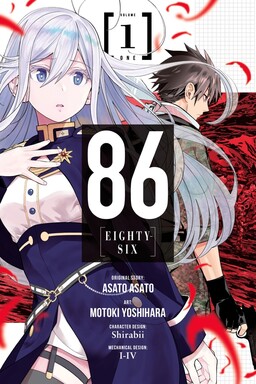
86—EIGHTY-SIX
The Republic of San Magnolia tells its citizens the war is fought by unmanned drones. The drones have pilots — children stripped of citizenship and conscripted to die in squadrons the republic refuses to count. Lena is a military officer who refuses to lie. Shin is the squadron leader who has stopped expecting to live. The manga adaptation of Asato Asato's light novel ran 3 volumes (2018–2021) before being suspended due to the artist's health; the LN and anime cover the full story.
Sci-Fi
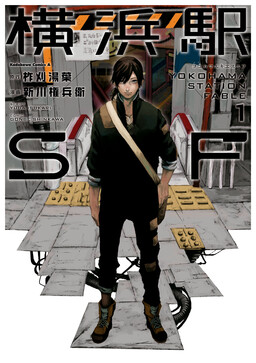
Yokohama Station SF
Yu's review of Yokohama Station SF — Yokohama Station has been self-expanding for centuries and now covers all of Honshu; the world outside is called the Outside; Hiroto, who has never been inside the Station, gets in; manga adaptation of Yuba Isukari's web novel about an infrastructure apocalypse.
Written by
Yu
Manga Enthusiast from Japan
I grew up in Japan and manga literally saved me during a tough time in elementary school. My English isn't perfect, but my love for manga is real — and I want to share it with you.
Disclosure: This post contains affiliate links. As an Amazon Associate, I earn from qualifying purchases at no extra cost to you.