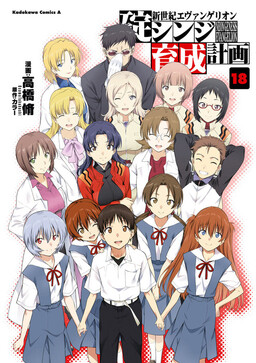
Neon Genesis Evangelion: The Shinji Ikari Raising Project Review: The What-If Where Yui Lived and Shinji Got to Be a Normal Teenager
by Osamu Takahashi
Read the first volume. If it doesn't hook you, put it down. It'll hook you.
Buy Neon Genesis Evangelion: The Shinji Ikari Raising Project on Amazon →*Affiliate link — I earn a small commission at no extra cost to you.
I came to Shinji Ikari Raising Project the way most EVA fans my age did: in my twenties, after I'd already cried through End of Evangelion twice, and with a real suspicion that anyone making "happy Shinji" content was committing a category error. The first volume on the Dark Horse English release sat on my shelf for a year before I read it. I was wrong to put it off. It's not the masterpiece the original is. It's a thoughtful answer to a question the original couldn't ask itself.
I'm Yu. I love Evangelion the way you love a wound that taught you something. This manga is the closest thing the franchise has to a hand on the shoulder, and that's not nothing.
Quick Take
- Osamu Takahashi's 18-volume Shōnen Ace spinoff (April 2005 – May 2016), loosely adapted from the "Campus" route of the 2004 Gainax PC life-sim Shinji Ikari Raising Project.
- Premise: Yui Ikari never died, NERV is a normal research lab, and Shinji is a regular high schooler living next door to his childhood friend Asuka.
- Rated T (Teen) — mild fanservice, romantic comedy beats, no apocalypse-grade content.
Story Overview
The premise is a single counterfactual: Yui Ikari survived. From that one change, everything else falls. Gendo isn't a destroyed man who weaponized his son; he's a stiff, competitive father who's still in his marriage. NERV is a research institute, not a paramilitary cult. The angel attacks didn't happen. Shinji, Asuka, and Rei are just kids at the same school.
Shinji and Asuka are childhood friends — neighbors, casually close, the kind of intimacy that gets weaponized when puberty enters the room. Rei lives in the Ikari household, raised alongside Shinji in a way the manga gradually explains. The romantic comedy spine is the slow-motion collision of those three relationships across high school, complicated by the cast you already know: Misato as the homeroom teacher, Ritsuko as the school nurse, Kaji haunting the edges, and eventually Mana Kirishima (the new transfer student) and Kaworu Nagisa (the boy with the easy smile and an agenda) arriving to push the triangle into uglier shapes.
The series ran for over a decade and ended in 2016 at 18 volumes; the Dark Horse English release covers the full run.
Characters
Shinji Ikari — In a universe where his mother lived, Shinji is still recognizably himself: anxious, deferential, allergic to making people uncomfortable. The change is that his anxiety is teenage-normal here, not existential. Watching him be allowed to just be awkward — not destroyed, just awkward — is the entire premise made flesh.
Asuka Langley Sōryū — Childhood friend, neighbor, and the most modified character in the alternate universe. Her mother Kyōko is alive in this timeline (and drawn as something close to an airhead, which is its own commentary on what Kyōko's death did to original-Asuka). She's still loud, still defensive, but the defensiveness here is teenage performance rather than survival mechanism.
Rei Ayanami — Lives with the Ikaris. The manga slow-rolls the explanation for why, and the eventual reveal is the place where the lighter-tone material brushes against the original series' weirder territory. Her arc is the most patient of the three.
Yui & Gendo Ikari — The change. Yui is NERV's chief scientist, present in Shinji's daily life, the parent the original series never let him have. Gendo is dramatically different: still rigid, still socially weird, but now the kind of distant father who buys the wrong gift, not the one who abandons his child to die in a robot. Their marriage is intact and slightly comic.
Mana Kirishima & Kaworu Nagisa — Both transfer in midway through the run, and both are infiltrators from outside Shinji's small world — Mana via Mana Kirishima's character from Girlfriend of Steel, Kaworu in his usual ambiguous mode. The series uses them to break the equilibrium when the rom-com triangle threatens to settle.
What I Love About It
What I love about Raising Project is that it is not a fix-it. It would be easy to read this as "what if Shinji was okay" fan-comfort and dismiss it. The manga is doing something a step harder: it's asking what Shinji is like without the wound that defined him.
The answer is unexpectedly tender. He's still Shinji. He's still apologizing for taking up space. He still flinches when an adult raises their voice. The trauma of canonical NGE turns out not to be the whole of his personality — but it's not nothing, either. Even in this universe, his shape is recognizable, just less broken. Takahashi lets the reader sit with that. The implication is that the apocalypse of the original series did not create Shinji; it just amplified what was already there.
I find that more moving than I expected from a manga that was originally licensed off a dating game.
Memorable Scene ⚠️ Spoiler Warning
Without spoiling specifics — there's a sequence late in the run where the AU's surface tension breaks and the underlying mechanism of Rei's situation becomes visible. Takahashi handles the moment carefully: it doesn't reset the manga's tone into the original series' dread, but it does insist that the "lighter universe" is not a frictionless one. There are reasons Yui survived. There are costs to those reasons. The manga doesn't show you all of them. It just lets the floor creak under the romantic comedy.
That choice — to keep the spinoff's lighter register while gently confirming that yes, the underlying NERV machinery still exists and still has costs — is the moment I trusted Takahashi as a custodian of these characters.
Pros & Cons
Pros:
- Eighteen volumes, finished, fully available in English from Dark Horse — a complete reading project.
- The "normal Shinji" thought experiment is more thoughtful than the cover and premise suggest.
- Misato-as-teacher and Ritsuko-as-nurse are quietly delightful.
Cons:
- Genuinely requires NGE familiarity. If you haven't seen the original, the manga's emotional beats will not land.
- Eighteen volumes is more space than the premise actually needs; mid-run can feel padded.
- The PS2-game DNA shows in some of the rom-com beats, which can feel dated.
Is Shinji Ikari Raising Project Worth Reading?
Yes, if you love NGE and want to spend more time with these characters in a different register. No, if you came to Evangelion for the apocalypse and find the rom-com framing offensive on principle.
Who Is This Manga For?
- EVA fans who want a long, complete spinoff to live in.
- Readers of Sadamoto's original manga adaptation who want more of these characters after finishing it.
- People who liked the lighter parts of Rebuild of Evangelion 3.0+1.0 and want more of that energy.
- Anyone curious how the franchise's dating-game ecosystem cross-pollinated with the main continuity.
Official English Translation Status
Dark Horse Comics published all 18 volumes of Neon Genesis Evangelion: The Shinji Ikari Raising Project in English between 2009 and 2018. The English run is complete. Individual volumes may be out of print at any given moment, but the set is regularly stocked through Dark Horse's catalog and major retailers.
Where to Buy
The Dark Horse English volumes are the practical way to read this in order; the early volumes are easy to find new, the late ones occasionally need a used-market detour.
Browse Shinji Ikari Raising Project on Amazon →
This post contains affiliate links. If you purchase through these links, I may earn a small commission at no extra cost to you. As an Amazon Associate, I earn from qualifying purchases.
*Affiliate link — I earn a small commission at no extra cost to you.
More Manga You Might Like

Sci-Fi
Evangelion: Campus Apocalypse
Yu's review of Evangelion: Campus Apocalypse — an alternate universe NGE spinoff where Shinji Ikari is a new student at a school hiding a secret connected to the Angels; Mingming's reimagining moves the Eva mythology into a school setting while keeping the core emotional relationships.

Sci-Fi / Drama
Emanon
Yu's review of Emanon — a young man on an overnight ferry meets a mysterious woman who claims to remember every life she has lived since the first single-celled organism; she carries within her the memories of three billion years of evolution; he doesn't know whether to believe her.

Sci-Fi / Classic
Astro Boy
Yu's review of Astro Boy (鉄腕アトム) — Osamu Tezuka's foundational manga about a robot child built by Dr. Tenma to replace his dead son, abandoned, then raised by Professor Ochanomizu into a hero who defends both humans and robots. Includes 'The Greatest Robot on Earth.' Complete in 23 volumes from Dark Horse.
Sci-Fi / Cyberpunk
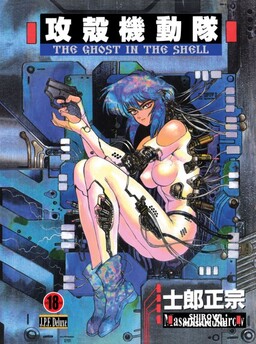
Ghost in the Shell 2: Man-Machine Interface
A review of Ghost in the Shell 2: Man-Machine Interface — Masamune Shirow's 11-chapter Young Magazine sequel from 1997, collected into a single volume by Kodansha (Solid Box 2000, mainstream 2001). Dark Horse Comics's English edition came out in 2003.
Sci-Fi
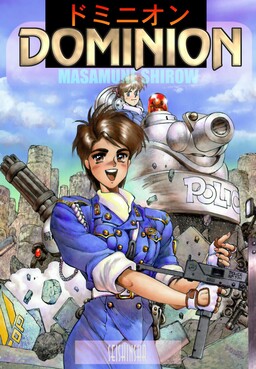
Dominion Tank Police
Yu's review of Dominion Tank Police — in a future city where crime requires a Tank Police division, officer Leona Ozaki is assigned to the unit and falls deeply in love with her miniature tank Bonaparte; Masamune Shirow's comedic sci-fi action, lighter than Ghost in the Shell but with the same worldbuilding attention.
Sci-Fi / Action
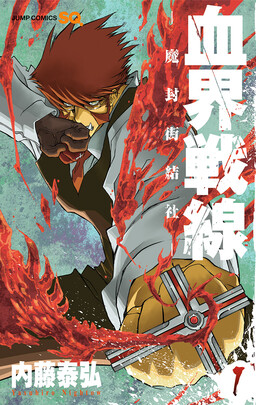
Blood Blockade Battlefront
Yu's review of Blood Blockade Battlefront — New York has become Hellsalem's Lot, a city fused with a supernatural Beyond, and a crew called Libra keeps it from tearing itself apart. Leonardo Watch joins them carrying the All-Seeing Eyes of the Gods, paid for with his sister's sight. Yasuhiro Nightow's wild, episodic post-Trigun work.
Written by
Yu
Manga Enthusiast from Japan
I grew up in Japan and manga literally saved me during a tough time in elementary school. My English isn't perfect, but my love for manga is real — and I want to share it with you.
Disclosure: This post contains affiliate links. As an Amazon Associate, I earn from qualifying purchases at no extra cost to you.